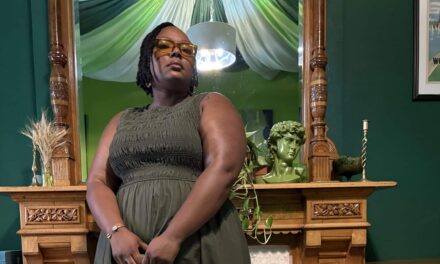
The Nashville-based musician and documentary creator confronts the consequences of ICE raids on “Innocent Criminals,” a protest song and archival-footage music video exploring empathy, accountability, and the responsibility of communities to one another.
There is a difference between witnessing injustice and deciding that witnessing it is no longer enough.
For Nashville-based musician, filmmaker, and Emmy-nominated artist Joshua Caleb Smith, that distinction lies at the heart of “Innocent Criminals,” a song that examines the human consequences of immigration enforcement across the United States and the increasingly complicated relationship between legality, morality, and collective responsibility.
Released through True Source Entertainment, the single emerged from years of observing what Smith describes as a deterioration in the way Americans treat one another, eventually becoming a direct response to immigration raids affecting people in his own communities.
Rather than approaching the subject exclusively through the language of partisan politics, Smith attempts to reframe the conversation around something more immediate: the lives of individuals, families, friends, and neighbors whose experiences can become obscured by ideological arguments.
“This is a human problem, not a political one,” he explains. “This is person to person, day to day life. We are complicit if we don’t do something, say something, help out where we can.”
It’s an argument that raises questions extending beyond immigration itself. What responsibility do individuals have when institutions act in ways they consider unjust? How does language influence our willingness to empathize with strangers? And can music encourage meaningful reflection in a society increasingly saturated with disturbing images and conflicting narratives?
For Smith, these questions are not simply theoretical.
When the Personal Becomes Political
Although “Innocent Criminals” responds to contemporary immigration enforcement, Smith began developing the song several years before its release.
Initially conceived as a broader reflection on injustice and profiling, the composition took on a more specific urgency as immigration raids began affecting people he knew.
That proximity transformed the project from an observation about society into a response to circumstances unfolding around him.
The title itself introduces a deliberate contradiction.
By placing the words innocent and criminals together, Smith challenges the assumptions that can become attached to legal classifications, particularly when public discourse reduces complex human experiences to simplified categories.
His lyrics also examine the responsibilities of bystanders, questioning whether people who witness suffering without responding can consider themselves entirely removed from its consequences.
The song’s argument is therefore not limited to the actions of immigration authorities. It also asks listeners to consider the relationship between individual conscience and the institutions operating in their names.
At a time when immigration remains one of the most contested subjects in American public life, Smith’s approach reflects his belief that shared ethical concerns can provide common ground between people who otherwise disagree politically.
A Music Video Built From Reality
The accompanying video for “Innocent Criminals” rejects conventional music-video storytelling in favor of archival material, news reporting, and footage documenting immigration enforcement and detention.
Drawing on publicly available coverage from outlets including PBS News, NBC News, Bloomberg, Nashville Noticias, and CGTN America, the visual places Smith’s music alongside images of events and people directly connected to the subject.
It also incorporates reporting and public statements concerning immigration enforcement in cities such as Chicago and Los Angeles.
Among the subjects referenced are allegations concerning conditions at the Otay Mesa Detention Center in San Diego, including reports of overcrowding, inadequate medical care, and other concerns raised by detainees and journalists. The facility’s operator, CoreCivic, has denied allegations concerning its conditions.
The use of real footage introduces an ethical dimension that fictional storytelling might avoid.
When artists incorporate images of actual suffering into their work, questions arise about consent, representation, and whether the desire to communicate a message risks turning someone else’s trauma into an artistic device.
Smith argues that the purpose of the video is not to dramatize events but to bring greater attention to accounts already circulating in the public record.
He also emphasizes that the song is not intended to center his own experience.
Instead, he hopes the combination of music and documentary imagery can reach audiences who might otherwise overlook the stories being presented.
Music as a Form of Public Memory
Smith’s approach belongs to a long tradition of musicians using their work to confront social and political issues.
From the protest songwriting of Woody Guthrie and Bob Dylan to the politically engaged compositions of Nina Simone, Marvin Gaye, and Fela Kuti, music has repeatedly served as a medium through which artists interpret events that extend beyond their personal lives.
For Smith, these influences demonstrate how a song can preserve the emotional dimensions of an issue long after the immediate news cycle has moved elsewhere.
His work across music, documentary production, and multimedia storytelling also informs the way he approaches the subject.
Each medium communicates differently. Journalism can establish facts and provide context, documentary footage can make events visible, and music can create an emotional connection that encourages listeners to engage with what they are seeing.
But Smith is also aware of the limitations of artistic expression.
A song cannot independently resolve institutional problems, and public attention does not automatically translate into meaningful change.
What it can do, he suggests, is sustain conversations, encourage people to examine their assumptions, and remind communities of responsibilities that extend beyond individual interests.
We spoke with Joshua Caleb Smith about the making of “Innocent Criminals,” the ethics of documentary imagery, the influence of protest music, and the difficult relationship between empathy, political disagreement, and collective accountability.
In Conversation With Joshua Caleb Smith
Your new single “Innocent Criminals” addresses immigration enforcement and the human consequences of ICE raids across the United States. What was the specific moment or experience that made you feel you could no longer remain an observer and needed to respond through your music?
I’m not sure I can point to a single moment for the song’s inspiration. I started working on it a couple of years ago with the intent to speak about injustice, and profiling. When these ICE raids began, and it was hitting close to home—affecting the lives of my friends and neighbors—I just knew I needed to get this out there; to do something.
You’ve described the situation as a human problem rather than a political one. Yet immigration enforcement is inseparable from government policy, legal authority and public debate. How do you approach the challenge of emphasizing shared humanity without overlooking the political and institutional structures that shape people’s experiences?
Maybe I’m an idealist—I am an artist after all—but from my experience talking with friends who vote differently from me, we agree this is a problem because we share similar beliefs and values.
I don’t care if you vote red or blue, I want to know if you care about someone with no criminal record being persecuted because of the color of their skin, and what you personally can and will do about it.
A politician or a policy might solve this issue in time, but if you remove politics from the conversation, what remains is a situation that is inhumane and unjust.
We can make changes on the ground, together, right now, and I’m saying we should. Our actions, ethics, and morals can affect politics because they can affect how we vote, but politics don’t have to affect our actions.
In my opinion, you can’t let the political tail wag the dog. You don’t talk about red and blue when you’re trying to pull someone out of the rubble from a fallen tower. We need to set political views aside and take action now.
The title “Innocent Criminals” confronts the tension between legal classifications and the moral judgments society attaches to them. What does the word “criminal” mean to you in this context, and how do you think the language used to describe immigrants influences the public’s willingness to empathize with them?
The song addresses how criminality is based on perception. My perspective, as indicated in my last answer, is that accountability needs to be addressed here.
“If everybody’s guilty, there can never be a crime”.
With the lyrics, and the title, I’m trying to convey that no one is innocent in this situation.
In terms of the language used to describe immigrants––I see it significantly impacting people’s empathy and response. So much journalism these days relies on opinion rather than facts, so I think it’s important to get out and see this for ourselves.
ICE raids are happening near you. Talk to those impacted, find out more about the reality of the situation and then make a determination on whether you think these tactics are justified.
Your music video uses real news footage, archival material and firsthand accounts rather than a fictional narrative. What responsibilities do you believe artists have when incorporating images of real suffering into their work, and how did you approach the ethical distinction between documenting injustice and turning someone else’s trauma into artistic material?
An artist’s responsibility, no matter how small or large the platform, is to tell stories, illustrate emotions, and draw attention to important current events.
Regarding the video, the song isn’t about me, it’s about others. I didn’t want to fabricate a narrative version of the events for the music video. I wanted to support the lyrics and music with the real life events that inspired them.
The footage is all publicly accessible, but if someone were to ask me to take a clip down, I would. I have no ulterior motive to create art from another person’s pain; I’m showcasing reality because that’s what the song is based on.
I found that a common thread in the news stories sharing these images, people wanted their stories told to show what’s really happening and who is actually impacted, versus what some outlets are propagating.
One of the clips actually came from someone I know, and they gave their blessing for me to use it. I think this would be the same for others.
You’ve spoken about the responsibility of ordinary people to respond to what happens in their communities. Where do you draw the line between personal responsibility and institutional accountability, and what does meaningful action look like for someone who feels deeply concerned but uncertain about how to help?
I genuinely feel that we all have a responsibility to serve our community.
In some cases, I know people whose neighbors and coworkers have been directly affected and they are working directly with those people to help in any way they can.
You may not know those people directly, but we can all take meaningful action by finding groups that support and defend immigrants detained without legal cause, and by helping those families left behind.
In Nashville, we have a few groups, I’m sure anyone reading this can find something similar in their town or nearby city, maybe a church or a community center will have dedicated resources. It’s just a matter of looking for ways to help.
There’s a difference between accountability and responsibility.
If you are asking where I would draw the line between a person’s responsibility and an institution’s responsibility, what a person can do differs from what an institution can do – so individual responsibility varies – we should do what we can.
If you’re talking about where I would draw the line between a person’s accountability and an institution’s accountability, we can and should hold each other accountable, and we can also hold institutions accountable.
But institutions are held accountable through legal action and public attention. This is one of those reasons why we need to come together, because one person with one voice can only go so far. 100 people with one voice is 100 times stronger there is power in that.
Music has a long history of confronting social injustice, from folk protest songs to politically engaged hip-hop and punk. Which artists or musical movements have influenced your understanding of music as a form of public expression, and do you believe a song can genuinely change someone’s perspective on an issue as divisive as immigration?
Music inspires us, it lives in our minds and hearts and changes our view of the world by helping to reconcile emotion and bring peace of mind. It’s the soundtrack to our lives.
This is important for confronting and changing injustice.
Bob Marley brought a culture and community voice to the world through his music. He helped encourage the unity of a nation in turmoil.
Look back at Fela Kuti, Nina Simone, Stevie Wonder, Marvin Gaye, Bob Dylan, Woody Guthrie, and currently Jesse Welles––these artists have all helped raise awareness, confront real-life issues, and inspire real change.
Nothing changes instantly; inspiration helps sustain the movement and sometimes initiates it.
The contemporary media environment exposes audiences to an almost constant stream of disturbing images and accounts of suffering. Do you worry that repeated exposure can lead to emotional numbness, and how did you approach creating something that encourages reflection rather than simply adding to the overwhelming volume of information people already encounter?
Between the news, social media, and all the ways we ingest content, we are all numb.
The reason I wanted to speak about this issue now is that it seems to be faded by the rest of the fires in the world, but it hasn’t stopped.
More people are arrested by ICE now than when this was headlining the news.
I think when an issue is important, you can’t stop talking about it, and I hope a song like this can reignite the flame in people to initiate change.
You’re based in Nashville, a city where musical storytelling is deeply embedded in the culture, but where artists and audiences can hold very different political and social perspectives. How do you navigate conversations with listeners who may fundamentally disagree with the message of “Innocent Criminals,” and is reaching those people part of what you hope the song can accomplish?
I am seeing people comment on the video already who don’t agree with the message – or are simply making oppositional statements.
I’m glad it’s reaching those folks now, even if only to a limited degree.
Yes, it’s important for people to see both sides and educate themselves.
I’m currently working on a live show that will bridge the gap between online and in person and hopefully open the dialogue for more local conversations.
I’m hoping to partner with local organizations where I bring the show to help raise awareness and educate people on the reality of the situation in their town.
Your career spans music, documentary creation and multimedia production. How do these different disciplines influence the way you investigate and communicate difficult subjects, and what can music express about a real-world event that traditional journalism or documentary filmmaking might struggle to convey?
I just tell stories, and I happen to have a varied toolkit to do that with.
I try to think three dimensionally, and apply a different approach to each aspect of the creation.
A video will relay a song’s message differently than the music production or a live show because of the different ways they can impact an audience, but they complement each other well when curated and produced with that in mind.
All media suffers from the information bottleneck that exists; this, I think pulls authenticity away from the craft and the messaging in favor of the loudest voice.
When a room gets loud the only way to quiet it is to turn on the lights. Music can do that. But any authentic and honest message, regardless of the medium, can do that.
“Innocent Criminals” raises questions about empathy, complicity and the responsibility we have toward people whose experiences differ from our own. Beyond the immediate conversation surrounding immigration enforcement, what do you hope this release encourages listeners to reconsider about their relationship with their communities, their institutions and one another?
Right now it feels like some people think there is no real cost to them, but that’s very shortsighted.
People can’t assume these things won’t affect them just because they aren’t an immigrant.
It’s already taking a major toll on local economies and that toll will only grow.
As the saying goes, “it takes a village”. Maybe this project will remind people of that.
At its core, “Innocent Criminals” is as much a meditation on the responsibilities of witnessing as it is a response to immigration enforcement.
Smith’s argument is that the stories we encounter through news reports, social media, and everyday conversations shouldn’t become so familiar that we stop recognizing the individuals behind them.
His choice to build the music video from real footage also reflects a larger question about the role of artists in contemporary society.
Can creative work help restore emotional meaning to events that have become reduced to statistics, political arguments, or fleeting headlines?
And what happens when the people watching those events begin to consider themselves participants in the communities affected by them, rather than distant observers?
For Smith, music provides one way to begin those conversations, even if it cannot determine where they will lead.
“Innocent Criminals” doesn’t offer an easy resolution to the tensions between law, morality, political authority, and individual conscience.
Instead, it asks listeners to confront those tensions without forgetting the human lives at their center.
“Innocent Criminals” was released October 16, 2026, via True Source Entertainment, with its companion music video released October 2.
Learn more: Joshua Caleb Smith — “Innocent Criminals”
Artist website: listentojoshua.com