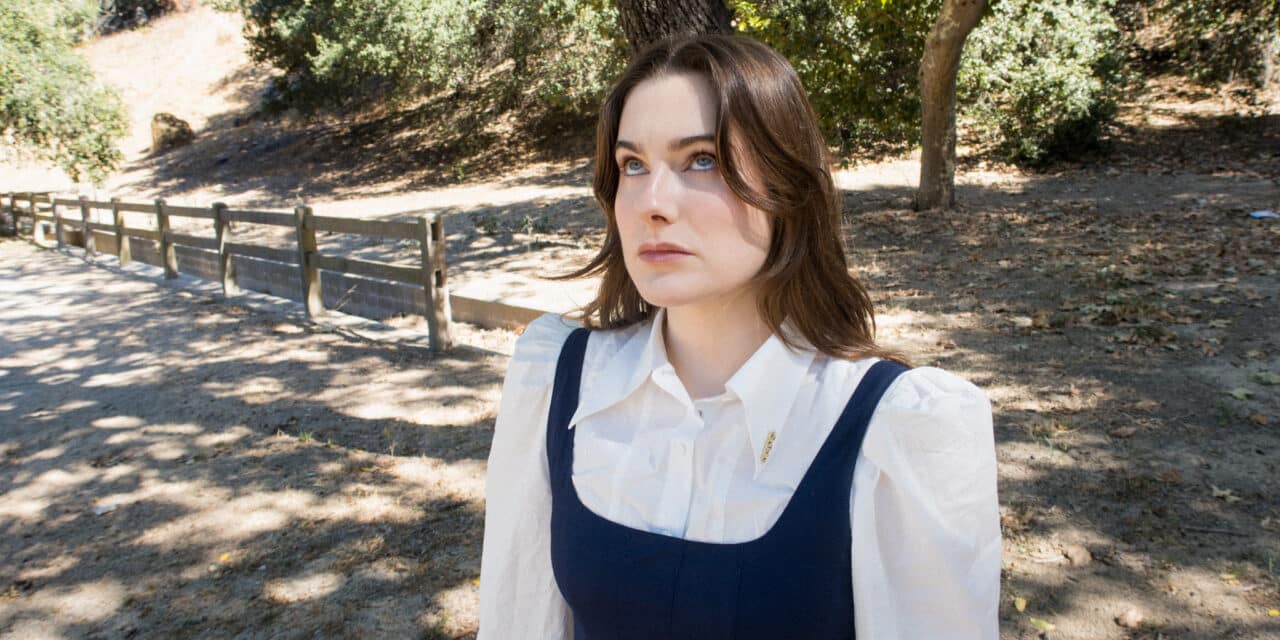
On her haunting new single, the Los Angeles-based singer-songwriter turns clear backpacks, school buses, memory, and imagined futures into a gentle meditation on innocence in a world that no longer feels designed to protect it.
There is something especially devastating about an ordinary object becoming evidence that the world has changed.
On Maddie Regent’s new single “Schoolbags,” that object is a backpack.
Not a metaphorical one.
Not something transformed through elaborate symbolism.
A clear schoolbag carried by a child getting onto a bus.
The image is painfully mundane, which is precisely why it works. Childhood is still happening around it—the bus, the backpacks, the devices, the daily trip to school—but something about the conditions surrounding those rituals has fundamentally shifted.
“Clear schoolbags and iPads and all this sad sad sad,” Regent sings, returning to the phrase throughout the song like a thought she cannot quite put down.
The Toronto-born, Los Angeles-based singer-songwriter could have turned that feeling into anger.
Instead, she chose grief.
“I didn’t want to write an angry song,” Regent explains. “I grieve my whimsical childhood knowing I might never be able to give that to my own kids.”
That decision changes everything about “Schoolbags.”
Rather than escalating, the song observes.
Rather than shouting, it drifts.
Ethereal vocals, gentle guitars, and atmospheric production surround the subject with something almost lullaby-like, creating a tension between the softness associated with childhood and the much harsher reality being contemplated underneath.
It is not escapism.
It is Regent’s way of making something painful possible to look at.
When an ordinary image says everything
The central image arrived almost instinctively.
“It felt like a good anchor point to the verses,” Regent says. “Like bringing it back to such a simple image that says so much.”
That simplicity is crucial.
“Schoolbags” does not need to explain every anxiety embedded within the sight of children carrying clear backpacks.
The image already carries enough.
Regent kept returning to the line during the writing process because its repetition felt natural.
It becomes something like a refrain of disbelief.
Here are the kids.
Here is school.
Here is technology.
Here are the visible reminders that innocence now exists alongside precautions children themselves did not create.
And here is an adult watching all of it and realizing that the childhood she remembers may not be reproducible.
Grief without a solution
Regent describes the song as a journal entry.
That distinction separates “Schoolbags” from protest music built around action or argument.
“I didn’t know how to fix the feeling,” she says. “I just knew that I was feeling it and wanted to write about it.”
So she allowed herself to remain inside observation.
The song moves slowly and steadily, developing like a train of thought rather than a thesis.
That structure mirrors how grief often behaves.
It does not always arrive with conclusions.
Sometimes you simply keep thinking about the same thing from slightly different angles.
A memory.
An image.
A possibility.
A future child who does not exist yet.
A childhood that already ended.
Regent’s decision not to resolve any of those thoughts allows the song to retain its emotional ambiguity.
She is not claiming the past was perfect.
She is mourning something more intimate: the particular feeling of safety and whimsy she remembers having.
Writing the song ultimately made her realize how fortunate that memory itself was.
“I think I realized that I’m lucky that I have good memories of my childhood,” she says. “That’s such a privilege.”
Making sadness sound like a lullaby
Sonically, “Schoolbags” does not sound as harsh as its underlying subject might suggest.
That was intentional.
“I think in a way I wanted the song to still sound hopeful,” Regent says. “Or even like a lullaby.”
The choice makes sense.
If the song is grieving innocence, reproducing some trace of innocence in the production becomes more emotionally potent than simply making everything dark.
“I wanted it to be easy to listen to because of how hard the topic is to think about.”
Gentle guitars and a steady beat provide emotional stability even while the lyrics contemplate something unsettling.
The production does not deny the sadness.
It holds it.
That contrast has become an increasingly distinctive part of Regent’s work: beautiful worlds surrounding uncomfortable emotional truths.
Fantasy as emotional accuracy
Regent has always been inclined toward imagination.
Growing up, she staged elaborate plays for her family and disappeared into fictional worlds.
She describes herself as a child who became intensely fixated on stories and characters, studying them until she could recognize fragments of herself within them.
“I was always very observant as a kid,” she says. “I would get hyper-fixated on a story or movie character and learn everything about them, and I’d find pieces of them in myself.”
She still writes that way.
Her songs frequently transform real emotions through fantasy, romance, theatrical imagery, and cinematic storytelling.
For Regent, that does not distance her from reality.
It actually makes the emotional experience more accurate.
“I feel things intensely, so matching that with an elaborate story feels more honest.”
That is an important distinction.
Fantasy is not being used to soften pain into something more palatable.
The scale of the fantasy validates the scale of the feeling.
“It’s not to avoid the real painful stuff,” Regent explains, “but more to validate it.”
The child who became the songwriter
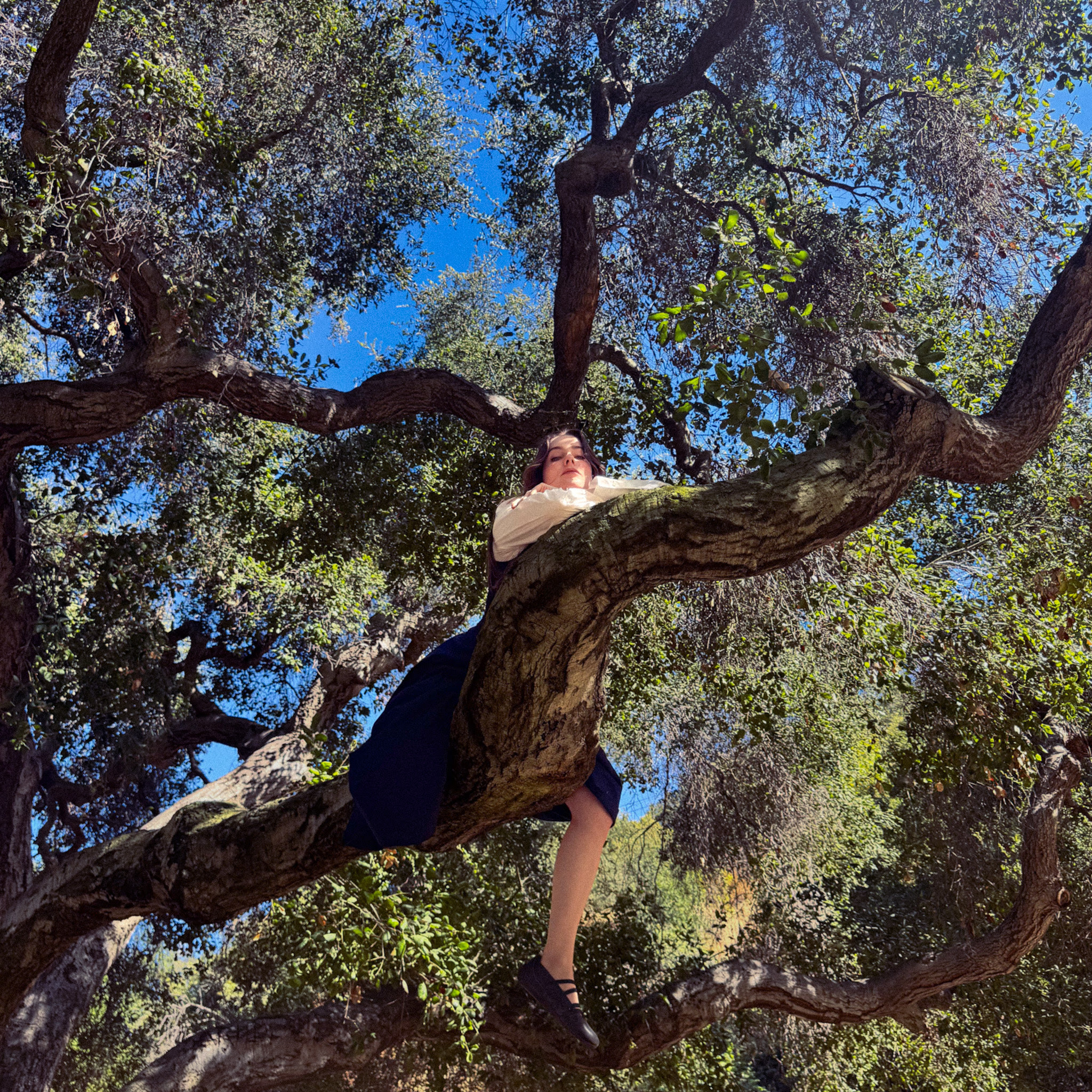
Regent began writing songs at twelve—the same broad period of childhood that “Schoolbags” now looks back toward.
Music eventually became more serious during college, when she began collaborating with writers and producers, followed by her 2021 debut and the EPs MISS REGENT and Girl of Your Dreams.
Her 2025 debut album, On the phone with my mom, pushed her toward increasingly vulnerable songwriting.
But Regent does not describe her current chapter as simply becoming more emotionally revealing.
She already believes she reached deep vulnerability on that album.
What has changed is permission.
“I’m embracing my playful side more with this work,” she says.
That means costumes.
Characters.
Visual storytelling.
Less concern with being perceived correctly.
More concern with feeling like herself.
“I’m becoming less concerned with how I’m perceived and more focused on being my authentic self.”
It creates an intriguing creative progression.
Greater honesty does not necessarily require greater realism.
For Regent, becoming more authentic appears to be giving her permission to become more theatrical.
Creating mini movies
Regent’s songs often feel visual before their narratives completely reveal themselves.
But the images do not necessarily arrive first.
Usually the production or chords establish an emotional atmosphere.
Then she begins to see the world that belongs inside it.
With previous single “See Me,” for example, the opening verse made Regent think of a romance novel.
Rather than resisting that association, she followed it.
That process is becoming increasingly central to the music she is currently building.
The next songs, she says, will push further into storytelling and escapism.
“Almost like mini movies.”
It feels like a natural evolution for someone whose childhood imagination revolved around staging plays and inhabiting fictional worlds.
Songwriting has simply become the adult technology for doing the same thing.
“Yes,” Regent says. “That’s what I love to do. I write songs so I can create worlds.”
And she knows exactly who those worlds are for.
“I really make music for daydreamers.”
In Conversation With Maddie Regent
MUNDANE: “Schoolbags” takes something as ordinary and nostalgic as children boarding a school bus and turns it into an image of lost innocence. What was the moment that made you realize that image could carry an entire song?
MADDIE REGENT: It felt like a good anchor point to the verses, like bringing it back to such a simple image that says so much.
I just kept singing that line, “clear schoolbags and iPads and all this sad sad sad,” at the end of each verse, and it felt right as we were writing.
MUNDANE: You’ve said you deliberately chose to write “Schoolbags” from grief rather than anger. How did that decision affect the way you approached the melody, lyrics, and overall atmosphere of the track?
MADDIE REGENT: I think I wanted this song to be like a journal entry in a way, where it really is just about observation instead of taking action.
I didn’t know how to fix the feeling; I just knew that I was feeling it and wanted to write about it.
So we made the song slow and steady, unfolding like a train of thought I was having about this sad thing I couldn’t stop thinking about.
MUNDANE: There’s an interesting tension between the ethereal, almost dreamlike sound of “Schoolbags” and the much darker reality underneath it. Did you want the production to evoke the innocence you’re mourning rather than simply mirror the sadness of the subject?
MADDIE REGENT: Yes, I think in a way I wanted the song to still sound hopeful? Or even like a lullaby.
I wanted it to be easy to listen to because of how hard the topic is to think about.
I wanted it to feel gentle in that way, so keeping the guitars and steady beat were really important to me.
MUNDANE: You talk about grieving the whimsical childhood you had while wondering whether you’ll be able to give that same freedom to your own children someday. Has writing this song changed the way you understand your own childhood in retrospect?
MADDIE REGENT: I think I realized that I’m lucky that I have good memories of my childhood.
That’s such a privilege.
MUNDANE: Your songwriting often uses fantasy, romance, and cinematic imagery to process very real emotions. What interests you about creating beautiful or imaginative worlds around subjects that can actually be quite painful?
MADDIE REGENT: I think that’s how I process life.
I feel things intensely, so matching that with an elaborate story feels more honest.
It’s not to avoid the real painful stuff but more to validate it.
MUNDANE: “See Me” and “Schoolbags” have been described as the beginning of a more honest, cinematic, and emotionally fearless era for you. What are you allowing yourself to say in these songs that you might have avoided on On the phone with my mom?
MADDIE REGENT: I think it’s less about what I’m allowing myself to say, because I truly felt like I was my most vulnerable self on On the phone with my mom.
It’s more that I’m embracing my playful side more with this work.
I’m dressing up in costumes and becoming less concerned with how I’m perceived and more focused on being my authentic self.
MUNDANE: You started writing songs at 12, around the same period of life that “Schoolbags” seems to look back toward. When you think about the girl who first started writing music, what parts of her imagination or worldview are still present in the artist you are today?
MADDIE REGENT: I was always very observant as a kid.
I would get hyper-fixated on a story or movie character and learn everything about them, and I’d find pieces of them in myself.
I still do that, and I still write that way.
MUNDANE: Your music often feels very visual, almost as though a scene exists before the listener fully understands the story. When you’re songwriting, do you tend to see images and environments first, or do the lyrics and melodies create that visual world afterward?
MADDIE REGENT: The production/chords will usually come first, and then the emotion it gives me will inspire the visual and image that I want to explore.
Like with “See Me,” it truly felt like a romance novel in the first verse, so we kept that in mind.
MUNDANE: You’ve described growing up staging elaborate plays and disappearing into fictional worlds. Do you think songwriting has essentially become the adult version of that same impulse—to build a world where you can make sense of things that are harder to process in reality?
MADDIE REGENT: Yes.
That’s what I love to do.
I write songs so I can create worlds.
Hopefully I can continue to do that at bigger scales, but I really make music for daydreamers.
MUNDANE: If “See Me” opened the door to this new chapter and “Schoolbags” takes us further inside it, what larger emotional or sonic world are you building with the music that comes next?
MADDIE REGENT: My next few songs really build on the storytelling and escapism component, almost like mini movies.
I’m so excited for you to hear!!
Music for Daydreamers Living in the Real World
There is something revealing about Regent describing her work as music for daydreamers.
Daydreaming can sound like withdrawal.
In her songs, it functions more like a way of paying closer attention.
She does not build fictional worlds because reality lacks importance.
She builds them because reality sometimes generates emotions too complicated to approach directly.
A childhood anxiety becomes a lullaby.
A feeling becomes a romance novel.
A song becomes a miniature film.
An ordinary school bus becomes the image through which an entire generation’s relationship with innocence can be contemplated.
“Schoolbags” is especially effective because Regent refuses to turn that contemplation into certainty.
She does not pretend to have a solution.
She does not transform grief into a slogan.
She notices something.
It hurts.
She writes it down.
That journal-entry quality leaves the song suspended between the childhood she remembers and the future she imagines.
Somewhere between those two lives is the question she cannot answer yet: what kind of childhood will the next generation inherit?
There is grief in not knowing.
But there is tenderness too.
The lullaby still exists.
The imagination still exists.
The kid who once staged elaborate plays is still building worlds, only now she has records to put them inside.
And as Maddie Regent moves deeper into this new chapter, the most interesting shift may not be that she is becoming more serious.
It is that she is giving herself permission to be playful while saying serious things.
To dress up.
To exaggerate.
To romanticize.
To dream.
To let a difficult feeling become beautiful without pretending that beauty makes it less difficult.
For an artist who says she makes music for daydreamers, “Schoolbags” understands something essential about them:
sometimes the people imagining other worlds are the ones looking most closely at this one.