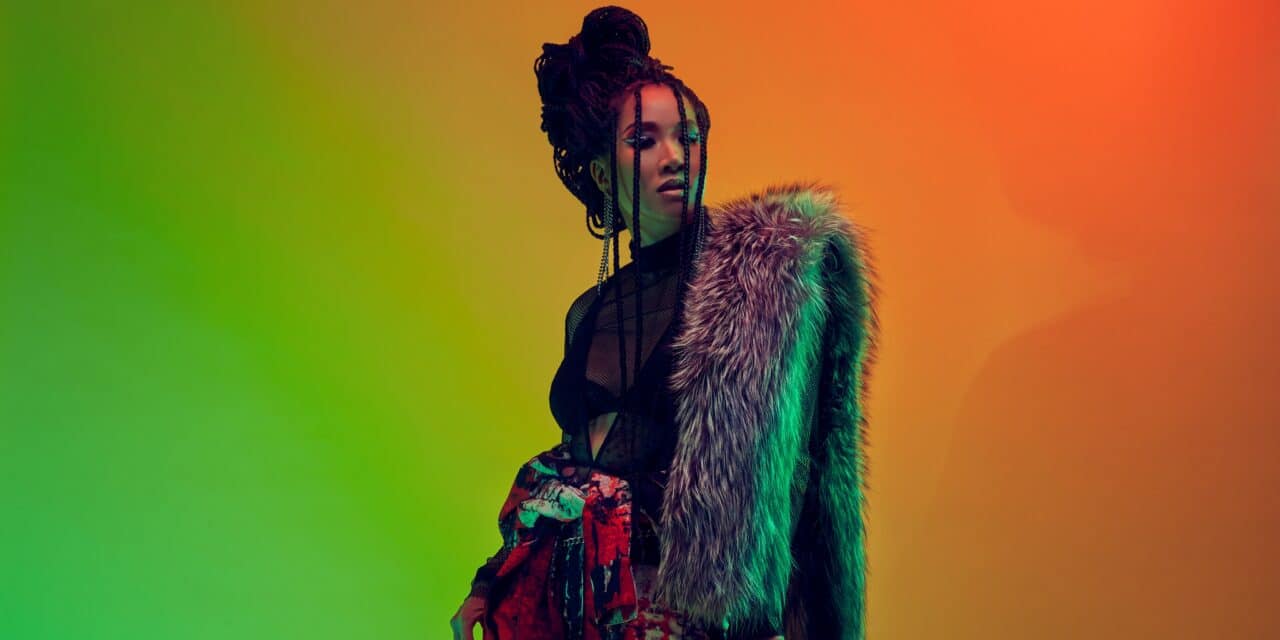
As the “Far East Empress” prepares to take two stages at Rototom Sunsplash, she reflects on two decades of hip-hop and reggae, building Singapura Dubclub, rejecting polished representations of Singapore, and why the next chapter of Southeast Asian music has to be rooted in authenticity
For much of her career, Masia One has been told some version of the same thing: that what she was doing would not work.
That an Asian woman in hip-hop was not marketable. That reggae would never develop a serious audience in Singapore. That the ideas were too specific, too unfamiliar, too far outside what the industry already understood.
Twenty years later, she is still here.
More importantly, much of what once appeared improbable now looks increasingly prophetic.
Masia One has spent decades moving between hip-hop, reggae, dub, dancehall and sound system culture while building bridges between scenes that the global music industry has historically treated as peripheral. Born in Singapore, raised in Canada and shaped by years spent working internationally—including five years in Jamaica—she has developed an artistic identity that is inseparable from cultural exchange.
But increasingly, exchange does not mean dilution.
This August, Masia reaches one of the most symbolic milestones of her career when she performs at Rototom Sunsplash, Europe’s largest reggae festival. She will first appear on the Dancehall Stage before joining Indonesian sound system pioneers Yella Sky Sound at Dub Academy the following day.
It is the realization of a dream more than a decade in the making.
Yet Masia does not speak about Rototom primarily as personal validation.
“When I was new in the business, there was more of a hustle mentality of getting yourself more notorious as an artist,” she explains. “However, as the journey continues I learned that building community is essential to growing something bigger than yourself.”
Now she sees the stage as an opportunity to represent something considerably larger: the multilingual, multicultural reality of Southeast Asia and the reggae communities she has helped connect across the region. For Masia, that proximity of cultures—and the new ideas produced when they collide—is already deeply aligned with reggae’s fundamental message of unity.
Her appearance at Rototom arrives alongside “Neighbourhood,” a new global collaboration from New Zealand artist Emma Dilemma featuring Dende the Sensei, Masia One and Jay Coast.
Masia’s contribution began, somewhat ironically, with rejection.
Her first verse was sent back for being too generic.
Years of writing in Los Angeles and New York had taught her how to make material broadly digestible for the pop market. “Neighbourhood” demanded the opposite. Instead of imagining what might work internationally, she began thinking about what could only come from Singapore.
The result trades the immaculate skyline and polished global-city branding for something far more intimate: kepoh uncles, ah beng music, Singlish, laundry outside apartment windows and the strange, funny details that actually make a place feel inhabited.
In an era of increasingly flattened global aesthetics, that specificity becomes quietly radical.
“The real gems that emerge from our creativity are in reflecting the beautiful imperfections and one-of-a-kind experiences that come from being human,” Masia says.
It is a philosophy that now seems to extend beyond a single song.
Masia One is less interested than ever in proving she can participate in a global music industry on its terms. Instead, she is asking what happens when artists root themselves so deeply in their own communities, histories and languages that the rest of the world has to travel toward them.
For Southeast Asian music, she believes that moment is already arriving.
Mundane spoke with Masia One about finally reaching Rototom Sunsplash, building reggae culture across Southeast Asia, cultural responsibility, the politics of authenticity, Singlish going global, the evolution of Asian hip-hop, and why longevity matters more than celebrity.
Performing at Rototom Sunsplash has been a decade-long dream for you, but you’re arriving there not simply as an artist—you’re representing a Southeast Asian reggae and sound system community you helped build. Does that make this moment feel bigger than a personal milestone?
When I was new in the business, there was more of a hustle mentality of getting yourself more notorious as an artist.
However, as the journey continues I learned that building community is essential to growing something bigger than yourself, and much more fulfilling because the impact affects many more lives.
Now as I get to step onto my dream stage that I’ve waited many years for, my mind is not only how to represent Southeast Asian reggae well in terms of performance and technical skill, but going deeper to share what message we need to share to the world as artists from this region.
The many cultures and languages that live in such close proximity in the ASEAN region, how we influence one another, how we inspire new ideas through this diversity—that is the very essence of One Love, one of reggae’s most prominent themes.
Through Singapura Dubclub, you spent years doing the foundational work of creating space for reggae and dub culture in Southeast Asia. What did that scene look like when you started, and what exists today that you once had to imagine from scratch?
When I started there were a couple of other sound crews in Singapore including Dub Skankin’ Hifi, Lion Steppa Sound and of course Bushman playing live.
I was also told by potential sponsors and venues that reggae was “homeless people music” and that it would never have an audience in Singapore. There was a strong stereotype that the sound was only tied to beach bums.
I intentionally threw Singapura Dubclub events in high-end venues like Ce La Vie at the iconic Marina Bay Sands, Potato Head and Sentosa to break these stereotypes.
By bringing legendary international artists to Singapore, we let audiences new to the culture witness the authentic sound that represents the foundations of the music.
We made sure the branding, including merchandise and event aesthetic, was done well and always professional to raise the profile of reggae as a culture for new fans in Singapore.
Simultaneously, I saw that reggae had prominent audiences around Southeast Asia, particularly in Indonesia, Malaysia and Thailand, and sought to bring more communication between these scenes and Singapore.
What emerged was Singapore becoming a hub and jump-off point for new booking routes for reggae and dub into the region.
You’ll perform both solo on Rototom’s Dancehall Stage and alongside Yella Sky Sound at Dub Academy. Considering your relationship with Yella Sky stretches back to Bintan Dub Club in 2015, what does sharing this particular international stage together mean to you?
I remember the first time I met Yella Sky Sound System. They had written me an email asking to join Bintan Dub Club’s music lineup, describing their music as “sounds like a sunset.”
I added them to the lineup instantly.
Sharing this international stage with Yella Sky Sound from Indonesia and myself representing Singapore is particularly significant as it can be viewed as two Southeast Asian scenes coming together.
Although we come from different countries, we share a common connection through reggae, dub and sound system culture, strengthening a regional connection and building more bridges between our scenes at home, and for the overseas market to come to Southeast Asia.
This year we released a single together called “Global Warning,” from The Global Steppers EP.
This song is the perfect soundtrack for this journey to Rototom together, with a message that celebrates diversity, unity and connection on a global scale.
I believe as we perform this song live at the Dub Academy stage in Benicàssim, Spain, it will be the first steps in a bigger development of Southeast Asian artists and sound system crews becoming increasingly connected to the international scene, which has its most massive following in Europe.
We come not just to perform, but to build relationships, exchange ideas, and share the energy of our culture with the wider world.
Reggae, dub, dancehall, and hip-hop all carry very specific cultural histories. As a Singaporean artist working across those traditions, how have you approached participating in them respectfully while still creating something unmistakably Southeast Asian?
I was born in Singapore, raised in Canada and worked around the world, including Jamaica for five years, before returning back to Singapore, having been away most of my life.
I’m very grateful to have such amazing international influences on my creative vocabulary.
I think it’s important to celebrate the roots of where the culture came from, and pay the artists that built the culture.
This is why it was important for me to facilitate bookings for legends like Johnny Osbourne, The Wailers, Sister Nancy, Kabaka Pyramid, General Levy and U-Brown in Southeast Asia, giving back to the pioneers of the sound.
That said, the beauty of reggae music is that it’s the “sufferer’s sound,” growing as a voice for the poor, the oppressed, and the working-class people.
This is a universal message that speaks to the needs of the people from the Caribbean, to Asia, to the West.
Staying true to the culture means staying true to the root meaning—which is using music to ease pain and suffering, and allowing the message to unite the people.
Your first verse for “Neighbourhood” was rejected because it was considered too generic—and ironically, that pushed you toward something much more distinctly you. What did that experience teach you about the difference between making something universally accessible and making something genuinely authentic?
I spent many years as a songwriter behind the scenes in L.A. and N.Y.C., and had learned how to write verses that are universally friendly for the pop market.
I had been considering what would be palatable for New Zealand radio.
Emma reminded me the song was called “Neighbourhood” and the point was to authentically represent where I’m from.
I took a step back to think about what I loved about Singapore—all the unique and quirky things that only exist in our city-state.
Your “Neighbourhood” verse deliberately avoids the polished, internationally marketable image of Singapore in favor of kepoh uncles, ah beng music, laundry hanging from windows, and the everyday language of your community. Why was it important to show the Lion City without cleaning it up for an outside audience?
With the gentrification of one-world branded malls, AI-sanitized sound and bland poreless perfection of today’s aesthetic, the real gems that emerge from our creativity are in reflecting the beautiful imperfections and one-of-a-kind experiences that come from being human.
Also remember I never grew up in Singapore, so there are aspects of the Lion City that many locals take for granted that stand out distinctly to me—a Singaporean that reconnected with my roots as an adult.
Language seems especially important to that authenticity. When you bring Singaporean slang, rhythms, humor, and cultural references into music for global audiences, do you ever feel pressure to translate yourself—or have you reached a point where you want listeners to come to your world instead?
I think that Singapore has such a bad rep as this stiff place with rules and nerds.
Singlish has been one of the most unique points of being Singaporean, allowing people to express full paragraphs in one word like “Can” or “Cannot.”
I think it’s about time we celebrate Singapore slang beyond local borders, to an international vernacular.
Besides, it’s super fun to rap.
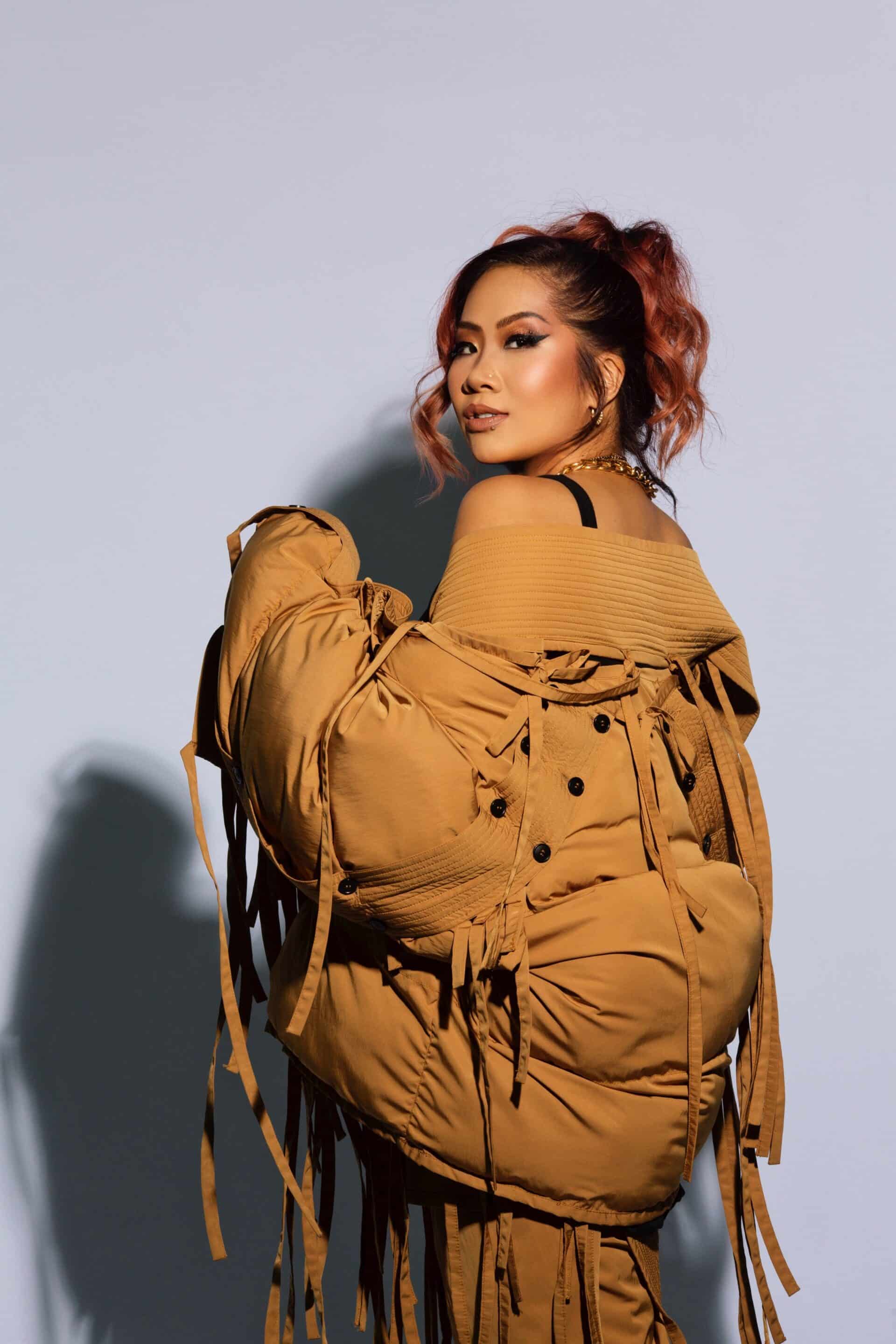
Processed with VSCO with c3 preset
You’ve spent more than two decades carving out space for Asian artists in genres where representation was historically scarce. When you look at younger Southeast Asian artists now, where do you see genuine progress, and where does the global music industry still have catching up to do?
It amazes me, the rise of hip-hop in Asia, and today seeing an Asian emcee is as normal as witnessing the culture’s influence on K-pop.
When I started I couldn’t find anyone that looked like me rhyming on Canadian TV.
The exciting thing about the rise of Southeast Asian hip-hop is that the artists are flowing in their native tongues like Cambodian, Vietnamese, Thai, Malay—for the first time, without trying to imitate American accents.
Just like my earlier comments about reggae, this allows different communities to express the core message of “Power to the People” in a way that is meaningful to their own lives and stories.
The global music industry gets their trends and metrics late from what is actually bubbling up on the street and grassroots level.
So many stereotypical depictions of cultural roles have already become so irrelevant by the time it has finally been accepted by the mainstream.
How do we remedy this gap in reality versus mainstream entertainment?
Pay creatives so they can continue to reinvest in themselves and others, put more experienced community leaders in decision-making roles, and readjust industry models toward the vision of longevity instead of quick gains and AI slop.
It sounds very idealistic, but this is no longer just a conversation about capitalizing on art—it determines the works and story that is left to document the human experience for future generations.
You’ve collaborated with figures like Pharrell Williams and RZA and had your work reach major international platforms, yet this current chapter seems particularly focused on roots, community, and cultural specificity. Has your definition of what it means to be a “global artist” changed over the years?
Every major talent that has focused on only building up their own name has, at one point or another, had the mass media and audience turn on them to seemingly fall from grace.
From Drake to Ariana Grande, the idol model of the music industry that is constantly fed to young talent is not one of legacy and positive impact toward humanity—no matter how many speeches are given about “I just want to make music that people relate to.”
To have longevity in today’s world as an artist, the business must be diversified to businesses other than the music industry, the community must be nurtured to create a cultural foundation, and you need a good lawyer to read everything before you sign it.
For myself I have Nusantara Records as a music publishing company that focuses on sync and licensing opportunities, Singapura Dub Club that builds up boutique events, Suka Suka Sauce—my Southeast Asian-based Jamaican-inspired jerk sauce—and my own work as a music director and consultant to develop other talents in the game.
Rihanna knows it: the long game is the strong game.
Between “Neighbourhood” and Rototom, you’ve said you’re increasingly being asked to represent your Southeast Asian roots in a way “only I could bring as an artist.” Does that responsibility feel empowering, complicated, or both—and what do you want the world to understand about Southeast Asian music culture after encountering Masia One?
I was a pioneer for Asian artists in hip-hop for North America, a leader for reggae music in Asia—and all along my journey I’ve constantly been told I am not marketable, my concepts will never work and I need to change who I am.
I’ve stayed true to my voice, and I’m 20 years in the music business living full-time off my creative output.
Don’t let anyone steer you off your path—not the industry, friends, family and even lovers.
Get rooted to your own sound, know your message, create a solid plan, ask for help where you need it and embrace your growth.
Masia One makes music to make the people be brave, and have the courage to be their authentic selves no matter what you look like.
Southeast Asia is so unique and beautiful, and we are coming into our era where we step into our language, culture and unique sound without apology or colonial influence.
The more we learn to work together, the more powerful the movement.
Masia One’s story is easy to frame as persistence.
But persistence alone does not explain it.
What stands out more clearly is refusal.
Refusal to abandon cultural specificity for broader legibility.
Refusal to accept that reggae belonged only in certain spaces.
Refusal to believe an Asian artist had to imitate an existing archetype to participate in hip-hop.
Refusal, eventually, to define success exclusively through individual visibility.
The earliest version of the ambition may have been about becoming known.
The current one is about making the ecosystem larger.
That difference is everywhere in the way Masia speaks about Rototom. Her performance matters because she will be there, certainly—but also because Yella Sky Sound will be there beside her. Because Singapore and Indonesia will occupy the same international sound system space. Because relationships formed at regional events a decade ago can now reappear on one of reggae’s largest global stages.
It is also why “Neighbourhood” matters.
The song could have contained a geographically interchangeable verse and still technically represented Singapore.
Instead, Masia chose the things that require context.
The slang.
The humor.
The characters.
The imperfections.
She is betting that cultural specificity does not make music smaller.
It makes it harder to replace.
And after two decades of being asked, directly or indirectly, to make herself easier for the industry to understand, Masia One seems increasingly interested in reversing the relationship.
The world can learn the language this time.
The Eastside is already speaking.