The London-based Nigerian artist talks heritage, momentum, digital instinct, and why the next wave of global music starts by honoring where the rhythm came from.
There is nothing passive about “Shina Rampe.” From its first seconds, the track moves with the kind of energy that feels inherited rather than manufactured—urgent, celebratory, street-smart, and impossible to ignore. For OSHAMO, that charge is not accidental. It comes from somewhere older, deeper, and culturally specific: the pulse of Fuji music, reimagined through a Gen-Z lens without losing its original force.
That tension between legacy and immediacy is exactly what makes OSHAMO so compelling right now. Born Idris Oluwadamilare Lawal in Lagos and now based in London, the fast-rising singer-songwriter has been steadily building a sound that feels rooted in Nigerian musical history while remaining fully aware of the present moment. His new single “Shina Rampe” does not simply borrow from Fuji—it moves inside its bounce, its percussive insistence, its communal spirit, and then pushes it outward into something built for today’s clubs, social feeds, festival stages, and global audiences.
The track arrives at a particularly pivotal moment. OSHAMO has already been named to Shazam’s Fast Forward 2026 list after previous support from Spotify RADAR, BBC 1Xtra, KISS Xtra, Clash, Notion, Hunger, and Numéro. Before its official release, “Shina Rampe” had already exploded on TikTok, racking up hundreds of thousands of uses—clear proof that he understands how to translate cultural texture into something immediate and contagious without diluting it.
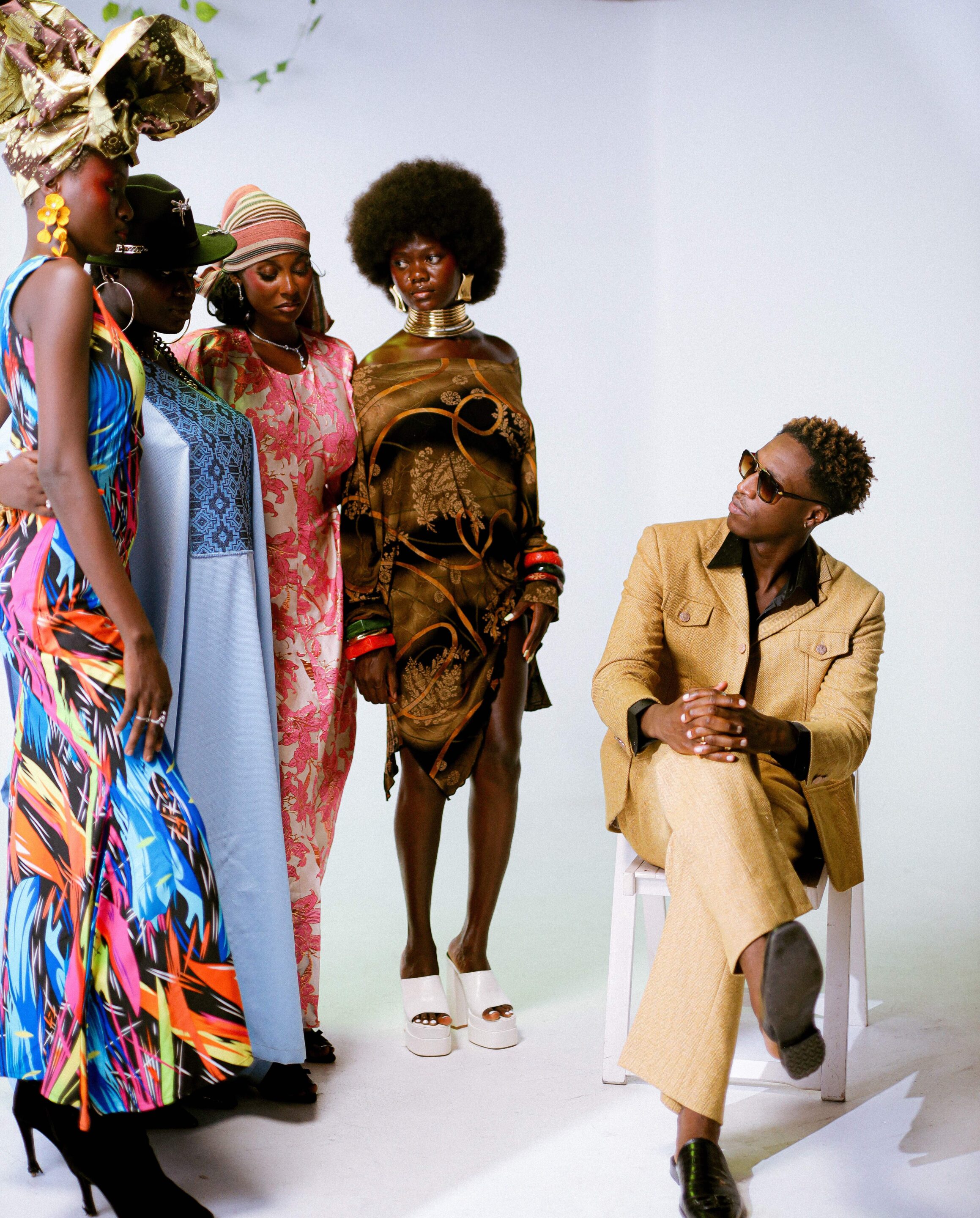
But what makes his rise especially interesting is that his ambition does not feel detached from responsibility. OSHAMO speaks about Fuji not as a stylistic reference point, but as a lineage. A starting point. A sound that deserves to remain visible and evolving, especially for younger artists who may know its influence without fully understanding its source. In his hands, rhythm is not only aesthetic. It is inheritance.
That idea runs through his entire project. Raised on music by Fela Kuti, Wasiu Ayinde, and other artists whose work spoke directly to struggle, survival, and social awareness, OSHAMO grew up understanding music as something that could carry both joy and direction. After moving to the UK at 16, he began shaping that foundation into something more globally fluid—bridging Yoruba, English, and Arabic in his writing, building an audience online, and eventually breaking through with tracks like “Why You Lying” and “Life of the Party.”
Now, with “Shina Rampe” and a larger vision unfolding around him, OSHAMO seems less interested in fitting into an existing lane than in widening one.
For Mundane Magazine, OSHAMO talks about honoring Fuji while building his own legacy, the difference between Lagos and London, what rhythm means spiritually, how he handles success, and why the ultimate goal is bigger than personal visibility.
“Shina Rampe” feels both nostalgic and urgent at the same time. When you step into that Fuji bounce, are you thinking more about honoring the past or redefining it for Gen-Z — and where do you personally sit between those two worlds?
I’m doing both actually, but I’m more driven toward setting my own legacy in a way where the kids coming after us also have a sound to sample or interpolate, so it is not now a case of sampling an already sampled track. So literally a world of mine, but definitely piggybacking off the greats.
You were raised in Lagos surrounded by Fuji pioneers and Afrobeat legends like Fela Kuti, then relocated to London at 16. How did that physical shift — from Lagos to London — reshape your relationship with heritage and ambition?
Most of my music is highly inspired by my upbringing in Lagos, but I’ll say for the marketing part on social apps, living in London has made me realize how to market my sound in a way that interests the Western world.
Before its official release, “Shina Rampe” had already exploded on TikTok. How intentional are you about digital culture when you’re creating — or does that viral energy happen naturally because the music already carries that communal spirit?
Once we have a direction, I always find a way to bring my identity into the track, maybe from delivery or production-wise. So I’ll say it was quite intentional.
There’s a strong sense of rhythm as inheritance in your work. When you say rhythm is inheritance and momentum is a mindset, what does that mean to you on a spiritual and practical level?
On a practical level, I would say that my sense of rhythm was largely inherited from my experiences attending church frequently and singing a lot of gospel music with my mom. Regarding momentum, no matter what craft you pursue, you must first make a firm decision and focus all your attention on what you can do to ensure the success of your business. By doing this, you’ll begin to see growth, which starts with the commitment you made to your initial goals.
From “Why You Lying” catching Mr Eazi’s attention to signing with emPawa Africa, that breakthrough period changed everything. What did that time teach you about timing, belief, and being ready when opportunity knocks?
It taught me to keep working regardless of the support I get at the moment. You never know who is watching, and as long as the quality of my work remains good, they’ll come knocking someday because God’s time is the best.
Fuji music has always carried themes of survival, perseverance, and social awareness. In 2026, what do you feel is your responsibility as a young artist representing that lineage globally?
My responsibility remains bringing a spotlight to the sound that started it all, Fuji, and letting the new Gen-Z artists know it’s also a distinct genre to tap into.


Your sound bridges Yoruba, English, and even Arabic culturally and sonically. Is multilingualism a creative choice, a reflection of identity, or a strategy to connect beyond borders?
I believe it’s a combination of various factors. Based on my upbringing, I frequently speak Yoruba and English. Additionally, I attended Arabic school for about five or six years. So moving to a Western country and a multicultural environment that understands all of these, it felt easier to sing and connect by just playing around with all three of the languages.
Performing sold-out headline shows in London and opening at the Royal Albert Hall are major milestones. On stage, who are you — Idris, OSHAMO, or a fusion of both?
That’s a lovely question. As I’ve mentioned in many interviews, I believe I have an alter ego named OSHAMO. I don’t know how he does it, but I am 100 percent a shy boy before going on stage. Haha.
With over 25 million streams and recognition from platforms like Spotify RADAR and Shazam Fast Forward, the industry is clearly watching. How do you protect authenticity while stepping into bigger rooms and wider audiences?
By being myself, an unapologetic Nigerian Yoruba boy who embraces my language and culture.
Looking ahead, as someone redefining Fuji-inspired global music, what would success mean to you five years from now — cultural impact, global stages, ownership, legacy, or something else entirely?
In five years, I envision myself touring the world with my band, performing in places where our sound hasn’t yet reached and building a larger fanbase there. This will help pave the way for the next wave of Nigerian artists to benefit from our journey.
What makes OSHAMO stand out is not simply that he understands where music is going. It is that he understands where it came from, and refuses to sacrifice one for the other. “Shina Rampe” works because it does not treat heritage like a museum object or a branding device. It treats it like living rhythm—something that can still move, still mutate, still pull a crowd together in real time.
That is what gives the track its duality. It sounds nostalgic because its DNA is rooted in history. It sounds urgent because OSHAMO is not interested in reenactment. He is trying to create a version of the future that younger artists can inherit in turn.
And maybe that is the larger point of his rise right now. Not just personal success, not just another viral moment, but a widening of the frame. A reminder that global music becomes most powerful not when it smooths itself out for wider consumption, but when it carries its local truth with enough force that the world has to move to it.
On “Shina Rampe,” OSHAMO does exactly that. He doesn’t just enter the conversation.
He accelerates it.