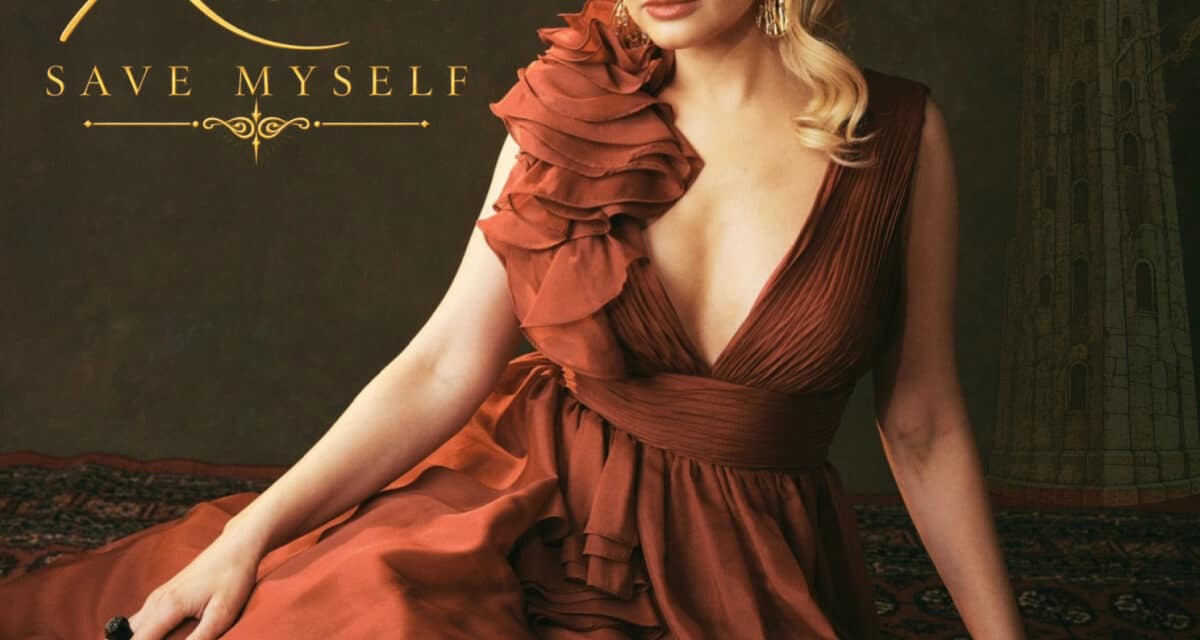
On “Save Myself,” the Hungarian-born artist turns heartbreak into self-reliance as she begins again in Nashville — carrying a career, several countries and more than one version of herself into the next chapter.
There is a familiar story we are taught almost from childhood.
Someone is trapped. Someone else arrives. The tower opens, the danger passes, and salvation comes from outside.
On “Save Myself,” RAMI decides to rewrite the ending.
“I think at some point in our lives, we all want someone to help us or save us,” she says. “Maybe because it feels easier, or simply because as human beings we naturally look for support.”
But eventually, waiting becomes its own kind of trap.
“The real power is already inside you.”
For the Hungarian-born artist, “Save Myself” is more than a song about surviving a difficult period. It arrives as RAMI begins another reinvention of her own: relocating to Nashville and effectively becoming both an established artist and a newcomer at the same time.
She has already lived several musical lives. She began her professional career at 17, later signed with mTon, Warner Music’s Hungarian subsidiary, studied and created music in Italy, interpreted songs including “Caruso” and the iconic Hungarian ballad “Gloomy Sunday,” and collaborated internationally.
Now Nashville represents another beginning.
And perhaps fittingly, the song introducing that beginning is about realizing nobody else can begin it for you.
Nobody Is Coming to the Tower
“Save Myself” emerged from a period in which difficulties seemed to arrive simultaneously.
“I think we all reach that point at least once in our lives, when a lot of difficult things happen at the same time and you just feel lost,” RAMI says.
Eventually, something shifted.
“I reached a point where I simply had enough of being sad and feeling stuck.”
There is no suggestion that reaching that realization magically erased what came before it. Instead, the song is interested in the moment when exhaustion with remaining still becomes stronger than the fear of moving forward.
“When you reach that point, there is really only one way to go — forward.”
That is where RAMI’s fairytale begins to change.
In the chorus, she places herself inside an archetypal tower, seemingly waiting for the person who will arrive and make everything right. Then comes the reversal: she was the prince all along.
It’s a simple image carrying a much larger realization.
“I believe we are much stronger than we sometimes realize,” she explains. “The idea behind the song is that you can be the person who saves yourself.”
That doesn’t mean refusing help.
RAMI is careful to distinguish self-reliance from isolation. Friends, family, mentors and other sources of support remain important. What changes is the assumption that another person holds the ultimate responsibility for getting you out.
Support can help you find the door.
You still have to walk through it.
Starting Again Without Pretending It Didn’t Hurt
Self-empowerment songs can sometimes flatten pain into a neat before-and-after story: something terrible happened, strength was discovered, everything became better.
RAMI isn’t interested in pretending transformation works quite that cleanly.
“You can go through something painful without pretending it wasn’t painful, but still decide that it is not going to define you forever.”
That distinction is at the heart of “Save Myself.”
Its optimism isn’t built upon denying the circumstances that necessitated the song. Instead, RAMI sees the experience itself as part of what makes rebuilding possible.
“Every experience makes us stronger and wiser. I think that is part of the journey of life.”
The important word is rebuilding.
Not returning.
Because after certain experiences, returning to exactly who you were before may be neither possible nor desirable.
“You are capable of starting again, rebuilding yourself, and saving yourself.”
It is a philosophy that suddenly feels even more relevant when considering where RAMI is standing now.
Nashville, From the Beginning
Moving to Nashville means RAMI is experiencing an unusual contradiction.
She knows what it feels like to have a professional career in music. She has released records, appeared on television, heard herself on radio and music television, shot videos, given interviews and experienced the machinery surrounding a young pop career.
And now she’s new again.
“Both are really good feelings for me,” she says.
Rather than distancing herself from her earlier career, RAMI speaks about it with affection.
“I’m very proud of my past and of that chapter of my life when I was discovered as a young pop singer.”
But pride in the past doesn’t require remaining inside it.
“This whole journey in Nashville feels like a new beginning.”
There is something almost poetic about launching that new beginning with a song about self-rescue. Relocating doesn’t merely change the setting around an artist; it removes familiar structures and asks what remains when the environment does not already know who you are.
For RAMI, that uncertainty feels less intimidating than energizing.
“It is a new challenge in my life, but every new challenge also comes with a new opportunity.”
She talks about Nashville almost as if arriving there was less a strategic decision than something she was being pulled toward.
“In a way, I believe fate brought me to Nashville.”
Now she wants to find out why.
The Artist You Carry Across Borders
Nashville isn’t the first place RAMI has had to reconstruct her artistic identity.
Born in Hungary, she later pursued music in Rome and Milan, developing her craft while moving between languages, cultures and musical environments.
Rather than fragmenting her identity, those movements have accumulated.
“Every city, every culture, every language and every person you meet adds another layer to who you are.”
For an artist, those layers inevitably enter the music.
“The more places I have lived in and the more cultures I have experienced, the richer I feel as a person and as an artist.”
Interestingly, distance has also made RAMI more conscious of what she carries from Hungary.
“When you live far away from your family I think you become more aware of where you come from.”
Home becomes more complicated when you’ve built a life in several places.
“When you build a new home somewhere else — or in a way, have more than one place that feels like home — you become more emotional about those connections.”
RAMI doesn’t feel compelled to resolve those identities into a single geography.
“Hungary, Italy and now Nashville are all part of me.”
Rather than asking which one represents the “real” RAMI, her music increasingly allows all of them to coexist.

Feeling Before Technique
That emotional continuity also connects “Save Myself” to the music RAMI has interpreted throughout her career.
Her performances of songs like “Caruso” and “Gloomy Sunday” may belong to different traditions and carry stories she did not originally write, but RAMI doesn’t approach interpretation as fundamentally separate from songwriting.
“Whether you are singing a cover or your own song, there is actually less difference than people might think, because ultimately it is all about feeling.”
Ballads have always made particular sense to her.
“I have always loved singing ballads because I am a very emotional person.”
For RAMI, vocal performance begins with understanding what emotion needs to travel through the song rather than simply reproducing its notes.
“When I sing a song, I have to connect with it emotionally and understand what I want to communicate through it.”
“Save Myself” intensifies that relationship because this time the story belongs explicitly to her.
“The message is very personal to me, and it is exactly the message I wanted to share at this point in my life.”
That personal connection also explains why the song places so much emphasis on voice, narrative and emotional clarity.
“There is vulnerability in that, of course, because you are putting a very personal emotion into the music,” she says. “But I also think that vulnerability is what allows people to connect with the song.”
Established and Unknown
There is a strange freedom in becoming a beginner again.
RAMI has already experienced the excitement of being discovered. She remembers the interviews, television appearances, radio play, videos and photo shoots. She knows what external momentum feels like.
But Nashville gives her the opportunity to ask a different question:
What happens when experience remains, but expectations reset?
Her answer, at least for now, is excitement.
“I really feel that I’m in the right place.”
That confidence doesn’t seem to come from knowing exactly what happens next. Quite the opposite.
The central transformation behind “Save Myself” appears to be RAMI’s willingness to move without waiting for certainty, permission or rescue.
“I just feel ready.”
After a career that has already moved through Hungary and Italy before arriving in Tennessee, readiness may matter more than having a perfect map.
“At this point, I’m not waiting for permission. I’m just allowing myself to move forward, enjoy the journey, and see where this new chapter takes me.”
There is a subtle but important difference between those two approaches to life.
Waiting asks the future to arrive and change you.
Moving forward means meeting it yourself.
For RAMI, the tower is still part of the story. So are the sadness, confusion and moments when everything appeared to be collapsing.
She simply no longer expects a prince to come.
She already found one.
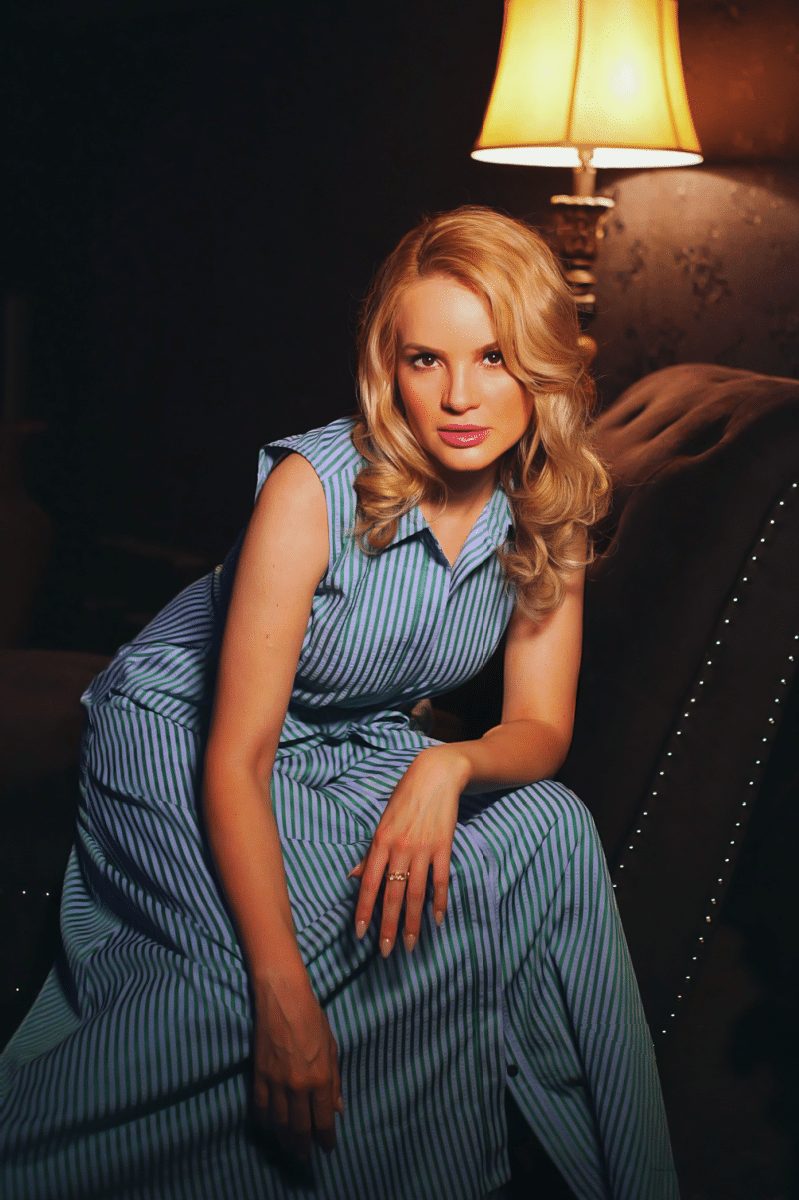
In Conversation with RAMI
What happened in your own life that made you realize you had to become the person you were waiting for?
I think we all reach that point at least once in our lives, when a lot of difficult things happen at the same time and you just feel lost. I reached a point where I simply had enough of being sad and feeling stuck.
And I think when you reach that point, there is really only one way to go — forward. That is when you start realizing how strong you actually are, and that you are capable of getting yourself out of a difficult situation, no matter what kind of situation we are talking about.
Why was it important to use such a familiar fairytale image to challenge the idea that happiness or salvation needs to come from another person?
I think at some point in our lives, we all want someone to help us or save us. Maybe because it feels easier, or simply because as human beings we naturally look for support. That is why people turn to friends, family, life coaches, or anyone who can help guide them through a difficult period.
But at the end of the day, the real power is already inside you. Of course, support is important, but I believe we are much stronger than we sometimes realize. The idea behind the song is that you can be the person who saves yourself.
How do you create an uplifting resolution without rewriting how painful that experience actually was?
Every experience makes us stronger and wiser. I think that is part of the journey of life.
The song is uplifting because both the lyrics and the melody carry the message that you can rebuild yourself as many times as you need to. You can go through something painful without pretending it wasn’t painful, but still decide that it is not going to define you forever.
You are capable of starting again, rebuilding yourself, and saving yourself.
Does the idea of self-rescue take on another meaning when you’re simultaneously starting over creatively in a new city and music community?
Absolutely. It is a new challenge in my life, but every new challenge also comes with a new opportunity.
Being in Nashville is very exciting for me. I really love the city and the musical energy here. In a way, I believe fate brought me to Nashville, and that feeling gives me a lot of motivation to keep moving forward and see where this new chapter takes me.
How has repeatedly entering new cultures and musical environments changed your understanding of who RAMI is as an artist?
Every chapter of your life gives you something. Every city, every culture, every language and every person you meet adds another layer to who you are.
The more places I have lived in and the more cultures I have experienced, the richer I feel as a person and as an artist. All of those experiences become part of you, and naturally they also become part of the way you express yourself through music.
What have you learned from interpreting songs like “Caruso” and “Gloomy Sunday” that you now bring into telling your own personal stories?
For me, whether you are singing a cover or your own song, there is actually less difference than people might think, because ultimately it is all about feeling.
I have always loved singing ballads because I am a very emotional person. When I sing a song, I have to connect with it emotionally and understand what I want to communicate through it.
With “Save Myself,” the difference is that the message is very personal to me, and it is exactly the message I wanted to share at this point in my life.
Did stripping the focus back to voice, emotion and narrative feel exposing in a different way?
“Save Myself” is a very important song for me, and I think the strength of the song comes from its message.
For me, the focus is really on the emotion and on communicating that message clearly: that you are strong enough, capable enough, intelligent enough and worthy enough to move forward and rebuild yourself.
There is vulnerability in that, of course, because you are putting a very personal emotion into the music, but I also think that vulnerability is what allows people to connect with the song.
What parts of your Hungarian identity become stronger when you’re creating abroad?
When you live far away from your family I think you become more aware of where you come from.
When you build a new home somewhere else — or in a way, have more than one place that feels like home — you become more emotional about those connections. For me, being abroad has actually made my connection to Hungary stronger in certain ways.
At the same time, I don’t feel like I have to choose between my different experiences. Hungary, Italy and now Nashville are all part of me, and they all influence who I am as a person and as an artist.
What does it feel like to be simultaneously an established artist and a newcomer again?
Both are really good feelings for me. I’m very proud of my past and of that chapter of my life when I was discovered as a young pop singer.
It was such an exciting time. I was giving interviews, appearing on television, hearing my music on the radio and music TV, shooting music videos and doing photo shoots. I’m very proud of everything I experienced during that period.
At the same time, I’m very excited about my future. This whole journey in Nashville feels like a new beginning, and I really feel that I’m in the right place. Nashville is such a special city for music, and I honestly feel like there is no better place for me to be right now.
As you begin this Nashville chapter, what are you finally allowing yourself to pursue now that you’ve stopped waiting for someone else to give you permission — or come to the rescue?
I just feel ready. I feel excited, happy, and very grateful for where I am in my life right now.
I’m especially excited about the “Save Myself” project, and it means so much to me to see people listening to the song and connecting with the message behind it.
At this point, I’m not waiting for permission. I’m just allowing myself to move forward, enjoy the journey, and see where this new chapter takes me. I am very happy.