There are moments when life changes so suddenly that the person you were just weeks earlier begins to feel like a stranger.
Relationships end. People disappear. Familiar places become impossible to inhabit. And the routines that once gave life its structure dissolve almost overnight.
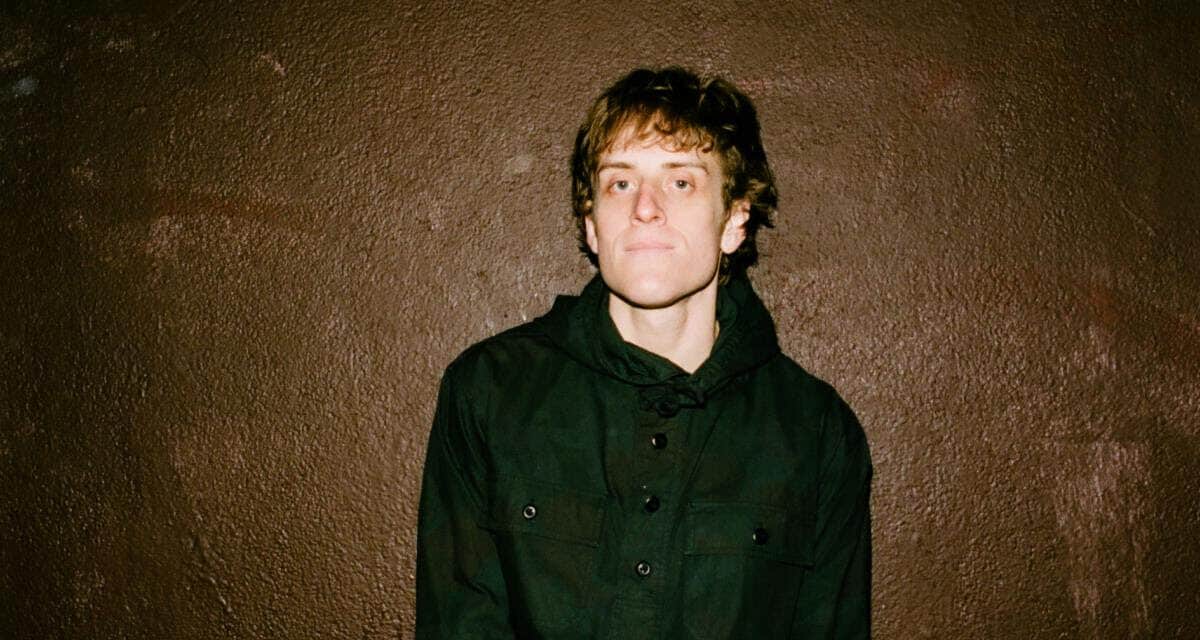
For Brooklyn-based singer-songwriter Renny Conti, several of those experiences arrived within the same devastating period.
After losing his brother, going through a significant breakup, and leaving his New York apartment, Conti found himself navigating a period of instability that stretched across much of 2024. He moved between couches and temporary sublets, searching for a sense of permanence while the emotional consequences of those changes continued to unfold.
The experience would eventually become the foundation of Split Second, his second album, released September 25 via Mom + Pop.
But unlike the familiar narrative of an artist transforming personal tragedy into catharsis, Conti is reluctant to suggest that songwriting provided him with clarity.
“Making this record felt more like a document or a report of the feelings I was having as I wrote the songs, not necessarily like a way to understand it.”
It’s an important distinction.
Rather than attempting to explain what happened, Split Second preserves the emotional atmosphere of a period when explanations were difficult to find.
And in doing so, Conti has created a record that feels less concerned with overcoming the past than understanding how it continues to exist within us.
When Music Becomes a Record of Survival
Conti’s relationship with music began long before he established himself as a solo artist.
Growing up around San Francisco with parents who worked as actors while maintaining other jobs, he witnessed the realities of creative life from an early age.
As a teenager, music became a way to navigate uncertainty and find community.
He began playing with his older brother before moving through metal and punk bands with friends. Later, while studying film, he started making music independently, gradually developing the folk-influenced indie songwriting that would define his early solo work.
His self-titled debut, recorded in 2023 and released in 2025, brought together songs written across different periods of his life and introduced his melodic instincts and understated storytelling to a wider audience.
But Split Second emerged from a more concentrated period of upheaval.
Its songs began taking shape while Conti was still experiencing the instability that inspired them.
“I actually wrote a lot of the record while I was in that period,” he explains.
For him, songwriting isn’t necessarily a therapeutic exercise that transforms confusion into understanding.
Instead, it functions more like an investigation.
“Music can bring me closer to my inner world, but not all the way into understanding.”
That perspective gives Split Second much of its emotional complexity.
The songs don’t insist that difficult experiences must eventually reveal some larger meaning.
Sometimes they simply document what it feels like to live through them.
“Leaving The Zoo” and the Mystery of What Comes Next
Perhaps nowhere is that philosophy more apparent than on “Leaving The Zoo.”
The song began with the convergence of grief, a relationship ending, and Conti’s decision to leave New York.
But as it developed, its focus expanded beyond autobiography into something more existential.
Conti began imagining what it might feel like to exist at the threshold between life and death.
The arrangement mirrors that uncertainty.
What begins in a murky, intimate atmosphere gradually becomes overwhelming, with explosive guitar passages, strings, distortion, and increasingly spectral vocals.
Rather than simply accompanying the lyrics, the instrumentation becomes its own form of storytelling.
“Music is so cool because it can communicate emotions, images, feelings, dreams, atmospheres, etc. so accurately, all without words.”
For Conti, words can sometimes limit what he’s trying to communicate.
Sound offers a different possibility: the ability to suggest experiences that cannot be fully understood or described.
“In Leaving the Zoo I was just using music as a medium of communication, my best guess at what it feels like to die.”
Yet he resists interpreting the song as an expression of losing control.
“Do we lose control when we die? I like to think we might actually gain control, at least in some way.”
It’s a striking possibility, particularly within a record shaped by experiences that seemed to arrive without warning.
Instead of presenting death solely as disappearance or surrender, Conti leaves room for mystery.
The song doesn’t offer certainty.
It allows the unknown to remain unknown.
The People Who Make Us Who We Are
At the emotional center of Split Second is Conti’s relationship with his older brother.
Music was something they discovered together, a shared language that helped shape Conti’s earliest understanding of creativity and belonging.
As his brother struggled with addiction, their musical paths diverged.
Following his brother’s death, Conti found himself continuing with the very thing that had once connected them.
Several songs on Split Second emerged after that loss, exploring not only the experience of death but also the complicated difference between losing somebody physically and experiencing their absence while they’re still alive.
It’s a distinction that resists simple emotional resolution.
And it gives the album’s reflections on memory and identity particular weight.
Conti has described his brother’s influence as something resembling a passing of the torch.
The music they once shared became part of what allowed him to continue.
In that sense, Split Second isn’t simply an album about loss.
It’s also about inheritance: the ways people shape us, the habits and passions they leave behind, and the parts of their identities that continue through our own lives.
Finding Beauty Between Intimacy and Distortion
Musically, Split Second moves between delicate acoustic arrangements and moments of considerable intensity.
Working with co-producer Adrian Olsen in Los Angeles, Conti developed a layered sound that incorporates orchestration, electric guitars, and distortion without abandoning the conversational quality of his songwriting.
Those heavier moments also reconnect with his musical beginnings in punk and metal.
But Conti doesn’t necessarily see them as symbolic representations of past experiences.
Instead, they reflect his current listening habits, his renewed interest in electric guitar, and the process of developing songs through live performance before recording them.
“Distortion and big guitars definitely are able to communicate things that acoustic guitar can’t necessarily, at least in my experience, and vice versa.”
That instinctive approach is central to his creative philosophy.
Although Split Second was made with a greater awareness that people would hear it, Conti deliberately avoided allowing an imagined audience to influence the writing process.
“Music has to be just an instinctual thing. Micro-decisions, collaboration, being present.”
The result is a record that moves naturally between restraint and emotional intensity.
Rather than forcing every song into the same sonic identity, Conti allows different arrangements to communicate different emotional textures.
The Strange Geography of Home
California and New York recur throughout Split Second, reflecting the places and different periods of life that have shaped Conti’s identity.
But the album also questions whether home can ever be reduced to a geographical location.
After moving between cities and temporary living arrangements, Conti has developed a more flexible understanding of belonging.
“Home does get redefined as I move through my life.”
For him, that definition increasingly involves people, familiar smells, food, and small sensory details rather than a fixed address.
A particular atmosphere might bring back memories of California.
A new experience might transform the way he understands New York.
And returning to a familiar place doesn’t necessarily mean returning to an earlier version of himself.
The past remains present, but it doesn’t have to determine what comes next.
That tension between memory and movement gives Split Second its underlying sense of possibility.
Even when the songs revisit painful experiences, they remain connected to the idea that life continues changing.
Making Peace With Not Having the Answers
By the end of Split Second, Conti hasn’t necessarily resolved the experiences that inspired it.
Nor does he claim to have discovered a definitive understanding of who he’s becoming.
Instead, he sees the record as an opportunity to express something that had been building within him.
“I feel I’ve gotten a lot out of my system with this record.”
That release has created space for a different kind of curiosity.
He wants to experiment with new sounds, tones, and themes, allowing his music to evolve without needing to predict its destination.
It’s a fitting perspective for an album built around the realization that life can change almost instantaneously.
The people we love shape us.
The places we inhabit leave their marks.
And the experiences we survive become part of our identities, even when we can’t fully explain what they mean.
Perhaps Split Second is ultimately less about discovering why everything happened than acknowledging that it did.
And recognizing that somewhere between the people we’ve been and the people we’re becoming, there is still music to make.
In Conversation With Renny Conti
Split Second emerged after an extraordinary period in which you experienced a breakup, lost your brother, left New York and spent much of 2024 moving between couches and sublets. When life eventually became quieter, did songwriting allow you to understand that period differently than you understood it while you were actually surviving it?
I actually wrote a lot of the record while I was in that period. I don’t think songwriting helped me understand that period, but I think it prompted me at least a little bit to begin some reflection of that period. In my experience, music can bring me closer to my inner world, but not all the way into understanding. For me, making albums and writing songs is mostly just an outward pouring of whatever is going on inside, or like an investigation or something. After it’s all been poured out, I don’t feel there is so much more to do with it. Making this record felt more like a document or a report of the feelings I was having as I wrote the songs, not necessarily like a way to understand it.
“Leaving The Zoo” began with several events colliding—grief, the end of a relationship and your decision to leave New York—but evolved into an imagined experience of standing between life and death. Why did you need to move beyond autobiography and enter that more existential territory?
Music is so cool because it can communicate emotions, images, feelings, dreams, atmospheres, etc. so accurately, all without words. For me, very often I get lost with words. In Leaving the Zoo I was just using music as a medium of communication, my best guess at what it feels like to die.
The arrangement of “Leaving The Zoo” becomes increasingly overwhelming, with volcanic guitar breaks, ghostly vocals, strings and distortion eventually overtaking you. Were you trying to make the production itself feel like losing control and stepping into the unknown?
Stepping into the unknown, yes. Losing control, not necessarily, because I think it’s impossible for me (or anyone) to say. Do we lose control when we die? I like to think we might actually gain control, at least in some way …..
Your self-titled record gathered songs from different periods of your life, whereas Split Second was the first time you were writing with an awareness that people might actually hear the result. Did having an audience in mind make you more guarded—or did it force you to become more intentional about what you wanted to reveal?
Neither – it has made me excited to share the music and to play shows, but I always make sure not to think about the audience when I’m writing and recording music. Music has to be just an instinctual thing. Micro-decisions, collaboration, being present.
The record moves between acoustic intimacy, orchestration and waves of distortion that reconnect with your early history playing in metal and punk bands. Do those heavier sounds now function almost like emotional memories, appearing when gentler songwriting isn’t enough to communicate what you’re feeling?
The heavier moments were inspired by what I’ve been listening to now. I’ve just been playing a lot more electric guitar these days and we tested a lot of the songs out live before recording, so those arrangements made it in there. Distortion and big guitars definitely are able to communicate things that acoustic guitar can’t necessarily, at least in my experience, and vice versa.
California and New York repeatedly appear throughout Split Second, almost as characters within your personal history. When a place contains several different versions of yourself, can returning there ever really feel like going home—or are you inevitably encountering someone you no longer are?
For me, it does feel like going home, but yeah, a kind of home. The past self has nothing to do with it I don’t think. Cliche, but home does get redefined as I move through my life. My home right now is very different than it was 2 years ago, and a lot of the time it doesn’t have to do with place necessarily, but more so people, or smells, sights, food, and stuff like that.
You’ve said this album gets “at the root of who I am, of the me I no longer am.” After making a record about the people, losses, places and previous selves that explain why you are who you are now, did finishing Split Second give you any clearer sense of who you’re becoming next?
I’m definitely excited to experiment more with different kinds of music, different tones and themes. I feel I’ve gotten a lot out of my system with this record. Not sure who I am becoming, but I’m excited to have a lot of fun playing all kinds of music in the coming years.
Renny Conti’s Split Second is out now via Mom + Pop. Listen to “Leaving The Zoo”.
Photo credit: Gabe Long.