On their debut album, the Nashville singer-songwriter and visual artist reframes coming of age through folk intimacy, alternative textures, playful pop, gender exploration, first love, and the contradictions of becoming yourself.
Growing up rarely feels as graceful as people remember it.
In hindsight, adolescence gets edited into milestones: first crushes, first heartbreaks, first acts of independence, first discoveries about who you might become. From inside the experience, however, it tends to feel much less coherent.
You can be completely certain that you are destined for greatness at breakfast and convinced you are worthless by dinner.
You want independence until independence becomes frightening.
You question everything you were taught while simultaneously wanting the familiarity of believing it.
You can desperately want to be understood and equally desperately want everyone to leave you alone.
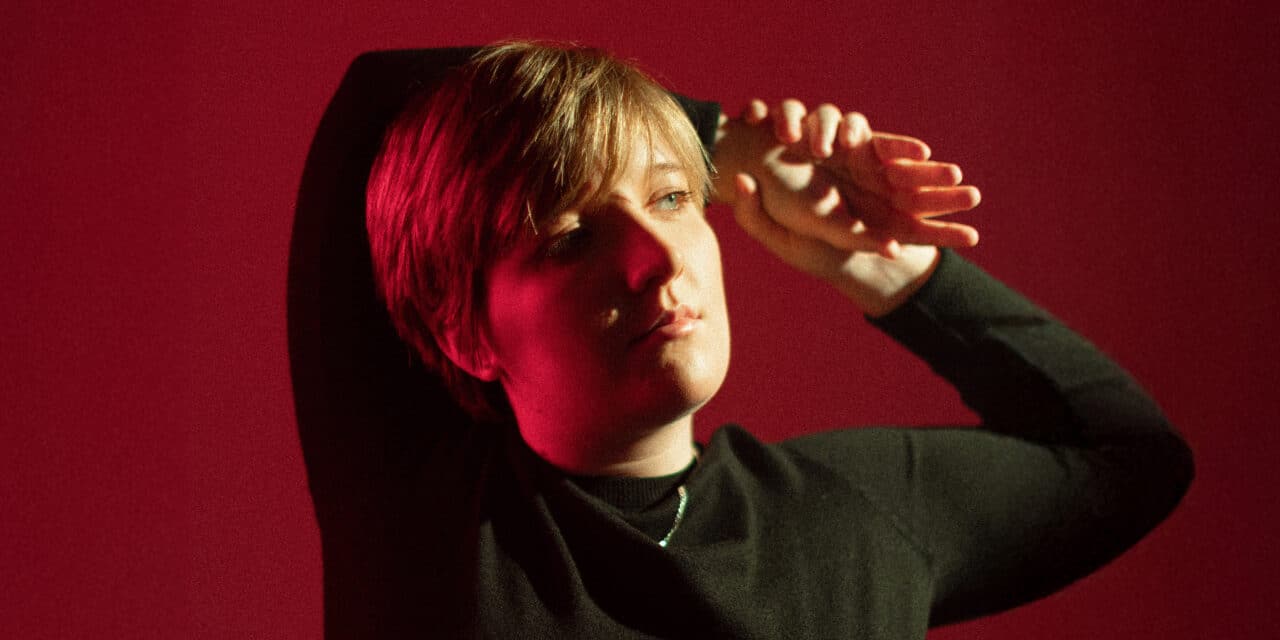
That contradiction is the emotional territory of Joan of Snark, the debut album from Nashville singer-songwriter and visual artist Winston Liv.
“It’s about growing up and simultaneously thinking you’re destined for greatness and also thinking you’re worthless,” Liv explains.
Even the title contains that collision.
Joan of Arc becomes Joan of Snark—martyrdom interrupted by a joke.
At first, Liv admits, the phrase simply sounded amusing.
“Honestly at first, I just thought the title sounded fun with the whole rhyme-scheme,” they say.
But the deeper they considered it, the more Joan became an unexpectedly useful figure for understanding adolescence: a teenager transformed into legend, someone associated with conviction, rebellion against gender expectations, religious experience, political violence, and ultimately dying for what they believed.
“Young people these days may not be going to war and burning at the stake,” Liv says, “but growing up can definitely feel that way.”
Joan of Snark understands that growing up is both profoundly serious and, occasionally, completely ridiculous.
The album refuses to choose between those truths.
Saving the confusion instead of rewriting it
Many of the songs on Joan of Snark began when Liv was still in high school.
That matters.
Rather than revisiting adolescence years later and translating it through adult wisdom, Liv is releasing work that retains traces of the person who was actually experiencing those emotions.
The result is less nostalgia than preservation.
“Growing up is full of contradictions,” Liv says.
Finding yourself requires experimentation, which means making mistakes. It means discovering that some convictions deserve to be held firmly while other situations contain multiple truths at once.
Within Joan of Snark, that uncertainty manifests as a recurring tension between autonomy and security.
You want to leave.
You want someone to tell you everything will be okay.
You want to define yourself.
You also want somewhere familiar to return to.
“There’s a fear of the unknown within the album and a conflict of wanting independence but also wanting security,” Liv explains.
Those feelings can become nostalgic later precisely because they once felt so overwhelming.
Rather than clean them up, Joan of Snark lets them remain contradictory.
From poetry to pop songs
Liv’s relationship with songwriting began through words rather than music.
They started writing poetry in seventh grade. Around the same period, joining their middle-school choir and learning ukulele created a bridge between language and melody.
Poems became lyrics.
Lyrics became songs.
The process suited someone who had already spent years fascinated by the possibilities of the voice.
“I’ve always liked mimicking sounds, pitches, and voices and trying to match them the best I can,” Liv says.
Music also developed alongside another creative language.
Liv graduated college with a degree in animation and works as a visual artist in addition to writing and performing music.
The two practices seem connected by an instinct for character, imagery, and transformation.
Even getting into a college songwriting class required a small act of persistence.
The course was technically limited to music majors. Encouraged by their father, Liv sent the professor a demo of “Sugar Baby.”
The professor let them enroll.
It was in that class that another song, “Muse,” emerged from an assignment.
The source material went back much further.
Turning a childhood crush into “Muse”
In seventh grade, Liv changed schools and encountered someone in science class who immediately became the object of an enormous crush.
The feeling lasted until high-school graduation.
Liv drew this person in sketchbooks.
Doodled them on class notes.
Wrote poetry about them.
Looking back, Liv does not treat the experience as some tragic lost romance.
“I just see a kid with a crush who was finding outlets for these big feelings they were having.”
That generosity toward their younger self shapes “Muse.”
The song deals with unrequited affection, but the music refuses to wallow.
Liv deliberately gravitates toward songs where sonic mood and lyrical content pull in different directions, citing Outkast’s “Hey Ya!,” Paramore’s “Rose-Colored Boy,” and Foster the People’s “Pumped Up Kicks” as examples.
“It’s such a fun form of subversion that can be done in music,” Liv says.
“Muse” participates in that tradition.
The crush may never have become anything, but that does not make the experience meaningless.
Liv describes it as a “no hard feelings” song.
“It was a school crush and it was fun, even if it never came to anything.”
Sometimes growing up means learning that not every emotionally significant relationship needs to become a successful one.
Some people become stories.
Some become songs.
When instinct writes the whole thing
“Sugar Baby,” meanwhile, illustrates another side of Liv’s process.
Some songs arrive slowly.
Others practically write themselves.
“With ‘Sugar Baby,’ for example, it all just came out at once,” Liv says. It was one of the relatively few songs they completed in a single sitting.
Liv distinguishes those instinctive songs from compositions that may take months or even years to finish.
With the latter, the central concept already exists; the craft lies in discovering how to fully articulate it.
That coexistence between instinct and patience mirrors the album’s broader aesthetic.
Liv originally writes on ukulele, meaning songs can begin in a relatively stripped-down singer-songwriter form.
The larger sonic identity arrives afterward.
“I think what genres came out were just what was natural for me and what I would predominantly listen to,” they say.
Producer Mike Waldron became essential in translating the sounds Liv could imagine internally into the finished record.
“I had the ideas of what I wanted in my head, like I could hear them, but I wasn’t able to get it out and sound how I wanted,” Liv explains.
Waldron helped bridge that distance while keeping the result specific to Liv.
That collaboration allows folk songwriting, alternative instrumentation, and pop melody to coexist without sounding like competing identities.
“Werewolf” and becoming visible to yourself
Perhaps no song captures Joan of Snark’s relationship with transformation more clearly than “Werewolf.”
The song grew from Liv’s animated senior thesis film, Gévaudan.
But rather than treating the werewolf as a traditional horror figure—a monster defined by ugliness, violence, and losing control—Liv became interested in reversing the metaphor.
What if transformation were liberating?
What if shedding your skin meant finally becoming recognizable to yourself?
“When most people think of werewolves, they think it’s scary, it’s ugly, you’re losing control of yourself,” Liv says. “I wanted to subvert that and show that maybe the werewolf could be about becoming your true self and be a symbol of individual freedom.”
The song was written with gender identity in mind.
Liv wanted something reassuring that they and others could sing when being perceived as someone they are not.
They connect the idea to a line from Lady Bird: “Just because something looks ugly doesn’t mean it’s morally wrong.”
The broader principle matters more than the literal monster.
The way another person looks or chooses to express themselves may violate someone else’s expectations.
That discomfort does not automatically make the expression wrong.
“Being uncomfortable isn’t a crime,” Liv says.
Within an album centered on adolescence, “Werewolf” therefore becomes more than a song about gender.
It is about one of coming-of-age’s defining tasks:
deciding that your body, presentation, identity, and choices ultimately belong to you.
Wanting everybody and nobody
That autonomy remains complicated by another recurring need.
Connection.
Liv recognizes an enduring internal contradiction between independence and intimacy.
“I’ve always had an internal conflict of wanting to be independent and isolated but also wanting to be around others and be comforted,” they say.
The tension remains unresolved.
Liv suspects it may continue appearing in future work.
There is something particularly truthful about refusing to manufacture an answer.
A coming-of-age album does not need to conclude with the artist having successfully come of age.
Some conflicts survive adulthood.
Perhaps maturity means becoming more skilled at holding them.
“You must find a healthy balance,” Liv says, “but this is something I haven’t quite figured out yet.”
That unfinished quality is essential to Joan of Snark.
The record is not written from the mountaintop.
It is written during the climb.
Nashville taught the rules. Liv wants to test them.
Being born and raised in Nashville inevitably places songwriting nearby.
For Liv, that influence was even more immediate.
Their mother is a singer-songwriter, while their father previously worked as an actor and live-show producer.
Music was simultaneously city, household, and inheritance.
“I think it’s a case of both nature and nurture for me when it comes to music,” Liv says.
That environment provided access to the fundamentals of songwriting.
But understanding tradition also created the desire to test its boundaries.
Liv believes artists need some grasp of the building blocks before they can effectively distort them.
Growing up in Music City gave them those foundations without needing to travel far.
What Liv pushes against is not songwriting craft itself, but the tendency to repeatedly circle the same subjects and comparisons.
“You can literally write about anything,” they say, “so why don’t you?”
That question might also function as a miniature manifesto for Joan of Snark.
A first crush can become pop.
Gender identity can become a werewolf.
A medieval martyr can become an album title.
Growing up can become mythology.
Nothing is inherently too strange to become a song.
In Conversation With Winston Liv
MUNDANE: Joan of Snark is such an immediately evocative album title—it takes this almost mythic figure and injects humor and irreverence into it. Where did the title come from, and what does it reveal about the personality of the record?
WINSTON LIV: Honestly at first, I just thought the title sounded fun with the whole rhyme-scheme, but the more I thought about it, the more I realized the title really brought the whole album together.
When I think of Joan of Arc, I think of the legend, the teenager, the breaking of gender norms, the mental illness/religious psychosis, someone who died for what they believed in.
Young people these days may not be going to war and burning at the stake, but growing up can definitely feel that way.
I think what it reveals about the record is the tumultuousness that comes with that transition from child to adult.
MUNDANE: The album brings together reflective folk songwriting, alternative textures, and playful pop melodies. When you were developing your sound, how did you find the point where those different musical instincts could coexist without one becoming dominant?
WINSTON LIV: I would come up with the melodies myself with just a ukulele. I think what genres came out were just what was natural for me and what I would predominantly listen to.
When it came to the final product, I have my producer Mike Waldron to thank for that!
I had the ideas of what I wanted in my head, like I could hear them, but I wasn’t able to get it out and sound how I wanted.
Mike was able to take what I could give him and make it sound the way I heard in my head, all while making it unique to me.
He really is amazing!
MUNDANE: These songs deal with autonomy, obsessive first love, insecurity, and growing up. Coming-of-age records can often become nostalgic in retrospect, but Joan of Snark feels like it wants to preserve the confusion of actually being inside those experiences. Was capturing that uncertainty important to you?
WINSTON LIV: Growing up is full of contradictions.
Which makes sense because you’re trying to find yourself, and that takes trying new things and making mistakes.
While there are choices that need to be made and held firm, there are other conclusions where more than one thing can be true.
There’s a fear of the unknown within the album and a conflict of wanting independence but also wanting security.
I think these feelings of confusion and uncertainty can be nostalgic when looking back on your younger self.
When putting this album together, I felt these songs had a common theme of “coming of age,” so that’s what the overarching story became.
MUNDANE: “Muse” turns unrequited feelings into something surprisingly buoyant. What made you want the music to feel playful against that emotional backdrop, and do you generally find yourself attracted to contrasts between what a song sounds like and what it’s actually saying?
WINSTON LIV: I love songs where the music doesn’t quite match the lyrics.
Some songs that come to mind are “Hey Ya!” by Outkast, “Rose-Colored Boy” by Paramore, “Pumped Up Kicks” by Foster the People.
It’s such a fun form of subversion that can be done in music and I think that can be found in my work quite a bit.
I also wanted “Muse” to be a “no hard feelings” song, because there really aren’t any.
It was a school crush and it was fun, even if it never came to anything.
MUNDANE: “Sugar Baby” has this infectious immediacy that earned it an “Earworm of the Week” nod. When you’re writing a hook, how much is instinct versus craftsmanship? Can you recognize immediately when you’ve landed on a melody that refuses to leave your head?
WINSTON LIV: For me, it really depends on the song.
With “Sugar Baby,” for example, it all just came out at once and was one of the few songs I had written in one sitting.
Some songs I write are just “right there,” so to speak, and those kinds of songs I would say are more instinctive.
Some songs may take me more time and require more craftsmanship and can take me months or even years to finish.
With the songs that take longer, I have the concept, but it just takes longer to flesh it out.
MUNDANE: “Werewolf” is an incredible title for a song on a record concerned with transformation and growing into yourself. What does that metaphor represent within the larger world of the album, and how did you translate that transformation into the sound of the track?
WINSTON LIV: When most people think of werewolves, they think it’s scary, it’s ugly, you’re losing control of yourself.
I wanted to subvert that and show that maybe the werewolf could be about becoming your true self and be a symbol of individual freedom.
I’m reminded of a quote from the movie Lady Bird: “Just because something looks ugly doesn’t mean it’s morally wrong.”
To rephrase, just because what someone looks like or what someone does isn’t conventional or isn’t how you think they should be, doesn’t mean that it’s wrong.
The way someone expresses themselves externally may make you uncomfortable, but being uncomfortable isn’t a crime.
I think “Werewolf” fits right in with the whole of the album because a big part of growing up is forming your identity and practicing your autonomy.
MUNDANE: There’s a tension throughout the project between wanting autonomy and desperately wanting connection. Do you see those as competing impulses in the album, or did writing these songs make you realize that growing up is partly about learning how to hold both at once?
WINSTON LIV: It’s so interesting that you’ve found that within the album and it’s a very astute observation!
I found that I’ve always had an internal conflict of wanting to be independent and isolated but also wanting to be around others and be comforted.
It’s an eternal internal conflict and it definitely shows in this album.
I wouldn’t be surprised if this friction could be found in future albums.
Like many, many things, you must find a healthy balance, but this is something I haven’t quite figured out yet.
MUNDANE: Nashville carries such a powerful songwriting tradition, but your music seems comfortable moving beyond conventional singer-songwriter boundaries. How has being surrounded by Nashville’s writing culture influenced your craft, and where have you deliberately pushed against it?
WINSTON LIV: I’ve always grown up around music, my mother being a singer/songwriter, my dad formerly an actor and producer for live shows, and being born and raised in Nashville.
I think it’s a case of both nature and nurture for me when it comes to music.
I believe in order to “push against” something in any art medium, you must first understand the fundamentals, the building blocks of the art form before you can really get creative and start making your own thing.
Growing up in Music City and within a musical family was an advantage for me because I really didn’t have to travel too far to learn those fundamentals.
I feel like a lot of the same stories and topics are written about and don’t stray too far outside of the box of what comparisons and observations can be made.
You can literally write about anything, so why don’t you?
I think that’s where I push most against the songwriting culture.
MUNDANE: This is your debut album, which means you’re effectively deciding how to introduce Winston Liv through one complete body of work. How did you determine which songs belonged on Joan of Snark, and what makes these particular songs feel like the right first chapter?
WINSTON LIV: I would like to grow and mature with each album, taking on different themes and topics as I do so.
I thought it made the most sense to start with an album that came from a younger me.
I feel like it would be a bit strange for me to at some point be in my 30s releasing songs that are from a teenager’s perspective.
I have so many songs I’ve written throughout the years that I’ve just been sitting on and haven’t released.
It made the most sense to me to start with these songs from a sort of overarching story of personal growth.
MUNDANE: If someone listens to Joan of Snark from beginning to end, what do you hope changes between the person entering the first song and the person leaving the final one? Is there an emotional realization at the center of the record that you hope stays with them?
WINSTON LIV: I would advise people to question their own beliefs on things, deconstruct what they were taught growing up, and come to their own educated conclusions.
Also not to take things, including yourself, too seriously.
I’ve always been so hard on myself and so rigid with the rules and standards I hold for myself, especially so when I was growing up.
It’s okay to let loose and enjoy your youth and you don’t have to do or be anything you don’t want to.
Sometimes growing up isn’t about the destination, it’s about the journey.
Becoming Without Arriving
There is a temptation in coming-of-age stories to make adulthood the reward.
Eventually the uncertainty disappears.
Eventually you know who you are.
Eventually the contradictions resolve.
Joan of Snark is more persuasive because Winston Liv does not seem especially interested in pretending any of that is guaranteed.
“I haven’t quite figured out” the balance between independence and connection, they admit.
That unfinished sentence could sit at the center of the album.
Growing up is not necessarily the process of answering every question adolescence creates.
Sometimes it is simply learning which questions deserve to remain open.
The teenage self who wrote some of these songs may no longer exist in exactly the same form, but Liv does not treat that person as embarrassing evidence to be hidden.
They give them an album.
The crush becomes “Muse.”
The yearning becomes “Sugar Baby.”
Questions of gender and autonomy become the liberated monster at the center of “Werewolf.”
And Joan of Arc—teenager, icon, transgressor, believer—gets transformed into Joan of Snark, because sometimes mythology needs to be punctured before it becomes useful again.
Liv ultimately hopes the record encourages listeners to examine what they inherited.
Question the rules.
Deconstruct old beliefs.
Reach conclusions deliberately rather than simply accepting whatever adulthood hands you.
But there is another lesson sitting beside that seriousness.
Stop being quite so merciless toward yourself.
Enjoy being young while you are young.
You do not need to become someone merely because somebody else expects it.
And you do not need to know exactly where the journey is heading before you begin.
For an artist introducing themselves through a debut album assembled partly from songs written years earlier, that feels like an appropriately open-ended beginning.
Winston Liv does not use Joan of Snark to announce that they have finished growing up.
They use it to preserve the strange, painful, funny person they were becoming along the way.