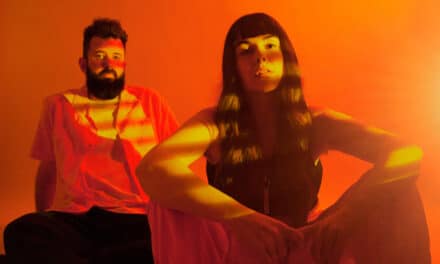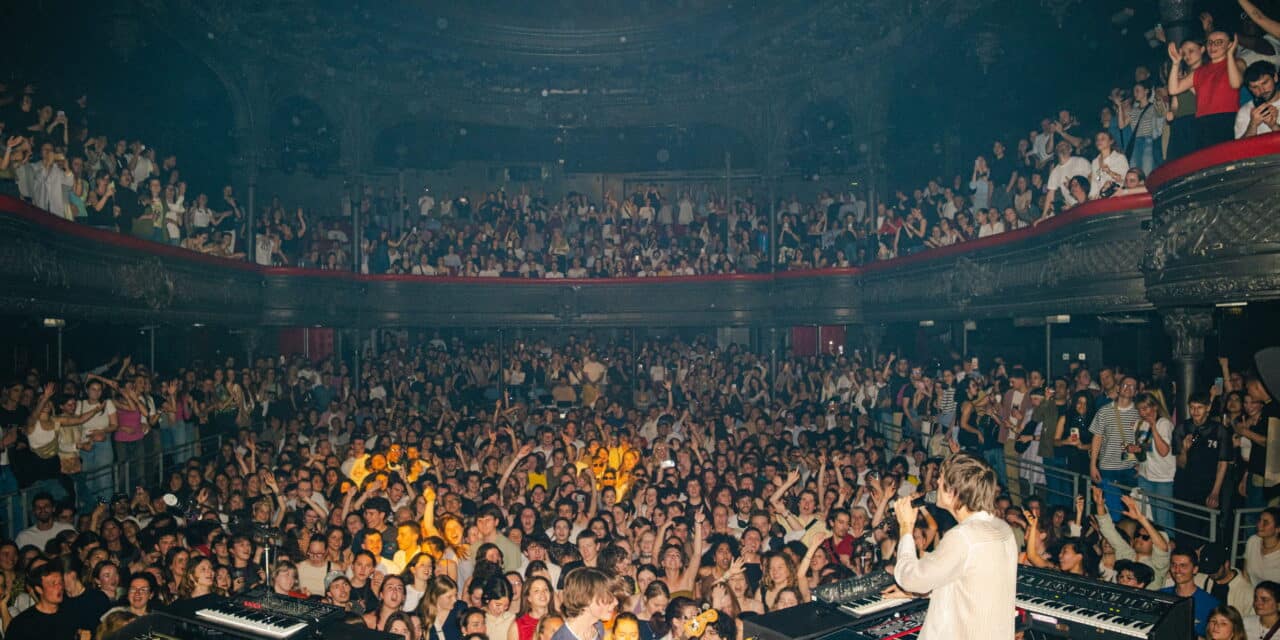
German indie-electro duo Zimmer90 are stepping into their most ambitious chapter yet. After a breakout year that saw their debut album Interior climb to #18 on the German charts and accumulate more than 155 million Spotify streams, the duo have announced their largest European headline run to date: the Arthouse Tour 2026.
The tour will span 29 dates across 16 countries, beginning with a special kickoff show in Barcelona before traveling through major European cultural hubs including Berlin, Paris, London, Milan, and Zurich.
For Zimmer90—best friends and creative partners Finn and Joscha—the tour represents more than a milestone in audience size. It’s an opportunity to expand their artistic vision: transforming concerts into immersive environments where music, architecture, and visual storytelling converge.
Following a high-profile arena support run with Parcels, the duo have sharpened their approach to performing for larger audiences while maintaining the emotional intimacy that defines their sound.
With over 150 headline shows globally, performances across Europe, the United States, Mexico, and Asia, and a rapidly growing digital presence—1.1 million monthly Spotify listeners, 200K Instagram followers, and a thriving TikTok community—the momentum behind Zimmer90 continues to build.
Yet at the center of their success remains a deceptively simple philosophy: songs should feel like spaces people can enter.
As they prepare for the Arthouse Tour, we spoke with the duo about scaling intimacy to larger venues, the intersection of music and architecture, and why the next chapter of Zimmer90 might be less about singles and more about building entire worlds.
After supporting Parcels on such a large-scale tour, what shifted in your mindset going into your own biggest headline run with the Arthouse Tour?
Touring with Parcels was like a masterclass. Watching how they handle big rooms so effortlessly changed our perspective a lot.
We’re slowly learning how to adapt to bigger crowds. Going into the Arthouse Tour, our focus is on creating an experience people can disappear into. We want the bigger rooms to still feel intimate.
That’s probably the biggest challenge.
Interior marked a major moment for you—both creatively and commercially. Looking back now, what did that album unlock for Zimmer90 as a project?
With Interior, we stopped overthinking what we should sound like and just followed our taste.
It unlocked trust—in our instincts, in slower tempos, and in leaving space in the music.
You describe “Arthouse” as a space where art, emotion, and joy can happen freely. How does that translate into the live experience?
For us, “Arthouse” means the show isn’t just songs back-to-back.
It’s more like walking through rooms in a film or an exhibition. There are visual transitions, different light moods, and little instrumental moments.
We want people to feel safe enough to dance, cry, or just zone out—whatever they need. It’s less like a concert and more like an experience.
Your work blends music with architecture, design, and visual storytelling. Where did that multidisciplinary vision originate?
It’s very intentional.
Before Zimmer90, we were already interested in photography, design, and visual concepts. Finn actually studied architecture, and I grew up around artists—painters, filmmakers, musicians.
We’ve never separated those influences from music. Songs feel like spaces you can enter. So architecture and aesthetics naturally became part of the project.
The world-building is as important as the tracks themselves.
There’s a strong sense of intimacy in your music, even as your audience grows. How do you maintain that closeness when playing larger venues across Europe?
We try to keep the emotional scale small, even if the room is huge.
Sometimes we keep arrangements minimal, or take moments to talk directly with the audience. Intimacy isn’t about venue size—it’s about honesty.
If we’re vulnerable on stage, people usually meet us there.
Opening the tour in Barcelona at Razzmatazz sets a strong tone. What does that first night represent for you?
Opening night always feels symbolic.
Barcelona has this warmth and energy that fits our music perfectly. Starting at Razzmatazz feels like jumping straight into something alive and sweaty and real.
You’ll be playing both major festivals and headline shows this year. How does your approach differ between those environments?
Festivals are more direct—you have maybe 45 minutes to grab people’s attention.
So those sets are tighter and more energetic, almost like a “best of.” Headline shows are more cinematic. We can slow down, take detours, and build atmosphere.
That’s where we can tell the full story.
You’ve built a strong digital presence alongside your touring career. How do platforms like TikTok and Spotify influence your creative decisions?
They help us connect with people, but we try not to let them dictate the art.
If you start writing for algorithms, you lose the magic. We make the music first and figure out how it lives online afterward—not the other way around.
Zimmer90 feels almost like a concept as much as a band. How do you balance the emotional core of your music with the aesthetic world you’re building?
Emotion always comes first.
If a song doesn’t move us emotionally, no amount of visuals will fix it. The aesthetic side is there to amplify the feeling, not replace it.
Especially now with AI everywhere, we keep asking ourselves: Does this still feel human? If the answer is yes, we know we’re on the right track.
This tour feels like a new chapter. What does the next evolution of Zimmer90 look like after Arthouse?
We want to go deeper into storytelling.
Maybe more cinematic projects, maybe collaborations with visual artists, maybe longer-form work. Less about individual singles and more about building worlds.
Arthouse feels like a foundation, not the peak. It’s just the beginning of what Zimmer90 can become.
A Space to Enter
With the Arthouse Tour, Zimmer90 aren’t just expanding their touring footprint—they’re expanding their creative language.
By merging architecture, sound, and emotion, the duo continue to explore what it means to build a space through music: a place where listeners can gather, reflect, and momentarily disappear inside the atmosphere of a song.
And as their audience grows across continents, that philosophy remains unchanged.
For Zimmer90, the stage isn’t simply a platform.
It’s a room. And everyone is invited in.