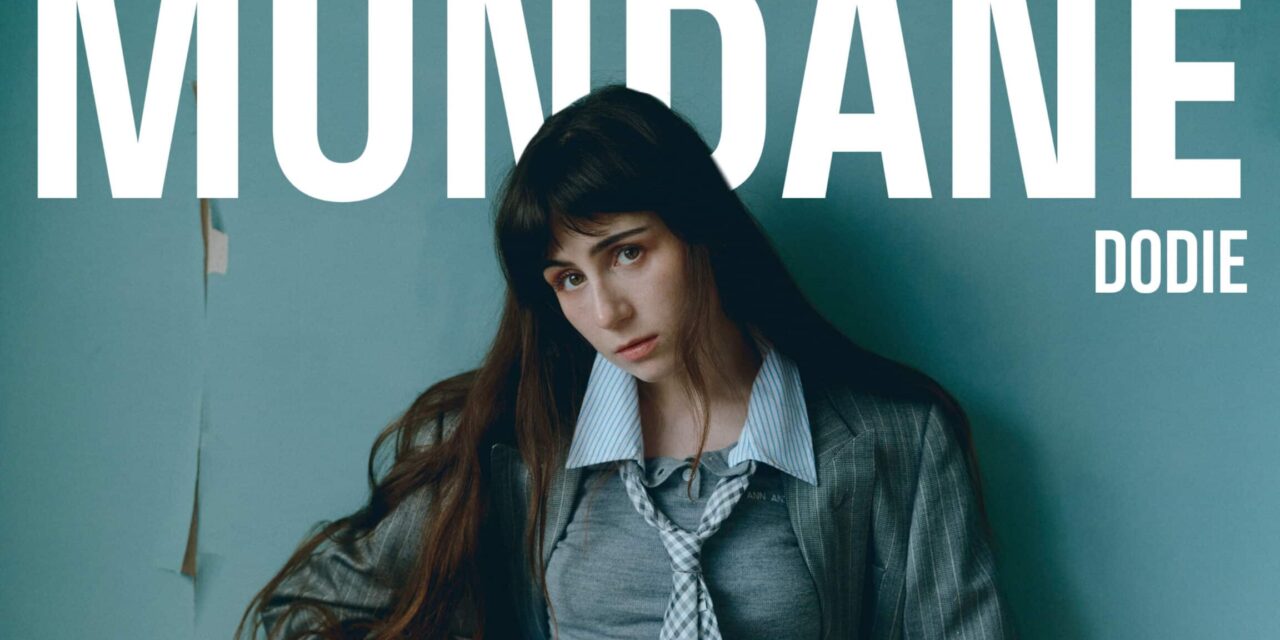
Fresh off a Nashville show and still moving through the latest chapter of her ever-evolving creative world, Dodie reflects on performance anxiety, songwriting perfectionism, the strange intimacy of YouTube, and why turning thirty has opened everything up.
There is something uniquely disarming about Dodie. Even after years of building one of the internet’s most beloved musical worlds—one rooted in softness, emotional precision, vulnerability, and meticulous craft—she still speaks with the kind of openness that makes every answer feel like it’s being discovered in real time.
When we speak, she’s fresh off a show at Brooklyn Bowl Nashville, the first stop on her U.S. tour. She’s amused by the venue’s dual identity as both concert hall and bowling alley, pleased that the lanes were paused during her set, and already energized by the difference between American and European crowds. There’s excitement there, but also the familiar pre-show tension she admits never fully goes away. Even now, even after all these years, her body still registers the unfamiliar, the newness, the pressure of stepping back into a live environment.
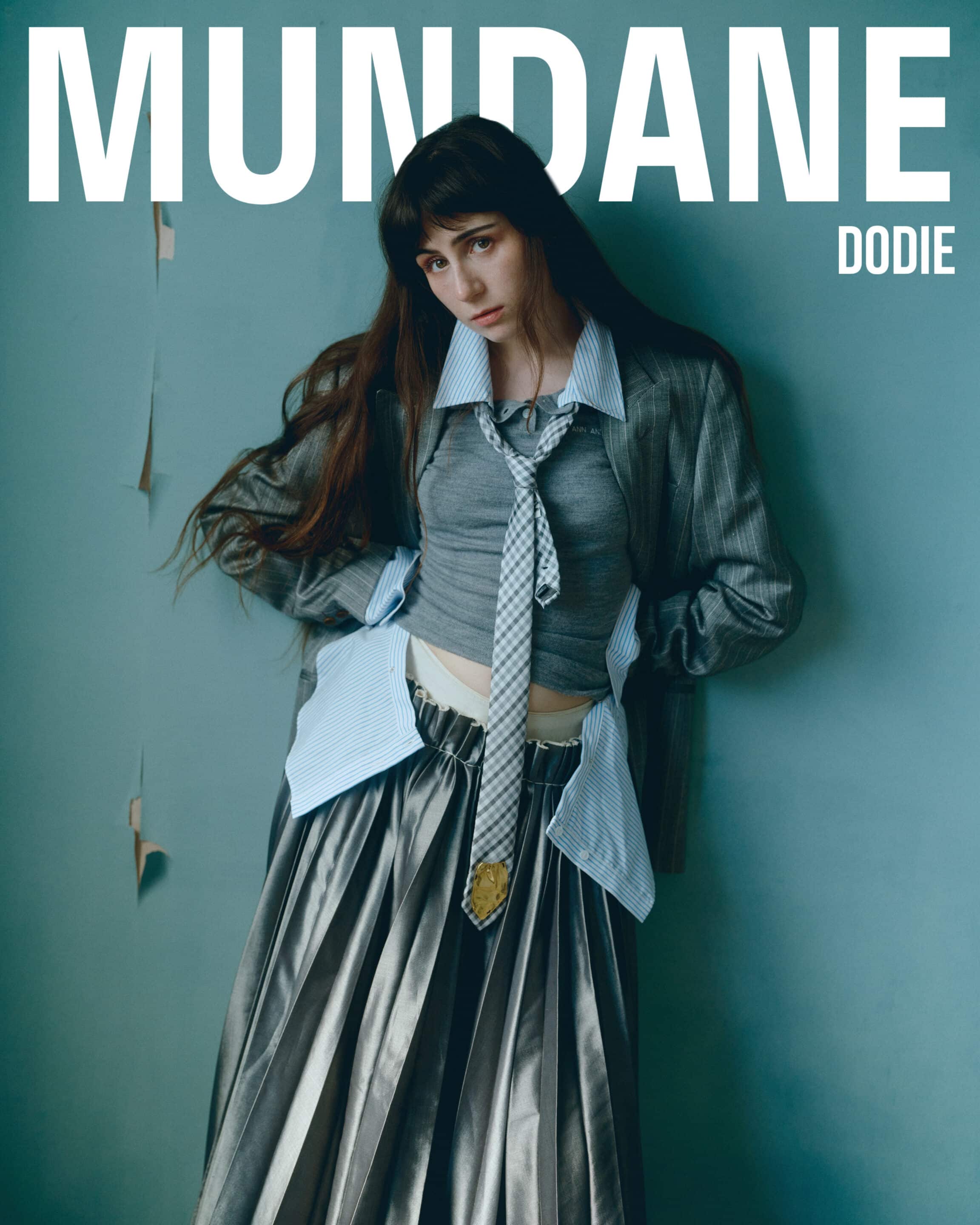
That honesty runs through everything Dodie does.
Her latest body of work, not for lack of trying, isn’t framed as a strict concept album so much as a collection of songs written during a period when she was trying—mentally, emotionally, creatively—to make sense of things that didn’t neatly resolve. For an artist like Dodie, whose music has always felt intimate without being careless, the throughline isn’t some external narrative device. It’s emotional architecture. A sentence left unfinished. A feeling carried across songs.
That emotional intelligence is part of what has made her such an enduring figure, especially for listeners who grew up alongside her. From her early years on YouTube, where she cultivated a deeply personal and communal online presence, to the more expansive, musically ambitious work she’s released since, Dodie has managed to do something increasingly rare: evolve without severing the connection that made people care in the first place.
She talks about YouTube now almost like a home that changed shape over time—once a refuge for outcasts and nerds, later something far bigger and louder, and now, for her, a kind of “cozy corner” again. She’s no longer interested in forcing herself into every platform or chasing visibility at all costs. Instead, she seems more attuned to boundaries, to safety, to how to share without overexposing herself. That sense of self-protection doesn’t read as distance. It reads as maturity.
There is also a perfectionist streak in her that feels foundational to how she works. She doesn’t write by throwing everything at the wall. She crafts. If a song isn’t getting there, she can’t force it. But when something does land, she trusts it deeply. She loves the songs she finishes. They remain part of her life, not disposable content from some earlier era. That level of commitment makes sense when you hear her talk about a song like “Sorry,” from her first album—the moment when strings she had painstakingly scored were finally played live in a room and became something larger than the MIDI in her head. It wasn’t just validation. It was proof.
And perhaps that’s the larger story here: Dodie is no longer waiting for permission from the outside world to believe in what she’s making.
For Mundane Magazine, Dodie talks about U.S. audiences, her relationship with her older songs, why YouTube still matters, how she protects herself online, the mentors who’ve helped shape her journey, and the thrilling uncertainty of what comes next.
You just played the first show of your U.S. tour in Nashville. How are you feeling right now, in the present tense of it all?
It’s nice to meet you. I played a show last night in Nashville, the first one of my U.S. tour. It was really fun.
I played Brooklyn Bowl, which I didn’t realize was also a bowling place as well as a venue. Luckily we managed to pause all the bowling because my set can be quite quiet. It would’ve been really funny if someone got a strike halfway through. But it meant we got two lanes while soundchecking, so we could just soundcheck and then go bowl and then come back on stage. The show was really, really fun.
Do you still get nervous before shows after all these years?
Yeah, I think my body just gets scared about anything new and fresh. If I haven’t done it in a while, it just feels unfamiliar. Even when people ask, “Are you excited about your tour?” I can’t really say yes until I’m a few rehearsal days down and everyone knows what they’re doing and I know exactly what I’m doing.
Then I can finally be like, “Oh my God, I’m so excited.”
But even on the day of the show, everyone’s still nervous and excited. My cellist Kat, for example, set herself the challenge of playing without the music sheet, even though I told her she didn’t have to. Everyone has their own little challenge. But honestly, once the first song is over, I’m like, alright, let’s go.
Do certain songs resonate differently with your U.S. audience than they do elsewhere?
That’s interesting. I probably should promote the new album, but honestly, older songs like “She” still come up a lot in the U.S. That song is really, really old. It’s about the first feelings of crushing on a girl, and in the decade I grew up in, it just wasn’t normalized yet.
I thought I had it bad, but people in southern parts of the U.S. had it really bad, with a lot of Christian trauma and things like that. So a lot of people I met last night mentioned that song and how important it was for them at a time in their life when they were in some sort of cult or deeply trapped in that world.
With not for lack of trying, what was the bigger emotional picture behind the album?
I find it really hard to write a concept album. I tried really hard to set myself the task of writing a clear story, but I have to work with myself, not against myself. I’m someone who writes a song and either I love it or, if I get halfway through and hate it, I just won’t finish it.
So any song I finish is one that I love.
I had this collection of songs, and it was down to me to find the throughline. What was very clear was that I wrote not for lack of trying in a time where I just wasn’t feeling great. I was trying to wrap my head around so many different viewpoints in order to feel better. So I think it’s a journey through all the spikiest moments.
Then the song that wraps it all up, also called “Not For Lack Of Trying,” hopefully feels like a sentence following something unspoken, like: I haven’t been feeling too great, I can’t figure it out, but not for lack of trying. That felt like a nice way to thread the songs together.
What is your songwriting process like? How many songs get abandoned halfway through?
Oh, loads. But I do think anything I write that I love in the moment, I’ll always love, because it’s me, it’s part of my life. If I forget something and come back to it later, I’m like, damn, I’m a genius.
Some people work by throwing everything at the wall—no bad ideas, just try everything. I have creative friends like that. But for me, I’m such a perfectionist and so afraid of something sounding bad that I genuinely can’t continue if it’s not getting there.
It’s important to sit with a problem if you know there’s something good at the end, but I definitely take my time with each note, each word. It could take a day or years. Even when I edit videos or produce, I need to be happy with every single thing I add. If I hear something I don’t like, I just can’t move forward.
How do visuals fit into your music? Do you think visually while writing?
Unfortunately, I’m not the most aesthetic creative person alive. I definitely know who I am and what I like, but there’s a whole art form there that I think some of my friends are much better adapted to.
So I use my friends.
I grew up in the YouTube community, and a lot of my peers used it more for filmmaking and directing, so I’m really lucky to have this pool of talented people around me. My friend Sammy Paul directed the video for “I’m Fine,” and we worked on that together. My writing is visual in some way, clearly, but it’s hard to translate that alone. Sammy is really good at finding a way to communicate those intricacies I can’t explain. And he sees things in my songs that I’ll never see myself. That’s what makes music videos and visualizers so fun.
YouTube was such a huge part of your career. What does it mean to you now, looking back?
It’s so interesting. It feels like a home in online form.
When I started, YouTube was small. It was for outcasts and nerds. It was the first time I got to connect with loads of people I actually felt similar to. That was amazing. Then obviously it got mainstreamed, which was incredible in some ways and also kind of shitty in others.
I was very young. Looking back, I’m like, oh God, I was so young to be chatting online about my life. But I don’t regret it. It was all a learning curve.
I took time away from it, and the platform moved on in its own way. But I still think YouTube has a place for me and my little world. I’m really enjoying coming back to it and making videos again, figuring out how to share my life, behind-the-scenes moments, writing, making, all of that, but without the pressure of it being so looked at. It just feels like my cozy corner, my portfolio, my safe place.
So why not TikTok in the same way?
I scroll, don’t get me wrong. But I’m not really trying to squeeze my way into TikTok. I’ll make short-form things for Instagram because that feels safer to me, and maybe sometimes I’ll throw it onto TikTok too. But I’m not studying TikTok or strategizing around it.
I think there’s a place for everyone on there, but it doesn’t feel like the safest platform for me because you can just be blasted into people’s eyes and they’ll decide to hate you. I’m not interested in that just for the sake of growth. I’m so pleased with where I am and what I’ve achieved. YouTube is my safe space for putting myself out there.
How do you deal with hate online, especially as someone whose work is so emotionally open?
I feel really lucky to have had so much experience with it when I was younger. It was weird to go through it young, but now everyone is exposed to it. Everyone has dealt with hate online in some way.
I deal with it like anyone else, but luckily I have some little packaged tools I’ve learned. One is this: some people don’t like chocolate ice cream. Even though I think chocolate ice cream is objectively delicious, some people can’t stand it. That doesn’t mean chocolate ice cream isn’t good. It just means they don’t like it.
So dumb little therapy tools like that help.
In terms of how it affects my artistry, I think being thirty now means I understand boundaries much better. When a song comes to me, I do have to think: is this appropriate to talk about? How can I bring it into the online world in a way that protects me and the people involved? It’s a delicate balance. But I feel lucky I’ve had enough time to learn how to navigate that.
Was there a song that first made you jump out of your chair and think: this is me, this is it?
I really do love all my songs. Any song I’ve finished makes me feel like a genius. But one of the most meaningful moments was with a song on my first album called “Sorry.”
I scored all these string parts for it, and that song became the climax of a larger twenty-minute block where all the strings weave melodies together across other songs. I remember it took forever because I’m not very good at music notation software, but I managed it.
Then all the players were in a room, and they played it, and I was like, oh my God, oh my God, oh my God. I had been listening to MIDI strings for ages and thinking, these sound kind of bad, but I can imagine them sounding incredible. Then they did. And I was like: I can do anything.
That was a real jump-off-the-chair moment.
When did you realize this was actually your life? Was there a turning point?
Honestly, I think it happened gradually. My parents were very scared of any kind of creative job because the world is tough and I grew up in a poor family, so they were always worried for me.
I don’t know if I ever had one huge spiritual moment where I knew. I kind of procrastinated to the highest degree and just waited until the draw came back to me and then I’d practice or write again. I never really felt like I was working hard. I was just doing what I wanted to do.
But in 2015, I was working an office job while balancing music, and I asked for time off to go on tour. My boss said, “I think you need to quit. You need to do this.” And I was like, damn, am I in a place where I can?
I think I was just at the edge of being able to sustain myself financially. So that was a moment. A very logical moment, not a spiritual one. But spiritually, it had all been growing in me for a long time.
That boss sounds unusually supportive. Did you have other mentors who helped guide you?
Yeah, mentors really matter. And honestly, one person who has been incredibly helpful to me is Jacob Collier.
He’s every amount of special that people think he is. He’s incredible. I’d definitely call Jacob some kind of mentor. He’s been so helpful to me. He always says that he feels like we’re in the same year in school when it comes to music and self-starting and whatever the hell we’re doing, and I do feel that.
He’s learning as he goes in some ways too, but he’s obviously so smart and exploding with ideas. I see parallels in how I’m learning to manage a team, build a world around me, and create something sustainable with other people. He’s always been so good at that and at giving incredible advice and pumping me up too—just saying, “You’re sick. Look what you’ve done. Keep going. I’m inspired by you.”
I’m so grateful to have a friend like Jacob. He really is magic.
What comes next for you? Are you already thinking beyond this record?
It’s good to be asked because my first instinct is always, oh, I don’t know. But I do have so many little ideas of things I’ve always wanted to try.
I’ve always thought it would be fun to make a little EP of “stimmy songs” with my friends, like those songs we sing to each other just because they feel good. I’ve also always wanted to write for a choir. I think a big vocal album would be really cool.
I can imagine doing something more collaborative next, where I build a world with other people from the beginning, because with my own music I’m obviously so internal and I can’t share it until it’s finished.
Honestly, I don’t know. The world feels like my asset right now. Turning thirty has opened up this whole new feeling of: wow, I know how to do things now. I’m experienced. I can hold myself. I’ve built something incredible and have so many opportunities.
But the answer is still: I don’t know. I’m going to do the tour and then I’ll probably panic.
Last one—what do you love most about touring America?
So many things. I love how many different climates you move through. You can start in Nashville where it’s sunny and no coat, and then end up somewhere like Minneapolis where it’s freezing.
Also, I get the room at the back of the bus because I’m a diva, so I get all the windows. I love waking up and seeing wherever we’re driving through. The open road is really inspiring.
What becomes clear in talking to Dodie is that she is no longer trying to prove she belongs in the world she has built. She already knows she does. The questions now are less about legitimacy and more about expansion: what new form can the work take, how can she protect herself while staying open, what happens when someone who has spent years becoming finally starts trusting her own experience?
That tension between caution and curiosity, intimacy and craft, has always been part of her appeal. But now it feels steadier, less anxious, more earned. She is still thoughtful, still perfectionistic, still deeply tuned in to the emotional lives of her songs—but there is also a new calm in the way she talks about uncertainty. Not knowing what comes next doesn’t seem to frighten her as much anymore. It seems to excite her.
And maybe that’s what this chapter really is: not reinvention, but expansion with self-trust. A bigger world, built from the same honesty that was there from the start.