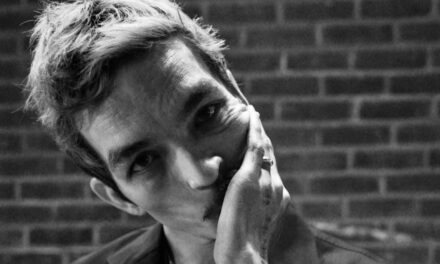
For all the songs written about love, very few stop to honor what happens after the rush. Not the butterflies of a beginning or the wreckage of an ending, but the quieter, harder, deeper version of love that survives routine, exhaustion, change, and responsibility. On “Whatever It Takes,” Spanish-American singer-songwriter Juana Everett turns toward exactly that territory, offering a moving meditation on family, commitment, and the kind of devotion that reveals itself not in fantasy but in persistence.
Released as the third and final single ahead of her sophomore album Past Lives In California, due May 22 via Great Canyon Records, “Whatever It Takes” is a tender Americana-folk ballad carried by emotional clarity rather than spectacle. Featuring Dylan LeBlanc, whose voice lends the track an earthy, lived-in gravity, the song reflects on the challenges of building a family and the quiet heroism of choosing each other again and again. It is love stripped of illusion, but not of beauty.
That honesty is what makes the song land so deeply. Rather than idealizing romance, Everett writes from inside the demanding, often invisible labor of mature love—the kind that must withstand relocation, exhaustion, parenthood, uncertainty, and the daily work of staying present. It is a perspective shaped directly by her own life. Three years ago, she became a mother while living in Los Angeles with virtually no support system, navigating the first years of parenthood alongside her husband in something close to survival mode. What emerged from that experience was not cynicism, but awe: the realization that family, especially the family you choose and build, can become the strongest force in your life.
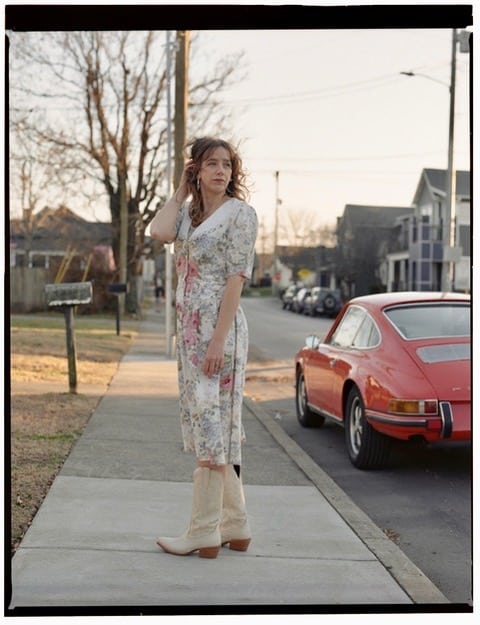
That emotional current runs throughout Past Lives In California, an album recorded between Middletree Studios in Nashville and the legendary FAME Studios in Muscle Shoals, with a team that includes producer Alex Muñoz, mixer Joe Pisapia, and mastering engineer Dave McNair. The record’s title gestures toward memory, reinvention, and the many selves we cycle through as we move across places and emotional landscapes. For Everett, California becomes not just a location but a series of versions of the self—lives lived, myths broken, people encountered, and lessons carried forward.
If earlier singles like “One Million Dollars” and “Bring Me Back” explored other corners of that emotional terrain, “Whatever It Takes” feels like its spiritual center. It is not flashy. It does not beg for attention. It simply tells the truth: that some of the most profound love in life happens far from the spotlight, in small repeated acts of care, in endurance, in showing up, in choosing home.
There is something quietly radical in that. In a culture that tends to reward either ecstatic beginnings or spectacular collapse, Everett makes a case for the emotional depth of what comes in between. Marriage, family, and chosen love are not the death of passion here. They are its evolution. They are where meaning settles into the everyday.
We spoke with Juana Everett about the making of “Whatever It Takes,” the emotional landscape of Past Lives In California, working with Dylan LeBlanc, and why mature love deserves its own songs.
“Whatever It Takes” feels like a deeply mature reflection on love—not the idealized version, but the one shaped by responsibility and endurance. At what point did you realize this was the story you needed to tell?
“Whatever It Takes” speaks about the type of love I live in my life, which is the stable type of love that many of us over the age of thirty have, but that seems to be invisible for younger generations, or not thrilling enough to write a song about. I feel like most love songs speak about the butterflies of the beginnings, or the heartbreaks of the endings, but not so many speak about the deep emotion that fuels a stable love, a family love, which requires so much dedication and responsibility, and brings about a deep change at a personal level.
I feel like many perceive this form of love as boring and secure, which is really not fair. I wanted to honor it by giving it light and expressing how beautifully challenging marriage and family can be. This mature love, in my opinion, is way bigger than romance. It gives meaning to simpler moments, to routine, and it calls you to give your best to take care of it, whatever it takes.
Your duet with Dylan LeBlanc carries a quiet emotional weight. What did his voice and perspective bring to the song that wouldn’t have existed otherwise?
Dylan not only has an incredible voice, with so much feeling, but he is also a father who works hard for his family. I wanted a male counterpart in this song, and I couldn’t think of a better artist to do it. I knew he would empathize with the song and the truth behind it, which he did, bringing that emotional weight without frills. He understood it right away, because he knows what it is at a personal level.
The track explores the idea of building a family—something rarely portrayed with this level of honesty in Americana. How did your personal experiences shape the emotional core of the song?
Three years ago, I became a mother. We lived in LA, and my husband and I had virtually no help the first couple of years. It was brutal. I know my mind didn’t register a lot of moments because it was in absolute survival mode. We’ve moved around so much since, we’ve been through so many changes, but we are solid as a rock. I feel like the three of us can do anything if we’re together.
That’s what “Whatever It Takes” is about. Family, the one you choose and make, is truly everything to me, and I think that’s the case for so many people. Maybe we don’t acknowledge that enough. As hard as it is to have a family these days, I’m constantly in awe, and telling myself, “Keep this moment. This one is a keeper.”
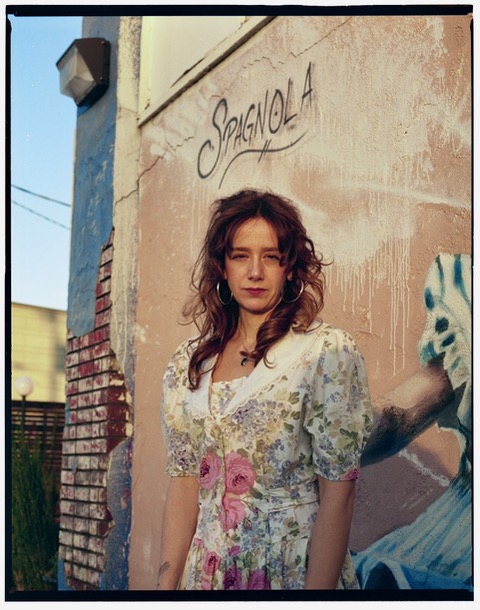
There’s a sense of stillness and patience in “Whatever It Takes,” almost like love unfolding in slow motion. How do you translate something so complex into something that feels so simple and intimate sonically?
“Whatever It Takes” came so naturally to me. It pretty much wrote itself. Sometimes I feel like I’m just holding a feeling while the music and the words come about. This one definitely came from an intimate place.
It makes me think of simple moments that sometimes become so vibrant to me. When you can share a space with somebody, maybe in silence, maybe each one doing their own thing, but there’s a sense of absolute calm: that’s true connection. It has infinite layers and is rich and complex, but that shared presence, simple and sweet, is truly where home resides. That’s what I think this song captures.
Your upcoming album, Past Lives In California, suggests themes of memory, identity, and reinvention. What does the idea of “past lives” represent for you—emotionally or philosophically?
The more I live, the more it seems to me that life is a flowing thing. That we come and go. Like consciousness expands and contracts, and our lives are the waves that it creates. I see myself in so many eyes. I’m a traveller and have moved around quite a bit, and the more I see, the more everything seems like a dream we dream. We invent ourselves, and reinvent ourselves. And I love letting myself navigate the lives that come in the form of song, too.
Recording between Nashville and FAME Studios carries a strong musical legacy. How did those environments shape the sound and spirit of the record?
The Nashville tradition of music recording is as organic and true as it gets. To me, this type of music, which is human and sincere, must be tracked live in the studio. There’s no other way. That’s how things work in Nashville, and definitely in FAME. There’s a reverence to the energy of the song, and to capturing how we as humans and musicians react to it. That’s what you want to capture. That raw honesty, combined with deep musicianship, is what drives the wheels of this record.
You’ve worked with producers and collaborators tied to artists like Margo Price and Kacey Musgraves. What did those collaborations unlock for you creatively on this project?
I knew I was in really good hands, so I decided to fully trust the process and let go of control. I can be a very obsessive person, and I really wanted to keep those impulses at bay. I put these songs and my heart on the table, knowing that these guys—Alex Muñoz, Joe Pisapia, Jamie Dick—are not only some of the best Americana musicians out there, but that they would put their hearts into it too. It’s been so incredibly fun. I won’t forget it.
Your previous singles like “One Million Dollars” and “Bring Me Back” introduced different emotional textures. How does “Whatever It Takes” complete that narrative arc leading into the album?
I’m not really sure there’s a conscious narrative arc on the selected singles, but the three of them do reveal an album that is rooted in nostalgia and time travel. There’s a good load of introspection and a shameless romanticization of the good as well as the bitter of life. Stories, lived and imagined, become deeply personal and human. Past Lives In California seems to me like one of those books or movies where several stories seem to take place independently, but cross paths in the weirdest ways. Have you read The Unbearable Lightness of Being?
As a Spanish-American artist working within Americana and folk traditions, how do you navigate cultural identity within a genre so rooted in place and history?
American history carries the history of the whole world. Its culture is shaped by so many other cultures. Sounds have always traveled. For instance, I’ve always felt a strong connection to Celtic music, which originated in Northwestern Europe and is really big in the north of Spain, but it also had a strong impact on bluegrass and country music, which absolutely evokes home away from home to me. I’m only looking for myself in this musical journey, and this genre is where the search has brought me. I simply feel at home in it.
This album feels like a deeply personal chapter. When listeners step into Past Lives In California, what do you hope they confront—or discover—about themselves?
I hope they find an old forgotten memory, maybe a glimpse of simpler times, maybe an appreciation for the full range of human emotions, because there’s no good or bad in them. Maybe it can take them to a summer sunset on the Pacific, and the night is young. Maybe it can be like the light entering through a window, illuminating the little specs floating in the air, or like the old smell of mothballs on your childhood sweaters. Maybe it can remind somebody that whatever they’re going through, it’s just a chapter, and one day they’ll move on to the next one. So take it in.