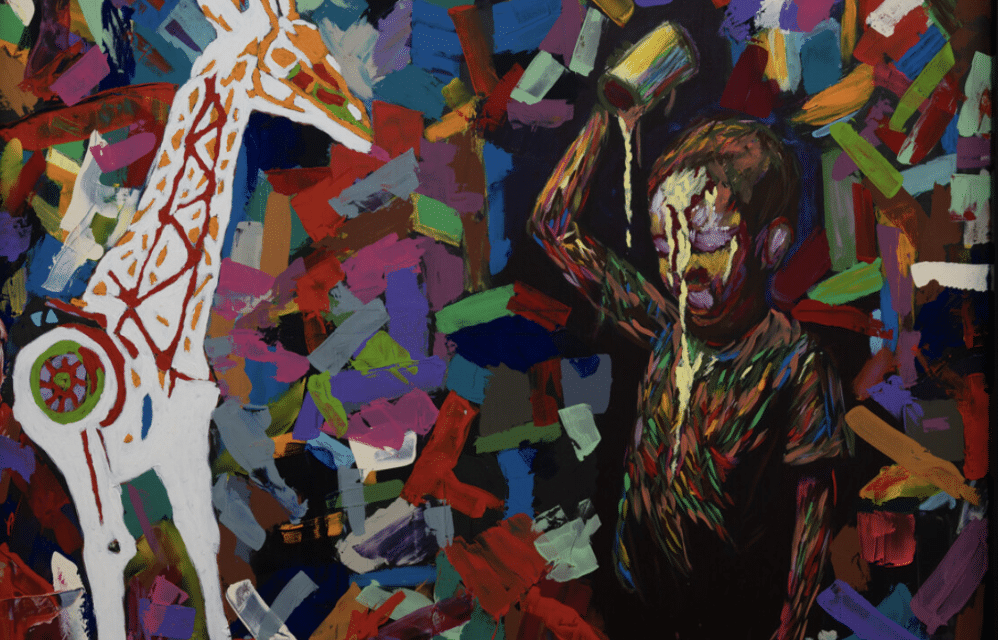
Something strange is happening in the contemporary art market and no one seems to be talking about it. Or rather, everyone is talking, but in whispers, in corners, as if acknowledging a shameful secret: that the public has had enough.
Had enough of monochrome canvases with pretentious titles. Had enough of conceptual installations that require ten pages of explanation to be “understood.” Had enough of abstract expressionism turned comfortable refuge for artists who have nothing left to say but want to appear as though they’re saying everything.
When Romanian artist Liviu Alexa entered the contemporary art world in February 2026, he didn’t do residencies, didn’t carry his portfolio under his arm through the galleries that matter, didn’t wait to be validated by the system that decides who deserves what. He simply opened an exhibition at the Cluj-Napoca Art Museum, set prices that everyone considered insane for a debut artist, and waited to see what would happen.
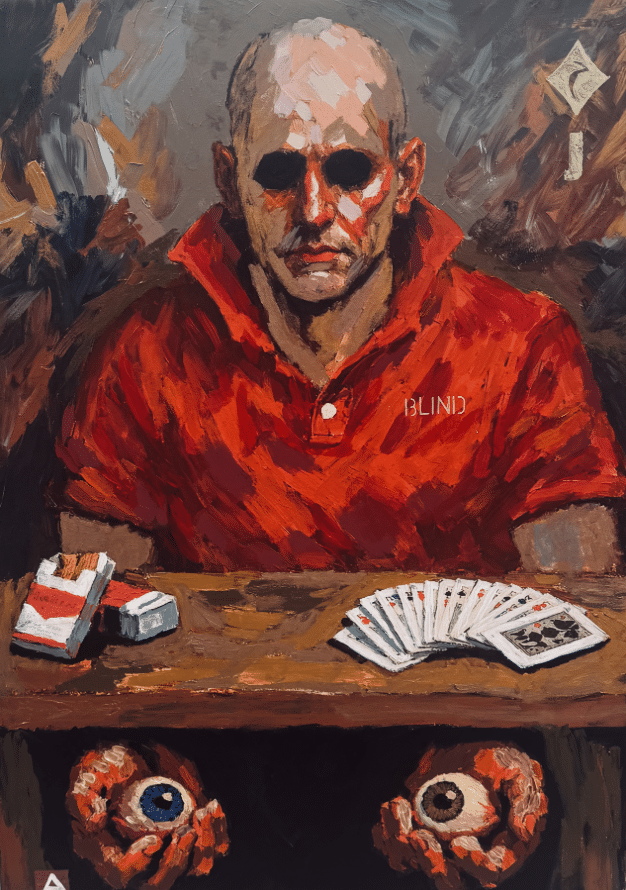
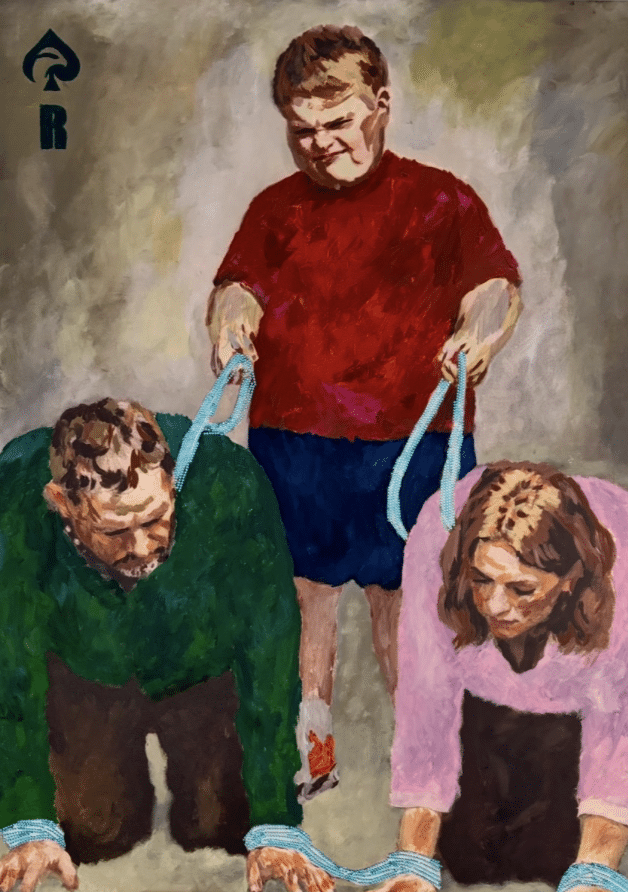
What happened shocked everyone. Thousands of paying visitors in a single month — a record for the museum. Works sold at 15,000 euros apiece. Articles in the international press — Kaltblut, 1883 Magazine, Ladygunn, publications that usually don’t look toward Eastern Europe unless they’re seeking cheap exoticism or photogenic tragedies. And less than two months later, a second exhibition in Bucharest at Kulterra gallery, where the same thing repeated: sales, audiences, interest, controversy.
The phenomenon is larger than any single artist and deserves analysis.
Why does a 46-year-old investigative journalist, with no formal art training, no connections in the system, no academic pedigree, manage to sell at prices that artists with impressive CVs cannot? Why does the public come, stand for minutes in front of the canvases, return with friends?
The answer seems to be that the contemporary art market has reached an impasse that no one wants to acknowledge publicly. Galleries are full of works that communicate nothing — or worse, that communicate only with those already initiated, with the narrow circle of curators, collectors, and critics who speak the same language and mutually validate each other’s choices.
“The general public has been systematically excluded, treated with condescension, made to feel stupid for ‘not understanding’ what they see. And the public, in the end, left,” says Liviu Alexa.
Abstract expressionism, which was once a revolution, has become a commonplace. It has become what you do when you have no ideas but want to appear as though you do. You throw some paint on a canvas, give it an ambiguous title, write a statement full of big words about “deconstruction” and “spatiality” and “boundaries,” and there you are — a contemporary artist. No one can contradict you, because there’s nothing concrete to contradict. No one can criticize you, because any criticism can be dismissed with “you didn’t understand.” It’s a perfectly closed system, immune to feedback, self-sufficient in its comfortable mediocrity.
Alexa chose something else. He chose to paint works that tell stories.
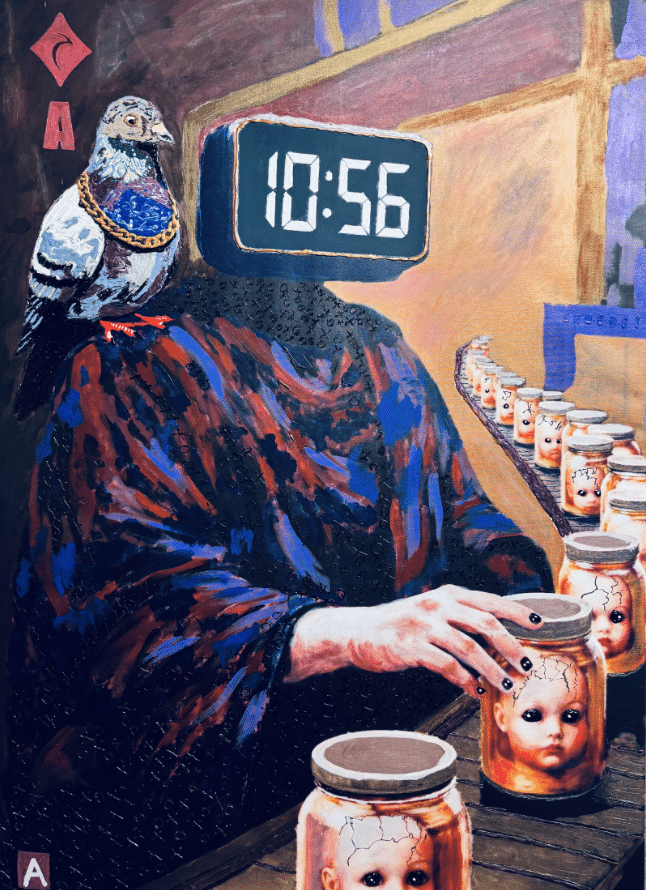
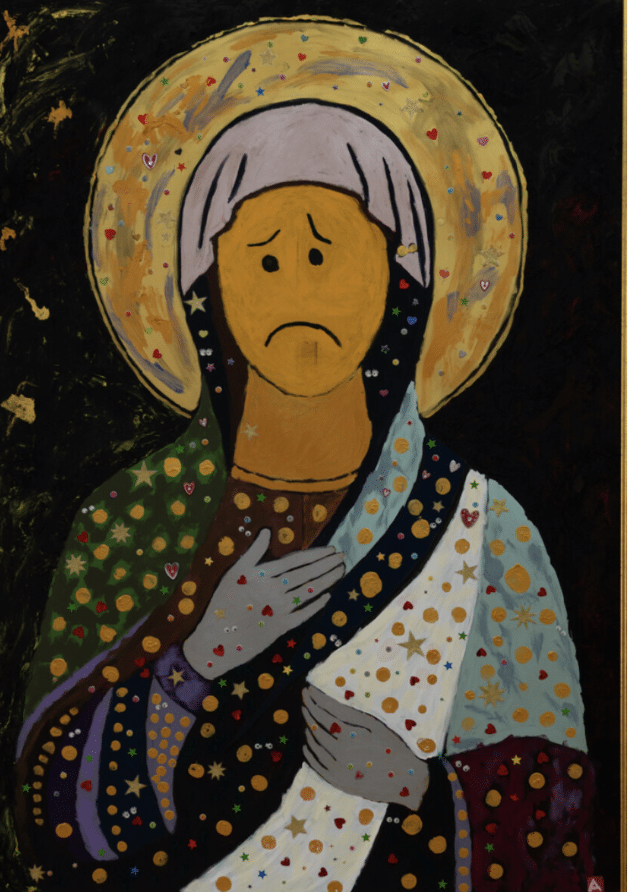
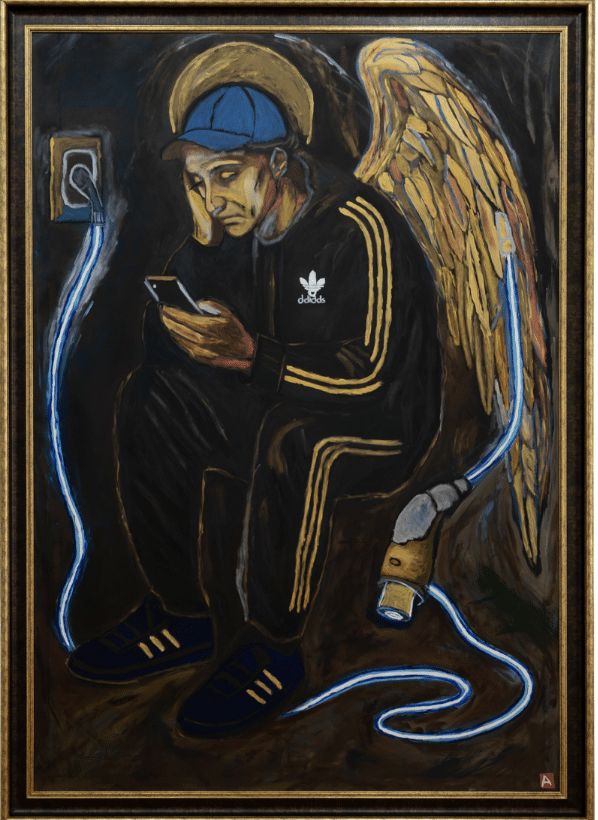
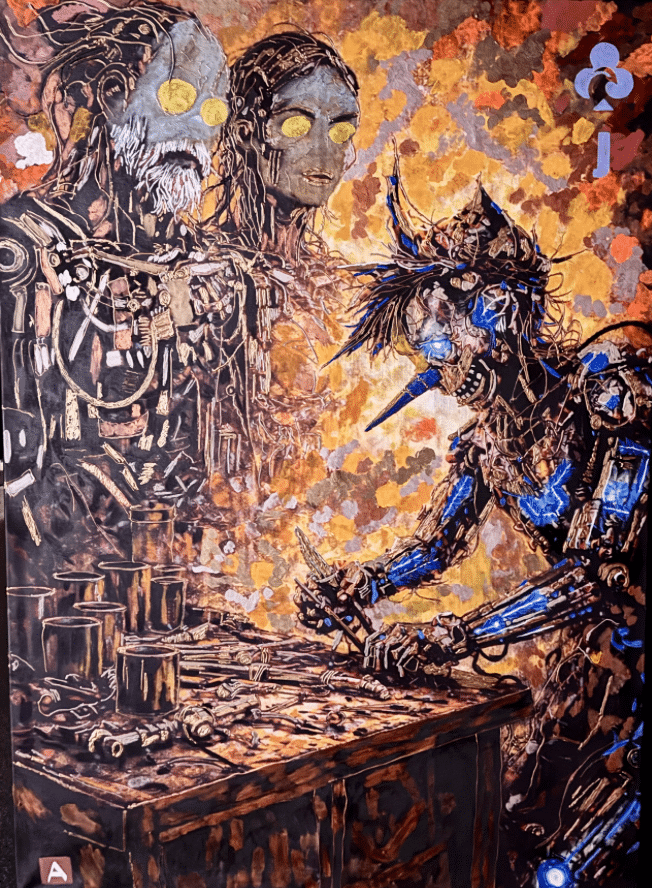
His paintings have characters, narratives, details you discover on the second and third viewing. His canvases shake you — sometimes harshly, sometimes tenderly, but they speak about the world we all live in, not about the artist’s inner world to which no one but the artist has access.
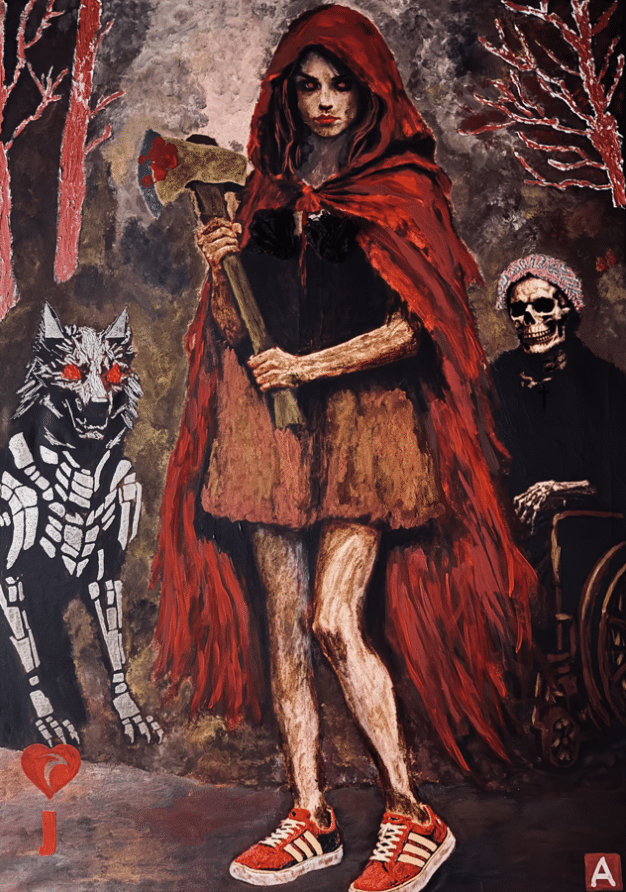
In his exhibition “Filcai,” he reimagined twenty cards from a traditional Transylvanian card game as large-scale paintings. Each playing card became a character reincarnated in the present: the Ogre has become a garbage collector because no one has hearts left to steal, Cleopatra delivers shawarma and talks on the phone with dissatisfied customers, Ochilă has become a neighborhood alpha male who scrutinizes the world with drone-like eyes. These are stories that can be understood without an instruction manual, but which also have layers for those who want to dig deeper.
This is what the public has been looking for and cannot find in galleries full of abstractions: visible creativity, ideas you can touch, stories that can be told again. Not everyone wants to stand in front of a white canvas with a red stripe and meditate on “the tension between void and presence.” Some want to see something, feel something, leave with something — not with the sensation that they’ve been fooled by a self-legitimizing system.
The prices at which Alexa sells are high for an artist just starting out — 12,000 euros per canvas, sometimes more. He has been criticized for this, accused of arrogance or naivety. But the prices are not arbitrary. They are a statement in themselves: art that communicates, art that works for the viewer, art that has ideas and expresses them visibly deserves to be paid as much as art that hides behind conceptual opacity.
And the market has proven him right — because there was a hunger that no one was feeding. A hunger for authentic creativity, for visually told stories, for works in front of which you laugh or get angry or feel sad or marvel, not just nod politely and move on.
The articles in the international press didn’t appear because he did PR — though he did PR too, because he’s not a hypocrite and understands that art without an audience is just an expensive hobby. They appeared because the phenomenon was unusual enough to be worth writing about.
An investigative journalist who becomes an artist overnight and sells at star prices? It’s a good story. But it’s also a symptom of a broader shift: the public and the market are beginning to turn toward art that does something, not just art that is something.
No one has anything against abstract expressionism itself. Rothko moved entire generations to tears. De Kooning remains a genius. The problem isn’t the style — the problem is that the style has become an excuse.
Alexa comes from investigative journalism, where if you have nothing to say, you don’t count. You can’t hide a lack of substance behind ambiguity — the editor sends you back to redo it. You can’t claim your article is too sophisticated to be understood — readers simply won’t read it. Investigative journalism teaches you that you must communicate clearly, with evidence, that the public doesn’t owe you attention and you must earn it with every sentence.
Alexa brought the same mentality to painting: each canvas must earn the viewer’s attention, not demand it by right, must offer something, not just claim something.
His two exhibitions so far have been conceived as communication events, not as monologues before an audience that came out of social obligation.
Alexa chose not to play it safe, to paint things that can be criticized, compared, judged, preferring the pain of honest feedback to the comfort of vague validation.
Two exhibitions in three months, several dozen canvases sold, thousands of visitors, international press coverage — one might say it’s luck, but it’s not luck. It’s work and it’s a message that resonates.
People want stories. They have wanted them for thousands of years. Alexa hasn’t forgotten this.
Perhaps Liviu Alexa is just a happy accident of the market, or perhaps he’s a symptom of a change that many were waiting for without knowing they were waiting.
Either way, he continues to paint in his garage, with his two dogs beside him, with loud music, and with the feeling that he’s doing something that matters — not because someone tells him it matters, but because he sees with his own eyes that it reaches people.
The contemporary art market is changing. The public is returning. Creativity is coming back into the light.
More about the artist at www.alexa.space