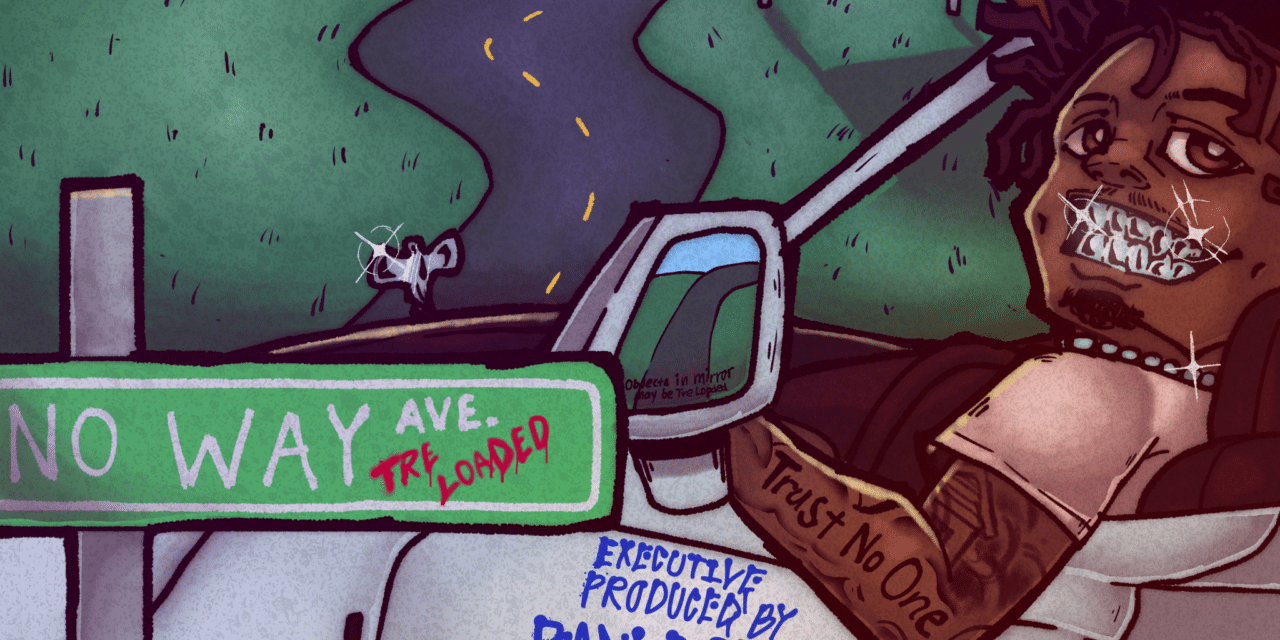
The distance between “no way” and a way forward is rarely measured in miles.
It is measured in risk, grief, discipline, and the number of times a person chooses to continue when the circumstances around them suggest they should stop.
On his new mixtape, A LongWay From NoWay, East Memphis rapper Tre Loaded transforms that distance into both a title and a statement of identity. The phrase describes a career built from limited resources, difficult surroundings, and the persistent belief that something meaningful could still emerge from a place others had already dismissed.
“It means making something out of nothing,” Tre says. “Growing something out of a place people said nothing could come from.”
At 23, Tre Loaded has already experienced the rapid momentum usually associated with a much longer career. His viral single “Vo Flow” introduced his music to millions of listeners, while “Another Whip” and its BigXThaPlug-assisted remix expanded his audience further. In 2024 alone, his catalog generated more than 50 million streams, helping position him as one of the most visible young voices emerging from Memphis.
Yet A LongWay From NoWay arrives at a moment when numerical success tells only a small part of the story.
The eight-track project is Tre’s first collection of entirely new material created without the guidance of his first cousin, ABP, who lost his life to the streets. ABP had been a source of advice, confidence, and perspective throughout Tre’s development. His absence is not treated as a detail surrounding the mixtape but as one of its emotional foundations.
Tre dedicates the project to his cousin’s memory, carrying the phrase “Long Live ABP” through the record as an ad-lib, a ritual, and a refusal to let absence become erasure.
The result is music that remains energetic and self-assured while allowing more vulnerability into Tre’s writing. His confidence has not disappeared. Instead, grief has sharpened it, giving his ambition a second purpose.
He is no longer pushing only for himself.
“I want to be the best I can be for both of us,” he explains.
Produced in collaboration with platinum-certified team Bankroll Got It, A LongWay From NoWay combines the simmering tension of Southern rap with the cruising atmosphere of West Coast rider music. Tracks including “Mud to Mansions,” “Won’t Say Too Much,” “Leg Up,” “Curious George,” and “2Tone” build a world rooted in movement, survival, and the continuous pressure to turn momentum into permanence.
On “Break Even,” triumphant horns frame Tre’s reflections on the risks required to avoid losing—or merely ending up exactly where he began. The song captures the precarious mathematics of ambition: the understanding that progress often demands wagers whose consequences extend beyond music.
“Quit Calling,” meanwhile, leans into Tre’s silky flow and out-the-mud mentality, rejecting distractions and conversations that do not move him closer to his goals. Taken together, the songs reflect someone looking back at what he survived without allowing nostalgia to slow his next step.
Tre’s musical identity remains inseparable from Memphis.
His uncle, rap pioneer Don Trip, established an early familial connection to the city’s hip-hop history, while Tre’s own work draws from the environment he experienced firsthand. Future and Lil Wayne sit beside Bruno Mars within his broad range of influences, but the details, urgency, and perspective remain distinctly his own.
Memphis is not simply where he is from. It is part of the language through which he understands survival, loyalty, grief, and ambition.
We spoke with Tre Loaded about dedicating A LongWay From NoWay to ABP, making music without chasing streaming numbers, staying grounded through family, and why progress remains his only real destination.
Tre Loaded Socials: Instagram | TikTok | Spotify | YouTube
A LongWay From NoWay is a title that immediately suggests resilience and transformation. What does the phrase represent in your journey, both as an artist and as a person?
It means making something out of nothing for me.
It means growing something out of a place where people said nothing could come from.
I feel like I made a way out of no way.
This is your first full project created after the loss of your cousin ABP. How did that experience shape the music and the mindset you brought into the mixtape?
Kevo is a big part of everything I do now.
Now that he isn’t here, it makes me want to push myself harder and become the best I can be for both of us.
I made it a point to say “Long Live ABP” after every song.
You’ve described the project as deeply personal while still delivering the energy your listeners know you for. How did you balance vulnerability with the confidence that defines your music?
I wanted to create a stronger sound for this project, and being more vulnerable helped bring out some of my natural talents.
As far as the energy goes, it stays the same regardless of what I approach.
After breakout records such as “Another Whip” introduced you to millions of listeners, did you feel pressure going into this mixtape, or were you more focused on telling your story honestly?
I never feel pressured to create music just to cater to streams.
I’m blessed to be able to make the music I like.
When I made “Another Whip,” I wasn’t trying to create a song bigger than “Vo Flow.”
It became what the fans made of it.
Working with Bankroll Got It helped shape the sound of A LongWay From NoWay. What made that collaboration work so naturally?
Before we even decided to make a project together, we were already creating a lot of songs.
Eventually, it made sense to intentionally curate a full project.
They are some of the most talented people I’ve had the opportunity to work with, and we have plenty more music on the way.
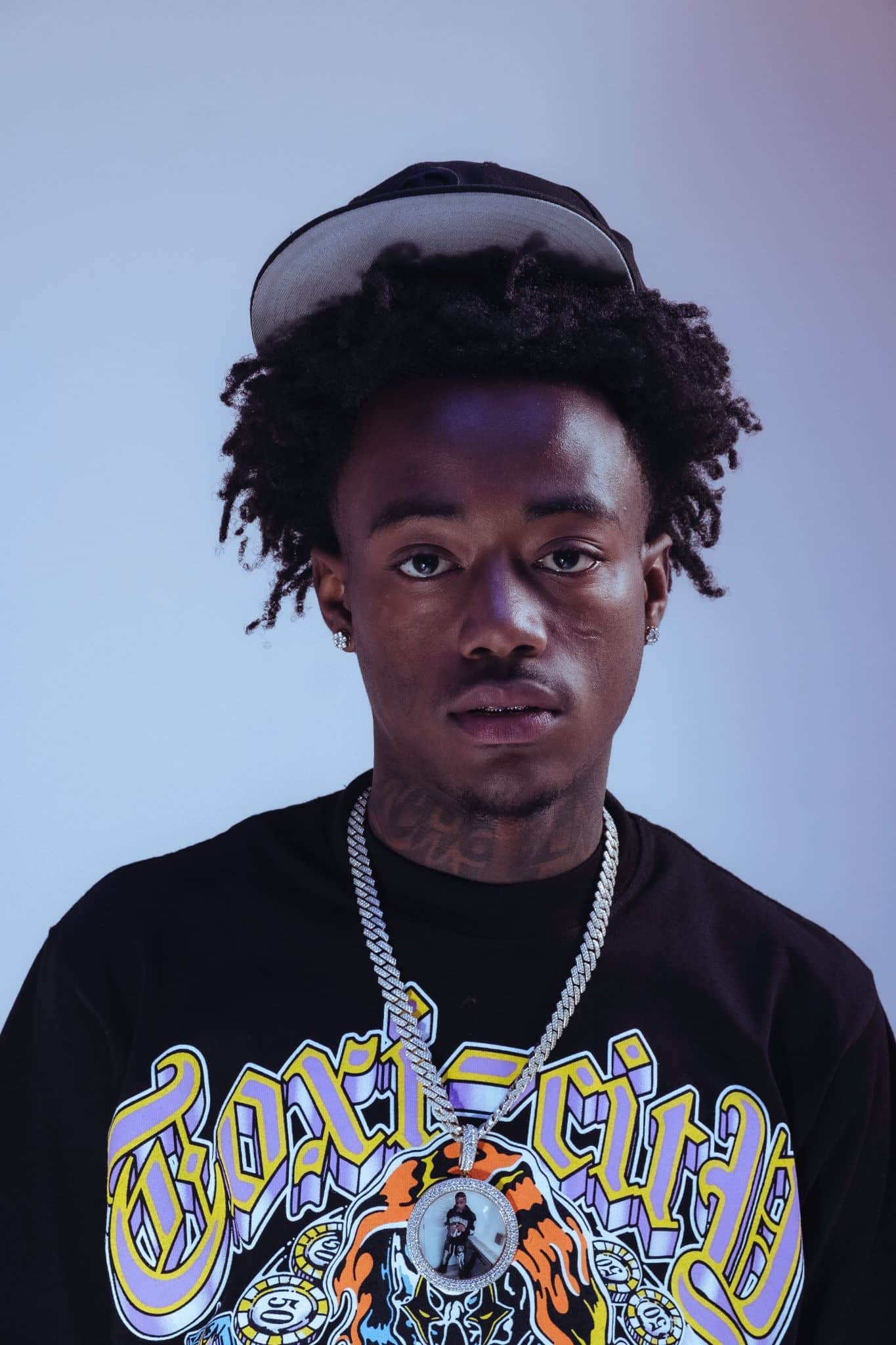
Coming from East Memphis, how has your hometown influenced your perspective and musical identity as your career has grown?
Memphis plays a major role in my music.
A lot of what I talk about comes from what I experienced and the environment around me.
I don’t think that will ever leave my identity.
You’ve already earned recognition alongside artists such as Yeat, Megan Thee Stallion, Latto, and Key Glock. What have you learned from watching artists at that level navigate success?
Do what you feel.
I didn’t make it this far by listening to everybody else’s opinions.
Make music for yourself.
That’s why everybody showed up in the first place.
The title looks back at where you came from while remaining focused on what is ahead. How do you stay grounded as your profile continues to rise?
My people keep me grounded.
My family keeps me grounded, and most of all, my son does.
The same things that motivate me today are the things that motivated me at the beginning.
Your music reflects the realities of your environment while pointing toward something bigger. What do you hope young people from similar backgrounds take from your journey?
You can make it out.
You don’t have to follow the route everyone else chooses.
It depends on how seriously you take it and how much work you’re willing to put in.
If A LongWay From NoWay represents one chapter of your story, where do you see Tre Loaded heading next, both musically and personally?
I just want to keep progressing.
I’m taking it one day at a time and continuing to grow.
Progression in life and music is my only focus.
The language of “making it out” carries particular weight in rap.
It can suggest financial escape, geographic movement, public recognition, or survival itself. Often, all four are entangled. Success becomes more than ambition; it becomes evidence that the conditions surrounding a person were not powerful enough to determine the ending of the story.
Tre Loaded understands that complexity.
His rise may be documented through streams, viral moments, media attention, and increasingly significant collaborations, but A LongWay From NoWay is shaped by the understanding that progress always leaves something behind.
In this case, that absence has a name.
ABP’s presence throughout the mixtape turns the project into more than a career milestone. Each “Long Live ABP” becomes a point of remembrance embedded inside the momentum of the music. Tre does not separate mourning from achievement because, in his life, the two now move together.
Grief becomes motivation, but it is not reduced to a convenient inspirational device.
There is pain in the realization that this is Tre’s first new body of work without the person who once helped give him confidence. There is also responsibility in carrying that person’s belief forward.
That tension gives the project its emotional force.
The music is triumphant because Tre has survived enough to claim triumph, but it remains alert to how fragile progress can be. “Break Even” captures that anxiety especially well. The phrase describes the fear of taking enormous risks only to return to the starting point, no better and no safer than before.
For artists coming from financially precarious or dangerous environments, failure is rarely theoretical. It can mean returning to circumstances that music briefly appeared capable of transforming.
Tre’s answer is not to avoid risk.
It is to become more deliberate about why he takes it.
He refuses to shape his work around projected streams or the expectation that each release must outperform the last. “Another Whip” was not engineered to eclipse “Vo Flow.” Its success belonged partly to the listeners who recognized something in it and carried it further than he anticipated.
That perspective allows Tre to protect the instinct that brought people to him in the first place.
“Make music for you,” he says.
In a culture where artists are constantly encouraged to study algorithms, repeat viral formulas, and anticipate audience reactions before creating, that statement feels almost defiant. Tre’s strategy is not to ignore his listeners but to trust that authenticity is what made the connection possible.
His relationship with Memphis operates in much the same way.
The city is present not as branding but as memory, language, and lived experience. Even as his reach expands, East Memphis remains the foundation beneath the stories he tells. The goal is not to erase where he comes from. It is to demonstrate what can emerge from it.
“A LongWay From NoWay” therefore describes more than upward movement.
It describes the refusal to accept that a difficult beginning must produce a limited future.
Tre is candid about the work required. There is no suggestion that escape happens simply because someone wants it badly enough. Desire must become discipline. Individual ambition must be reinforced by family, community, and the willingness to remain focused when attention begins arriving from outside.
His son now stands at the center of that grounding force.
Success may alter the rooms Tre enters, the artists connected to his work, and the scale of the audience waiting for each release. The motivations underneath it remain intimate: family, survival, memory, and the determination to create options where few once existed.
The mixtape does not present arrival as a final state.
Tre’s last answer may be the simplest, but it reveals the philosophy beneath everything else: progression is the focus.
Not perfection.
Not comparison.
Not the pressure to recreate a previous viral moment.
Only the next day, the next record, the next decision, and the next step away from the place where no path seemed possible.
For Tre Loaded, the way forward was never waiting to be discovered.
He had to build it.