Tom Monforti (@tommonforti)
On “somehow strangers,” Revenge Arc, friendship heartbreak, turning 30, and discovering that sometimes the best revenge is simply becoming yourself
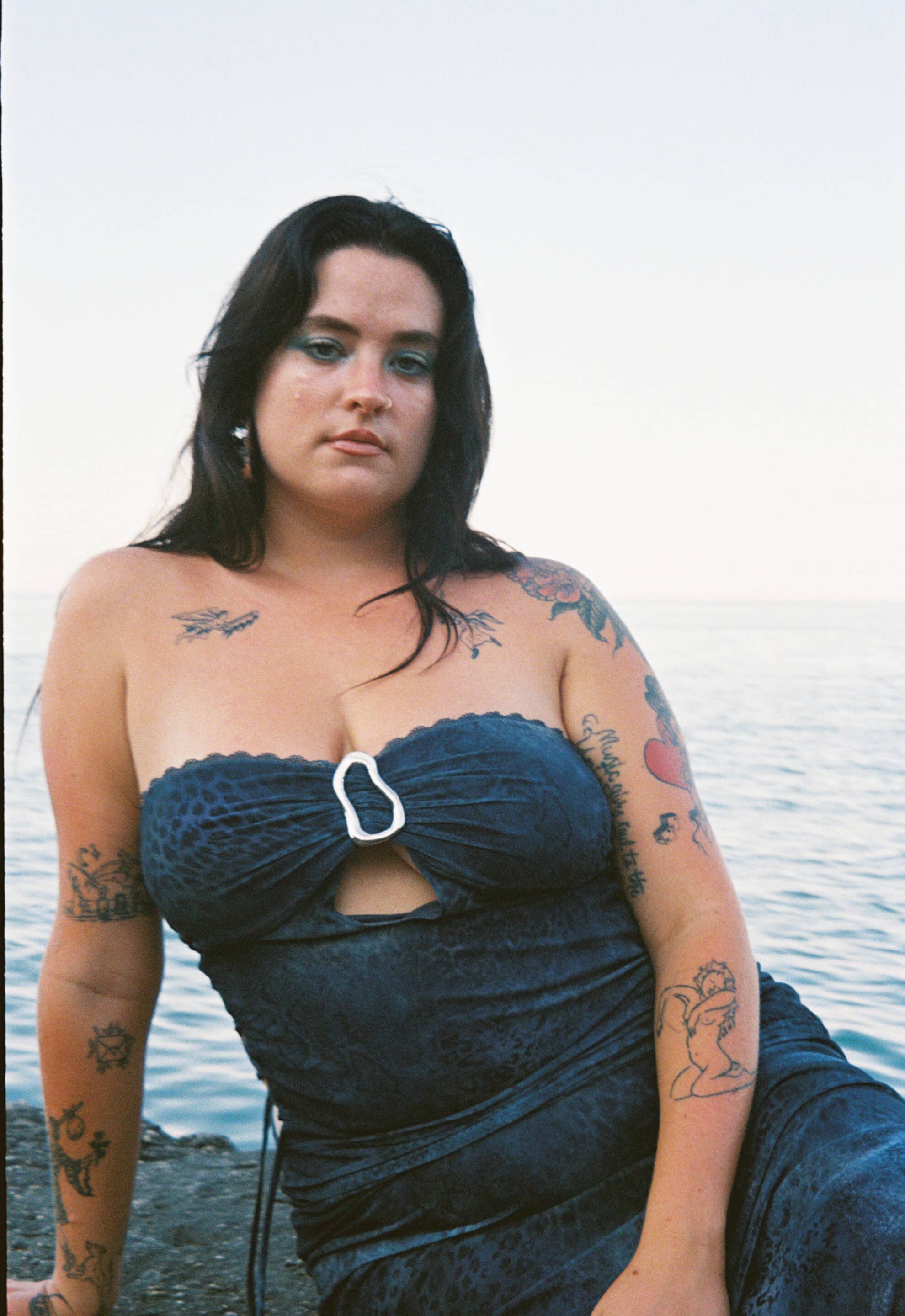
Grace Kinter isn’t particularly interested in revenge—at least not anymore.
On her forthcoming album Revenge Arc, the Los Angeles-based soul singer-songwriter takes the fantasy of getting even and slowly dismantles it. What emerges instead is something quieter, harder, and ultimately more powerful: learning to stop organizing your life around the people, places, expectations, and wounds that belong to your past.
It’s fitting for an artist entering a decade that culturally carries an almost absurd amount of expectation. Kinter turned 30 this year, and rather than arriving at the milestone with everything suddenly figured out, she found herself confronting the accumulated emotional debris of her twenties.
“My twenties felt like a sprint,” she says. There was the post-college scramble for financial independence, grief after losing her father, the pandemic, heartbreak, loneliness, friendship drama, and the chaos of figuring out adulthood in real time.
She had hoped 30 might somehow mark the finish line. Instead, it taught her something less glamorous: there isn’t one.
That realization sits at the center of Revenge Arc, arriving in September. Dreamy, intimate, soulful, and introspective, the record examines the growing pains that don’t necessarily receive grand cultural narratives: leaving a childhood home behind, watching friends move into marriages and families while your own life follows another trajectory, losing relationships without closure, and realizing that healing often requires surrendering the version of the past you wish you could rewrite.
Its first single, “somehow strangers,” turns toward a particularly strange form of heartbreak: losing a friend.
Beginning in emotional distance before erupting into a cathartic chorus, the song recreates the contradictions of grieving someone who is still alive but no longer part of your world. Anger becomes hurt; hurt becomes questioning; questioning eventually becomes acceptance.
For Kinter, friendship carries a weight that can rival—and sometimes exceed—romantic love. It is connection stripped of many of the expectations surrounding family or partnership: people simply choosing, again and again, to remain in one another’s lives.
“somehow strangers” is about discovering that someone she believed shared that understanding didn’t.
That ability to locate enormous emotion inside overlooked experiences has become central to Kinter’s songwriting. Having sung since she was nine, encouraged by her late father, a gypsy jazz guitarist, she began pursuing solo music at 18 in Chicago before eventually finding her way toward the dreamy soul language she inhabits today.
There are traces of Amy Winehouse in her love of emotional directness, jazz-informed phrasing, and willingness to explore the less flattering corners of relationships. But after more than a decade of writing, Kinter is increasingly interested in trusting the specificity of her own experience.
Revenge Arc is the result: not a victory lap, not a revenge fantasy, and certainly not a declaration that everything has healed.
It’s a record about what happens when you realize the people who hurt you don’t deserve to remain the protagonists of your life.
We spoke with Grace Kinter about friendship heartbreak, grief, her father’s enduring influence, turning 30, Amy Winehouse, and why sometimes the most satisfying revenge arc is abandoning revenge altogether.
Your upcoming album, Revenge Arc, explores the growing pains that come with entering a new chapter of adulthood. Looking back, what did turning 30 reveal about yourself that you couldn’t have understood in your twenties?
When I think about what was revealed, the biggest thing that comes to mind is: you weren’t perfect, but you did the best you could, and that’s okay. Just keep going and try to be present.
My twenties felt like a sprint. Finding a job post college and fighting for financial freedom, grieving the loss of a parent, the pandemic, heartbreak, long stages of loneliness and celibacy, friend drama and the “messy” party years of college…. I was always searching, running, climbing, and fighting.
I did sort of hope that when I turned 30, it would all just go away and I’d have a break but that was another lesson: life doesn’t reward you just cause. That’s a big part of what I write about in my upcoming album: letting go of the past and what you can’t change.
“somehow strangers” captures one of the most painful kinds of heartbreak—the quiet ending of a friendship without closure. What inspired you to write about that particular kind of loss rather than romantic heartbreak?
Me and many of my closest friends view friendship as almost more sacred than romantic and familial relationships. When you remove the obligation, loyalty, and longevity associated with family and the sex and romance associated with romantic partnership, you have friendship…people who just choose to keep spending time with each other through seasons of life.
Not everyone I allow into my life has to share this ethos, but I’m usually pretty good about knowing who does share it. This song is about someone I was wrong about.
The song gradually moves from emotional distance to cathartic acceptance, almost mirroring the grieving process itself. Was that emotional progression something you consciously built into the arrangement from the beginning?
My verses came from a place of judgement, annoyance, and distance—they represent the feelings on the surface. “I think I’m past your explanation if you even had one.” // “Good luck slipping through friendships like sand.”
But naturally—like you’d find writing a journal entry—I uncovered the truth of the matter: I was hurt. That’s when the chorus comes in. Lyrically, it was a conscious build, but sonically, it kind of just happened that it sounds like a cathartic release.
Your music has been described as dreamy, soulful, and introspective, often balancing sadness with resilience. Why are you drawn to telling stories that acknowledge pain while still leaving space for hope?
I’ve always been emotional and empathetic, gravitating towards collective sadness. Movies, books, people… Maybe it’s my pisces moon or maybe I just find it more relatable to be sad.
When it comes to art, writing, and music, I find it easier and more compelling to comment on what hurts and what’s hard rather than what feels good or comes easy. I prefer to hang out in the darker corners and find the rainbows in the less obvious places.
It just comes naturally to me and it fits my emotive vocals and the consistent genre and mood I seem to sprinkle into most of my songs.
Growing up with a father who was a gypsy jazz guitarist clearly shaped your relationship with music from an early age. What lessons from him—musically or personally—continue to influence the artist you’ve become today?
He was my biggest cheerleader. If I was home and playing a song on piano—whether an original or a cover—no matter where he was in the house, I’d hear a clap of applause from him after I finished.
He sadly passed away in 2019. I find that when I’m alone playing and singing, after I finish a song and it was a really good go at it, I sit there for a second waiting for my applause.
He certainly inspired me to keep going when he was here and even more so now that he’s gone. Having been making music for over ten years, there have been plenty of moments where I felt like giving up, but remembering how proud he’d be of me covering an Alicia Keys song at the piano keeps me going.
Amy Winehouse has been a defining influence on your artistry, but your songwriting feels deeply personal and contemporary. Beyond her unmistakable voice, what qualities of Amy’s artistry have had the greatest impact on your own creative philosophy?
I love how she isn’t afraid to say the harsh, ugly truth. One of my favorite songs by her is “Stronger Than Me.” It wouldn’t be very PC today; she’s sort of roasting her current man for not being manly enough.
And her phrasing is always so unique. She calls him “longer than frozen turkey.” What singer sings “frozen turkey?”
So yeah, I wish I had a bit more of her unapologetic attitude and way of saying things. But I do think we both sing about the less obvious corners of life, self, love, relationships.
** Revenge Arc isn’t about revenge in the traditional sense—it seems more like reclaiming yourself after letting go of people, places, and expectations. What does “revenge” mean to you in the context of this album?**
Exactly. The idea of a revenge arc came to me when I was sitting in the car after volunteering one night, and I decided to open Instagram. Mistake number one.
An old flame came up on my phone and my face got hot. My visceral reaction was so unsettling to me because of how long it had been since this flame and me had spoken. Sometimes certain hurts plant themselves inside your body, underneath your skin.
My hurt will always be valid but my reaction to the hurt felt unhealthy. And that led me to reflect on how much I live my life FOR the people who have wronged me. Whether I’m having a jump scare in my car after seeing a photo or wondering if they’re thinking about me, I realized with sudden clarity that I needed to live my life for me.
No revenge arc for me.
Many of the songs explore transitions that don’t always receive much attention, like saying goodbye to a childhood home or feeling out of sync with friends entering different stages of life. Why do you think these quieter moments deserve their own soundtrack?
I think it’s interesting to take a feeling or event and dissect it and then write a song from an angle that feels less triumphant or obvious… like taking a step back from the big picture idea and reflecting on the sore spots most people overlook or zoom past.
Also, these are the specific growing pains that I’m experiencing. Turning 30 means a lot of people I love are getting married, moving, and even starting families. My reality is not that, so I write about the things that feel monumental in my life.
You’ve spent more than a decade refining your sound, evolving from your beginnings in Chicago to where you are now in Los Angeles. How has your relationship with songwriting changed as you’ve grown more comfortable trusting your own voice?
I think the biggest thing I’ve noticed is a sharpening of my lyrical abilities. In “somehow strangers”‘ first verse, the last word of every phrase is also used to start the next phrase. “When it’s so clearly tripled in size up the man I thought was you.” I was proud of that one 🙂
I also take peoples’ advice more now too. I’m less stubborn and more open to listening and collaboration. I don’t hold my own idea as sacred as I used to because I’ve seen the beauty that blooms when you drop that ego and give others a chance to listen and add/adjust.
I know that the song is still mine, and other people can help the message deliver with even more impact. But I definitely still need to work on asking for help and not feeling like a bother!
By the end of “somehow strangers,” the unanswered questions give way to acceptance. As listeners step into Revenge Arc, what do you hope they discover about healing—not as a destination, but as an ongoing process?
I hope when people listen to Revenge Arc, they feel valid and seen as they navigate the less obvious, tender hardships of getting older.
Revenge Arc is for the funny friend, the single friend, those who feel alone in a room full of people, those who feel like a black sheep, those who have literal and figurative scars they’re constantly putting bandaids on.
I hope they know it’s normal to want to tell someone off, stay up late scheming revenge, feeling the big emotions. Those feelings are an important part of the process. You just can’t lose yourself in it.
The best revenge for all of the trauma and pain is just to be the best you for you.
Grace Kinter’s “somehow strangers” is the first single from her forthcoming album Revenge Arc, arriving in September.