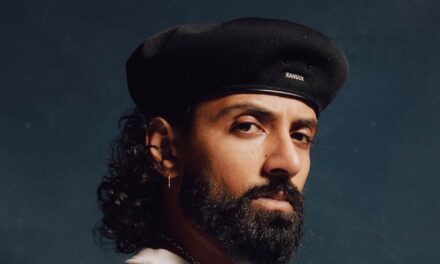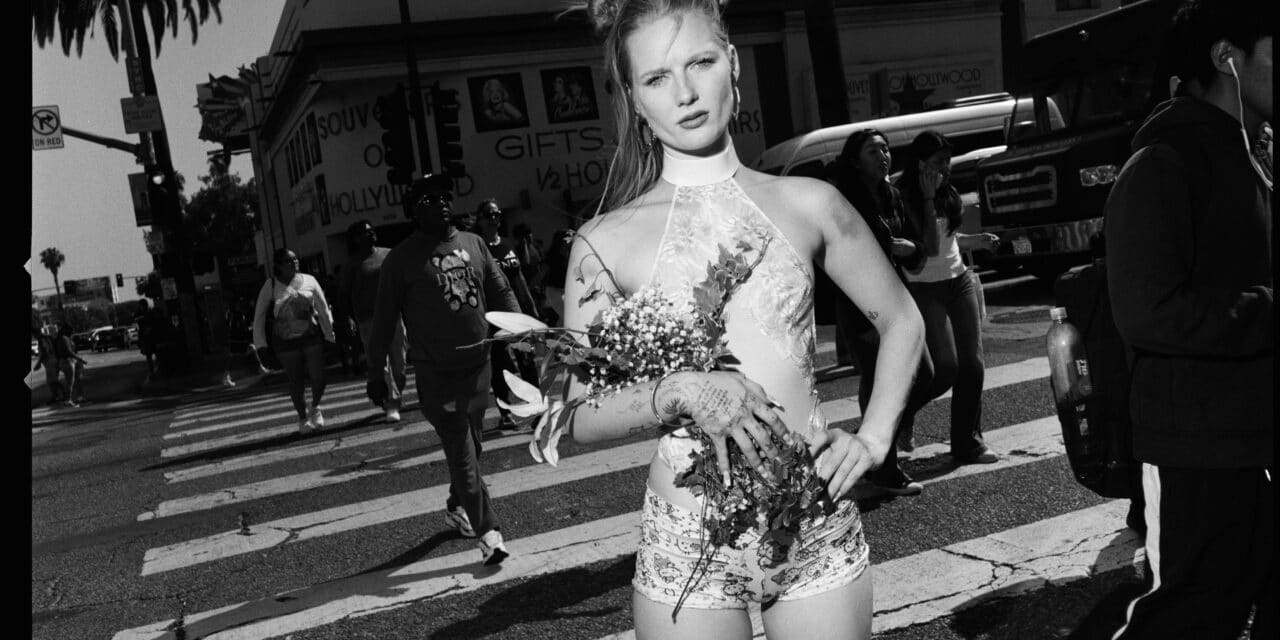
After stepping away from the major-label system, the alt-pop artist is entering her biggest era yet with a deeply personal new EP, a global headline tour, and a clearer understanding of what success can—and cannot—give her
Growth rarely looks as clean as people want it to.
It is not always a breakthrough. It is not always a reinvention. And it is almost never a straight line.
For Lilyisthatyou, the title of her forthcoming EP, FROM THE GARDEN I GREW, captures that messier reality: the idea that becoming requires cultivation, but also discomfort. Dirt under your nails. Weeds cut back. Old versions of yourself left behind.
“To create something beautiful—a flower, a garden—you need to get your hands dirty,” she says.
That image becomes the emotional center of a project arriving at a particularly significant moment in her career.
Several years after parting ways with Warner Records in 2023, Lilyisthatyou is now entering what could easily be described as her breakout independent era. She has surpassed 300 million cumulative streams, recent single “Empty Universe” has climbed past 350,000 streams in less than a month, and her upcoming global headline tour has already moved more than 11,000 tickets before the first date.
But she is not particularly interested in measuring the moment that way.
“Success to me is being proud of my work and being able to stand behind it fully,” she says. “Streams and ticket sales come second.”
That distinction matters.
Much of Lilyisthatyou’s music has always existed in the friction between public confidence and private contradiction. Sexuality, shame, addiction, identity, self-worth, longing, excess—she approaches those subjects without sanding down their edges for easier consumption.
That refusal becomes even sharper across FROM THE GARDEN I GREW.
The EP is less concerned with presenting a perfected version of Lilyisthatyou than dismantling the need for perfection altogether. She describes confronting conformity and validation, questioning the ways artists are encouraged to package themselves into something cleaner, safer and easier to digest.
“People just don’t care,” she says of trying to move closer to the middle. “And I know that is not what my fans want from me.”
Instead, she is leaning further into the contradictions.
On “Empty Universe,” nothing matters and everything matters simultaneously. On “MONEY CAN’T BUY HAPPINESS,” external momentum collides with the realization that success cannot manufacture self-acceptance. Across the EP, darkness and confidence occupy the same emotional space.
And perhaps most importantly, the artist who emerges from that process sounds increasingly comfortable with not asking permission.
Mundane spoke with Lilyisthatyou about FROM THE GARDEN I GREW, life after a major-label deal, the limitations of external validation, provocative pop, learning to trust intuition, and what it means to finally feel both happy and in control.
FROM THE GARDEN I GREW feels like a title about transformation, but not the clean, romanticized version of it. You’ve talked about needing to “get your hands dirty” to create something beautiful. What did you have to confront in yourself to make this EP?
A need for perfection, conformity, validation from others.
I want to reject the idea that music could ever be perfect, and embrace the idea that true art is a rejection of conformity in the pursuit of fulfillment.
This project arrives several years after parting ways with Warner Records, and you’re now reaching major milestones independently—300 million-plus cumulative streams and more than 16,000 headline tickets sold. Has independence changed your definition of what success actually looks like?
No.
Success to me is being proud of my work and being able to stand behind it fully.
Streams and ticket sales come second to the feeling of listening back to my own songs and projects knowing the time, attention, and energy I put in to get them out there.
Being independent is just part of it for me right now, but I don’t think about it too much or as an obstacle.
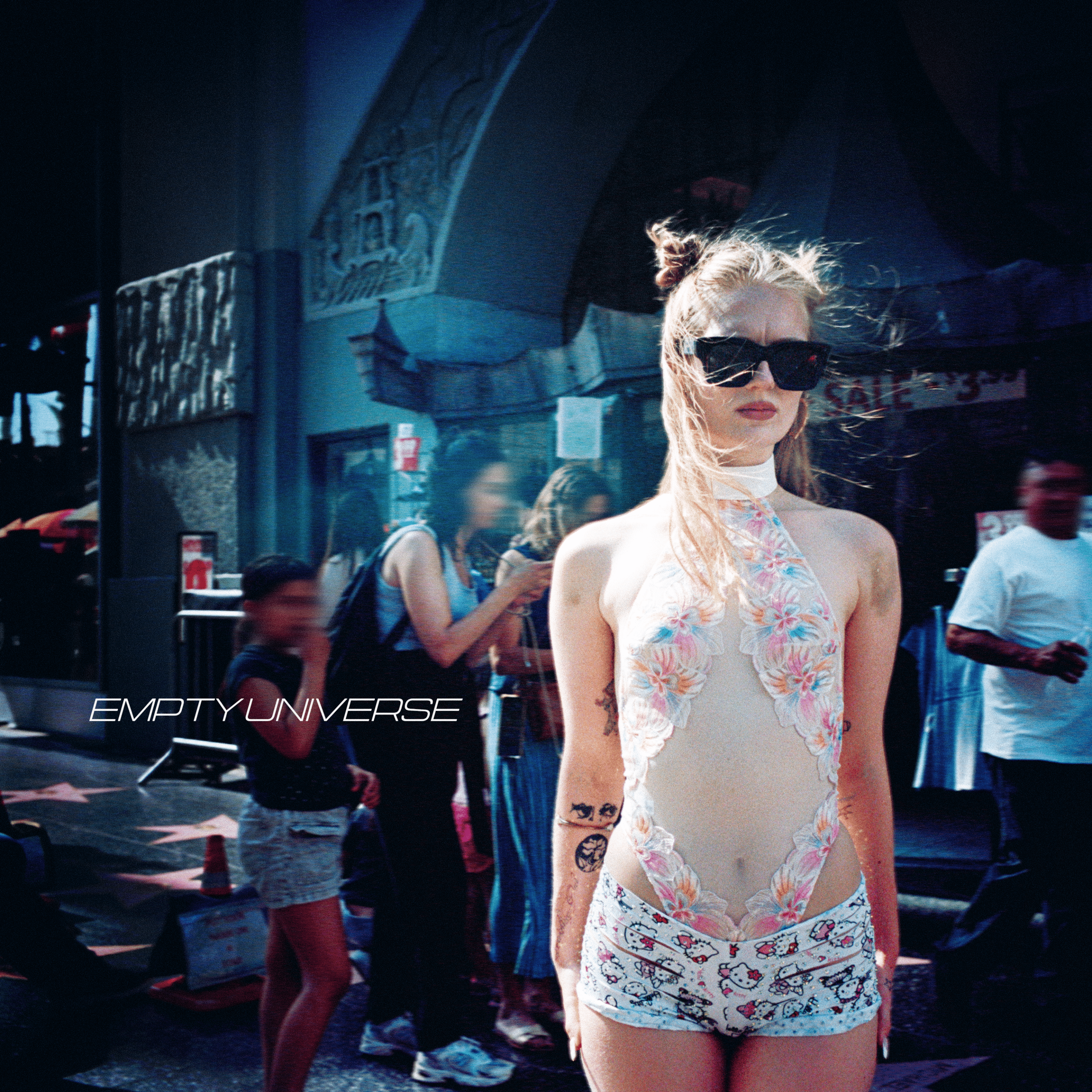
There’s an interesting irony in releasing a song called “MONEY CAN’T BUY HAPPINESS” at a moment when your career is visibly accelerating. What has success given you that you genuinely value—and what have you realized it can never give you?
Success has given me the ability to tour and connect with fans one on one while doing what I love most, which is performing and sharing a room with the people who get me.
I never feel lonely on stage.
It’s so valuable to me because it’s a tangible culmination of hard work compared to virtual “successes” like social media and streaming.
It can never give me nirvana or self-acceptance.
I know those are states of being I reach from being still—not outward accolades.
Your music tackles sexuality, shame, addiction, and identity without sanitizing those experiences for pop consumption. Have you ever felt pressure—from the industry, audiences, or even yourself—to make your story more palatable?
The biggest pressures come from inside myself, wondering if I was different or posed ideas in a “cleaner” way, my reach may grow.
But it’s a risk I feel I took before with different singles or song notes and it never made an impact to be straight down the middle.
People just don’t care, and I know that is not what my fans want from me.
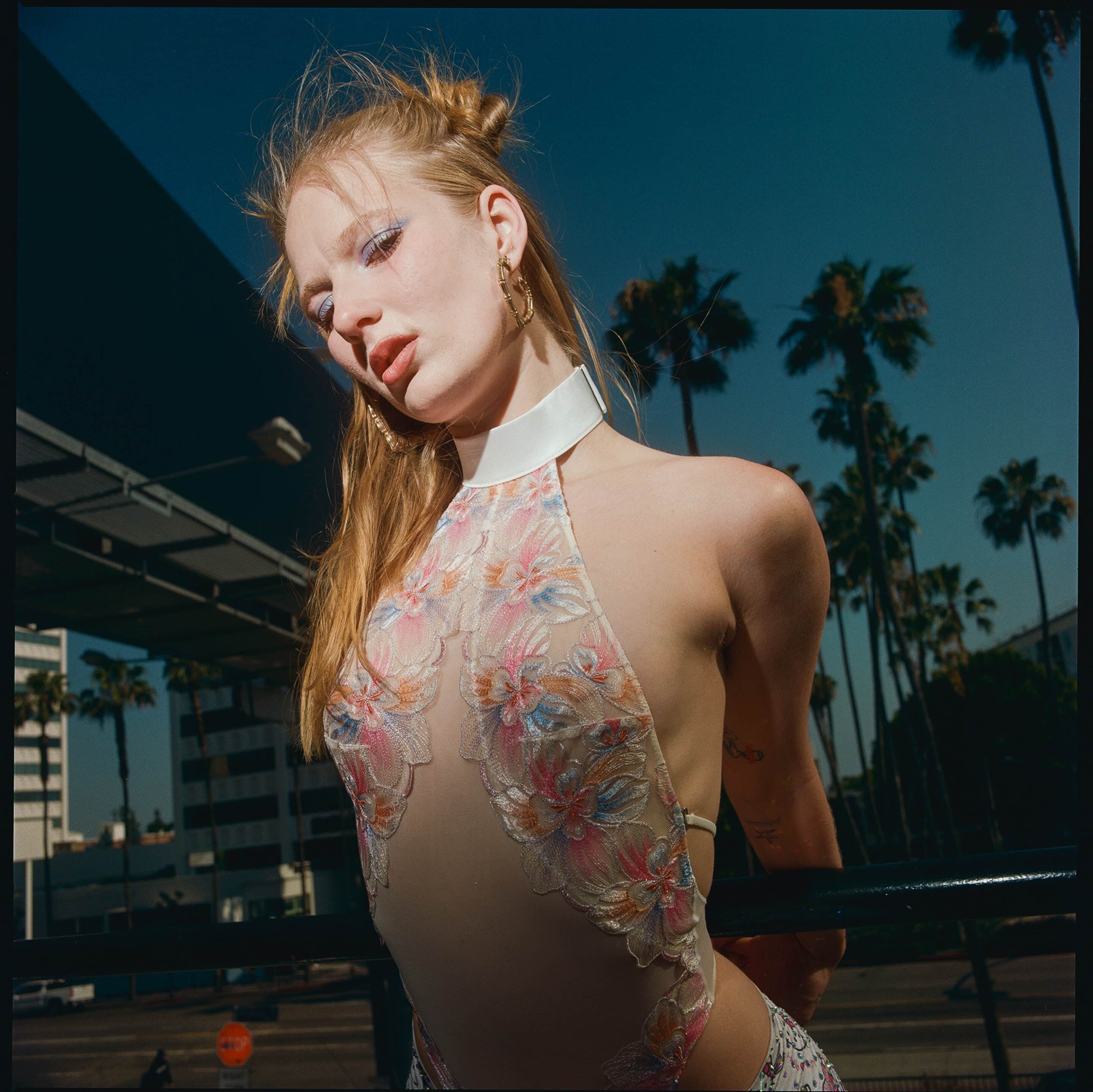
“Empty Universe” has connected incredibly quickly, reaching hundreds of thousands of streams within weeks. What do you think listeners are recognizing in that song that feels particularly relevant to where people are emotionally right now?
The contradiction between nothing and everything mattering is something I struggle with every hour, every day, and it’s clear I’m not the only one who feels both so intensely, which feels nice.
There’s often an expectation that losing a major-label deal represents failure, when your trajectory suggests almost the opposite. Looking back at 2021 now, do you see that separation as a setback, liberation, or something more complicated?
I would never call it a setback.
In “Empty Universe” I say, “living life with no regrets,” and I really, really mean that.
I don’t look back at anything, ever, wishing it was different than it was because no self-sorrow or disappointment will change what happens.
Every day I learn to love myself and my life a little bit more, and that’s because of every single thing, small and big, that’s happened to me.
I’m very grateful for my time with Warner and it ended when it was supposed to.
I really believe what’s meant for you is already yours.
Just follow the path and get in tune with your intuition.
Left-of-center pop has historically been a space where artists can turn things society labels excessive, uncomfortable, sexual, or messy into sources of power. What does being provocative mean to you when it comes from authenticity rather than simply trying to shock people?
I wouldn’t call myself provocative.
The voice that sings the songs is the body that’s lived through this life—I’m always writing about my experiences as they happen.
Sometimes those experiences are ugly or disrespectful or sexual, but it’s inherent in my nature to be brutally honest and use art and songwriting as a form of self-understanding.
I think what shocks people is how comfortable I am with being myself.
You’re about to take this music into a global headline tour, with dates already selling out before the EP has even arrived. How does seeing thousands of people physically show up for something you built independently change your relationship with the audience?
I don’t think I’ll feel the shift in the relationship until I’m on stage looking out at everyone night after night for three months.
The garden metaphor suggests that growth isn’t something that simply happens to us—it requires deciding what to cultivate and what needs to be cut away. What did you have to leave behind in order to become the version of Lilyisthatyou we hear on this record?
Every day I cut new weeds and sow new seeds.
I don’t take myself too seriously, but I think I left behind maybe a more cheerful, forgiving, naive version of myself to tap into these deeper, darker songs.
FROM THE GARDEN I GREW is being positioned as a turning point, but turning points are usually much easier to recognize in retrospect. Does this moment already feel like the beginning of a new era to you, and if so, what are you finally allowing yourself to become?
Yes.
Happy and in control.
There is a temptation to frame Lilyisthatyou’s current momentum as a comeback story.
That would be too simple.
The more interesting story is what happened after she stopped treating industry structures as the thing that defined whether she was moving forward.
Leaving a major-label deal did not suddenly make everything easy. Independence is not presented here as some romantic cure-all. She does not even seem particularly interested in making it the central narrative.
Instead, what matters is ownership of the work.
Not ownership merely in the contractual sense, but the deeper ability to look at something she has made and recognize herself inside it.
That may be why the garden metaphor works so well.
A garden is never finished.
There is always something growing, dying, being removed, reseeded or becoming something different than expected.
Lilyisthatyou speaks about herself in similar terms.
She is still cutting weeds.
Still planting.
Still learning which versions of herself are worth carrying forward.
And while numbers surrounding this era are undeniably impressive, her answers repeatedly move away from them.
Streaming is abstract.
Social media is abstract.
A room full of people singing the songs back is not.
Neither is the feeling of listening to your own work and knowing you did not bend it into something more acceptable just because someone told you that might make it easier to sell.
If FROM THE GARDEN I GREW represents a turning point, maybe it is not because Lilyisthatyou has finally arrived somewhere.
Maybe it is because she has stopped waiting for arrival to validate the path.
The garden is still messy.
The work is still ongoing.
But for the first time in this chapter, she knows exactly who gets to decide what grows there.