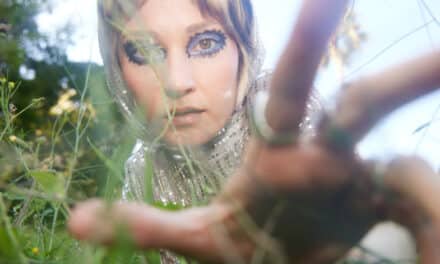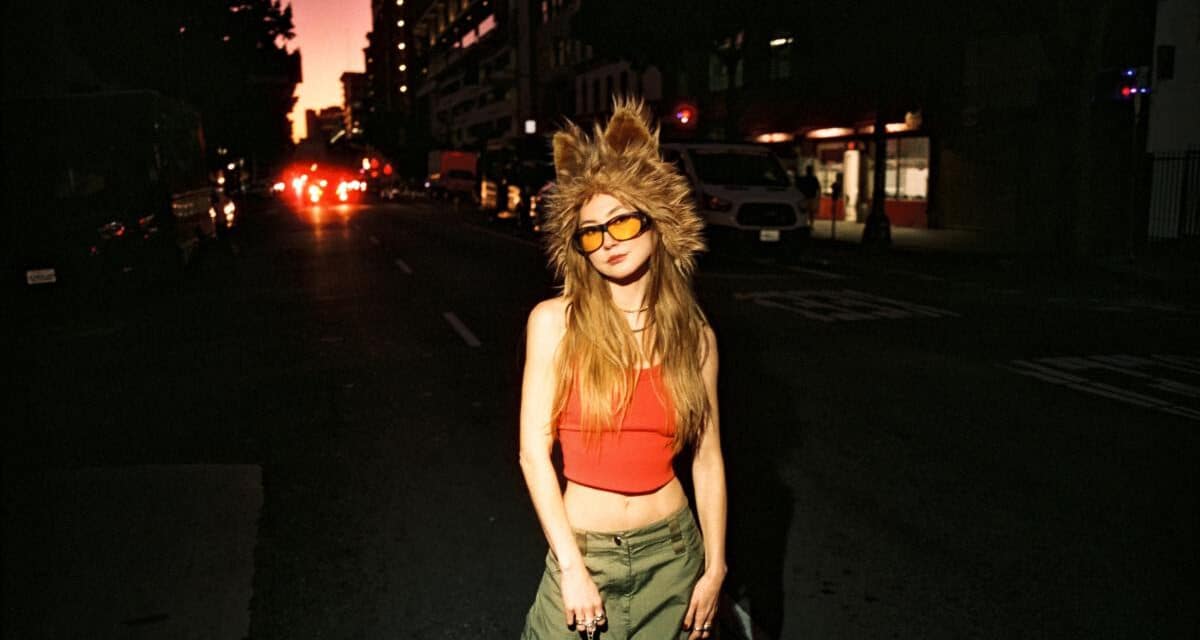
Photo credit: Kimiko Glenn/Press
There is a particular choreography to modern romance: approach, retreat, wait, pretend not to care, check the story views, reconsider the text, disappear, reappear, repeat.
For KIMIKO, the recording moniker of actress, director, vocalist, and multidisciplinary performer Kimiko Glenn, that choreography has become fertile creative territory.
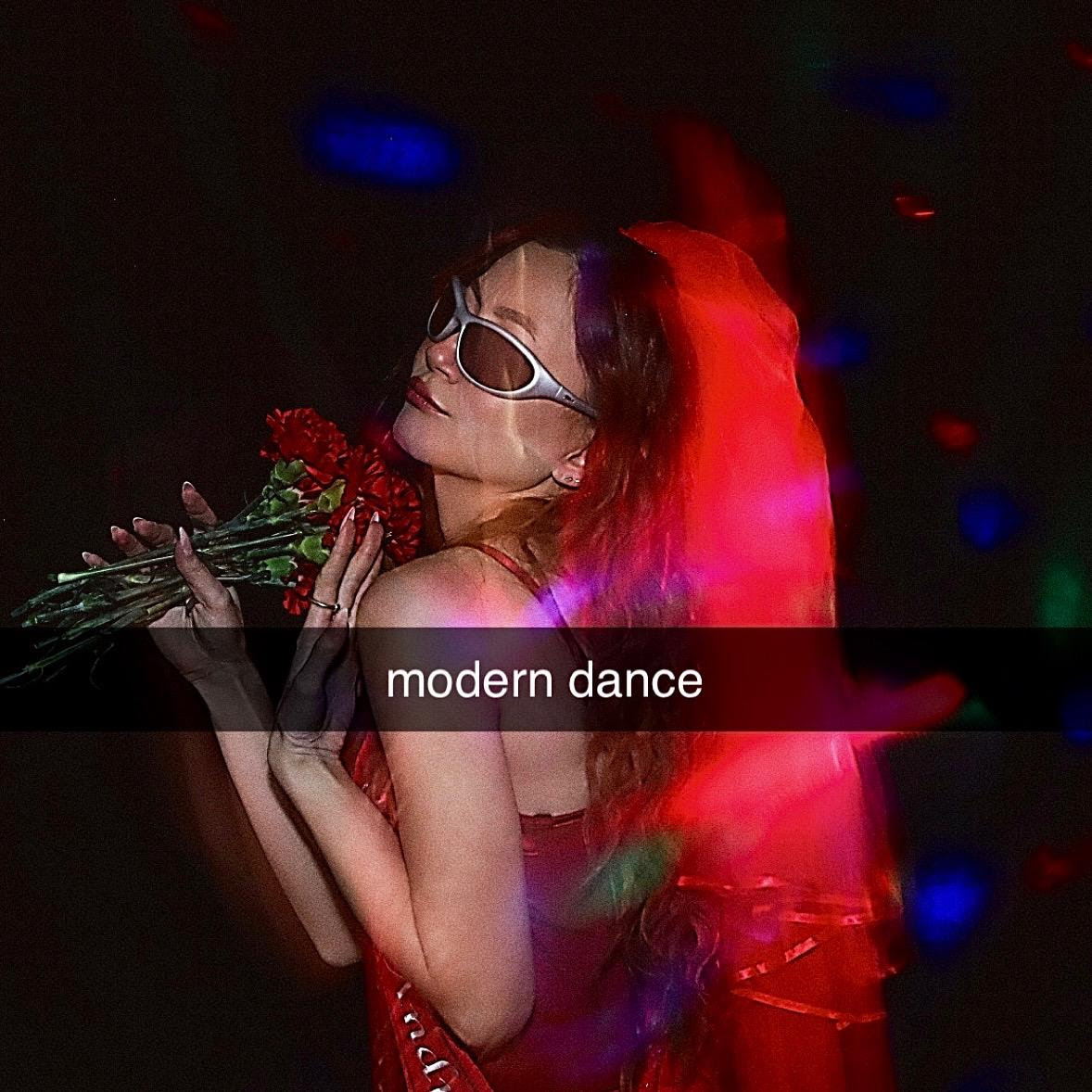
Her debut EP, Modern Dance, turns the strange rituals of contemporary dating into five tightly constructed pieces of theatrical pop, where emotional instability is met with humor, frustration becomes melody, and romantic disappointment is rarely allowed to leave the room without becoming a punchline first.
The project is less interested in documenting heartbreak as tragedy than examining its sheer absurdity.
Across “Hang Out Forever?,” “Emotional Whiplash,” “Just Like That!,” “BIG ICK ENERGY,” and its title track, KIMIKO chronicles a romantic culture built around contradiction: people demanding intimacy while protecting themselves from vulnerability, endless access to potential partners accompanied by increasingly limited emotional availability, and a digital ecosystem where everyone is simultaneously living, observing, and marketing their own lives.
For someone whose career has already stretched across Broadway, television, film, animation, directing, and voice performance, songwriting presented something different.
“For me, telling stories through songwriting is like clicking puzzle pieces into place,” she says. “It is so satisfying.”
Glenn has spent much of her professional life interpreting other people’s words. She originated Dawn in the Broadway production of Waitress, portrayed Brook Soso in Orange Is the New Black, and has built an enormous voice-acting career spanning BoJack Horseman, Hazbin Hotel, Kiff, Centaurworld, Spider-Man: Into the Spider-Verse and beyond.
With KIMIKO, however, there is no character standing between performer and material.
“I’ve written scripts, I’ve sung other people’s music, I’ve read other people’s words, but nothing feels more therapeutic and validating to me than writing a song that expresses exactly how I’m feeling,” she explains.
That sense of processing in real time gives Modern Dance much of its personality. These songs do not sound as though they were written after KIMIKO achieved some calm, retrospective understanding of the relationships behind them. They sound like dispatches from inside the confusion.
The title track began in exactly that state.
KIMIKO had been seeing someone whose early enthusiasm—talk of deleting dating apps, telling his parents about her, even potentially traveling together—suddenly gave way to distance when she tried to make plans.
The disconnect sent her to her computer, where what began as a stream-of-consciousness rant slowly revealed itself as a song.
Soon, she found the metaphor that would define the entire project.
“I imagined us constantly missing each other, awkwardly slinking through each other’s negative spaces, flexing our feet, bending into odd shapes, kind of like in modern dance,” she recalls.
It is an almost perfect description of contemporary dating.
There is movement everywhere, but very little arrival.
Frustration With a Beat
The genius of Modern Dance lies in KIMIKO’s refusal to treat romantic dysfunction with excessive solemnity.
Pain exists within these songs, certainly. So do anxiety, rejection, disappointment, and confusion. But whenever things threaten to become unbearably earnest, she reaches instinctively for comedy.
“At this point in my dating life it almost feels like a joke,” she says. “I don’t set out to do it for the plot, but for whatever fun reason, the plot just keeps thickening.”
Humor functions partly as survival.
“There’s a time and place for the pain to exist like an open wound,” she explains, “but…I lean into the comedy out of survival, because I know some other girl has been through it and just needs a laugh.”
That puts KIMIKO within a lineage of pop songwriting associated with artists like Lily Allen and Sabrina Carpenter, both of whom understand that a perfectly timed joke can communicate resentment, sexual politics, humiliation, and power more effectively than a dramatic monologue ever could.
For KIMIKO, comedy also creates distance without necessarily reducing emotional honesty.
Her songs can expose someone’s behavior and simultaneously acknowledge how ridiculous it is that she cared so much in the first place.
That self-awareness prevents Modern Dance from becoming a catalog of grievances.
Instead, the joke frequently implicates everyone.
Including her.
KIMIKO hints that this strategy will deepen considerably on her eventual full-length album, you’re smaller than i remember, which she describes as emerging from an experience that was genuinely traumatic despite the whimsical and comedic language surrounding it.
“Comedy is a way in,” she says. “It can convey the amount of hurt someone caused you, while still inviting people into the ridiculous nature of messy human dynamics.”
The Hook Is the Revenge
That perspective becomes especially potent when paired with KIMIKO’s unapologetically melodic instincts.
The songs on Modern Dance want to be sung.
Even when their narrators are spiraling, the production remains bright, rhythmic, and sharply structured. The result is music that converts emotional confusion into something communal.
The anxiety becomes a chorus.
The grievance becomes choreography.
The bad date becomes three minutes of pop.
The chorus of “Modern Dance” itself required outside intervention. KIMIKO initially wrote three verses but struggled to find the hook that could organize them.
Eventually she turned to longtime friend and collaborator Morgan Karr, aka morgxn, whom she jokingly calls the “hook daddy.”
His contribution unlocked the song.
“I’m under no illusion that I am the smartest person in the room,” she says. “Best idea wins!!!”
Despite working in highly collaborative industries throughout her career, KIMIKO explains that songwriting remains unusually private for her. She generally writes alone because the process is first and foremost emotional processing.
Collaboration tends to happen only when the song requires another perspective.
“If I feel stuck, or need help getting a message across the finish line, then I consult my incredible songwriting friends,” she says. “But I just like to keep it contained and do things on my own if possible, and that probably comes from a deeper place of being scared to ask for help.”
That admission feels important.
For all the glitter, punchlines, and dramatic framing around KIMIKO’s pop world, Modern Dance is fundamentally built around someone trying to understand what happened to her by giving it shape.
Pop becomes a form of organization.
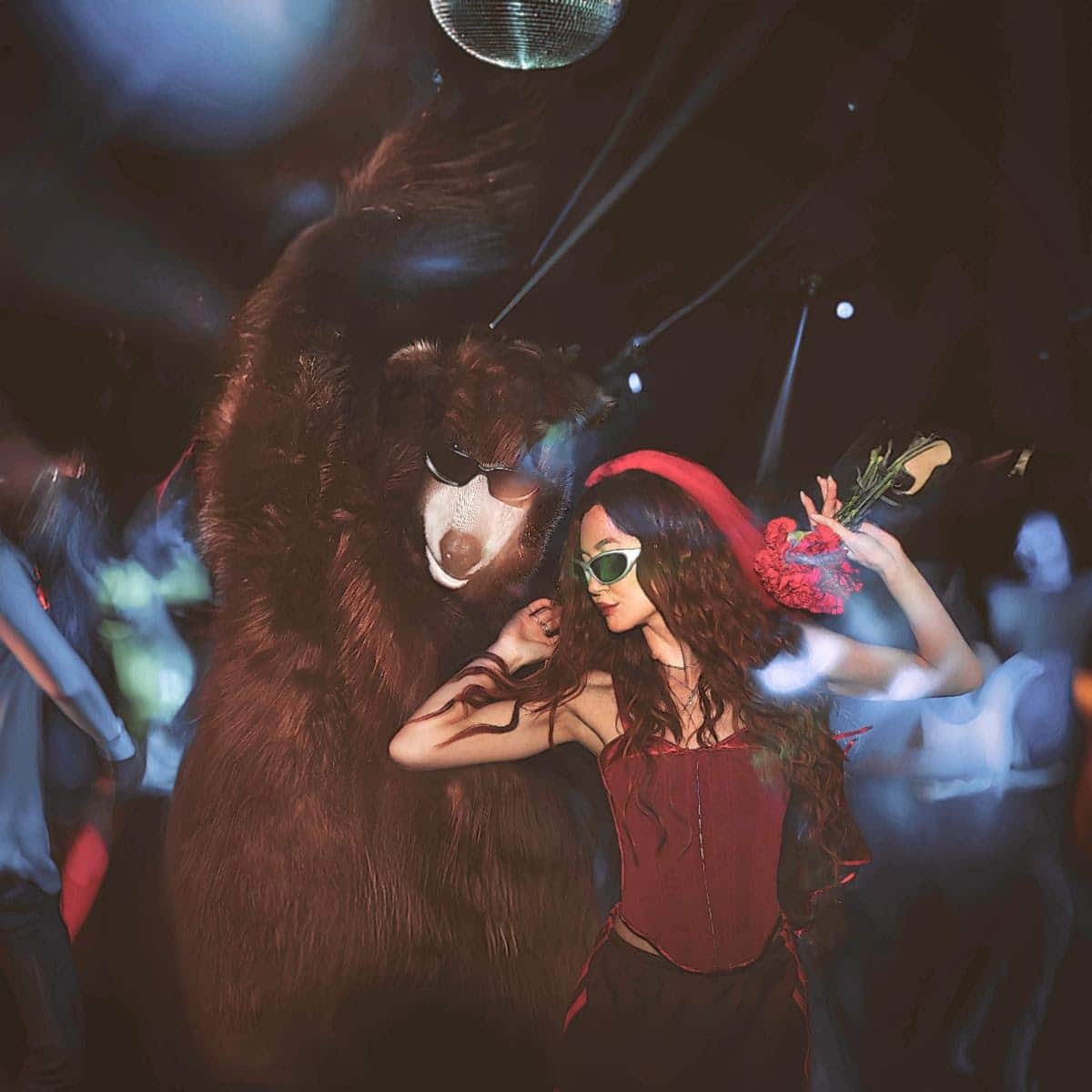
The Theater Never Really Leaves
KIMIKO’s acting background inevitably enters the music, although perhaps not in the obvious way.
She is not approaching these songs as characters.
If anything, the project is powerful because she appears to be stripping away character entirely.
But acting has taught her something crucial about delivery.
“Being a vocalist is an art-form,” she says. “You can take people on a journey with how you deliver a line or a lyric or a phrase. You can be the most technically skilled singer in the world, but it’s how you tell the story that draws people in.”
Her increasing involvement in comping her own vocals has made that principle even more deliberate.
Rather than automatically choosing the cleanest performance, she looks for personality.
“I often try to pick the takes with personality and a point of view, because I admire this in so many singers.”
It helps explain why Modern Dance can feel theatrical without feeling performative.
The exaggeration serves emotional truth.
A raised eyebrow can matter as much as a high note.
Love in the Age of the Feed
KIMIKO’s visual language extends that critique beyond the songs themselves.
The video for “Just Like That!” places romantic instability inside the visual architecture of TikTok: Get Ready With Me videos, matcha shots, outfit content, dancing, beauty routines, and all the supposedly casual fragments through which digital identities are meticulously constructed.
Underneath the polished feed is someone losing her mind.
For KIMIKO, the connection between romance and social performance is hardly theoretical.
“When I have a crush, I use social media differently,” she admits. “I’m compulsively checking my story views to see if they’ve seen it yet; I’m trying to look a little bit hotter in my pictures, trying to be a bit more clever in my wording.”
The internet turns desire into analytics.
Did they watch?
When?
Did they like?
Did they post?
Who are they following?
“We can so easily fall in love with the idea of a person through their profiles,” she says, “only to realize that we are all just weirdos trying to participate in the hamster wheel of internet culture.”
It is one of the EP’s more interesting underlying tensions.
Technology promises access while intimacy increasingly feels inaccessible.
Dating apps offer infinite possibility, while the infinite possibility itself can make choosing and committing feel irrational.
Everyone can theoretically meet everyone.
Nobody wants to look as if they want anyone too much.
Hence the dance.
A Tango of the Sexes
The video for “Modern Dance,” directed by DEATHCATS, translates that metaphor literally without actually relying on conventional choreography.
KIMIKO and Vinny Balbo move through split screens, bedrooms, cars, and stages, repeatedly occupying adjacent worlds without quite arriving in the same one.
The visual draws from the stylized romantic comedies of the 1960s while allowing modern behavior to leak into the frame.
According to KIMIKO, the original concept was even more firmly rooted in the period.
“We initially said no cell phones in the video, and it was going to be way more ’60s, but then we started blending more modern ideas with tropes that felt both old and new,” she explains.
The split-screen becomes particularly effective because it turns emotional misalignment into geography.
They can see one another.
They can almost touch.
They repeatedly miss.
“I liked the idea that the end was the only time we ended up moving in sync together,” she says. “It feels like a really nice payoff.”
The dynamic is funny because it is recognizable.
Romance has always required choreography.
The technology changes.
The evasions do not.
In Conversation With KIMIKO
MUNDANE: You’ve spent years expressing yourself through acting, voice work, directing, and performance, but Modern Dance introduces KIMIKO as a recording artist on your own terms. What did songwriting give you that those other creative mediums couldn’t?
KIMIKO: For me, telling stories through songwriting is like clicking puzzle pieces into place. It is so satisfying! It comes completely naturally to me, given that I’ve always loved writing—my parents actually thought I’d be a writer—and that singing has been my number one favorite thing to do since before I can even remember.
I’ve written scripts, I’ve sung other people’s music, I’ve read other people’s words, but nothing feels more therapeutic and validating to me than writing a song that expresses exactly how I’m feeling.
I am often processing experiences as I write, and when I think up an awesome melody that just feels so right and real, or when a lyric pours out unexpectedly that hits the nail right on the head, it feels like finally being understood in a moment where I am experiencing confusion and uncertainty. It’s comforting!
MUNDANE: The EP turns frustrating romantic experiences into music that’s bright, funny, and incredibly hook-driven. When something painful or irritating happens in your life, at what point does it stop being a grievance and start becoming a pop song?
KIMIKO: Well, I like approaching everything with a sense of humor, generally. There’s a time and place for the pain to exist like an open wound, but at this point in my dating life it almost feels like a joke.
I don’t set out to do it for the plot, but for whatever fun reason, the plot just keeps thickening. I lean into the comedy out of survival, because I know some other girl has been through it and just needs a laugh.
I don’t like sinking too deeply into the bad feelings, because at the end of the day, the songs are meant to be my therapy. An expression of the “what the f*ckness.” It’s purely selfish, really!
MUNDANE: You’ve described “Modern Dance” as coming from this dating dynamic of “who can care less more,” which feels painfully specific to contemporary romance. How did you translate that emotional power struggle into the rhythm and structure of the song itself?
KIMIKO: Well, when I started writing the song I was in such an anxious state because this guy was fully giving me the runaround.
Date two telling me he deleted all his apps, that he had told his parents about me, inviting me to travel with him. But when I tried to schedule our next hang, he got SO WEIRD and acted like I was moving too fast. The reality was, I was trying to schedule because I actually just had no timeframe available to see him, and the cal was filling up.
Anyway, I sat down at my computer and just started typing out a stream-of-consciousness rant that ended up being the verses. Then I got out my guitar and messed around with melody. I think it was pretty much the first thing I thought of out the gate.
And then I realized that what we were doing felt like modern dance. I imagined us constantly missing each other, awkwardly slinking through each other’s negative spaces, flexing our feet, bending into odd shapes, kind of like in modern dance.
Because it kind of had a rambling quality like “When He Sees Me” from the musical Waitress—OG Dawn, btw hehe—I was drawing from that song structure and mirroring it slightly.
Then, well, I thought of as many dance-related puns as possible.
MUNDANE: You originally had three verses and struggled with the chorus until Morgan Karr helped unlock the hook. As someone accustomed to working across so many creative disciplines, what has learning to collaborate as a songwriter taught you about surrendering an idea rather than controlling every part of it?
KIMIKO: Oh, it’s easy for me to surrender an idea. I’m under no illusion that I am the smartest person in the room. Best idea wins!!! And Morgan is the hook daddy.
I typically write solo because my goal is to process things on my own, in my own time. If I feel stuck or need help getting a message across the finish line, then I consult my incredible songwriting friends.
I think there are only two songs I’ve written with someone from the ground up, one of them being “BIG ICK ENERGY,” mostly because I just had that concept in my head and thought it’d be a fun song to make.
Those writing session experiences have been rewarding in a different way, and the songs turned out awesome! But I just like to keep it contained and do things on my own if possible, and that probably comes from a deeper place of being scared to ask for help.
MUNDANE: From “Hang Out Forever?” to “Emotional Whiplash,” “Just Like That!” and “Modern Dance,” the EP almost creates its own vocabulary for dysfunctional dating. Did you realize while writing these songs that they were becoming chapters of the same larger story?
KIMIKO: It’s not by design, no; it just happens to be the part of my life that is constantly so unhinged.
Things are going well for me! I’ve created an amazing life for myself that includes beautiful friendships and so many rich, new experiences. The major disruption to my emotional well-being tends to be my dating life. Nothing makes me more stressed than when I invite a man into the picture.
My friends have borne witness to some of the most diabolical behavior, and I swear to God it’s not “my picker.” They can attest I’ve tried everything, and it all seems normal at the start.
I think men have lost the plot?? There’s always some batshit story I walk away with, some absurd plot twist, another grown man who is emotionally irresponsible and possesses nothing remotely resembling an acceptable EQ or the tools to be a capable partner.
It. Is. Wild out here.
So those are the predominant experiences that take up a lot of my mental energy. I write to soothe the part of me that doesn’t understand how anyone with a conscience can act that way, and when I take a step back, ya, my music unfortunately ends up painting a hellish romantic landscape.
MUNDANE: There’s a theatricality to your pop music without it feeling like you’re playing another character. Has your acting background changed the way you think about vocal delivery—how much attitude, humor, vulnerability, or exaggeration a lyric can carry?
KIMIKO: Being a vocalist is an art-form. You can take people on a journey with how you deliver a line or a lyric or a phrase.
You can be the most technically skilled singer in the world, but it’s how you tell the story that draws people in.
I definitely think my acting background helps; however, I do think I spent so much time in my early years smoothing out my voice for the theater that it can sometimes lack the cool, rugged tone that a lot of singers have.
Lately, I have been comping my own vocals, and I often try to pick the takes with personality and a point of view, because I admire this in so many singers.
MUNDANE: The “Modern Dance” video turns dating into a literal tango of the sexes and draws from the visual language of 1960s romantic comedies. How did that idea develop?
KIMIKO: It was mostly DEATHCATS’ idea! I think our main focus was the cadence of the video feeling like we were dancing without actually dancing and leaning into the humor of it all.
We initially said no cell phones in the video, and it was going to be way more ’60s, but then we started blending more modern ideas with tropes that felt both old and new. “A tale as old as time,” as I like to say.
I thought her bringing split-screens into the mix was so brilliant, and we workshopped what that would look like, how we would be jumping into each other’s worlds and still somehow missing each other.
I liked the idea that the end was the only time we ended up moving in sync together. It feels like a really nice payoff.
MUNDANE: With “Just Like That!,” you use TikTok aesthetics—the GRWMs, hauls, matcha, dance trends—to conceal emotional turmoil behind this polished digital surface. Do you think social media has made modern romance more performative, where we’re simultaneously experiencing relationships and packaging our lives for an audience?
KIMIKO: Oh, totally! It’s the comparison complex—what we glean from our parasocial perceptions vs. what someone’s real-life reality is. We never truly know.
But I do know that when I have a crush, I use social media differently. I’m compulsively checking my story views to see if they’ve seen it yet; I’m trying to look a little bit hotter in my pictures, trying to be a bit more clever in my wording.
It’s such a ruse, social media. We can so easily fall in love with the idea of a person through their profiles, only to realize that we are all just weirdos trying to participate in the hamster wheel of internet culture—the main portal into our measure of relevancy, our successes (and failures), and a mind trap that is whispering to us that we can, and always should be, forever leveling up.
Also, never look at a man’s discover page. It is… disheartening.
MUNDANE: You’ve cited Lily Allen and Sabrina Carpenter as inspirations, particularly in the way humor can become a form of power when writing about gender, sex, and disappointing relationships. What can you say through comedy or a cheeky pop lyric that you might not be able to express as effectively through straightforward vulnerability?
KIMIKO: My upcoming album is about a situation that was, in actuality, hugely traumatic for me. However, from the telling of it, you may not even realize how severely it impacted me—save for the fact that I wrote a whole album about it, of course.
It draws you into this delusional little world that actually is filled with silliness, and has almost a dreamy element to it.
I make fun of myself; I go balls to the wall on some painfully truthful lyrics, hitting him where it hurts.
Comedy is a way in. It can convey the amount of hurt someone caused you, while still inviting people into the ridiculous nature of messy human dynamics.
The album is called you’re smaller than i remember. I can’t wait to share it at some point.
MUNDANE: The title Modern Dance works beautifully on multiple levels—dance-pop, romantic choreography, and the strange rules people perform around intimacy today. After making the EP, what do you think you’ve learned about your own version of the “modern dance,” both romantically and creatively?
KIMIKO: I’m not actively pursuing partnership anymore, not because I don’t want it, but because I find those games exhausting and ultimately a real waste of time.
I got things to do!
I figure if someone is interested, they will be intentional about getting to know me as a human being and will make it happen.
I am a good communicator, I’ve got my shit together, and I am a great time. I don’t have any desire to meet someone at a lower level of competency. I don’t have the patience for it, and it’s just not sustainable.
On a creative level, I think I’ve learned there are endless ways to encourage men to put down the VR headset, get in touch with their emotions, and step up to the plate. 🙂