On their new album, the Los Angeles quartet turns growing up, political frustration, collaboration, and the fear of standing still into a louder, stranger, more expansive version of themselves.
For The Linda Lindas, growing up has never been a metaphor.
It has happened in public.
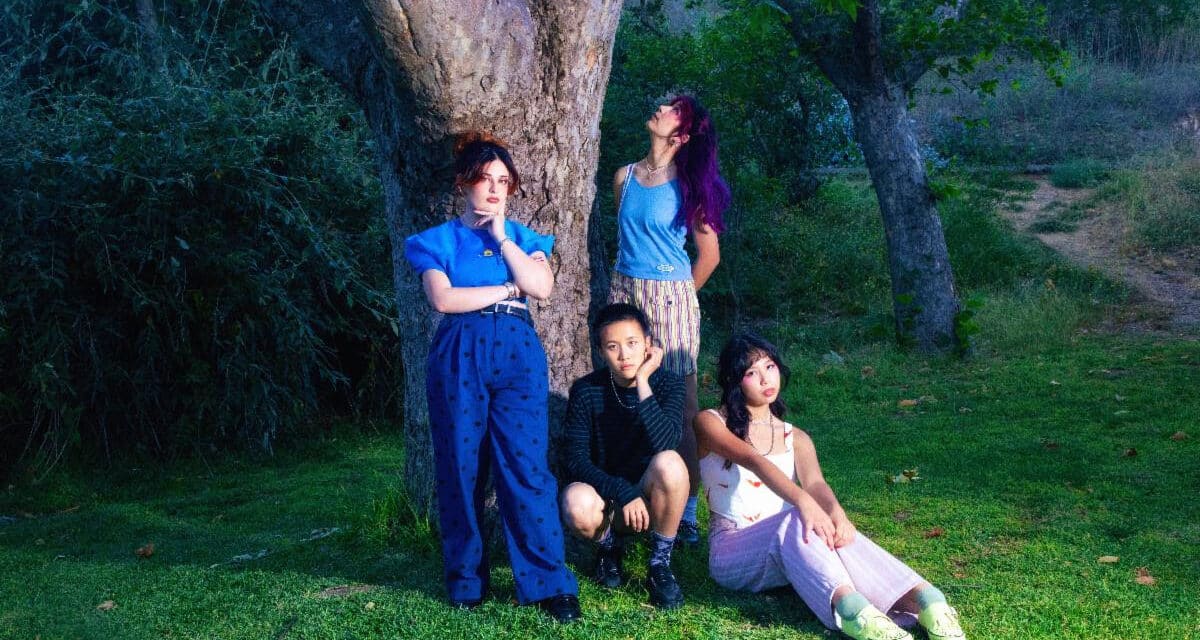
Since forming as kids, Bela Salazar, Eloise Wong, Lucia de la Garza, and Mila de la Garza have gone from playing all-ages shows in Los Angeles to touring internationally, opening for bands they grew up admiring, and becoming one of the most visible young punk bands of their generation.
That history makes the title of their new album, GOTTA GET OUT, feel particularly charged.
It is not simply about escape.
It is about refusing to stay static.
“We’ve never really had the idea that we needed to be one thing or fulfill any expectations,” Lucia says, “but this is the farthest out we’ve pushed ourselves so far.”
The album arrives August 28 via Reprise/Warner Records, and it finds The Linda Lindas deliberately challenging their own habits. For the first time, the band stepped away to write together in the same room from the very beginning, retreating to Palm Springs and Long Beach and allowing unfinished ideas, demos, competing influences, and spontaneous experimentation to shape the record collectively.
That process matters because The Linda Lindas have always been a band made from difference.
All four members write.
All four sing lead.
All four bring distinct musical instincts.
On GOTTA GET OUT, instead of smoothing those differences into a single sound, they seem increasingly interested in exaggerating them.
“We each have very different musical influences,” Eloise says, “and we tried to lean into all of them as far as we could.”
The result is an album concerned with movement in nearly every sense of the word: artistic movement, emotional movement, political movement, growing older, breaking habits, leaving old versions of yourself behind.
“I don’t think as humans we’re supposed to be too comfortable,” Lucia says. “We’re supposed to challenge ourselves and try new things because it’s hard, and more importantly, because it’s fun.”
Growing up without getting stuck
The Linda Lindas’ first album was literally called Growing Up.
Four years later, that process is nowhere near finished.
“Even though Growing Up is our first album, we’re still growing up!” Eloise says. “It’s still pertinent!”
That awareness has always made the band’s music feel immediate.
Their songs do not pretend to arrive from some finished ideological position. They document whatever the members are currently thinking about, whether that means boredom, anxiety, friendship, injustice, environmental collapse, or simply sitting around at home.
The subjects have become more complicated because their lives have.
But the basic method remains the same.
“As we grow older, our perspectives naturally change,” Eloise says.
That may be the clearest way to understand GOTTA GET OUT.
It is not an attempt to abandon what The Linda Lindas have been.
It is the natural consequence of becoming different people.
Watching time move
That theme becomes especially explicit on “Closer,” featuring Hayley Williams.
The song began as a bilingual idea between Bela and Lucia while Eloise and Mila were at school before expanding into a dense wall of guitars and layered vocals.
Lyrically, it explores the unsettling feeling of watching yourself grow older from a distance while everything around you continues moving.
For a band whose development has unfolded in front of an audience, that idea carries unusual weight.
“We’ve learned to appreciate every single day we get to be creative with each other and play music and be a part of our community of friends and artists and cool people,” Lucia says.
They can look backward now and recognize how extraordinary the last several years have been.
But they resist turning memory into a permanent residence.
“We try not to live in the past too much because we have so much we’re excited about that we haven’t done yet.”
Hayley Williams’ presence makes that tension between past and future even more visible.
The Linda Lindas grew up listening to her.
Now she is standing in the studio with them.
Rather than sending her part remotely, Williams showed up in person, helped write the bridge, and entered the process as a collaborator rather than a distant icon.
“Hayley is such an incredible force, but also insanely humble,” Mila says.
What surprised the band most was learning that Williams said this was the first time she had helped write on someone else’s song.
“She stepped back and helped foster the creative environment,” Mila says, “because she’s both someone that loves to laugh and have fun and chat and also someone that loves to get serious and will advocate for her favorite creative ideas.”
Afterward, they all went to Halloween Horror Nights.
It is difficult to imagine a more Linda Lindas version of mentorship.
Personal politics
The band’s politics have always emerged from lived experience rather than abstraction.
That was true when “Racist, Sexist Boy” went viral in 2021.
It remains true on GOTTA GET OUT.
“All of our politically charged songs are based on personal experiences,” Eloise says.
He points to “Blood On Our Hands,” which grew from thinking about where money goes and the ethics of consumption.
“Nothing Left” comes from a different anxiety: helplessness in the face of environmental destruction and the realization that convenience and business interests are repeatedly prioritized over human and planetary health.
This is an important distinction in the band’s songwriting.
Politics does not exist in a separate category from personal life.
It arrives through shopping, community, fear, anger, relationships, school, neighborhoods, and the everyday decisions through which larger systems become visible.
The Linda Lindas have never needed to choose between writing about themselves and writing about the world because, for them, the two are inseparable.
Punk without the costume
That same instinct shapes their relationship with punk.
The Linda Lindas entered a tradition rich with visual codes, historical expectations, and endless arguments about authenticity.
They appear increasingly uninterested in policing any of it.
“We don’t care about fitting into a ‘punk’ look or sound,” Eloise says.
Instead, their definition is behavioral.
“Really, we just play music we enjoy, with people we love, and try to put the most authentic versions of ourselves out to the world.”
That freedom is audible throughout GOTTA GET OUT.
Punk here is less a sonic limitation than permission to experiment.
The band can be noisy, melodic, bilingual, sentimental, angry, playful, political, or strange without having to decide which version is the legitimate one.
If punk means rejecting externally imposed expectations, refusing to become predictable might be the most punk thing they can do.
Leaving the imperfections in
That philosophy extends into the album’s visual world.
Rather than presenting creativity as something pristine and fully formed, The Linda Lindas have embraced the process itself—the unfinished ideas, the weird experiments, the imperfect moments.
For Bela, that messiness is important because it proves there are actual people behind the product.
“The messy parts and imperfections show that we are human, and that everything we make is real,” she says.
That statement also describes the band’s internal chemistry.
The Linda Lindas are not unified because they all have the same taste or write the same way.
They are unified because the differences belong together.
“What makes The Linda Lindas so special is that we are a mixture of all our music tastes, all our experiences, and all our writing styles,” Bela says. “We wouldn’t be The Linda Lindas without those things.”
In Conversation with The Linda Lindas
MUNDANE: GOTTA GET OUT feels like more than just an album title—it sounds like a mission statement. Was this record born from a desire to escape old expectations, or from finally giving yourselves permission to evolve?
LUCIA: It was a little bit of both! We’ve never really had the idea that we needed to be one thing or fulfill any expectations, but this is the farthest out we’ve pushed ourselves so far.
The phrase “GOTTA GET OUT” reflects a belief that breaking out of habits and routine can be good, because I don’t think as humans we’re supposed to be too comfortable; we’re supposed to challenge ourselves and try new things because it’s hard, and more importantly, because it’s fun!
MUNDANE: “Closer” captures that strange feeling of watching yourself grow up while life races ahead. As a band that has literally grown up in front of the world, how has your relationship with time changed over the past few years?
LUCIA: We’ve learned to appreciate every single day we get to be creative with each other and play music and be a part of our community of friends and artists and cool people.
As we grow up, it’s pretty wild to reflect on everything we’ve done, but we try not to live in the past too much because we have so much we’re excited about that we haven’t done yet.
MUNDANE: Having Hayley Williams join you on “Closer” feels like a full-circle moment, especially for a band that has admired her for so long. Beyond the excitement of the collaboration, what did she bring creatively that surprised you?
MILA: Hayley is such an incredible force, but also insanely humble.
It was surprising that she said this was the first time she’d helped write on someone else’s song! She stepped back and helped foster the creative environment, because she’s both someone that loves to laugh and have fun and chat and also someone that loves to get serious and will advocate for her favorite creative ideas.
MUNDANE: This is the first time you intentionally stepped away to write together in the same room from the very beginning. How did that collaborative environment reshape both the songs and the way you communicate as a band?
ELOISE: We each have very different musical influences, and we tried to lean into all of them as far as we could. I think we all have grown to trust each other’s taste, and love all ideas that are brought to the table.
MUNDANE: Your music has always balanced youthful energy with remarkable emotional and social awareness. As you’ve grown older, have you found yourselves asking different questions, or simply finding more complicated answers?
ELOISE: I mean, there are never simple answers to anything.
As for what we say with our music, it’s always been just a reflection of our experiences. As we grow older, our perspectives naturally change.
Even though Growing Up is our first album, we’re still growing up! It’s still pertinent!
We’ll sing about anything that we’re thinking about, whether it be sitting around at home or environmental and social disaster.
MUNDANE: From “Racist, Sexist, Boy” to GOTTA GET OUT, you’ve never been afraid to speak honestly about the world around you. How do you navigate writing songs that feel politically and emotionally relevant without losing sight of your own personal stories?
ELOISE: All of our politically charged songs are based on personal experiences.
“Blood On Our Hands” is about making an effort to think about where my money goes, and where I don’t spend it.
“Nothing Left” is about feeling helpless to environmental ruin, and how business and convenience is often put before the health of people and the planet we all live on.
MUNDANE: Punk has always been about challenging expectations, but GOTTA GET OUT also embraces experimentation, vulnerability, and melody in exciting new ways. What does being a punk band mean to The Linda Lindas in 2026?
ELOISE: We don’t care about fitting into a “punk” look or sound.
Really, we just play music we enjoy, with people we love, and try to put the most authentic versions of ourselves out to the world.
MUNDANE: Your albums have documented your coming-of-age in real time. Looking back at where you started, what conversations are you having with yourselves now that your younger selves probably couldn’t have imagined?
LUCIA: When we started the band, we never imagined all the new friends we would make or all the places we would go.
It’s crazy that we get to do art and music with our friends every day, and we’ve gotten to play with so many of the bands that we grew up listening to.
I do have to say it’s probably even a little bit crazier for our parents though.
MUNDANE: The visual world surrounding this album embraces imperfection and celebrates the creative process rather than polished perfection. In an age obsessed with curated identities, why do you think showing the messy parts of creating is so important?
BELA: The messy parts and imperfections show that we are human, and that everything we make is real.
What makes The Linda Lindas so special is that we are a mixture of all our music tastes, all our experiences, and all our writing styles.
We wouldn’t be The Linda Lindas without those things.
MUNDANE: Every record captures a different chapter of your lives, but GOTTA GET OUT feels like the beginning of something bigger rather than a destination. When fans look back on this album years from now, what do you hope they’ll recognize as the moment everything changed for The Linda Lindas?
MILA: I think that we might just have to wait and see haha!
This album is especially close to our hearts, but who knows what the next round of inspiration will bring.
We don’t plan on stopping though, and this album definitely leaves us with a lot of possibilities to play with in the future.
Still growing up
There is an easy narrative available for a band like The Linda Lindas.
A young group breaks through early.
The world watches them grow.
Eventually, adulthood arrives and replaces whatever made the beginning exciting.
GOTTA GET OUT rejects that story.
The record suggests that growing older does not have to mean narrowing possibility.
If anything, experience has given the band more permission to complicate itself.
The Linda Lindas now know more about what they can do together, but they also appear increasingly comfortable not knowing what comes next.
That uncertainty becomes productive.
The band’s first years were full of experiences they could not possibly have predicted: viral performances, international tours, friendships with artists they once listened to from a distance, and stages they never imagined occupying.
“When we started the band, we never imagined all the new friends we would make or all the places we would go,” Lucia says.
That history could easily create pressure to preserve whatever already worked.
Instead, GOTTA GET OUT is built around the opposite instinct.
Break the habit.
Try the weird idea.
Let someone else’s influence change the song.
Leave some evidence of the mess.
Trust the person next to you.
And keep moving.
Mila refuses to declare this album the beginning of some definitive new era because doing so would contradict its entire philosophy.
“We might just have to wait and see,” she says.
That answer feels exactly right.
The Linda Lindas have spent years documenting themselves growing up.
On GOTTA GET OUT, they sound less interested in reaching adulthood than in making sure they never stop becoming.