After turning anonymous alt-pop into a global phenomenon, Marino looks past the mythology of the viral hit and toward something harder to sustain: honesty, independence, and a career built one song at a time.
Success can make an old argument look simple.
Once the streams arrive, once the audience exists, once a song goes Gold and another number climbs into the hundreds of millions, the path that once seemed irresponsible can suddenly appear inevitable.
But it rarely felt inevitable while someone was choosing it.
On “I’m Sorry Mom,” independent alt-pop artist Marino returns to the moment before proof—when pursuing music meant disappointing people he loved, rejecting the future they understood, and believing in an alternative he could not yet demonstrate would work.
The song centers on one of adulthood’s quieter conflicts: realizing that the people who want the best for you may have a completely different definition of what “best” looks like.
“‘I’m Sorry Mom’ is about wanting to do something different from what your parents want for you and how hard it can be to explain that to them and get them to understand,” Marino says. “You don’t want to let them down, but at the same time, you don’t want to become someone just because it’s who they want you to be.”
There is no villain in that equation.
That is what makes it difficult.
Marino was not trying to rebel simply for the pleasure of rebellion. His parents believed college represented security because it belonged to the model of adulthood they knew. Marino wanted their approval.
He also knew following that path would take him further away from himself.
“The song is really about this whole internal struggle of trying to satisfy my parents while also satisfying the fire to be an artist and not go down the traditional path.”
Years later, the argument looks different.
Marino’s breakout single “Devil in Disguise” has surpassed 200 million streams and received Gold certification. He has accumulated more than 2 million social followers and over 1 million YouTube subscribers, while songs including “I’m Doing Fine” have demonstrated an ability to keep growing long after the moment typically described as a release cycle.
But “I’m Sorry Mom” is compelling precisely because Marino does not rewrite the uncertainty of the past using the confidence of the present.
He goes back to the person who did not know if any of this would work.
Before There Was Proof
Marino describes his younger self as openly resistant to college.
Not because he lacked ambition.
The problem was almost the opposite.
He already knew where his ambition pointed.
Music.
His parents saw the conventional educational path as responsible. Marino understood why. He simply could not convince himself that following it for someone else would eventually become his own dream.
“I never wanted to rebel against my parents or just be a ‘deadbeat,’” he says. “But I didn’t want to do it in their traditional way.”
That distinction gives “I’m Sorry Mom” its emotional center.
Choosing yourself is often described as empowerment after the fact.
In practice, it can feel remarkably similar to guilt.
You are asking people who care about you to trust an outcome you cannot guarantee.
Sometimes you are asking them to trust your understanding of yourself more than their experience of the world.
And sometimes the only evidence you have is desire.
Marino wanted to make his parents happy.
He also realized that doing exactly what they wanted would eventually make genuine happiness impossible for everyone involved.
The apology in the title therefore does not mean surrender.
It means: I know this hurts you, but I still have to go.
Turning a Private Conversation Into an Anthem
Writing that conflict into a public song created another complication.
The person addressed by the title is real.
So Marino did what someone in his position probably has to do.
He warned his mother.
“Hey, this song is about you but don’t take it personally, haha.”
By the time he wrote the track, much of the original conflict had already changed. His career had given him the opportunity to show his parents that being an artist could become something sustainable.
But emotional truth does not expire when circumstances improve.
Marino still wanted to tell the story.
More importantly, he realized it was not exclusively his story.
Millions of people recognize some version of the same conversation: education, career, family expectations, identity, money, tradition, the fear of disappointing someone by becoming different from what they imagined.
By making the apology public, Marino turns an intensely personal exchange into reassurance.
The message is not that parents are wrong.
It is that someone else’s love for you does not automatically give them the blueprint for your life.
Building the Sound Around the Feeling
Marino’s music tends to place vulnerable writing inside polished contemporary alt-pop, but his process rarely begins with a predetermined sonic formula.
Usually, it starts smaller.
An emotion.
A thought.
Something that bothers him enough that he wants to turn it into language.
“Most of the time it starts with the emotion or just a random thought I have and then I try to build the world around that,” he explains.
Sometimes melody or production comes first, but lyrics are usually what convince him that a song deserves to be completed.
That order matters.
The production is not simply a container for the confession.
Its job is to make the music feel like whatever the words are describing.
“I kinda just try to make the production feel like what the lyrics are saying.”
It is an intuitive statement, but it explains why Marino’s songs can travel so widely without feeling designed by committee.
The hook matters.
The production matters.
But the emotional idea remains the organizing principle.
Anonymous, but Not Hidden
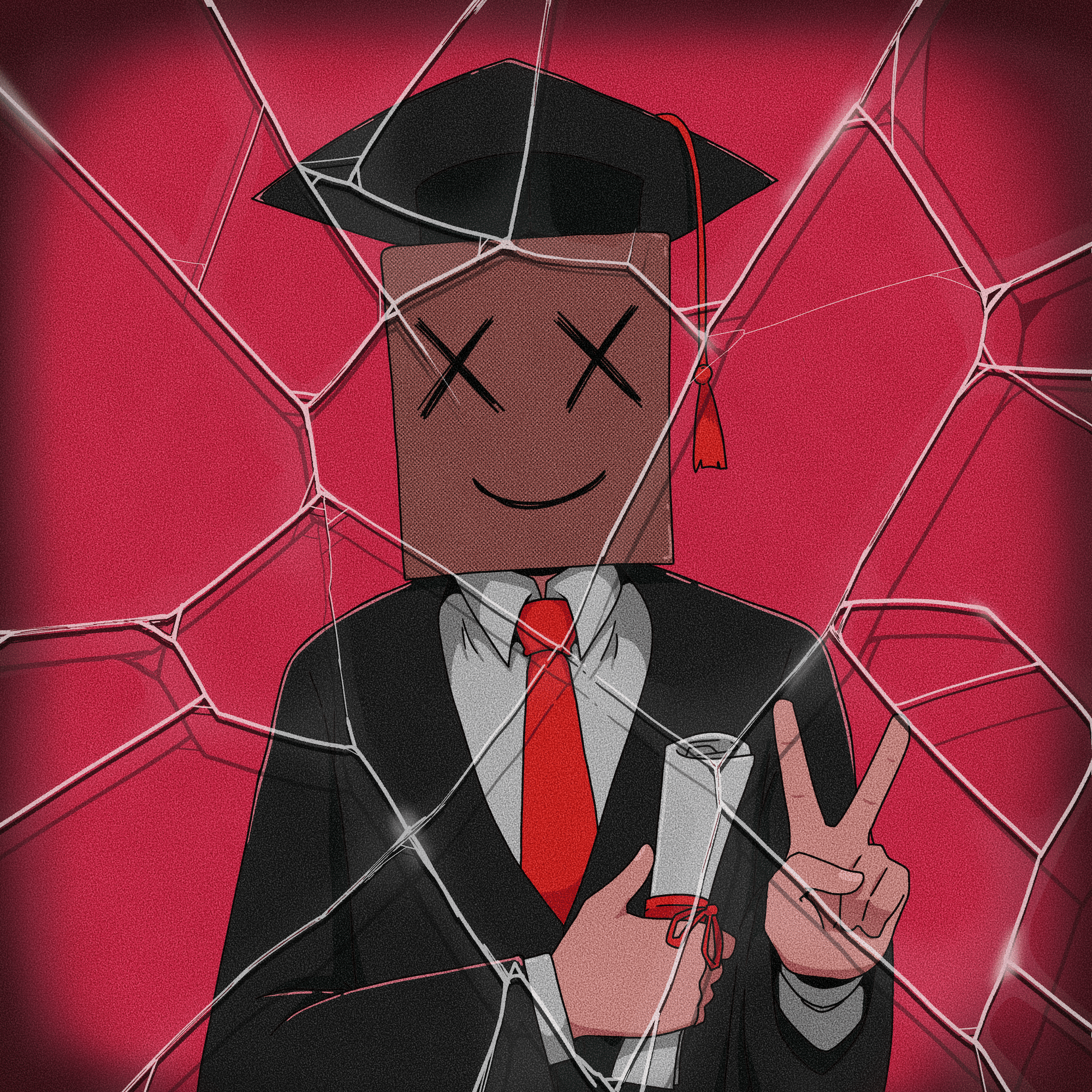
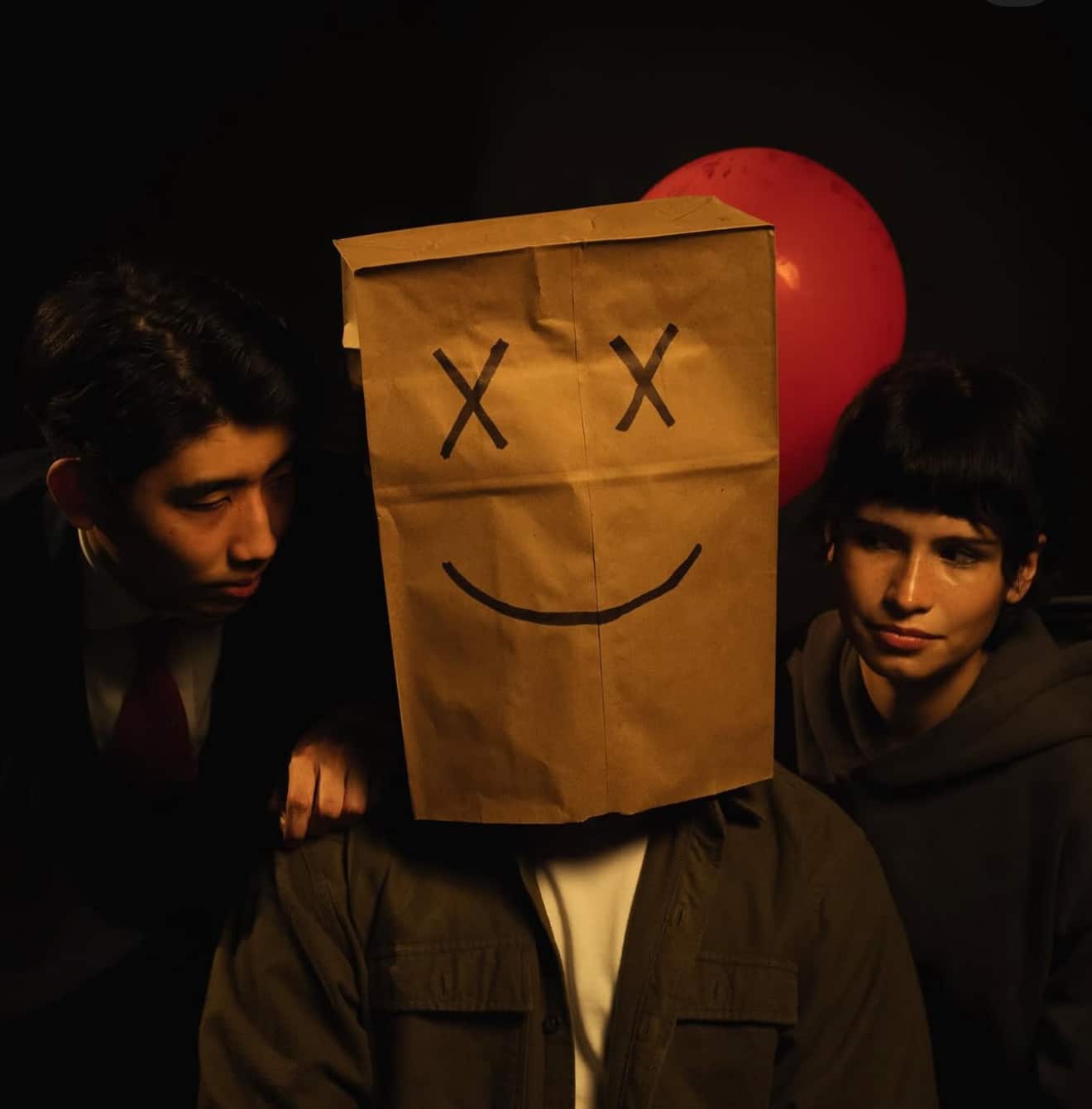
Marino has built all of this while maintaining an anonymous public identity.
In a contemporary music culture where the artist’s face, habits, relationships, outfits, personality, and daily life can become nearly indistinguishable from the songs being promoted, anonymity might appear like a marketing strategy.
For Marino, it began more naturally.
“I just liked the idea of people connecting with the music without knowing everything about me.”
He wanted listeners to encounter the songs before encountering assumptions about the person responsible for them.
“I think there’s something cool about letting the music speak for itself instead of having people judge it based on what I look like or what my life is like.”
The result is a fascinating inversion of contemporary pop intimacy.
Marino hides his physical identity while disclosing his emotional one.
Listeners may not know exactly who he is.
They know what he regrets.
What frightens him.
What he wanted from his parents.
How he has experienced loneliness, ambition, and doubt.
The songs reveal the parts that actually matter to the project.
“At the end of the day I want people to know me through the music.”
Anonymity Can Make Confession Easier
That distance appears to have given Marino more freedom.
Without a recognizable public face attached to every lyric, the pressure of personal perception changes.
The listener can still interpret him.
They just have fewer external details competing with the song.
“I think being anonymous removes some of that pressure of worrying about how people will perceive me and lets me focus more on just telling the story.”
This is where Marino’s anonymity becomes less about hiding than controlling the terms of visibility.
He is not refusing to be known.
He is choosing where the knowing happens.
Inside the songs.
There is something unexpectedly intimate about that arrangement.
In an era built around the language of authenticity, artists are frequently encouraged to reveal everything except the interior self that initially made them want to create.
Marino does almost the reverse.
The biography stays blurry.
The emotions are clear.
When a Song Refuses to Die
Few experiences have reshaped Marino’s understanding of success more dramatically than watching songs continue to find listeners months or years after their first release.
“Devil in Disguise” provides the spectacular headline: more than 200 million streams, Gold certification, and a seemingly endless ecosystem of fan-made edits and videos.
Marino wrote it casually one night in his bedroom.
Then he posted it on TikTok.
The reaction the following day stunned him.
The song began traveling through different online communities, generating edits and inspiring other people to create their own visual art around it.
For Marino, that secondary creativity remains one of the most rewarding parts of what happened.
“I make art obviously because I love making it first but it does feel nice to see people take the art and create things from it.”
The song stopped belonging exclusively to him.
But “Devil in Disguise” is not actually the clearest example of longevity in his catalog.
That distinction may belong to “I’m Doing Fine.”
The Release Day Is Not the Song
“I’m Doing Fine” never had the enormous initial launch associated with some of Marino’s other songs.
There were releases with more hype.
Bigger first days.
More obvious internet momentum.
And yet “I’m Doing Fine” kept moving.
“It’s honestly been my most consistent song by far,” Marino says.
Other tracks exploded faster.
“I’m Doing Fine” lasted.
He attributes that endurance partly to relatability—the message can reappear in someone’s life whenever they need it.
The same has happened on a smaller scale with “Hideaway,” a song that initially performed modestly but continued growing until it began outlasting releases that had seemed much larger at first.
It has changed the meaning of a successful release.
A first day can measure attention.
It cannot necessarily measure attachment.
Some songs announce themselves immediately.
Others quietly become part of people’s lives.
For an artist whose career grew through algorithms and social discovery, Marino has ended up learning one of music’s oldest lessons:
the audience ultimately decides what survives.
The Bedroom Song and the 200 Million Streams
That lesson becomes even stranger when applied to “Devil in Disguise.”
Marino did not construct the song expecting a career-defining breakthrough.
“I had no clue,” he says. “I wrote that song randomly one night in my bedroom.”
There is an appealingly anticlimactic quality to the origin story.
Two hundred million streams sounds industrial.
The song began privately.
That distance between creation and reception has taught Marino not to assume he knows what a track will become once it leaves him.
The audience might hear something he never anticipated.
A creator might transform it into an edit.
A community might adopt it.
A lyric might become meaningful in a context completely separate from the one that produced it.
That is part of what he enjoys most.
Art generates more art.
Success becomes not only consumption but response.

Independent Does Not Mean Alone
Marino’s rise is often described through independence, though his situation complicates the romantic mythology of the entirely solitary artist.
He works with the independent label broke, which he credits with helping amplify his releases and build around moments when a song begins taking off.
But the creative and promotional engine still begins with him.
He writes.
Produces.
Records.
Builds snippets.
Develops the social concepts that help songs move.
“When a song really hits the ceiling and does well it starts on my socials with ideas I solely come up with pretty much all on my own,” he says.
Then the team helps enlarge the opportunity.
That experience has given Marino a philosophy of artist-label relationships that is far less passive than the traditional dream of being discovered.
A label can help.
A manager can help.
A team can help.
But they cannot create the internal propulsion.
“Labels are great but only if you are steering the ship and really putting your all into it.”
For Marino, nobody is going to hand an artist the exact instructions for succeeding.
Especially an artist entering the industry without money or preexisting connections.
“You have to do it all yourself and find the right team to rally behind you and push it even farther,” he says. “But remember it all starts with you.”
The Artist as an Ongoing Document
The Marino catalog increasingly functions like a record of becoming.
Not simply the person he is today.
The people he has been.
“I’m Sorry Mom” illustrates this particularly clearly because it exists simultaneously in past and present.
Its central conflict looks backward toward the period when Marino was resisting college and struggling against family expectations.
But the song itself began with feelings he was experiencing while writing it.
The opening sense of lacking motivation was immediate.
That present emotion opened a doorway into an earlier one.
Marino describes the project as documenting “everything I’m feeling and have ever felt as I go along in my life.”
Memory and present tense are therefore allowed to overlap.
Songs do not have to be literal diary entries written at the exact moment something happens.
Sometimes the person you used to be becomes legible only because of something the current version of you suddenly feels.
Beyond the One Hit
The challenge after a song reaches 200 million streams is almost absurdly simple:
write another song.
Then another.
The mythology of breakthrough often treats the hit as the destination.
Marino is more interested in what happens afterward.
“I think just proving time and time again that it’s not about one hit like ‘Devil,’ it’s not about the few songs; it’s about every song.”
He is realistic enough to know he may never recreate the exact scale of “Devil in Disguise.”
“Hell, who knows, I might never have another song like ‘Devil.’”
That does not sound like defeat.
It sounds like the beginning of a more useful definition of ambition.
Marino wants consistency.
Songs that remain true to him.
Songs that remain relatable to someone else.
Community.
A career that does not depend on endlessly trying to recreate one statistical anomaly.
He does not want to disappear into the abyss after the one hit.
Though he admits one particular number still has some appeal.
A billion streams remains on the bucket list.
Fair enough.
In Conversation With Marino
MUNDANE: “Devil in Disguise” has now crossed 200 million streams and reached Gold certification. When you made that song, did you have any sense that it could take on a life this big, or has its longevity completely surprised you?
MARINO: Honestly, I had no clue.
I wrote that song randomly one night in my bedroom and was completely stunned by the reaction the next day after posting it on TikTok.
The song literally inspired so many edits from so many different communities, and it was a blessing to have it used in so many amazing artistic videos.
I make art obviously because I love making it first, but it does feel nice to see people take the art and create things from it. It is so fulfilling and awesome.
MUNDANE: Your new single “I’m Sorry Mom” feels rooted in guilt, ambition, identity, and the complicated expectations we inherit from the people closest to us. What were you trying to say with this song that you hadn’t been able to articulate before?
MARINO: Yeah, I think “I’m Sorry Mom” is genuinely about when I was younger. My whole thing was not wanting to go to college.
I hated the idea of it and was pretty outspoken and against it, but my parents always thought it was the right path because that’s what they grew up on and what they did.
I never wanted to rebel against my parents or just be a “deadbeat,” but I didn’t want to do it in their traditional way.
My whole goal has always been to make them happy, but I knew I’d never be able to make myself and them happy if I went down the college route.
The song is really about this whole internal struggle of trying to satisfy my parents while also satisfying the fire to be an artist and not go down the traditional path.
MUNDANE: There’s something particularly powerful about apologizing to a parent through a song because it turns an intensely private conversation into something thousands of strangers can recognize themselves in. Was there any hesitation about making something that personal public?
MARINO: Yeah, for sure.
I actually had to tell my mom before posting it, like, “Hey, this song is about you but don’t take it personally, haha,” because at this point I had kinda already made my mom and dad happy and proved to them being an artist can be a sustainable career path.
But I still wanted to tell my story through this song even though I wasn’t completely going through everything I talked about right in the moment.
I wanted to encourage others through the song to chase their dreams and to know that what I’ve felt is being felt by millions of other people around the world, so they’re not alone.
MUNDANE: Your music often pairs vulnerable writing with polished, contemporary alt-pop production. When building a song, what usually comes first for you: the emotional confession or the sonic world that allows you to say it?
MARINO: I think it honestly depends on the song, but most of the time it starts with the emotion or just a random thought I have and then I try to build the world around that.
Sometimes I’ll have a melody or a production idea first and then I’ll find something to say over it, but usually the lyrics are what really make me want to finish a song.
I kinda just try to make the production feel like what the lyrics are saying, if that makes sense.
MUNDANE: You’ve built a substantial audience while maintaining an anonymous identity, which feels almost countercultural in an industry increasingly obsessed with personality, visibility, and constant content. Was anonymity always part of the artistic concept, or did it develop as the project grew?
MARINO: Yeah, I think anonymity was always kinda part of me, but I don’t think I ever really planned for it to become this big thing.
I just liked the idea of people connecting with the music without knowing everything about me.
I think there’s something cool about letting the music speak for itself instead of having people judge it based on what I look like or what my life is like.
I just wanted Marino to feel like its own world and not just be me posting myself all the time.
MUNDANE: Has staying anonymous actually allowed you to be more honest in your songwriting? There’s an interesting contradiction between hiding your physical identity and revealing incredibly personal parts of yourself through music.
MARINO: I think it probably has.
Even though people don’t know exactly who I am, they know a lot about what I’ve felt through the music.
I think being anonymous removes some of that pressure of worrying about how people will perceive me and lets me focus more on just telling the story.
At the end of the day I want people to know me through the music.
MUNDANE: Songs like “Devil in Disguise” and “I’m Doing Fine” have continued finding new audiences through streaming and social media rather than simply disappearing after a traditional release cycle. Has watching listeners repeatedly reinterpret your songs changed the way you think about what a “successful” release looks like?
MARINO: Yeah, I think “I’m Doing Fine” is probably the biggest example of that.
It’s honestly been my most consistent song by far, surpassing “Devil” or any other song, but it has never really had a big release day like “Lust” or “Greed,” or even a song like “I Can’t Fit In” had a bigger release day and more internet hype, I guess.
But “I’m Doing Fine” has always outlasted these songs.
I think it’s because “I’m Doing Fine” is such a relatable song and the message just always comes back around.
Also, the whole thing all the way through is just such an easy, nice listen and every part of it is just spot-on lyrically and melodically.
Another example of this is “Hideaway” on a smaller scale. That song never did great on release but has continued to outlast other songs in my catalog and even grow bigger than them just because the song has such a great melody and message.
MUNDANE: You’ve managed to build this momentum independently. At a moment when artists are constantly told they need labels, algorithms, viral moments, and nonstop visibility to break through, what has independence taught you about building something sustainable on your own terms?
MARINO: I do work with an independent label named broke that has helped me a lot, but through that I still have to do most of the heavy lifting myself.
I mean, I write, produce, and record all of my music, sometimes with a little help, but all the viral snippets and stuff purely come from me.
Also, every time a song really hits the ceiling and does well, it starts on my socials with ideas I solely come up with pretty much all on my own, and then broke really knows how to make the moment even bigger.
I think what it’s taught me is labels are great, but only if you are steering the ship and really putting your all into it.
No one is going to be able to tell you what to do to succeed—no label, no manager, no one.
In this day and age, surely if you come from no industry connections or money, you have to do it all yourself and find the right team to rally behind you and push it even farther.
But remember, it all starts with you.
MUNDANE: Much of your writing seems concerned with becoming the person you want to be while reckoning with who you’ve been, what others expect from you, and the mistakes made along the way. Do you see Marino as documenting your own evolution in real time?
MARINO: Yeah, I see it as real time but also going back and visiting the past, such as “I’m Sorry Mom” being sort of me in the past but also in the present with how it starts out saying I have no motivation, etc.
That’s literally how I felt in the moment with those first few lyrics, and that’s what jump-started the song.
But yeah, I feel like it kinda is just documenting everything I’m feeling and have ever felt as I go along in my life.
MUNDANE: Gold certification is a major milestone, but “I’m Sorry Mom” already points toward another chapter. Beyond streams, certifications, and numbers, what would make you look back at this next era and feel like you actually became the artist—and person—you wanted to be?
MARINO: I think just proving time and time again that it’s not about one hit like “Devil,” it’s not about the few songs; it’s about every song.
Sure, every song might not be “Devil”—hell, who knows, I might never have another song like “Devil”—but I think just staying consistent, releasing songs that are true and relatable to me and others, is what I long for.
I don’t long for the one hit and then to just disappear into the abyss never being seen again.
I long for consistency, telling my story, and community.
Although I can’t lie and say that a song with a billion streams hasn’t been on my bucket list…
The Harder Ambition
There is a version of Marino’s story that could be reduced to an extremely familiar contemporary music narrative.
Anonymous artist.
TikTok.
Viral song.
Two hundred million streams.
Gold record.
Millions of followers.
Next.
But “I’m Sorry Mom” makes that version feel inadequate.
The more interesting story begins before the metrics existed.
A kid tells his parents that he does not want the future they imagined for him.
He cannot prove the alternative will work.
He does not particularly want to disappoint them.
He simply knows that becoming someone else in order to reassure them would create another kind of failure.
Then the unlikely thing happens.
The music works.
But success does not erase the person who once had to make the decision without knowing that ending.
Marino keeps returning to him.
That may be why the anonymity feels so appropriate.
The public figure remains obscured while the internal life accumulates detail from song to song.
Listeners might never know everything about Marino.
They are increasingly able to trace who he has been.
The ambitious kid resisting college.
The artist stunned by what happened when he uploaded a bedroom song.
The person wrestling with motivation.
The son who wanted approval without sacrificing identity.
The songwriter watching supposedly smaller tracks quietly become some of his most enduring work.
And now the musician trying to resist one of success’s most dangerous demands: allowing the biggest thing you have done to dictate everything you do afterward.
Marino may never make another “Devil in Disguise.”
Or he might make something much bigger.
Neither possibility seems like the most interesting measure anymore.
The harder ambition is longevity without dishonesty.
To keep writing songs after there is no longer anything to prove to his parents.
To keep finding meaningful things to say after the origin story becomes old news.
To allow one song to reach 200 million streams without spending the rest of his career desperately attempting to manufacture its replacement.
To build community rather than simply accumulate audience.
“I don’t long for the one hit,” Marino says. “I long for consistency, telling my story, and community.”
For an artist whose breakthrough arrived through enormous numbers, it is a surprisingly grounded definition of success.
And maybe “I’m Sorry Mom” is ultimately less of an apology than the title suggests.
It is a message sent backward.
To his parents.
To the version of himself who could not explain why the traditional path felt wrong.
And perhaps to anyone currently standing inside the same uncertainty, trying to decide whether disappointing someone else might sometimes be the price of refusing to disappoint yourself.