
With Bedroom Confessional and the closing chapter “Liplock,” the dark-pop artist turns heartbreak, obsession, jealousy, chaos, and visual storytelling into a cinematic emotional archive—before making space for something unexpectedly hopeful.
For Ellise, music has never existed without a world around it.
The songs matter, obviously. But so do the objects, colors, characters, costumes, references, symbols, and visual narratives that grow around them. Across her career, she has treated aesthetics not as decoration but as another form of songwriting—one capable of extending an emotion long after the track itself ends.
That instinct reaches one of its clearest expressions in Bedroom Confessional, Ellise’s diaristic EP built around the emotional fallout of a breakup and the less obvious feelings that linger once sadness becomes too simple an explanation.
Jealousy.
Curiosity.
Fixation.
Betrayal.
The almost compulsive desire to know what another person is doing after they have left your life.
Rather than organize the project around traditional heartbreak, Ellise became interested in the stranger emotions underneath it.
“I was trying not to write from a place of sadness,” she explains. “I was writing from the more lingering underlying feelings—the jealousy, the wondering, the curiosity. What is he doing now? Who is he with now? What’s going on now?”
By the time she wrote “Liplock,” the final song created for the project, something had changed.
Ellise was beginning to leave that emotional period behind.
Instead of another song about the breakup, she wanted to write about attraction without consequence: having a crush, being single, having fun, and allowing something not to become devastatingly serious.
That shift is precisely why “Liplock” became the project’s final chapter.
It does not simply conclude Bedroom Confessional.
It documents the moment Ellise began exiting it.
The official visual extends that idea even further. While the videos for “Sexxxtapes,” “Littlepill,” and “Her” operate as interconnected chapters following an anonymous male figure through betrayal, jealousy, obsession, and emotional haunting, “Liplock” literally sets pieces of that world on fire.
Ellise burns objects from the previous videos before descending into a new kind of chaos.
The past is destroyed.
The story ends.
And somewhere inside the flames, another version of Ellise begins emerging.
What makes that transition especially significant is where she appears to be headed next.
For perhaps the first time in her artistic life, Ellise says she is creating from a healthier emotional position.
Hope.
Love.
Peace.
A stable relationship.
That presents its own artistic anxiety for someone whose creative identity has historically been intertwined with chaos.
Ellise admits that she has sometimes wondered whether happiness could deprive her of the emotional volatility that once fueled her work.
Instead, she is discovering something more complicated.
Happiness can be intense too.
So can the fear of losing it.
“I’m learning how to write and make music from this place of happiness and not make it bubblegum pop,” she says. “It’s more from a place of deep obsession, deep yearning, deep emotions—just from a different part of the emotional spectrum.”
Below, Ellise speaks with MUNDANE about closing the Bedroom Confessional chapter, turning her own history into an artistic archive, the relationship between music and imagery, learning not to chase chaos, performing alongside major artists, meeting the fans who have grown up with her, and the two artists who helped teach her how to become Ellise.
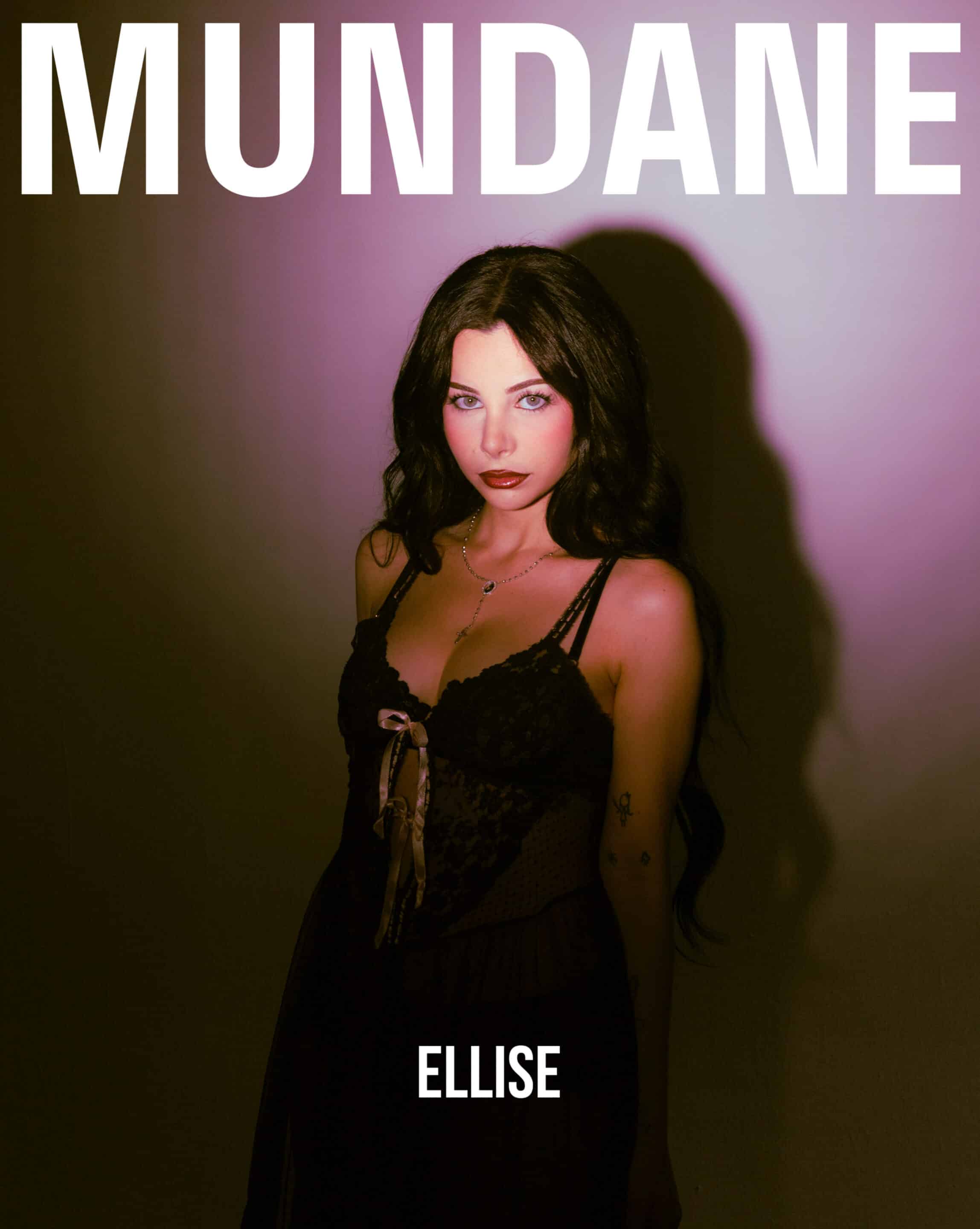
In Conversation With Ellise
MUNDANE: “Liplock” was the final single and music video from Bedroom Confessional. Why did you want this particular song to become the final chapter of the project?
ELLISE: It actually had a very specific reason.
A lot of the other songs on the project—“Sexxxtapes,” “Her,” “Littlepill”—had very dark undertones for me. I wrote them all from a place of these more negative and impactful emotions that I had.
When I was creating the EP, I was going through this breakup and writing all about it. I was trying not to write from a place of sadness and more from the other lingering, underlying feelings—the jealousy, the wondering, the curiosity. What is he doing now? Who is he with now? What’s going on now?
By the time I had written “Liplock,” which was the final song I wrote for the project, I was just in a new place. I was trying to get past that point in my life and write about something other than the breakup.
I wanted to write something a little more lighthearted that still felt like it fit within the world of the EP. It’s simply a song about having a crush on someone, having fun, knowing it doesn’t have to be serious, and being okay with being in a single era where I’m just having a good time.
I wanted to put out “Liplock” last to mimic the process I went through while making the EP, and then release it in that order as well.
MUNDANE: When you revisit songs written during a very specific emotional period, how do you relate to them once those feelings have passed?
ELLISE: Honestly, having music as my outlet for channeling my feelings is really important to me.
I don’t do therapy. I’m raw dogging life.
Music really is my therapeutic outlet, and it’s the only way I’ve ever known how to get my feelings out and make sense of them.
I’m not a great talker. I don’t like to talk about my feelings, so what I like to do is put them into songs.
By the time the music comes out and I’m performing it on tour or doing whatever I’m doing with it, usually that feeling has already passed.
I think it’s so cool that I have years of catalog to remind myself of the places I’ve been.
It’s almost like a lesson. Like, okay, you did that. You felt this way. Remember it and move on.
To me, it almost feels like a collection of books on a bookshelf. I’ve immortalized all these different pieces of me and all these different pieces of my past.
I view it like a history book of myself.
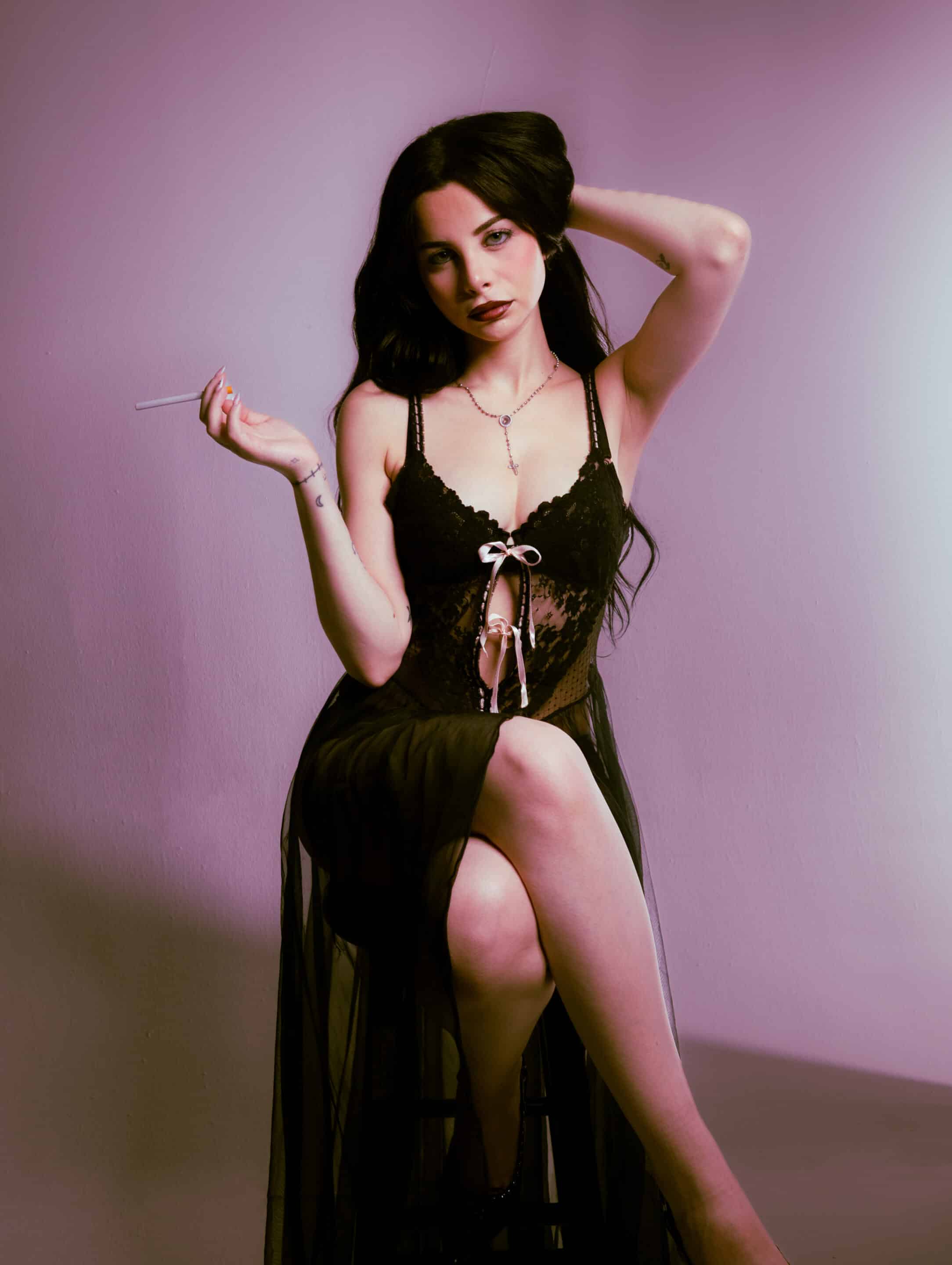
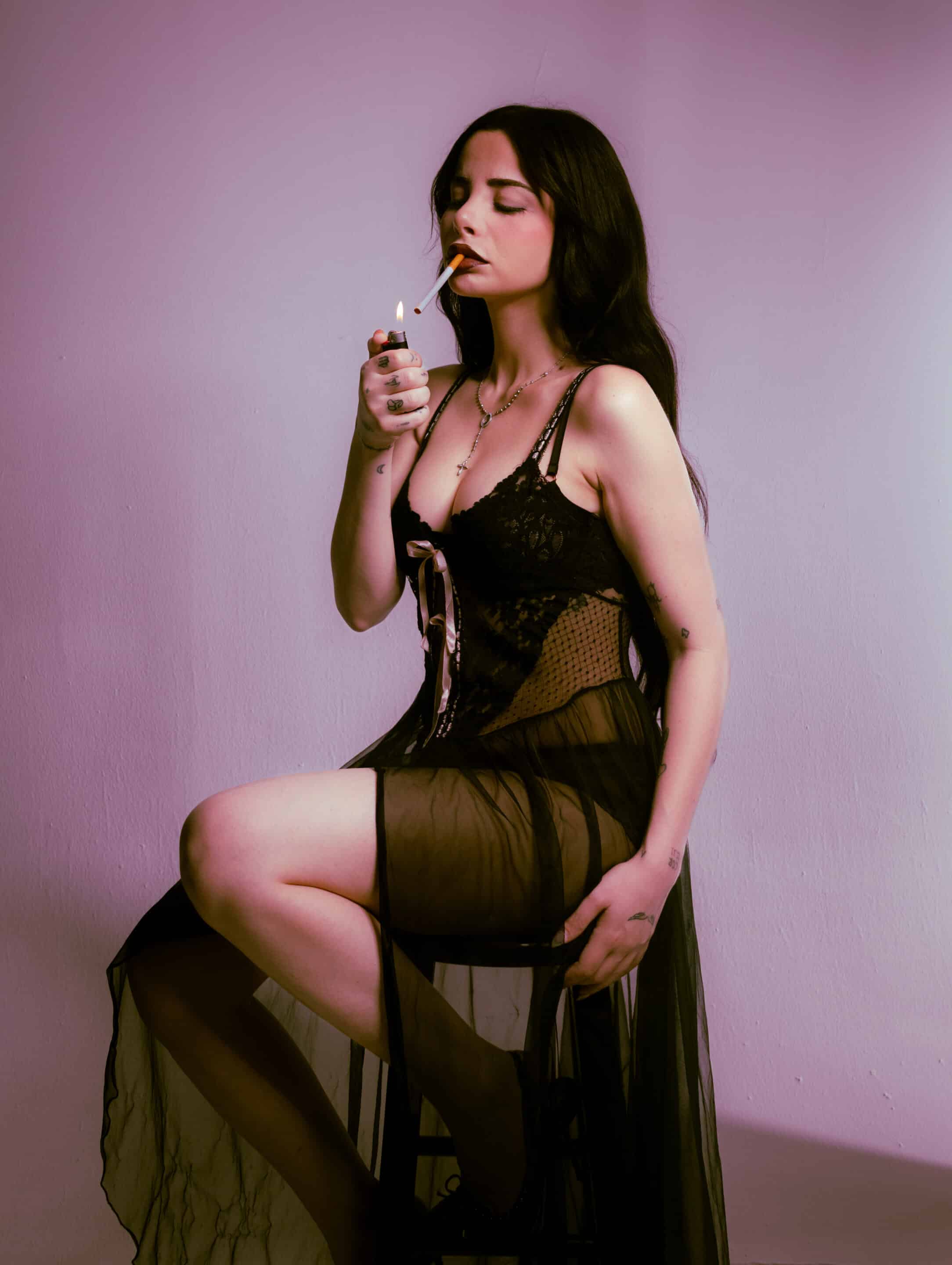
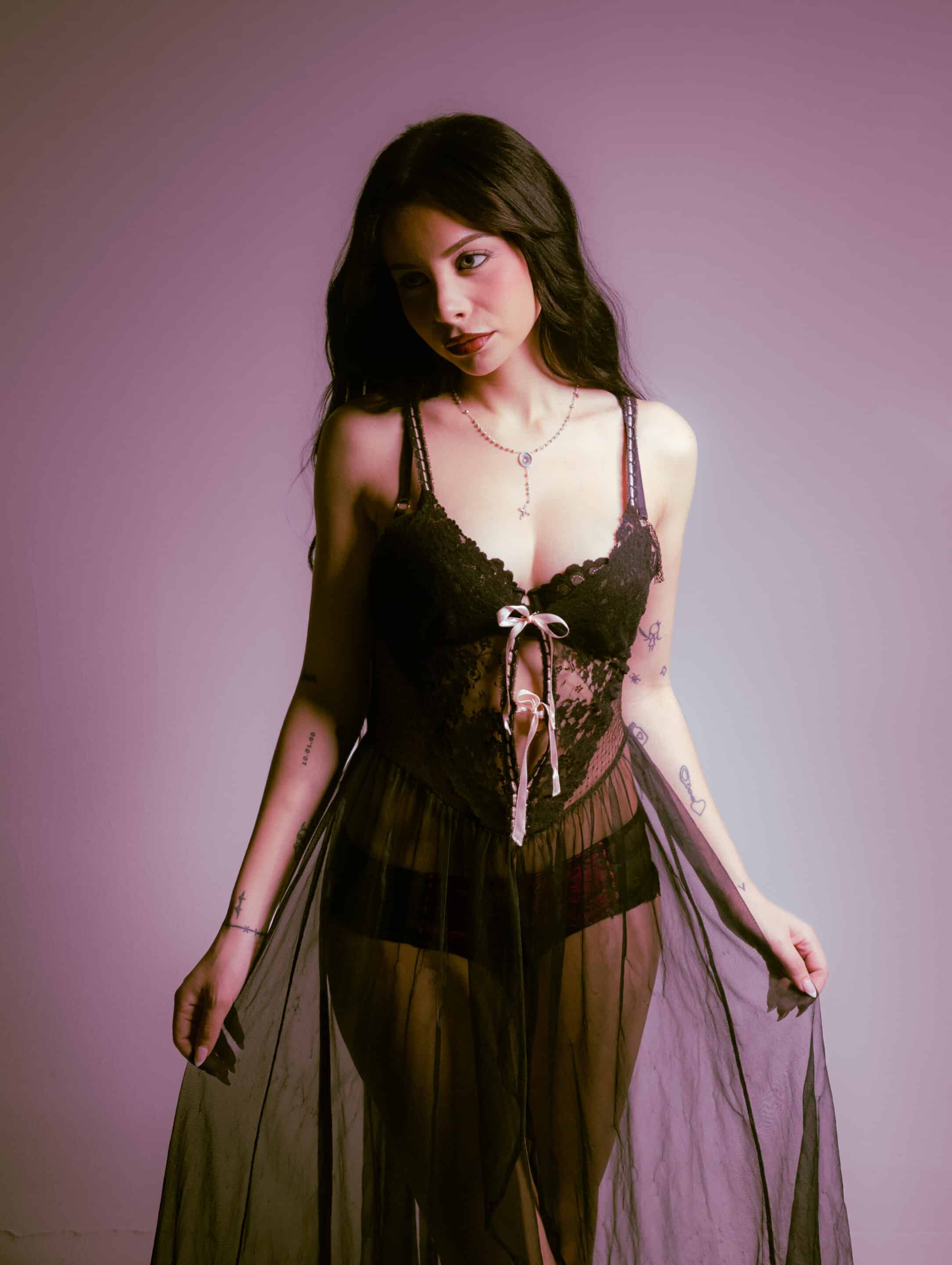
MUNDANE: Your visuals feel inseparable from the music. When you write a song, how early does the visual world begin forming around it?
ELLISE: For me, it really all comes from the same channel.
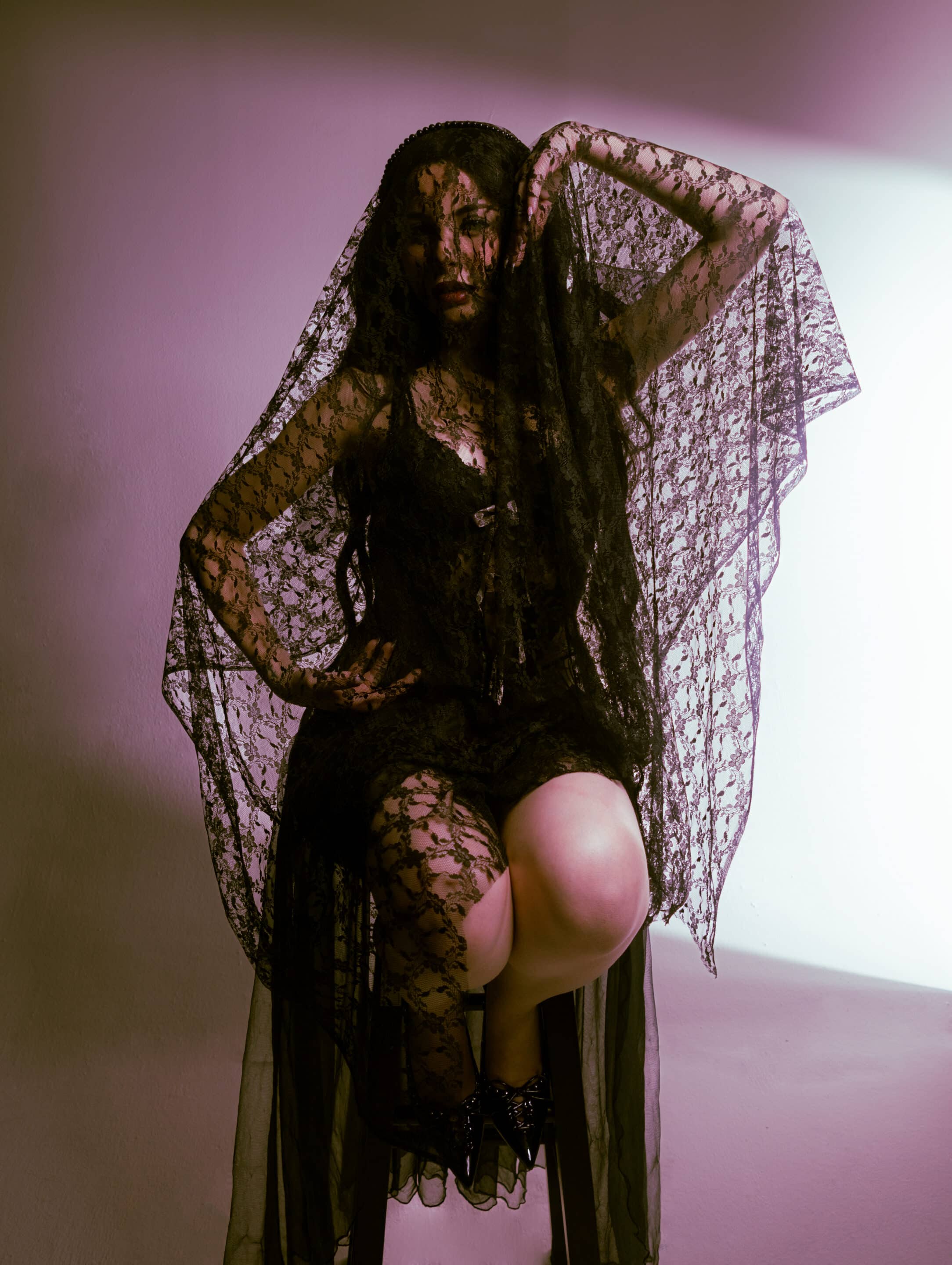
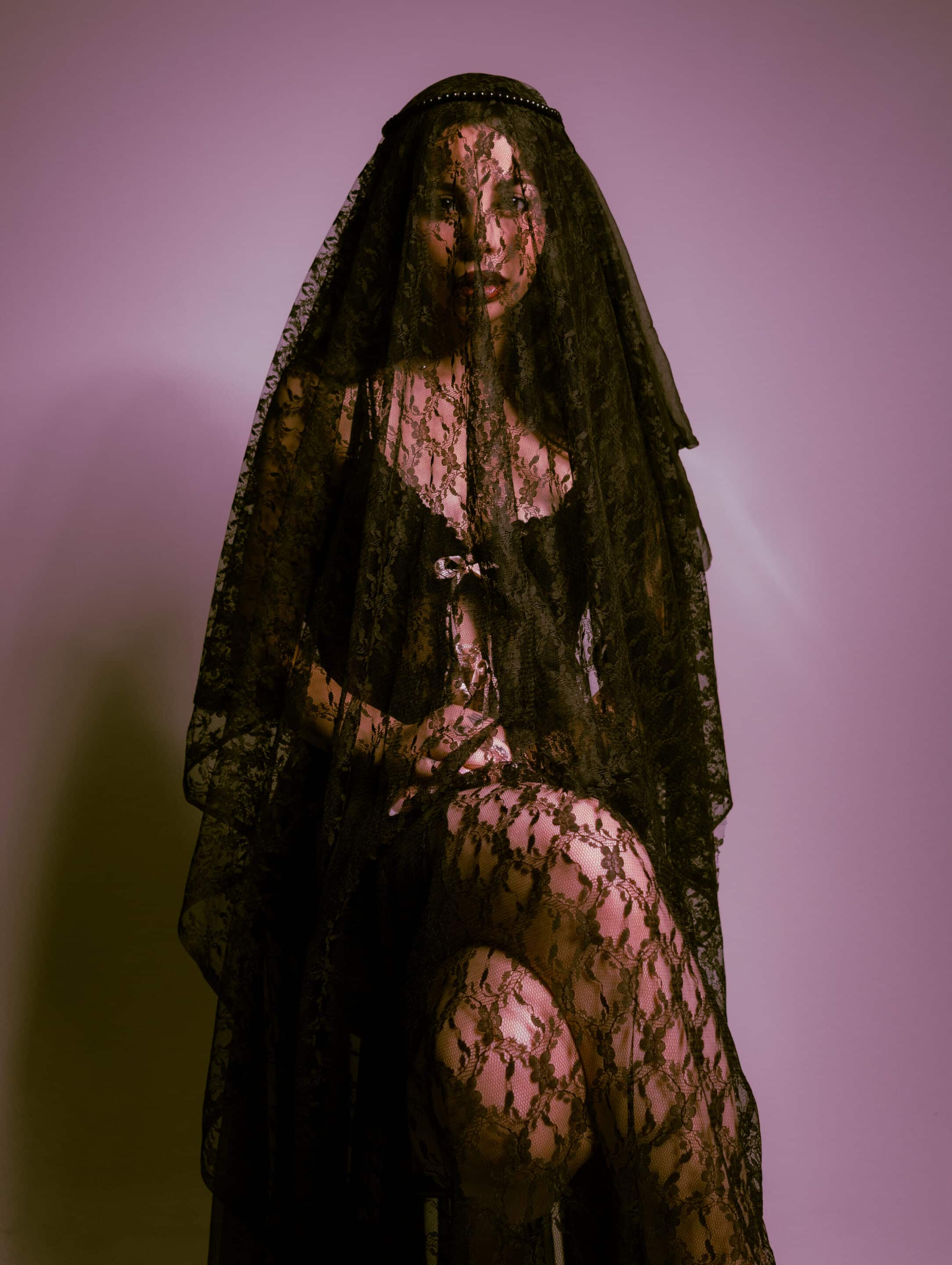
Throughout my whole career, I’ve placed as much importance on visuals as I do on the music.
My music is typically darker, as are my visuals and overall aesthetic, so I think the two things really feed each other.
When I’m making a song, I usually already have an idea of what I want the visuals to look like in my head.
By the time I go into making a project, I’ve already been doing world-building. I’m watching movies or reading books that assist the type of world I’m trying to build and gathering inspiration.
When I made “Liplock,” I knew that it was going to be the final song and the final music video to come out.
I wanted it to feel crazy.
The three music videos leading up to it—“Sexxxtapes,” “Littlepill,” and “Her”—were telling one cohesive storyline that spanned all three videos.
For “Liplock,” I wanted to break away from that storyline.
That’s why in the beginning of the video, I’m lighting the objects from the last three videos on fire and then going into this whirlwind of me spiraling and losing control.
It’s sort of the finale of the visuals for the whole EP.
MUNDANE: What was the larger story connecting “Sexxxtapes,” “Littlepill,” and “Her”?
ELLISE: The main storyline I wanted to represent was me going through the entire spectrum of emotions after this betrayal and this big, catastrophic breakup I experienced.
In the first three videos, I have a wonderful actor named Zane who plays a man in all three videos. He’s wearing a full gimp suit, and we never see his face.
That was very purposeful because I didn’t want to give the male figure in these videos an identity.
I wanted him to feel almost like a phantom or a shadow—something lingering that I couldn’t get rid of.
In the “Sexxxtapes” video, we see him and me, and he’s sort of haunting me in my life. Even though he’s out of my life, I’m still being haunted by him and reminded of him.
In the “Littlepill” video, we get the backstory. It shows the actual events of me being with him, then him finding this new person and essentially leaving me for this new person, and me feeling that betrayal and heartbreak.
Then in the “Her” music video, he and that new person—played by my amazing friend Paris Berelc, who is an incredible actress and also directed the video—are together.
I’m doing witchcraft and spells and trying anything I can do to get him back to me.
But in the end, it’s revealed that I actually didn’t want him.
I was just obsessed with her.
I couldn’t get over that jealousy and that longing of being obsessed with her. It’s almost like I didn’t miss him anymore, but I became so obsessed with the person he was with that I couldn’t get out of that mindset.
Then in “Liplock,” I’m burning her wig, I’m burning his gimp suit, and I’m fully descending into pure chaos.
That’s pretty much the finale of the whole thing.



MUNDANE: After ending this chapter in chaos, do you already know what the next artistic era looks like?
ELLISE: For sure. I’m already deep into the next chapter.
I’ve been making the music, doing the world-building, and joking with my manager and people on my team that this next era is a really big shift.
Not as much sonically, but conceptually it’s a huge shift.
The place I’m coming at it from is totally different because this is kind of the first chapter of music in my entire artistic life where I feel like I’m coming at songs from a place of hope, from a place of love, and from a healthier place.
My music has always been an outlet because something about me has always been drawn to chaos and to things that end up putting my life into a whirlwind or ruining my life, for lack of better words.
This is the first era of my life where I’m fighting against that.
I’m actually doing things that are healthier for me.
I’m in a healthy relationship.
I’m leaving that era behind me.
So the music is very different for that reason too.
I’m fully immersed in the next chapter, and it definitely comes from a more positive place than any previous music I’ve ever made.
MUNDANE: Has there ever been a fear that becoming happier could make writing harder, especially when chaos has been such an important source of inspiration for you?
ELLISE: That’s such a valid question because I’ve had that fear so many times throughout my life.
I do feel like I’ve chased chaos and attracted myself like a moth to a flame to anything that’s bad for me throughout my career.
My artistic identity has been so enmeshed with my actual self and my actual life that I do feel like I’ve put myself in many bad positions just for the sake—even subconsciously—of having something crazy, chaotic, and wild to write about.
But what I’ve learned through this journey of making new music and being in this happier and more peaceful place is that whether I’m depressed, sad, angry, upset, or whether I’m in love and happy, I really do just feel every emotion so deeply.
By nature, I’m someone who leans toward the melancholic and darker side of things.
Even in my happiness and in this different era where I’m more peaceful and happy, I’m still feeling things really intensely.
And I’m still leaning into them in a way that feels a little sad, even when it’s not.
I’m learning how to write and make music from this place of happiness without making it bubblegum pop.
It’s not going to be rainbows and butterflies.
It’s more from a place of deep obsession, deep yearning, deep emotions—just from a different part of the emotional spectrum.
MUNDANE: Does happiness itself become frightening when you’re more accustomed to instability?
ELLISE: A hundred percent.
Being happy and being in this place for the first time in my life comes with a lot of fears too.
When you’re someone who has been through toxic situations and a lot of trauma, being happy almost feels like: When is it going to stop?
So I’m not only writing about the happiness.
I’m writing about the fears around it.
I’ve definitely found a way to incorporate those kinds of emotions into my writing as well.

MUNDANE: You’ve opened for major artists including Madison Beer and Bishop Briggs. Supporting artists at that level can come with a lot of pressure because you’re stepping in front of audiences that already belong deeply to somebody else. Did that ever intimidate you?
ELLISE: I agree that there is pressure, but to be really honest, I never felt super nervous or scared.
I only felt excited.
Maybe it’s false confidence or just a belief in myself, but being onstage is the number one place I love to be.
I’ve never felt stage fright or nerves going onstage, only pure joy and this feeling of, wow, this is exactly where I’m meant to be.
When I got the opportunity to open for these bigger artists, it was really just a test to myself.
I wanted to show people what I could do, show myself what I could do, and push my limits.
If tomorrow someone told me I had to perform in front of a hundred thousand people, I think I could rise to the occasion.
Performing is my favorite part of being an artist.
On top of that, everyone on those tours—Madison, Bishop—they were so supportive and such amazing women to look up to.
It really felt like a little tour family, and they made it a very welcoming space.
MUNDANE: What did you take away from watching artists like Madison Beer and Bishop Briggs operate at that level every night?
ELLISE: Oh my God, it would be easier to tell you the things I didn’t learn.
Those tours were such a crash course for me and such a beautiful introduction into touring.
Especially the Madison tour, because I did that first and had only done one very small, short tour before that.
That was really my first real run.
To get to do it on such a big scale, in these huge venues, and watch someone so seasoned and professional in their lane doing it every night—I was just absorbing everything like a sponge.
The main thing I took away from the Madison tour was her kindness.
She makes time for everyone.
Even though she was busy and had hundreds, if not thousands, of people to meet every night, she took her time with every single fan.
She made every person feel important and made them know that it mattered to her that they were there.
That was a really beautiful thing to witness.
On the Bishop tour, what I was really absorbing was just pure talent.
That girl has a voice unlike any I’ve ever heard.
Getting to watch her sing and be the vocalist she is every night was really inspiring to me.
MUNDANE: Touring also creates one of the few spaces where online supporters become real people standing in front of you. What does that interaction with your fans mean to you?
ELLISE: Honestly, my favorite part of tour is getting to interact with fans.
In this day and age, being an artist involves so much interfacing through the internet.
You read your comments, you see your Discord, you see people’s posts, and it’s amazing to see people supporting you online.
But when you can actually get in front of people, hug them, talk to them, hear their stories, and tell them yours, that’s such a different experience.
It really reminds you why you’re doing this.
Being an artist is a hard job.
I’m not going to say it’s rocket science or brain surgery, but emotionally it’s very taxing and it can become a lot sometimes.
I don’t know any artist, including myself, who doesn’t have doubts sometimes or get into these ruts.
Going out on tour and actually meeting the people who support you and love you, and who are listening to your music in their day-to-day lives, is such a unique experience.
I don’t even really have words to describe it.
It changes your outlook.
It reminds you why you’re doing what you’re doing.
I’m really excited to go on tour again and meet people.
I think my fans and I have a really special relationship because I’ve been doing this for so long.
A lot of the fans I have are people who have been riding with me since I was a teenager.
They were teenagers too.
Now we’ve almost grown up together in a sense.
We’ve spent so many years together that it feels like such a deep connection.
I feel like they know me because they’ve known me through so many different times in my life.
It’s a really moving and beautiful thing to get to go see them.
MUNDANE: Your artistic identity feels incredibly specific—from the vocals to the writing to the dark, feminine visual language. Were there particular artists who helped you understand how to develop that kind of identity for yourself?
ELLISE: There are two artists who really inspired me, in different ways.
Ariana Grande is one of them.
When I found her, I was probably 12 or 13 years old. She had just done her first Broadway musical and she was making YouTube videos and covers of artists like Imogen Heap.
Finding her was such a godsend for me because she really taught me how to sing through watching her and listening to her music.
I paid attention to how she layered harmonies and how she recorded vocals.
That’s where I took so much of my inspiration vocally.
I really learned how to record and how to be a recording artist through listening to her music.
Then Melanie Martinez was also a huge inspiration for me.
I found her when she was on The Voice, and I think I was maybe 14.
She was really the artist who made me want to be an artist because she spoke to me.
I was the target demographic.
I loved everything she stood for.
She was totally into all of the dark stuff, but at the same time she was so cute, feminine, and girly.
Her outlook on life and the way she writes about things felt really similar to my own outlook and the way I wanted to write about things.
Discovering her was huge for me as a teenager because I realized there was a way to do it.
At the end of the day, most music is about the same few things—love, loss, heartbreak, whatever it is.
It’s really about the way you write it, your unique take on it, and the way you wrap it up in a bow that makes you original and makes you stand out from the rest.
She had such a unique voice that it inspired me to build my own unique voice and figure out what my take on all of these things was.
Burning the Evidence
What makes Bedroom Confessional particularly revealing is that Ellise does not treat healing as the erasure of what came before.
She archives it.
A song becomes a shelf in the history book.
A costume becomes evidence.
A wig holds jealousy.
A faceless figure becomes the phantom of a relationship she cannot stop thinking about.
Then, eventually, those objects burn.
The fire at the beginning of “Liplock” feels less like destruction than authorship.
Ellise decides when the symbols stop having power.
The gimp suit that once represented a nameless emotional haunting can be reduced to an object.
The wig belonging to the woman she became fixated on can disappear.
The interconnected narrative of betrayal and obsession can end.
And the artist can move somewhere else.
What makes the next chapter compelling is that Ellise is not simply replacing darkness with light.
That would almost be too easy.
Instead, she is confronting a potentially stranger challenge: learning what intensity looks like when destruction is no longer required to create it.
There is still obsession.
Still yearning.
Still fear.
Still melancholy.
But now those feelings might exist inside love rather than after its collapse.
For someone who admits she has historically been drawn “like a moth to a flame” toward situations that could destabilize her, peace creates unfamiliar narrative possibilities.
It also creates unfamiliar anxieties.
When is this going to stop?
What happens if something good disappears?
Can happiness be trusted?
Those questions sound perfectly capable of living inside an Ellise song.
Maybe that is the larger shift.
For years, her work has transformed emotional chaos into worlds she could control.
Now she appears interested in discovering whether she can build something equally vivid without first burning her own life down.
Bedroom Confessional closes with literal fire.
What comes after may be the more radical experiment:
Seeing what survives when Ellise no longer needs the flames.