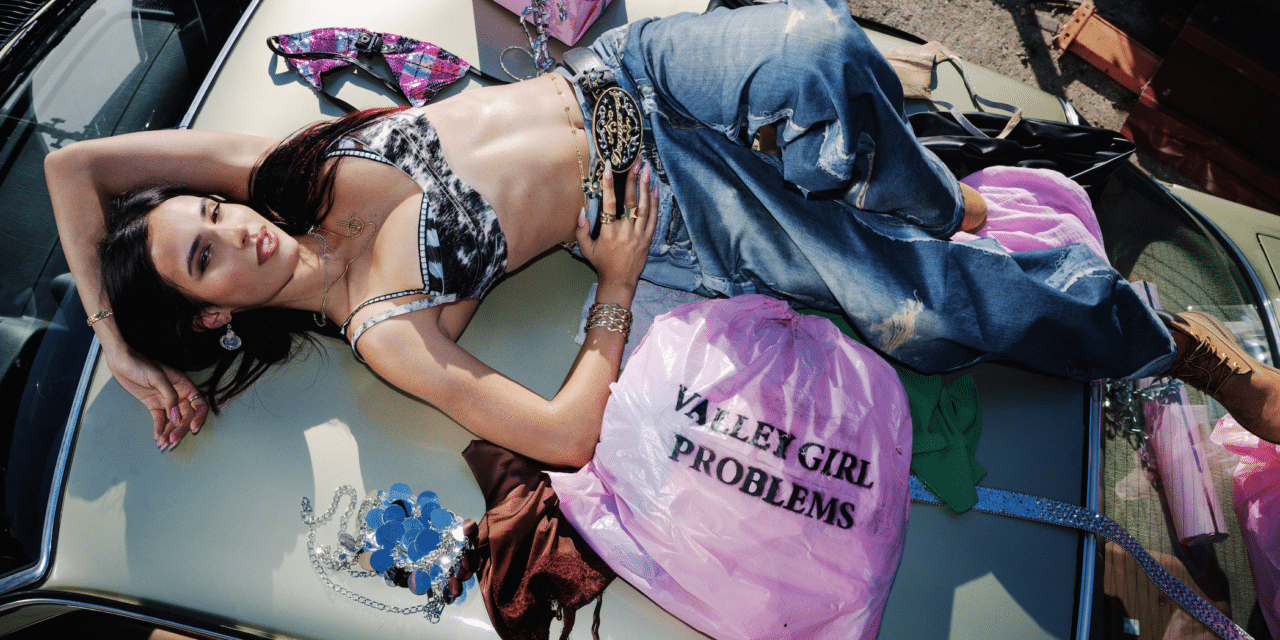
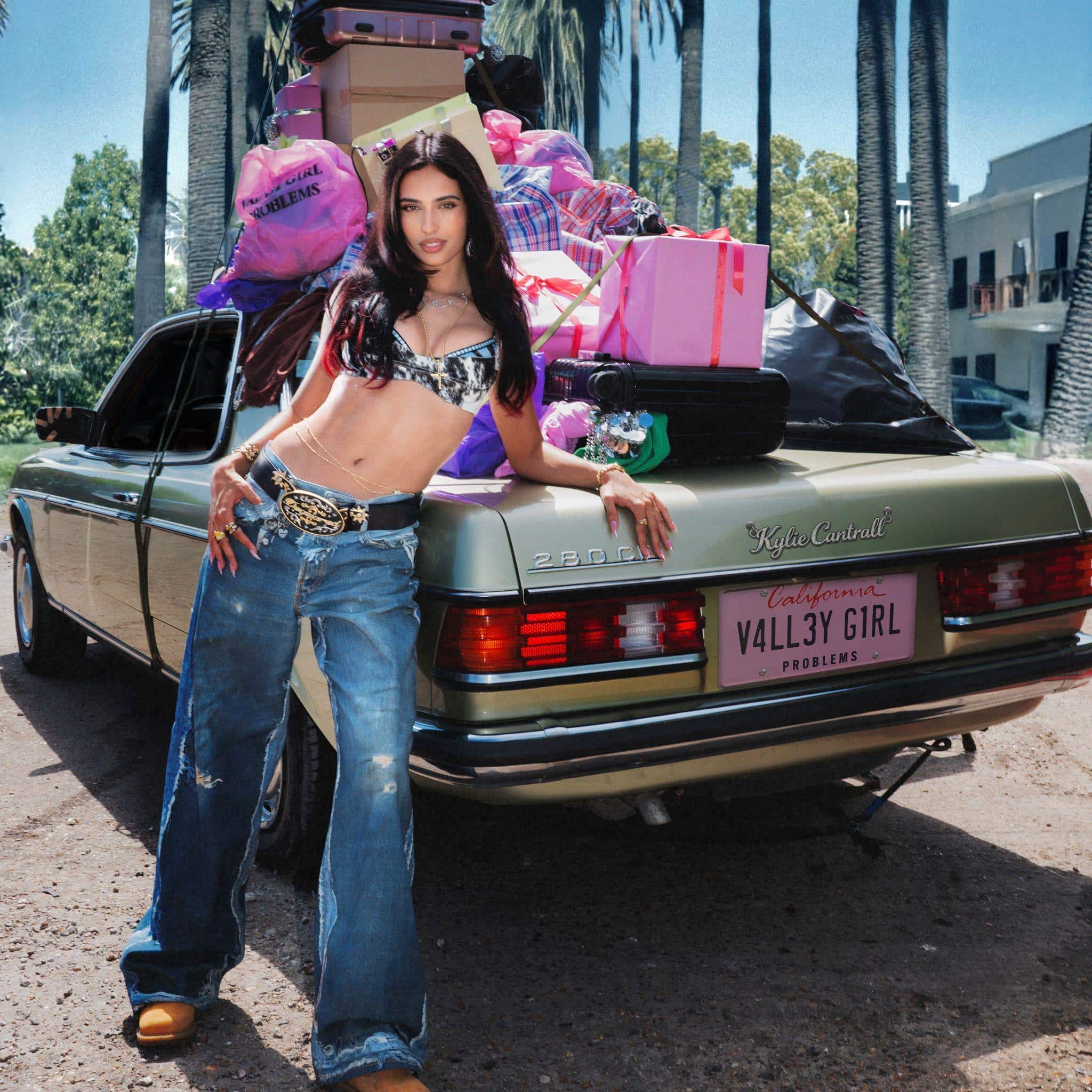
On Valley Girl Problems, Kylie Cantrall turns heartbreak, late-night drives, glossy pop, messy adulthood and the pressure to always present the best version of herself into a nine-track time capsule of growing up in public.
Kylie Cantrall thought she knew what album she was making.
It was going to be faster.
More dance-driven.
More confident.
“Full of baddie anthems,” as she puts it.
Then life interfered.
“In the middle of recording, my life was slowly falling apart.”
Suddenly, the songs Cantrall thought she was supposed to make became considerably less interesting than the ones she actually needed to make.
There were late nights crying.
Journaling.
Heartbreak.
Loss.
Then mornings when all of that followed her directly into the studio.
“And then, heartbreak was all I felt like writing about.”
So she stopped fighting it.
The result is Valley Girl Problems, a nine-track EP produced by Tricky Stewart and written alongside Tayla Parx that occupies an intriguing space between glossy pop fantasy and emotional documentation.
There are clothes.
Cars.
Friends.
Late nights.
Heartbreak.
Synths.
Attitude.
Interludes.
Carrie Bradshaw.
There is also a young woman discovering that growing up does not necessarily mean becoming more certain of who you are.
Sometimes it means becoming comfortable enough to admit that you have absolutely no idea.
“I’m growing, succeeding, failing and learning along the way,” Cantrall says. “I hope my music will be a scrapbook of what I was feeling in that particular moment in my life.”
Maybe that is a more interesting ambition than arriving fully formed.
Write What You Know
Valley Girl Problems begins with one of songwriting’s oldest instructions:
Write what you know.
Cantrall took it literally.
The project documents roughly a year of her life, from carefree nights around the Valley with friends to the emotional fallout of losing people close to her.
She imagines the listener riding shotgun in her Mini Cooper.
That framing could easily become an exercise in Los Angeles pop mythology.
Instead, the passenger seat becomes something closer to a therapist’s chair.
“You would’ve met a very introspective, self-aware version of me.”
For Cantrall, recording began to function as emotional processing.
“At times, it honestly felt more like therapy than recording sessions.”
Talking became writing.
Writing became singing.
Singing became a way of externalizing experiences she had not completely understood yet.
“There was something incredibly cathartic about hearing the songs at the end of the day. It felt like I was freeing something inside of me.”
That is why she describes the project as a time capsule.
Not a manifesto.
Not the definitive Kylie Cantrall.
A photograph.
“This record is the picture I took of this moment in mine.”
The Light in the Dark
Sonically, that contradiction is intentional.
Cantrall and Tricky Stewart repeatedly returned to a phrase during the recording process:
The light in the dark.
If something sounded feminine and sparkling, they wanted another element to resist it.
On “Carrie Bradshaw,” bright synths are countered by harder, grittier drums.
Softness meets force.
Hero meets villain.
Femininity meets what Cantrall calls the “baddie” version of herself.
That juxtaposition becomes an effective metaphor for the larger EP.
Because Valley Girl Problems is filled with the visual language of having everything together while emotionally documenting precisely the opposite.
That may be one of the more recognizable experiences of contemporary adolescence.
You can look fantastic while having a terrible day.
You can post while grieving.
You can perform confidence while questioning everything.
You can get ready with your friends while privately wondering who you are becoming.
The polished image and the messy reality do not cancel one another out.
They coexist.
Carrie Bradshaw and the Performance of Having It Together
That makes “Carrie Bradshaw” an obvious centerpiece.
For Cantrall, the Sex and the City protagonist represents something particularly appealing about entering adulthood without mastering it.
“She made being a little messy feel completely human.”
Cantrall connects discovering the show with the transitional period in which the uniformity of adolescence begins to fracture.
School creates a relatively clear structure.
Everyone is moving through similar milestones.
Then adulthood arrives and suddenly the questions become more personal.
Where do I belong?
What do I want?
What separates me from everyone else?
Who am I when nobody hands me the next step?
Carrie appealed to Cantrall because she could inhabit that uncertainty without surrendering style.
“Her life wasn’t always figured out, but somehow she still showed up, looking fab and kept moving forward.”
Cantrall recognized herself in that contradiction.
“My life was a mess behind the scenes, but everyone assumed I had it all together.”
Perhaps because she arrived at the studio with her hair done.
Makeup done.
Cute outfit.
The visual evidence suggested control.
The internal reality suggested something else entirely.
That tension made “Carrie Bradshaw” the natural introduction to this era.
Tricky Stewart Became His Own Reference
Cantrall approached Valley Girl Problems with an unusually specific aesthetic universe already in mind.
She builds references for everything.
Albums.
Videos.
Photoshoots.
The world comes before the individual asset.
Then she played Tricky Stewart the playlist she had created to explain the sound she wanted.
Five of its ten songs were his.
His response?
“I am the reference for your project!”
It is a funny moment, but it also says something about Cantrall’s musical education.
Stewart’s fingerprints exist across generations of modern pop and R&B, while Tayla Parx has similarly helped shape contemporary pop songwriting.
Working with people whose previous work existed inside Cantrall’s reference language could easily have encouraged imitation.
Instead, she says they pushed her toward instinct.
“They never try to recreate what they’ve already done, they’re always innovating and moving forward.”
The lesson was not to reproduce the songs that inspired her.
It was to trust why they inspired her.
“Being around them gave me the confidence to trust my taste, take risks, be a trailblazer and tastemaker.”
Kylie Isn’t Making an Album. She’s Making a Movie.
Cantrall’s acting background becomes especially obvious when she talks about sequencing.
She does not think about Valley Girl Problems as nine unrelated opportunities for playlists.
She thinks in scenes.
Characters.
Catalysts.
Transitions.
“I’m not just trying to write an album, I was trying to make a movie with music.”
That explains why “The Problem” and “The Answer” exist as interludes rather than being discarded in favor of another conventional track.
They serve narrative functions.
“GRWM” introduces the protagonist.
“Valley Girl Problems” establishes the world around her.
We learn where she comes from.
What she wears.
How she spends her time.
Who she appears to be when life feels carefree.
Then something shifts.
“Carrie Bradshaw” and “Girls Like U” reveal that the protagonist’s apparently polished existence contains something considerably less stable underneath.
The sequencing asks listeners to experience that revelation rather than simply be told about it.
Cantrall connects that instinct directly to performance.
Storytelling requires earning attention.
And she is acutely aware that somebody choosing to spend an entire EP with her is giving her something increasingly valuable.
Time.
“I want my fans to understand how much this means to me that they’re willing to put on their headphones and be with me on this journey.”
Every Singer Is a Mosaic
The same multiplicity exists in her voice.
On “Closet,” Cantrall pushes toward something grittier and more rhythmic—almost rap-like.
On “Space Between,” she moves in the opposite direction.
Soft.
Heartfelt.
Exposed.
She does not see those performances as competing identities.
“I think every singer is a mosaic.”
Her own musical memory was formed in the backseat of her parents’ car, where genre boundaries apparently meant very little.
Frank Sinatra.
Selena.
Biggie Smalls.
Different traditions entered the same young ears and eventually became part of the same vocabulary.
“Somehow, all those influences found their way into my own musical jambalaya.”
It is a fitting description for an artist increasingly uninterested in reducing herself to a single clean definition.
The Best Version of Kylie
Cantrall has been performing publicly since childhood.
She started posting videos to YouTube when she was eight.
Then came acting.
Disney.
Descendants.
Arena audiences.
Social media.
Pop music.
Millions of people encountering different versions of her at different stages of growing up.
When you spend that much of childhood being watched, you learn presentation early.
“I’ve gotten really good at presenting the BEST version of Kylie.”
Then she adds:
“Which can get a little boring.”
That might be the most important sentence surrounding Valley Girl Problems.
Because pop music has traditionally rewarded exactly that skill.
Create the image.
Maintain it.
Control the narrative.
Present confidence.
Hide whatever threatens the fantasy.
Cantrall is discovering that music becomes more useful when she does the opposite.
“I’m learning I can impact more people by letting them see the faults.”
The songs give her permission to discuss insecurities and experiences she might not otherwise have the courage to articulate publicly.
And instead of rejecting that imperfection, she says her audience has responded to it.
“I feel very lucky that my audience has embraced my flaws as much as they celebrate my confidence.”
Growing Up Without a Final Form
Young women in pop are frequently asked to introduce themselves with absurd certainty.
What is your sound?
What is your aesthetic?
What makes you different?
Who are you?
What is your brand?
What is your era?
The questions assume identity is something you discover once and then package correctly.
Cantrall increasingly rejects that premise.
“I think there’s a real strength in admitting you don’t have it all figured out.”
She knows she is going to change.
More importantly, she is becoming comfortable allowing the audience to witness that change.
“There’s an authenticity in being willing to talk about the messy parts of life.”
That relationship is particularly relevant because many members of Cantrall’s audience are navigating their own transitions alongside her.
“In a way, my audience is growing with me.”
Valley Girl Problems therefore does not need to establish a permanent artistic identity.
It only needs to tell the truth about this one.
In Conversation With Kylie Cantrall
MUNDANE: Valley Girl Problems feels almost like a coming-of-age movie condensed into nine tracks—late nights, friendships, heartbreak, confidence, and everything in between. When did you realize the last year of your life had become the story of an EP?
KYLIE CANTRALL: Looking back, it’s interesting because the album I thought I was going to make was completely different. More uptempo, dance driven, full of baddie anthems. And then… life happened.
In the middle of recording, my life was slowly falling apart. I was up late at night crying, journaling, and bringing all of that pain into the studio the next day. And then, heartbreak was all I felt like writing about, so I decided to trust that this was the record I was meant to make.
Sometimes you have to leave it in the universe’s hands and let the album become what it’s supposed to be.
MUNDANE: You’ve described the record as listeners “riding shotgun” with you in your Mini Cooper. If we were actually in that passenger seat during the making of this project, what version of Kylie would we have met?
KYLIE CANTRALL: You would’ve met a very introspective, self-aware version of me. At times, it honestly felt more like therapy than recording sessions.
It was the first time I was really talking, writing, and singing my way through my experiences, and there was something incredibly cathartic about hearing the songs at the end of the day.
It felt like I was freeing something inside of me.
I love the idea of an album being a time capsule and a true chapter of your life. This record is the picture I took of this moment in mine.
MUNDANE: Valley Girl Problems moves between glossy pop, rhythmic R&B influences, and more intimate moments without losing its identity. When you were building the sonic world of the EP, what sounds, records, or production choices became the blueprint for this era?
KYLIE CANTRALL: I had so many late night conversations with my producer Tricky Stewart, and we kept talking about this common theme, “The light in the dark.”
So if the song has bright sparkly synths that feel feminine, like the production on “Carrie Bradshaw,” the drums have to do the opposite… feel hard, masculine, grittier to balance both sides of myself.
Maybe it’s the hero and villain or the soft feminine with the baddie version of myself.
That was a conscious effort to infuse these records with that juxtaposition.
MUNDANE: “Carrie Bradshaw” uses such an instantly recognizable pop-culture archetype to talk about independence and self-expression. What does Carrie represent to your generation, and which parts of that character did you see reflected in yourself?
KYLIE CANTRALL: I think so many of us discover Sex and the City at a similar point in our lives 🙂 usually in our late teens, when you’re becoming an adult and trying to figure out who you are.
You go from everyone being on the same path, trying to get through school and fit in, to asking yourself where you belong and I guess what makes you different.
I was especially drawn to Carrie because she made being a little messy feel completely human. Her life wasn’t always figured out, but somehow she still showed up, looking fab and kept moving forward.
That really reflected how I felt while making this EP.
My life was a mess behind the scenes, but everyone assumed I had it all together, probably because I’d show up to the studio with my hair and make-up done, in a cute outfit 🙂
There was something so symbolic about that contrast, and it made “Carrie Bradshaw” the perfect lead single for this era.
MUNDANE: You worked with Tricky Stewart and Tayla Parx, two collaborators responsible for some massive moments in modern pop. What did being in rooms with writers and producers at that level teach you about trusting your own instincts?
KYLIE CANTRALL: I think they both taught me to really trust my instincts.
For every project, whether it’s a photoshoot, music video, or album, I create a very specific world of inspiration.
I remember playing Tricky my album playlist and realizing five of the ten songs were his. He laughed and said, “I am the reference for your project”!
But what I love about both Tricky and Tayla is that they never try to recreate what they’ve already done, they’re always innovating and moving forward.
Being around them gave me the confidence to trust my taste, take risks, be a trailblazer and tastemaker.
MUNDANE: The tracklist includes “The Problem” and “The Answer” as interludes, giving the EP a narrative structure rather than simply feeling like a collection of singles. How intentional was the sequencing, and what story did you want the listener to experience from “Grwm” to “Space Between”?
KYLIE CANTRALL: My acting background really influences how I approach music. So, I’m not just trying to write an album, I was trying to make a movie with music.
And even the transitions and interludes are pivotal in telling a story.
I like the storytelling structure, like introducing the lead character with “GRWM” and creating a world with telling you where I’m from, what clothes I wear, how I spend my days when I’m feeling carefree with the song “VALLEY GIRL PROBLEMS.”
And then we feel a dramatic shift as we hit “CARRIE BRADSHAW” and “GIRLS LIKE U,” as the catalyst to help the listeners realize the narrator is going through serious struggles.
It’s so important to earn the attention of the audience, and I want my fans to understand how much this means to me that they’re willing to put on their headphones and be with me on this journey… and hopefully feel a bit of resolve by the end of the project.
MUNDANE: Your voice gets used in a lot of different ways across the EP—from attitude-heavy, rhythmic delivery to softer and more vulnerable performances. How much do you think about vocal character when recording, and were there any songs on Valley Girl Problems that pushed you into a new space as a singer?
KYLIE CANTRALL: It was really important to me to showcase different sides of my voice.
On “CLOSET,” I lean into a grittier, angsty, almost rap-like delivery, while “SPACE BETWEEN” lets me be soft, heartfelt, and vulnerable.
I think every singer is a mosaic, pieced together from the sounds we grew up with.
Sitting in the backseat of my parents’ car, I heard everything from Frank Sinatra to Selena to Biggie Smalls.
Somehow, all those influences found their way into my own musical jambalaya so all of those sides of my voice exist together.
MUNDANE: You’ve already experienced arenas, major film sets, viral attention, and an audience that has essentially watched you grow up publicly. How do you figure out which parts of your life belong in the music and which parts you want to keep entirely for yourself?
KYLIE CANTRALL: I feel like that line gets blurred because I want to be the type of artist who is honest with her music.
A chance to hear my inner thoughts, struggles, insecurities… music allows me to talk about things I wouldn’t usually have the strength to discuss.
I’ve been in the public since I first posted videos on YouTube at 8 yrs old and I’ve gotten really good at presenting the BEST version of Kylie, which can get a little boring.
I’m learning I can impact more people by letting them see the faults, music has given me the permission to share that.
I feel very lucky that my audience has embraced my flaws as much as they celebrate my confidence.
MUNDANE: Pop music often asks young women to arrive with a perfectly defined identity, but Valley Girl Problems seems interested in documenting the messiness of figuring yourself out in real time. Do you feel pressure to know exactly who you are as an artist, or are you comfortable letting the audience watch that identity evolve?
KYLIE CANTRALL: I think there’s a real strength in admitting you don’t have it all figured out. And recently I’m more accepting that I’m going to evolve.
There’s an authenticity in being willing to talk about the messy parts of life, and I’ve found that my audience really connects with that self-awareness.
In a way, my audience is growing with me, so we really get to share this moment together.
I think there’s something really special about that.
MUNDANE: Between B.O.Y., Valley Girl Problems, and everything happening with Descendants, your world has expanded incredibly quickly. When all of the characters, aesthetics, expectations, and noise disappear, what do you think is becoming the most essential part of Kylie Cantrall’s artistic identity?
KYLIE CANTRALL: Wow, I think I’m still figuring that out.
But that’s probably going to be the constant theme in my music.
I’m growing, succeeding, failing and learning along the way.
I hope my music will be a scrapbook of what I was feeling in that particular moment in my life.
VALLEY GIRL PROBLEMS is a chapter in my life… an exhilarating, heartbreaking, trivial, earth-shattering, danceable time capsule. 🙂
A Scrapbook, Not a Blueprint
There is something freeing about Cantrall ending the conversation without an answer.
She does not know exactly what the essential Kylie Cantrall is yet.
Good.
She’s still young enough that certainty would almost be less interesting.
Valley Girl Problems succeeds as a concept because it does not pretend otherwise.
Its contradictions are the material.
Sparkly synths and hard drums.
Perfect makeup and private heartbreak.
Confidence and insecurity.
Disney-scale spectacle and late-night journaling.
The version of yourself everyone sees and the one sitting alone in the car afterward.
Cantrall calls the EP a scrapbook.
That might be the ideal format for growing up.
Scrapbooks do not explain everything.
They collect evidence.
A photograph.
A note.
A person you no longer speak to.
An outfit you cannot believe you wore.
A night that felt insignificant until years later.
A version of yourself you eventually outgrow but never completely lose.
Valley Girl Problems does not tell us who Kylie Cantrall will become.
It preserves the girl figuring it out.
And someday, when she is making an entirely different record as an entirely different version of herself, she will still be able to open this one and remember exactly what it felt like to be here.