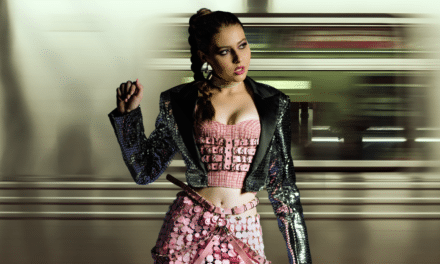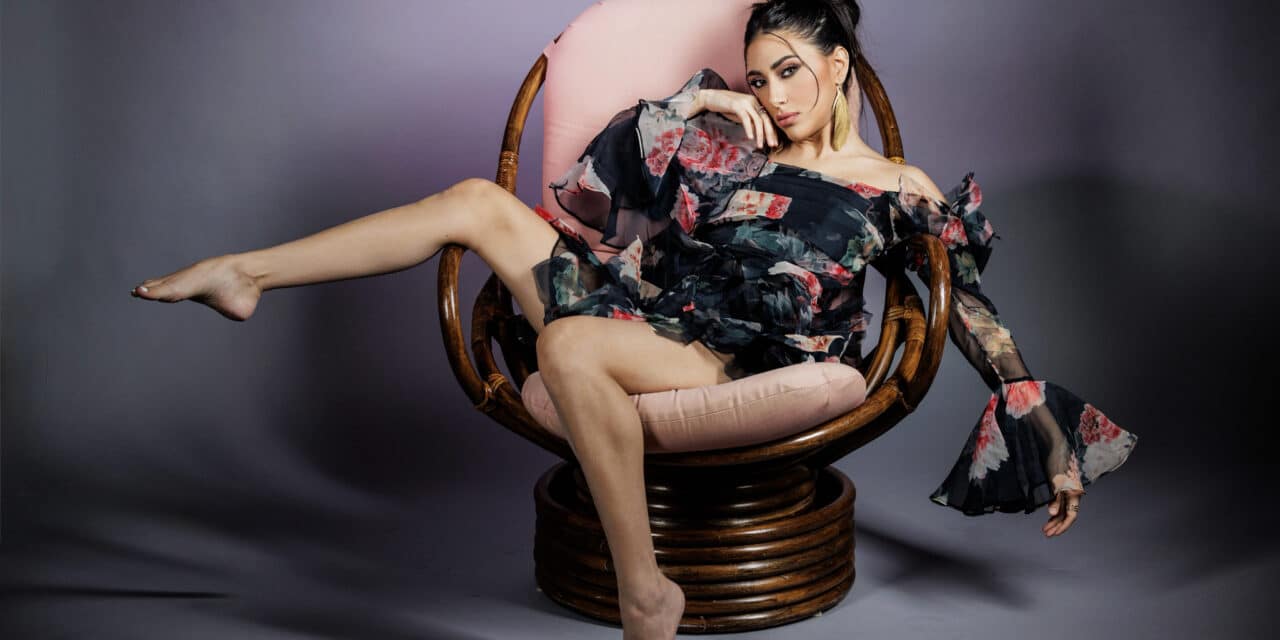
On “Time Will Heal,” the bilingual St. Louis artist turns heartbreak, physical loss and the collapse of an old identity into a hypnotic meditation on what healing actually means.
There is a phrase we tend to offer people when we have run out of better explanations for pain: time heals everything.
For Taya Elle, that promise eventually stopped making sense.
“I realized that time does not always erase the pain,” the St. Louis singer-songwriter says. “Sometimes it simply teaches you how to function around it.”
That realization sits at the center of “Time Will Heal,” Taya’s most personal release yet, a bilingual collision of reggaeton, pop and R&B that challenges the comforting assumption that enough distance will eventually make our wounds disappear.
Instead, Taya proposes something more complicated.
You can laugh again. You can work. You can dance. You can fall in love. You can build an entirely different life.
And something can still hurt.
“Certain memories, places or feelings could bring everything back,” she says. “That made me realize that healing is not always about forgetting or becoming completely unaffected.”
For Taya, that understanding extends far beyond romantic heartbreak.
Before becoming an artist, she was a competitive runner who earned 14 medals. Then spinal surgery abruptly ended the athletic career around which she had constructed much of her identity.
Music emerged from what was left behind.
When Time Isn’t Enough
“Time Will Heal” isn’t necessarily an argument against healing. It’s an attempt to redefine it.
Taya had been confronting several kinds of loss simultaneously: recovery from spinal surgery, the disappearance of athletics from her life, heartbreak and disappointment.
The expectation was that eventually those experiences would become distant enough to stop hurting.
That wasn’t exactly what happened.
“I could go through my day, laugh, work and appear fine, but certain memories, places or feelings could bring everything back.”
Rather than interpreting those returns as failures, Taya began to understand that emotions don’t follow the neat trajectory we often impose upon them.
“An emotion can be quiet without being completely gone.”
Writing the song forced her to revisit feelings she believed she had already left behind.
“It did not make me feel weak,” she says. “In a strange way, it made me feel more accepting of myself.”
The distinction is important. Healing doesn’t necessarily require erasure.
“Sometimes they return, and that does not mean you have failed to heal. It simply means that something still deserves to be acknowledged.”
Dancing With Something Heavy
That philosophy makes the sound of “Time Will Heal” particularly interesting.
Instead of turning unresolved grief into a conventional ballad, Taya places it against the movement of reggaeton and pop.
“Pain and movement can exist together.”
The contrast mirrors the contradiction of everyday life after loss. Internal pain doesn’t necessarily prevent external movement.
“When people are hurting, they do not stop living,” she explains. “They still go out, dance, work and try to enjoy moments, even when there is something heavy inside them.”
The production becomes part of the metaphor.
“The rhythm represents the way we keep moving on the outside, while the lyrics reveal what may still be happening inside.”
It also creates the possibility of listeners encountering the song physically before understanding it emotionally.
“Sometimes people dance to music before they fully understand the pain in the lyrics, and then the message reaches them later.”
Two Languages, One Emotion
Taya’s movement between English and Spanish adds another dimension to that emotional complexity.
She isn’t interested in treating bilingual songwriting as straightforward translation. Instead, each language becomes capable of expressing a different shade of the same experience.
“The language usually comes from the feeling itself. I do not always plan it intellectually.”
Spanish, she says, can feel particularly intimate when addressing longing, pain or vulnerability.
English offers something different.
“English can sometimes feel more direct and conversational.”
The result isn’t the repetition of one thought in two languages, but a conversation between emotional registers.
“I am not translating the same feeling word for word. I am allowing each language to express the part of the feeling that sounds most natural in it.”
That instinct places Taya’s bilingual identity inside the architecture of the songwriting rather than simply on its surface.
Losing What You Did Without Losing Who You Are
The emotional foundation beneath Taya’s music begins with another kind of rupture.
Before songs, studios and chart positions, there was running.
“For a long time, I connected my identity to what my body could do and to the achievements I had earned through athletics.”
Then spinal surgery took that certainty away.
“When surgery ended that chapter, it felt like I had lost more than a career. I felt like I had lost a version of myself.”
That experience poses a difficult question: when the thing you do becomes inseparable from your understanding of who you are, what happens when you can no longer do it?
Taya eventually began separating the activity from the characteristics that had allowed her to succeed at it.
“My discipline, resilience, determination and ability to keep going were still part of me. Athletics was something I did, but it was not the entire person I was.”
Music became a new container for those same qualities.
“I did not become a completely different person. I found a new way to express the same strength.”
During her year of recovery, songwriting initially functioned less as a cure than somewhere to put everything she couldn’t resolve.
“I was frustrated, confused and dealing with a lot of silence in my life. Writing gave those feelings a shape and a voice.”
And that distinction — between expression and cure — echoes the philosophy behind “Time Will Heal.”
“I would not say that songwriting instantly healed me, because some things cannot be solved just by writing a song.”
Instead, it allowed her to look directly at them.
“Maybe it did not heal every wound, but it helped me face the wounds honestly.”

Strength Doesn’t Always Have to Be Loud
Taya cites Sade, Sabrina Claudio and Ariana Grande among her influences, three artists whose approaches to vocals, vulnerability and sensuality offer very different lessons.
From Sade, Taya draws from restraint.
“She shows that you do not always have to over-sing or over-explain. Sometimes a quiet delivery can say the most.”
From Sabrina Claudio comes intimacy, sensuality and atmosphere. Ariana Grande represents another side of Taya’s musical instincts: vocal agility, high notes, runs and the ability to make technically demanding performances sound effortless.
The objective, however, isn’t imitation.
“I want to take the lessons and filter them through my own experiences, my bilingual identity and my emotional world.”
The balance between strength and softness is increasingly becoming central to what she considers her own artistic identity.
That process has also been shaped by her continuing collaboration with three-time Grammy-nominated producer Joe “Capo” Kent, who produced “Don’t Love You,” “Rainy Days” and “Time Will Heal.”
“He has learned how I communicate emotionally, even when I am not explaining everything with words.”
That can mean knowing when a vocal needs power — and when imperfection communicates more.
“He understands the difference between when I need to sing something softly, when I need to let my voice break a little, and when I need to bring more power and attitude.”
Success Without Losing the Reason
Taya’s first releases have already given her significant external validation.
“Don’t Love You” and “Rainy Days” both reached #1 on Amazon Music, with “Rainy Days” achieving a triple #1 across three Amazon Music charts.
For an emerging artist, early success can create a new challenge: once something works, the temptation is to reverse-engineer it.
Taya doesn’t want to.
“Success is a result, not the reason I started creating.”
The distinction becomes especially important when your music depends upon vulnerability.
“If I start creating only to repeat a chart result or to satisfy other people’s expectations, I could lose the reason people connected with the music in the first place.”
She wants longevity rather than a replication of a moment.
“External validation is beautiful, but it cannot replace the internal feeling that a song is true.”
The Mark Can Remain
Perhaps the most compelling thing about “Time Will Heal” is that Taya doesn’t replace one easy promise with another.
She doesn’t argue that every wound disappears if you work hard enough at healing.
Nor does she suggest that pain has to control the rest of your life.
Instead, she leaves room for something between those extremes.
“Some experiences leave a mark, and healing may mean learning how to live with that mark rather than pretending it never existed.”
It’s an idea that connects almost every piece of Taya Elle’s story so far.
The runner who underwent spinal surgery hasn’t disappeared simply because the singer emerged.
The heartbreak doesn’t cease to have existed because life continues.
Pain can return without erasing progress.
And vulnerability doesn’t negate strength.
“You can continue living, growing and finding joy even while carrying something painful,” Taya says. “You can remember what hurt you without allowing it to define your entire future.”
Maybe time doesn’t heal everything.
Maybe sometimes it teaches us how to carry what remains.


In Conversation with Taya Elle
“Time Will Heal” challenges one of the most familiar ideas surrounding heartbreak: that eventually time makes everything better. You argue instead that we don’t necessarily heal, we sometimes just forget until something brings the pain back. What happened in your own life that made you question the conventional idea of healing?
I think I started questioning that idea during a period when I was dealing with several different kinds of loss at the same time. I was recovering from spinal surgery, adjusting to life after athletics, and also carrying emotional pain from heartbreak and disappointment. People often say that time heals everything, but I realized that time does not always erase the pain. Sometimes it simply teaches you how to function around it.
I could go through my day, laugh, work and appear fine, but certain memories, places or feelings could bring everything back. That made me realize that healing is not always about forgetting or becoming completely unaffected. Sometimes it is about learning how to live honestly with what happened and finding a way to keep moving forward.
You describe pain as remaining “behind your heart,” alive and capable of resurfacing. Has writing this song changed your relationship with emotions you previously thought you had already moved beyond?
Yes, definitely. Writing this song made me realize that an emotion can be quiet without being completely gone. There were feelings I thought I had already moved past, but when I wrote about them, I understood that they were still somewhere inside me.
It did not make me feel weak. In a strange way, it made me feel more accepting of myself. I stopped judging myself for still being affected by certain experiences. Now I understand that emotions do not always disappear in a straight line. Sometimes they return, and that does not mean you have failed to heal. It simply means that something still deserves to be acknowledged.
“Time Will Heal” moves between English and Spanish. When you’re writing something this personal, what determines which emotion belongs in which language?
For me, the language usually comes from the feeling itself. I do not always plan it intellectually. Sometimes an emotion naturally sounds more honest in Spanish, and sometimes English gives me the exact rhythm or directness I need.
Spanish can feel very emotional and intimate to me, especially when I am expressing pain, longing or vulnerability. English can sometimes feel more direct and conversational. Moving between the two languages allows me to show different sides of the same emotion. It also reflects who I am as a bilingual artist. I am not translating the same feeling word for word. I am allowing each language to express the part of the feeling that sounds most natural in it.
There is an interesting contradiction between the subject matter and the production: you’re confronting unresolved heartbreak through a reggaeton and pop track built around rhythm and movement. Why did you want something painful to exist inside music people can dance to?
Because pain and movement can exist together. When people are hurting, they do not stop living. They still go out, dance, work and try to enjoy moments, even when there is something heavy inside them.
I liked the contrast between the emotional meaning of the song and the energy of the production. The rhythm represents the way we keep moving on the outside, while the lyrics reveal what may still be happening inside. Sometimes people dance to music before they fully understand the pain in the lyrics, and then the message reaches them later. I wanted the song to feel alive, because even when you are hurting, there is still a part of you trying to live.
You’ve worked with Joe “Capo” Kent across “Don’t Love You,” “Rainy Days” and now “Time Will Heal.” As that creative relationship has developed, what has he learned about your voice that allows you to become increasingly vulnerable in the studio?
Joe has learned how I communicate emotionally, even when I am not explaining everything with words. He understands the difference between when I need to sing something softly, when I need to let my voice break a little, and when I need to bring more power and attitude.
Over time, he has also learned that I care a lot about the emotional truth of a song. It is not only about singing the notes correctly. I need to feel connected to what I am saying. Because we have built trust through working together, I feel more comfortable taking risks, trying different deliveries and allowing myself to be vulnerable.
Before music became your primary path, you were a competitive runner with 14 medals, until spinal surgery abruptly ended that chapter of your life. When something that deeply defines you disappears, how do you separate losing what you did from losing who you thought you were?
That was one of the hardest lessons of my life. For a long time, I connected my identity to what my body could do and to the achievements I had earned through athletics. When surgery ended that chapter, it felt like I had lost more than a career. I felt like I had lost a version of myself.
Eventually, I had to understand that I had not lost the qualities that made me an athlete. My discipline, resilience, determination and ability to keep going were still part of me. Athletics was something I did, but it was not the entire person I was. Music helped me discover that those qualities could exist in a different form. I did not become a completely different person. I found a new way to express the same strength.
Music emerged during a year of recovery when you were dealing with frustration, heartbreak and the silence left by losing athletics. Looking back, do you think songwriting initially helped you heal—or did it simply give you somewhere to put emotions that could not be resolved?
At first, I think songwriting gave me somewhere to put emotions that I did not know how to carry. I was frustrated, confused and dealing with a lot of silence in my life. Writing gave those feelings a shape and a voice.
I would not say that songwriting instantly healed me, because some things cannot be solved just by writing a song. But it helped me understand myself. It gave me a way to process what I was experiencing instead of keeping everything trapped inside. So maybe it did not heal every wound, but it helped me face the wounds honestly. That was the beginning of a different kind of healing.
Your influences include Sade, Sabrina Claudio and Ariana Grande. What have you taken from those influences while figuring out what makes something unmistakably a Taya Elle record?
I have learned something different from each of them. From Sade, I take the power of restraint, elegance and emotional depth. She shows that you do not always have to over-sing or over-explain. Sometimes a quiet delivery can say the most.
From Sabrina Claudio, I admire the intimacy and sensuality in her music, as well as the way she creates an atmosphere. From Ariana Grande, I take inspiration from her high notes, vocal runs and riffs, her unique vibe, and her incredible vocal ability.
But I do not want to copy any of them. I want to take the lessons and filter them through my own experiences, my bilingual identity and my emotional world. A Taya Elle record should feel vulnerable, melodic and emotionally honest, but it should also have its own atmosphere and a balance between strength and softness.
Both “Don’t Love You” and “Rainy Days” reached #1 on Amazon Music, with “Rainy Days” reaching the top of three charts simultaneously. When success arrives this early, how do you keep external validation from influencing the honesty that made you want to create music in the first place?
I am grateful for every achievement, and seeing my music reach #1 on Amazon Music was incredibly meaningful. It showed me that the songs were reaching people, and that gave me encouragement. But I try to remember that success is a result, not the reason I started creating.
The most important thing is still whether a song feels honest to me. If I start creating only to repeat a chart result or to satisfy other people’s expectations, I could lose the reason people connected with the music in the first place. I want to build a real, long-term career, so I would rather grow honestly than create something that does not represent me just because I think it might perform well.
External validation is beautiful, but it cannot replace the internal feeling that a song is true.
You’ve said you want your music to create a safe space where people feel seen, understood and less alone. If “Time Will Heal” rejects the promise that every wound eventually disappears, what do you hope it offers listeners in place of that promise?
I hope it offers people honesty and permission to feel. If they are still hurting after a long time, I do not want them to feel broken or ashamed because they have not “moved on” in the way people expect them to.
The song does not say that pain will always control you. It says that some experiences leave a mark, and that healing may mean learning how to live with that mark rather than pretending it never existed. I hope listeners feel seen and less alone. I also hope the song reminds them that they can continue living, growing and finding joy even while carrying something painful. You can remember what hurt you without allowing it to define your entire future.