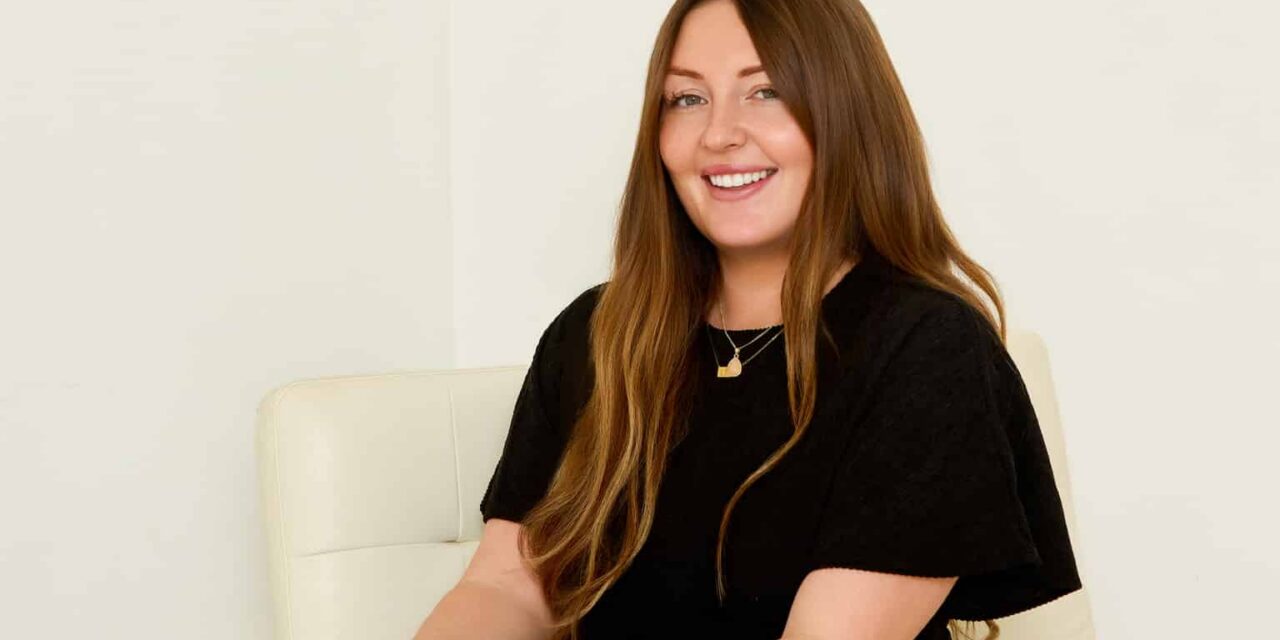
Chloe Smith spends much of her life talking about death. Strangely enough, it has made her much more interested in living.
The UK psychic medium, author and host of We Talk to the Dead has built an audience of more than half a million followers around conversations that many people still struggle to have openly: grief, intuition, loss, spirituality and the possibility that our relationships might somehow continue after someone dies.
For Smith, these aren’t abstract questions.
Although she says she experienced connections with spirits from an early age, the death of her Nan in 2022 fundamentally altered the way she understood those experiences.
“I always knew spirit was real, but I hadn’t realized my connections were different,” she says. “I thought what I was seeing was the same as everyone else.”
Grieving someone she loved transformed mediumship from an ability into something more personal.
“I realized that mediumship isn’t just about proving life after death is real, but also about providing comfort, closure and a bridge of love when someone’s world feels shattered.”
It is an important distinction because, underneath the supernatural language surrounding Smith’s work, many of the questions brought to her are intensely human ones.
Did they know I loved them? Could I have done something differently? Are they angry with me? Are they okay? Am I allowed to move on?
After years of readings, Smith says one lesson appears repeatedly: people often spend enormous amounts of energy worrying about things that become remarkably insignificant when viewed through the perspective of mortality.
“Spirit almost never comes through wishing they had worked longer, earned more or won arguments,” she says. “Their primary focus is on what was left unsaid: the simple ‘I love yous,’ forgiveness withheld or quiet moments of appreciation that went unexpressed.”
Her conclusion is disarmingly simple.
“Just live.”
Smith’s understanding of closure has evolved alongside that philosophy. People often arrive at readings searching for a definitive explanation that will somehow resolve their grief. But she doesn’t believe healing necessarily comes from answering every question.
“Real reassurance isn’t about getting a final answer to every ‘what if,’” she says. “It’s about shifting from seeking answers to accepting peace.”
Within Smith’s worldview, death changes a relationship rather than eliminating it. She encourages people to remain attentive to what they interpret as signs from loved ones—from nature and feathers to repeating numbers or physical sensations.
“Grief is not about saying goodbye forever,” she says. “It is learning how to communicate beyond this world.”
Of course, that raises an unavoidable question: how do you distinguish communication, intuition and meaningful coincidence from anxiety or simply wanting something to be true?
Smith points toward the quality of the feeling itself.
“Your intuition is calm and quiet, whereas anxiety will be loud,” she says. “Always trust the first thing that pops directly into your mind.”
During readings, Smith describes receiving information through a combination of physical sensations and what spiritual traditions often call the “clair senses.” She says she can sometimes experience bodily sensations associated with how someone died, while other information arrives through what she calls claircognizance—a sudden sense of knowing something without consciously reasoning toward it.
“I don’t hear or see,” she explains. “I simply just know a fact, like a name, a date or a hobby.”
Smith is also conscious of the skepticism surrounding her profession—and argues that skepticism can actually be useful.
“There are a lot of scammers in the industry,” she acknowledges. “Keep an open mind, but also keep a grounded foot.”
Rather than accepting something because it produces an emotional response, she encourages people to evaluate what was actually said during a reading.
“Did the medium actually tell me something specific, or did I fill in all the blanks for them?”
That question becomes particularly relevant in the age of TikTok and Instagram, where spirituality, manifestation, grief and intuition can be condensed into a few seconds of content and delivered with absolute certainty.
Smith herself has amassed a huge digital following, yet recognizes that these platforms can flatten experiences that are considerably more complicated offline.
“Online content can make it look as though you can simply think your way into a perfect life, or that by going through hard times, you may have manifested bad vibes,” she says. “But grief, heartbreak and struggles are essential parts of being human.”
Perhaps that’s one reason conversations around spirituality have become increasingly attractive to younger audiences.
Smith sees a generation living with anxiety, loneliness and uncertainty while simultaneously searching for spaces where questions about death, meaning and emotional pain can be discussed without embarrassment.
“We find it hard to open up and talk about our feelings without being judged,” she says, “so seeking guidance privately is magical.”
Her work has consequently expanded beyond individual readings. We Talk to the Dead takes these conversations into podcasting, while her children’s book Ivy & Nanny approaches loss through a language intended to make death feel less frightening. A nonfiction book will follow in 2027.
The mediums change. The underlying question remains remarkably consistent: How do we continue loving someone when they’re no longer physically here?
For Smith, spending so much time thinking about that question has removed much of the fear surrounding her own mortality.
“Death doesn’t scare me,” she says. “I find it magical to see how much of a reunion there is when you die.”
Whether someone shares Smith’s spiritual convictions or approaches mediumship with skepticism, there is something distinctly earthly beneath that belief.
If time is limited, love should probably be expressed while we can express it. Forgiveness might matter more than winning. And continuing to experience joy after losing someone isn’t a betrayal of them.
In Smith’s world, talking to the dead ultimately keeps returning her to the same instruction for the living:
Live.
You’ve described experiencing a connection to spirit from a young age, but losing your Nan in 2022 ultimately pushed you toward practicing mediumship professionally. How did experiencing grief yourself change the way you understood an ability you had already lived with for years?
I had such a spiritual awakening. A spiritual awakening happens when something in our life triggers pain, such as loss, a breakup, divorce or a career change. I realized that mediumship isn’t just about proving life after death is real, but also about providing comfort, closure and a bridge of love when someone’s world feels shattered.
Losing my Nan taught me what spirit communication actually means to the person receiving it. I always knew spirit was real, but I hadn’t realized my connections were different. I thought what I was seeing was the same as everyone else. It was only when my Nan died that I realized that, although I knew she was dead, I was still connecting with her.
After conducting so many readings for people navigating loss, what have conversations with the dead unexpectedly taught you about the way the living should approach life?
Each reading is completely different, and I’m still learning every day. Grief really is all the love we have with no place to go! But the one thing I really have learned is: just live!
Spirit almost never comes through wishing they had worked longer, earned more or won arguments. Their primary focus is on what was left unsaid: the simple “I love yous,” forgiveness withheld or quiet moments of appreciation that went unexpressed.
A common misconception is that loved ones in spirit want you to stay frozen in grief as a sign of respect. In reality, their greatest wish is to see you live fully, find joy and move forward without feeling guilty for continuing your story. There is no concept of time in heaven, meaning that when you do reunite, it will be like they only saw you yesterday.
People often come to mediums searching for answers, reassurance or closure. Have you learned that closure is actually possible—or is grief more about developing a different relationship with someone after they’re gone?
As humans, we often seek a reading wanting answers: Why did this happen? Could I have stopped it? We believe that information will end the pain. But the peace people actually walk away with comes from understanding that love didn’t end with physical death.
Real reassurance isn’t about getting a final answer to every “what if.” It’s about shifting from seeking answers to accepting peace. Death, yes, ends a physical life, but not a relationship. When someone passes, the connection doesn’t disappear; it simply transforms from a physical language into a spiritual and emotional one.
It’s about learning to recognize the signs around you, such as feathers, nature, angel numbers and physical feelings like ringing in your ears. Grief is not about saying goodbye forever. It is learning how to communicate beyond this world.
One of the hardest things for people interested in spirituality can be distinguishing intuition from anxiety, coincidence or simply hearing what they desperately want to hear. How do you make that distinction, particularly when emotions are running high?
Trust. Intuition is everything. You know yourself better than anyone else, and loved ones in spirit connect in magical ways. We are all living on different vibrations!
Think of us as living at the bottom and spirit at the top, and we meet in the middle to communicate through mediumship. But yes, it is hard to understand what is your intuition and what is anxiety. The clearest way to tell is by how the thought feels in your body and the tone of your mind. Your intuition is calm and quiet, whereas anxiety will be loud. Always trust the first thing that pops directly into your mind.
Mediumship inevitably asks people to place some degree of trust in something that cannot be verified in the same way as ordinary information. What do you think healthy skepticism looks like, and are there questions you wish people would ask before trusting a medium?
There are a lot of scammers in the industry, so it’s normal to be skeptical. To be a healthy skeptic, I would say keep an open mind, but also keep a grounded foot.
A healthy client enters a reading open to the process, but without abandoning their common sense. Evaluate the evidence, not just the emotion. It’s easy to get swept up in the emotion of a reading, but healthy skepticism steps back to ask: Did the medium actually tell me something specific, or did I fill in all the blanks for them?
There are many misconceptions surrounding what actually happens during a reading. When you say you’re communicating with someone who has died, what are you personally experiencing—is it something visual, auditory, emotional, intuitive, or a combination of those things?
Spirit will enter my body physically to show me how they passed. For example, if they passed from something related to the heart, I would feel my heart physically racing, or I might feel confusion if there was memory loss, etc.
But there are other ways spirit will use your senses. These are called clair senses, and you can have more than one sense. Every spirit communicates slightly differently, but for me, it’s a mix of distinct mental and physical inputs working simultaneously.
Clairsentience is usually the strongest entry point. This is what I mean when I speak about feeling a spirit enter my body. But I also experience claircognizance, which is direct knowing. This feels like a sudden drop of information directly into your mind. I don’t hear or see; I simply just know a fact, like a name, a date or a hobby.
Your audience is particularly large online, where spirituality, manifestation and intuition can sometimes become simplified into highly digestible content. Do you ever worry that social media can make complicated experiences feel more certain or straightforward than they really are?
Social media is hard, but I am a strong believer that everything that pops up or is shown to you is for a reason and comes at just the right time. It’s a reminder that the signs you have been seeing are confirmation.
I have to say, online content can make it look as though you can simply think your way into a perfect life, or that by going through hard times, you may have manifested bad vibes. But grief, heartbreak and struggles are essential parts of being human.
You’ve noticed younger generations becoming increasingly comfortable discussing mediumship, grief and the afterlife. Why do you think subjects that were once considered taboo—or even embarrassing to admit believing in—are moving into mainstream culture?
The shift has been embraced, and I can see that over the years. I generally feel the younger generations are living through high levels of anxiety, loneliness and uncertainty. We find it hard to open up and talk about our feelings without being judged, so seeking guidance privately is magical.
Ivy & Nanny approaches loss through a children’s book, while your forthcoming nonfiction book will allow you to explore these subjects from another perspective. What do you think adults could learn from the way children understand death and grief before we teach them how they’re “supposed” to talk about it?
That death doesn’t have to seem so scary or like an ending, but, in fact, a new beginning. My Ivy & Nanny book promotes the idea that signs are always around, no matter what.
Through We Talk to the Dead, your books and your readings, you’ve spent years exploring what might exist after death. Has that work ultimately made you less afraid of dying—or more conscious of how you want to live while you’re here?
Death doesn’t scare me. I find it magical to see how much of a reunion there is when you die, knowing that my loved ones are finally back together and that, when it’s my time to go, I will reunite with them as well.
The concept of time really helps! Where we have days, hours and years here, heaven is not like this. So now is the time to live your life and not feel bad for doing that.