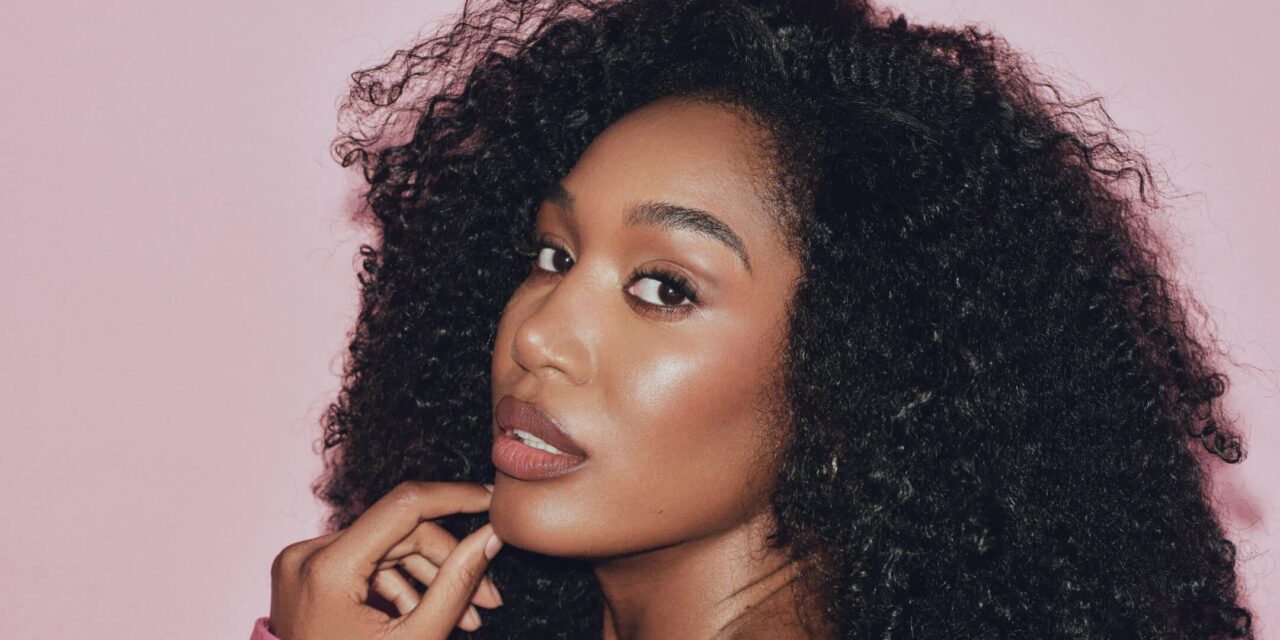
As Amber Shana Williams returns as Tamar in the sixth season of the global phenomenon The Chosen, the actress is reflecting on a journey that has transformed her understanding of representation, resilience, and the power of storytelling. From advocating for her character to speak her native Tigrinya to navigating life with an autoimmune disorder, Williams has developed a philosophy rooted in authenticity, compassion, and the courage to embrace change. In an exclusive conversation with MUNDANE, she opens up about the responsibility of portraying an underrepresented community, redefining self-care beyond wellness trends, her passion for secondhand fashion, and the unexpected creative possibilities she hopes to explore as the series approaches its conclusion.
There is a particular kind of strength that rarely receives the recognition it deserves.
It isn’t necessarily loud, unshakable, or immediately visible. Sometimes it reveals itself through vulnerability, the willingness to ask for help, or the courage to continue moving forward despite uncertainty.
For Amber Shana Williams, the actress behind Tamar in the internationally acclaimed series The Chosen, understanding that distinction has become central to both her work and her personal life.
As the series enters its sixth season, debuting November 15 on Prime Video ahead of a theatrical finale planned for spring 2027, Williams is preparing to say goodbye to a character who has accompanied her through an extraordinary chapter of her career.
What began as an opportunity she initially expected to last a single day has developed into a six-season journey, bringing her into a production with an international audience and a deeply invested community of viewers.
But beyond the professional significance of the role, Tamar has challenged Williams to reconsider how strength, identity, and belonging are represented on screen.
“I grew to understand that her resilience wasn’t something she just had, but something she had to build up over and over again,” Williams tells MUNDANE.
It’s an observation that speaks to the complexity of a character navigating unfamiliar cultural surroundings while attempting to preserve her sense of self.
And for Williams, whose own experiences include living abroad, managing a chronic health condition, and learning to establish boundaries within a demanding industry, that journey has taken on an increasingly personal dimension.
Playing Strength Without Losing Vulnerability
Throughout The Chosen, Tamar has become a meaningful presence for viewers who recognize aspects of their own experiences in her story.
An African woman and a Gentile living far from home, she navigates a community whose cultural traditions and beliefs differ from those she grew up with.
Her resilience is often evident in the way she continues to participate, contribute, and form relationships despite those differences.
But Williams was determined not to portray that strength as emotional invulnerability.
“What’s challenged me the most is learning how to play her strength without making her hard,” she explains.
For the actress, the distinction is essential.
A character who never struggles, cries, or admits fear might appear admirable, but risks becoming emotionally inaccessible.
Williams instead wanted Tamar’s resilience to feel earned.
Her moments of uncertainty are just as important as her expressions of courage.
The character’s willingness to reveal her fears and continue forward despite them creates a more nuanced understanding of what strength can look like.
That approach also reflects Williams’ broader philosophy of representation.
When portraying someone whose identity is rarely centered in historical or faith-based television, the temptation can be to make the character an idealized example of the community she represents.
But Williams believes authenticity requires allowing Tamar to be imperfect.
She can be stubborn.
She can be impatient.
She can make mistakes.
And those qualities make her more human, not less worthy of admiration.
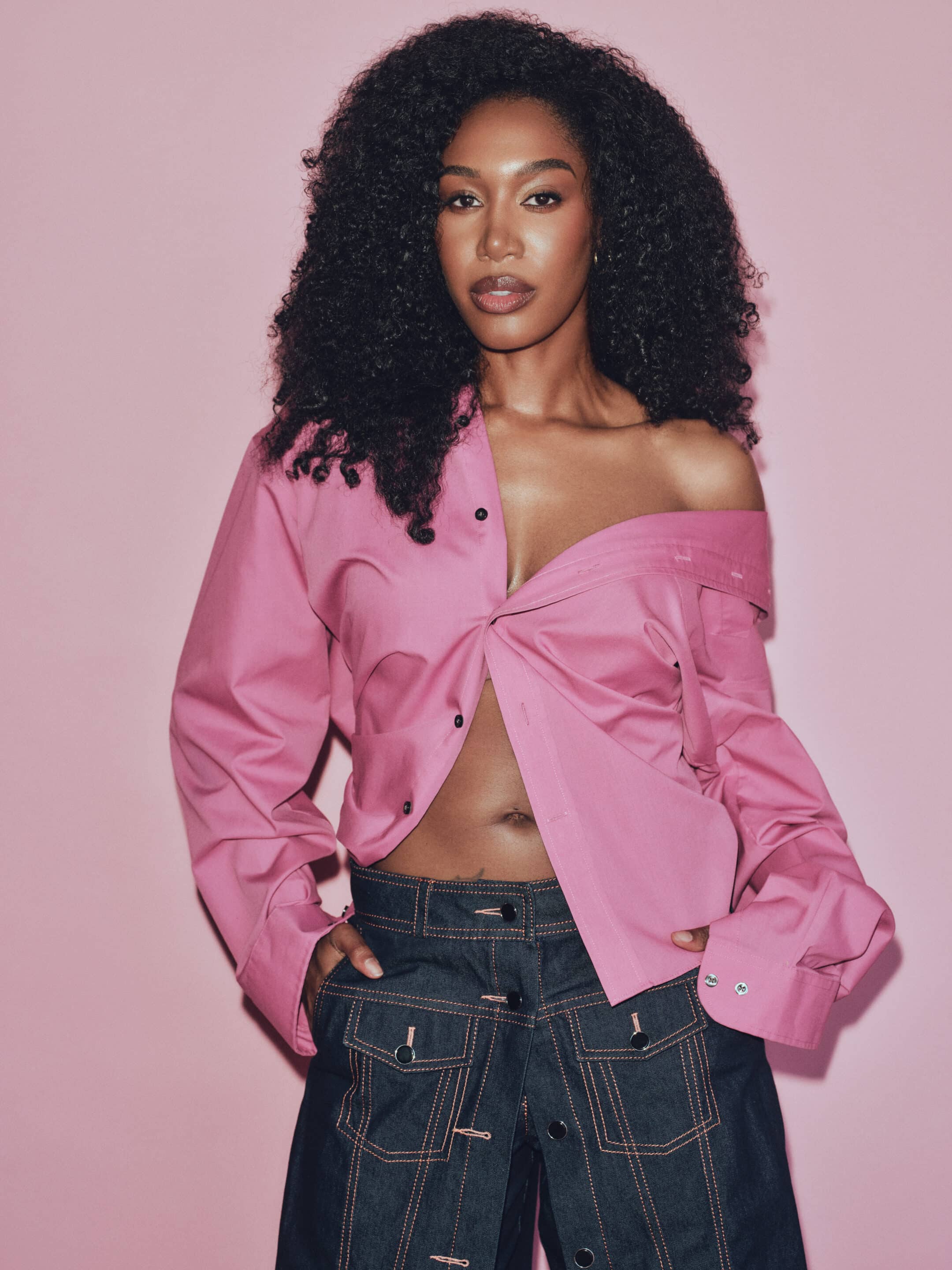
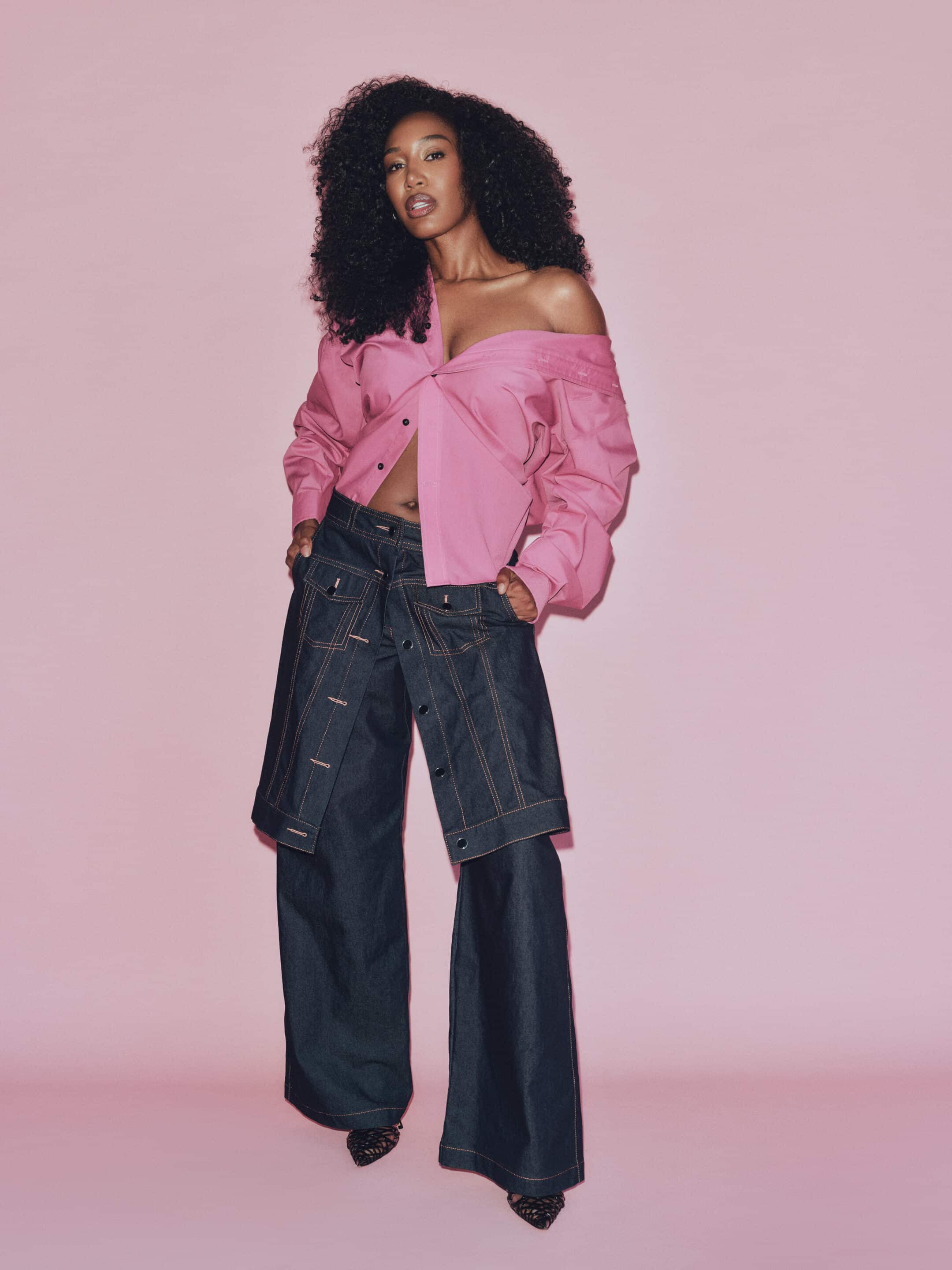
Photogrpaher: Jonny Marlow
Stylist: Anna Schilling
Hair Stylist: LaRae Burress
Makeup Artist: Dion Xu
The Language We Carry With Us
One of Williams’ most significant contributions to Tamar’s portrayal has been advocating for the character to speak Tigrinya, her native language.
The decision carries cultural and emotional significance beyond the immediate dialogue.
For much of the series, Tamar communicates in a language that isn’t her own.
That experience reflects a familiar reality for many immigrants: the need to adapt to a new environment while preserving a connection to the culture and identity they left behind.
Williams wanted audiences to recognize that Tamar’s life didn’t begin when she entered the story.
She has a history.
A family.
A homeland.
And a language that remains part of her identity even when it isn’t being spoken.
“It was imperative to me that Tamar continue to carry her home with her,” Williams explains.
Her perspective is informed partly by her own experience living in Spain.
Learning to navigate everyday life in another language introduced her to the emotional limitations of communicating outside her mother tongue.
Routine conversations become manageable.
Ordering coffee, asking directions, or making small talk gradually feels natural.
But expressing profound grief, fear, or love can be considerably more complicated.
“When something really hurts, you reach for the words you grew up with,” she says.
For Williams, the emotional significance of language extends beyond vocabulary.
It carries memories, family relationships, and cultural experiences that cannot always be translated directly.
She points to immigrant families in which parents or grandparents instinctively return to their first language during emotionally intense moments.
Even when younger generations don’t understand every word, the feelings remain unmistakable.
That, she believes, is cultural memory.
And by allowing Tamar to speak Tigrinya, Williams wanted to preserve an essential part of the character’s humanity.
Representation Without Perfection
Williams is acutely aware of the responsibility that comes with portraying Tamar.
As the only Black woman in the show’s main cast, and as a character who is both African and a Gentile, Tamar occupies a distinctive position within the series.
For some viewers, her presence represents an opportunity to see themselves reflected in a narrative where people with similar backgrounds have often been absent.
Williams has heard directly from audience members who describe the emotional significance of that visibility.
Those conversations have reinforced her understanding of the role’s cultural importance.
But they have also raised an important creative question.
How does an actress honor the people who identify with her character without reducing that character to a symbol?
Williams believes the answer lies in complexity.
“I’ve learned that the best way to honor them is to make her real, not perfect,” she explains.
The statement challenges a familiar tension within contemporary discussions of representation.
When characters from underrepresented communities finally receive visibility, they can sometimes be expected to embody an idealized version of their identity.
They must be admirable.
Morally consistent.
Exceptionally resilient.
And free from the flaws routinely afforded to other characters.
Williams rejects that limitation.
“If I’m too careful with her, she becomes a statue,” she says.
For her, the most meaningful representation isn’t necessarily the most flattering.
It’s the portrayal that allows audiences to recognize a complete human being.
An Unexpected Journey Through Six Seasons
Perhaps one of the most remarkable aspects of Williams’ experience with The Chosen is how unexpectedly it began.
She initially approached the opportunity believing she would be appearing as a day player.
The role wasn’t expected to develop into a long-term commitment.
Yet six seasons later, Tamar has become one of the show’s recognizable characters.
The experience fundamentally changed how Williams approaches the unpredictability of acting.
“I came in thinking I was a day player, and here I am six seasons later,” she recalls.
The lesson extends beyond the entertainment industry.
Opportunities don’t always reveal their significance immediately.
A small beginning can lead to an extraordinary outcome.
And rejection, while often painful, doesn’t necessarily indicate that a particular path has ended.
Williams acknowledges that she continues to encounter rejection, even after years on a successful production.
But she has become less inclined to judge opportunities solely by their initial scale.
Sometimes the most important experiences begin without any indication of what they might eventually become.
That philosophy also informs her understanding of reinvention.
Neither Williams nor Tamar was originally expected to occupy the position they eventually reached.
Their journeys demonstrate how circumstances, persistence, and unexpected opportunities can reshape the direction of a story.
Finding Family Through Storytelling
As The Chosen approaches its conclusion, Williams is reflecting not only on the character she has portrayed but also on the relationships she has developed throughout the production.
The series has provided an environment in which she has grown considerably as a performer.
Working alongside actors she describes as both talented and generous has strengthened her ability to collaborate, listen, and remain emotionally available within a scene.
For Williams, those qualities are essential to meaningful storytelling.
Acting isn’t simply about delivering an individual performance.
It’s about responding to other people, creating trust, and allowing vulnerability to exist within a shared creative space.
That process has helped transform the cast into something resembling an extended family.
“I’ve grown so much as a scene partner because of this show,” she explains.
The experience has also clarified what she hopes to find in future projects.
Rather than focusing exclusively on the size or visibility of a production, Williams wants to work in environments defined by generosity, trust, and creative connection.
“A home away from home,” as she describes it.
It’s an ambition that reflects the lasting influence of her time on the series.
The relationships formed behind the camera can be just as transformative as the stories told in front of it.
Redefining Strength While Living With a Chronic Condition
Outside her acting career, Williams has developed a deeply personal understanding of resilience through her experience living with an autoimmune disorder.
The demands of film and television production can be physically and emotionally intense.
Long working days, early call times, unpredictable environments, and the expectation of constant availability can make it difficult for performers to recognize when they need rest.
Williams admits that she once approached those demands by pushing through discomfort.
She worried about becoming the person who slowed down a production.
So she continued working, often dealing with the physical consequences afterward.
But managing a chronic health condition eventually forced her to reconsider that approach.
“My body wouldn’t let me continue ignoring it,” she explains.
Initially, the experience brought frustration and fear.
She struggled to understand why she couldn’t recover as quickly as she once had.
Over time, however, her relationship with her body began to change.
Rather than treating physical limitations as obstacles to overcome through sheer determination, she started recognizing the importance of listening to her body’s needs.
Today, her wellness routine includes strength and conditioning training, Pilates, yoga, and meditation.
But she no longer measures success exclusively through intensity or consistency.
Some days, she feels capable of lifting heavy weights.
Other days, stretching and breathing are enough.
Both experiences count.
“Strength has been learning to listen and to rest without feeling guilty about it,” she says.
It’s a perspective that challenges the entertainment industry’s tendency to celebrate endurance at the expense of personal well-being.
For Williams, genuine strength isn’t about ignoring discomfort.
It’s about developing the awareness to respond to it.
When Self-Care Becomes Another Obligation
Williams’ approach to wellness also challenges the increasingly commercialized culture surrounding self-care.
Social media frequently presents well-being as an elaborate collection of rituals.
Morning routines.
Cold plunges.
Specialized diets.
Meditation schedules.
Expensive treatments.
And an endless assortment of products promising a healthier, more optimized life.
But Williams recognizes how easily those expectations can become another source of pressure.
“Sometimes I’ll scroll through social media and feel like I’m failing at wellness because I didn’t do a cold plunge and journal and drink green juice before 7am,” she admits.
The irony isn’t lost on her.
A culture supposedly dedicated to reducing stress can sometimes create entirely new reasons to feel inadequate.
Williams has learned that meaningful self-care often looks considerably less glamorous.
Canceling plans when exhausted.
Going to bed early.
Setting boundaries.
Asking for help.
Or simply removing an unnecessary obligation from the day.
Her broader philosophy also includes practical choices that protect her time and energy, whether through aromatherapy, essential oils, or hiring someone to help clean her home.
For Williams, these decisions aren’t about constructing an ideal lifestyle.
They’re about making daily life more manageable.
“Having so many requirements of yourself is not self-care,” she explains.
“It’s just another to-do list.”
The distinction feels particularly relevant in a culture where wellness is frequently treated as another form of productivity.
Sometimes taking care of yourself means doing less.
And sometimes that’s the most difficult choice of all.
The Art of Finding Style Without the Price Tag
Williams’ commitment to individuality extends beyond her work and wellness practices into her relationship with fashion.
A devoted thrifter, she has incorporated secondhand pieces into some of her favorite red carpet appearances.
For her, personal style has little to do with the price attached to a garment.
Instead, it reflects creativity, self-knowledge, and the pleasure of discovering something unexpected.
“I think buying secondhand pushes back on the idea that you have to spend a lot to look good,” she says.
The approach challenges an industry in which luxury is frequently associated with exclusivity and status.
Williams enjoys the excitement of finding something distinctive without paying a premium.
She also appreciates the idea of giving clothing a second life.
Some of her favorite outfits, she explains, cost almost nothing.
It’s a philosophy that aligns naturally with her broader understanding of identity.
Style doesn’t have to be dictated by outside expectations.
Nor does it need to communicate wealth to feel meaningful.
Sometimes the most interesting fashion choices emerge from knowing what you like and having the confidence to wear it.
And for Williams, the thrill of finding an unexpected treasure is part of the experience.
What Spain Taught Her About Ambition and Happiness
Williams’ years living in Spain introduced another important shift in her perspective.
Coming from the United States, where professional achievement often dominates conversations about success, she encountered a different relationship with time.
Long lunches.
Extended conversations.
Meals that weren’t rushed.
And social gatherings that didn’t necessarily need to serve a practical purpose.
Initially, the slower rhythm felt unfamiliar.
She was accustomed to an environment where productivity often seemed inseparable from personal worth.
But over time, she began to appreciate the possibility of balancing ambition with a more expansive understanding of happiness.
“In the US we tend to treat work like it’s the whole point,” she observes.
“In Spain people take long lunches and sit at the table for hours just talking.”
For Williams, the experience wasn’t about abandoning ambition.
It was about recognizing that professional success doesn’t need to come at the expense of everything else.
She could remain dedicated to her acting career while making room for relationships, hobbies, and experiences that exist outside work.
Those interests include exploring new cities through food, karaoke, competitive group games, and recreational volleyball.
She also has a longstanding passion for anime and animation.
These activities provide something essential: a reminder that her identity extends beyond her profession.
“They remind me that I’m a whole person, not just an actress waiting for the next job,” she explains.
It’s a lesson that feels particularly important as she prepares for life beyond The Chosen.
The Next Chapter: Animation, Thrillers, and Unexpected Characters
Although Williams has become closely associated with Tamar, she is eager to explore roles that reveal entirely different dimensions of her abilities.
One of her biggest ambitions is to work in animation.
A lifelong admirer of the medium, she is fascinated by the creative freedom of voice acting.
Without the physical expectations that often accompany on-screen casting, performers can inhabit characters far removed from their own appearance or identity.
A dragon.
A villain.
A talking teapot.
A child.
The possibilities are virtually limitless.
“With voice acting you can play anything,” she explains.
For Williams, that freedom is especially appealing.
Animation allows performers to embrace exaggeration, playfulness, and imagination in ways that can be difficult to achieve in more grounded dramatic roles.
But her ambitions don’t stop there.
She is also interested in thrillers and psychologically complex dramas, particularly stories involving characters whose choices are morally ambiguous.
After spending years portraying someone she describes as steady and good, Williams is ready to explore less predictable territory.
She wants to play characters who aren’t always likable.
Characters who make difficult decisions.
Characters who must live with the consequences of their actions.
And ultimately, characters who challenge audiences to see her in an entirely new way.
In Conversation With Amber Shana Williams
You’re returning as Tamar in the sixth season of The Chosen, a character who has become particularly meaningful to audiences around the world. How has your understanding of Tamar evolved throughout the series, and what aspects of her identity, resilience, and personal journey have challenged or transformed you as an actress?
I grew to understand that her resilience wasn’t something she just had, but something she had to build up over and over again. She’s a long way from home and she’s surrounded by people who don’t share her culture or beliefs, and yet she still shows up every day with an open heart. What’s challenged me the most is learning how to play her strength without making her hard. I didn’t want her to be a woman who never cries or never needs anyone. Some of my favorite moments with her are the ones where she lets people see that she’s afraid or lost, and yet she continues pressing forward.
You’ve spoken about the importance of representing communities that are often underrepresented or misrepresented on screen, particularly through your decision to perform in Tamar’s native Tigrinya. What did incorporating that language bring to your portrayal, and how do you think language, cultural memory, and the immigrant experience shape the way people express their deepest emotions?
It was imperative to me that Tamar continue to carry her home with her. For most of the series we only hear Tamar speaking in a language that isn’t her own, and that says something about what it costs to fit into a new place. You assimilate. You learn to talk the way everyone around you talks so you can be understood, and over time parts of yourself begin to go quiet. Hearing her speak Tigrinya reminds the audience that she has a whole history and a family and a mother tongue that still lives inside her.
I understand a little of that from my time in Spain. When you’re living in a second language, there are feelings that are just bigger than your vocabulary. You can get by day to day, ordering coffee and making small talk, but when something really hurts, you reach for the words you grew up with. It’s the only way to truly express how you feel.
I also think about all the families where the parents or grandparents switch languages the second they get emotional. The kids might not understand every word, but they understand exactly what’s being felt. That’s cultural memory. It lives in the heart and sound of a language, not just the meaning. I think a lot of immigrants and children of immigrants recognized that in Tamar. It was something I had to advocate for, and I’m so glad I did.
Neither you nor Tamar was originally meant to be part of The Chosen, yet the character has become an important presence in the series. What has that unexpected journey taught you about reinvention, rejection, and the unpredictable nature of an acting career, and have you learned to approach opportunities differently because of it?
I came in thinking I was a day player, and here I am six seasons later. If that doesn’t teach you that you never know where something is going to lead, I don’t know what will. I still get plenty of rejection, but I’ve stopped judging an opportunity by how big it looks at the beginning. Sometimes a no is just making room for something you couldn’t have planned.
The Chosen has developed an extraordinary international following, with audiences forming deeply personal connections to its characters and stories. How do you navigate the responsibility of portraying a character who carries such emotional and cultural significance for viewers, while preserving the creative freedom to interpret her as a complex human being rather than simply a symbol?
I feel that responsibility a lot, especially since she’s the only Black woman in the main cast, and she’s African and a Gentile on top of that. I know there are people watching who don’t usually get to see themselves in stories like this one, and some of them have told me what it meant to finally see someone who looks like them in this world.
But I’ve learned that the best way to honor them is to make her real, not perfect. If I’m too careful with her, she becomes a statue. So I let her have her moods and her flaws and her own opinions. She can be stubborn. She can be impatient. She doesn’t always say the right thing. I think people connect to her because she feels like someone they could actually know, and I’d never want to trade that for making her a symbol.
As the series approaches its conclusion, with Season 6 arriving in November and the theatrical finale planned for 2027, you’re entering a significant transitional moment. What has being part of this production taught you about storytelling and collaboration, and how do you hope the experience will influence the kinds of characters and projects you pursue next?
I’ve grown so much as a scene partner because of this show. I’ve been blessed to work with some insanely talented actors who are not only brilliant at their craft, but are also generous scene partners. Working with them and living in a constant state of vulnerability has created such a tight-knit family. Going forward, I want to be part of projects that feel like that. A home away from home.
You’ve been open about living with an autoimmune disorder and developing a wellness routine that combines strength training, Pilates, yoga, and meditation. How has navigating a chronic health condition changed your relationship with your body, particularly in an industry that often demands constant physical and emotional availability, and what misconceptions about strength and self-care would you like to challenge?
This industry kind of trains you to push through exhaustion and pain. Long days, early call times, cold sets, hot sets, and you’re expected to be on no matter how you feel. Nobody wants to be the actor who slows things down. So I’d just keep going and deal with the crash later. Living with an autoimmune disorder forced me to change the way I took care of myself. My body wouldn’t let me continue ignoring it. At first that felt like a betrayal, honestly. I was frustrated and scared and I didn’t understand why I couldn’t just bounce back the way I used to.
Today I see my body as an extension of my mental health. Some days I can lift heavy and some days the most I can do is stretch and breathe, and both of those count. Strength training has been huge for me because it makes me feel capable, and Pilates, yoga, and meditation help me come back to myself when everything feels like too much.
I think a lot of people believe strength means never slowing down. For me, strength has been learning to listen and to rest without feeling guilty about it. That’s a lot harder than pushing through.
Your approach to wellness includes not only physical exercise and mindfulness but also setting boundaries, recognizing when you need rest, and making practical decisions that protect your energy. Do you think contemporary wellness culture sometimes turns self-care into another form of pressure or performance, and what have you learned about distinguishing genuine personal well-being from the expectation to constantly optimize ourselves?
Sometimes I’ll scroll through social media and feel like I’m failing at wellness because I didn’t do a cold plunge and journal and drink green juice before 7am. I’m not always consistent, and I’m not always okay. Having so many requirements of yourself is not self-care. It’s just another to-do list. Real self-care usually isn’t very pretty. It’s canceling plans when I’m exhausted and going to bed early. Nobody is really posting about that.
You’re a passionate thrifter who has incorporated secondhand fashion into some of your favorite red carpet appearances. What originally attracted you to vintage and secondhand shopping, and do you see fashion as a way of expressing individuality while challenging the industry’s obsession with luxury, exclusivity, and the idea that personal style must come with an expensive price tag?
I love retail therapy, and I love it even more when it doesn’t cost a fortune. I think buying secondhand pushes back on the idea that you have to spend a lot to look good. Some of my favorite looks cost almost nothing. Style is really about knowing yourself and having fun with it, and it feels good to wear something that’s been given a second life.
You’ve spent time living in Spain, where you embraced a slower approach to everyday life, while also maintaining interests ranging from karaoke and recreational volleyball to anime and animation. How have those experiences and interests helped you maintain an identity outside of acting, and has living between different cultures changed your understanding of ambition, happiness, and what constitutes a fulfilling life?
For me, it’s not really about slowing down. It’s about balance. In the US we tend to treat work like it’s the whole point, and in Spain people take long lunches and sit at the table for hours just talking. At first I didn’t know what to do with myself. Eventually I realized I don’t have to pick one. I can be ambitious and work hard and still make real time for the people I love and the things that make me happy.
My hobbies are a big part of that. My goal now is to make more time for them. They remind me that I’m a whole person, not just an actress waiting for the next job.
You’ve expressed an interest in eventually voicing an animated character, a creative direction that might surprise audiences who primarily know you through The Chosen. What attracts you to animation and voice acting, and as you look beyond the series, what kinds of unexpected roles, genres, or creative challenges would allow audiences to discover a completely different side of Amber Shana Williams?
I’ve loved animation my whole life, so getting to be part of that world would be a dream. With voice acting you can play anything. A dragon, a talking teapot, a villain, a little kid. Nobody cares what you look like, and there’s a freedom in that I find really exciting. You get to be as big, as wild, and as playful as you want.
I’d also love to try a thriller or a more complicated drama, where the character isn’t always likable and has to live with her choices. After so many years playing someone so steady and good, I’m ready to surprise people.
The Freedom to Become Someone New
As Amber Shana Williams prepares for the next chapter of her career, there is a compelling parallel between her personal evolution and the journey of the character who brought her international recognition.
Tamar’s story is shaped by the experience of navigating unfamiliar environments while preserving a connection to her identity.
Williams’ own journey has involved learning to trust herself, establish boundaries, and recognize that personal strength doesn’t always require pushing forward.
Both have discovered that resilience is rarely something we possess permanently.
It’s something we practice.
Something we rebuild.
And sometimes, something we redefine entirely.
Her advocacy for Tamar’s use of Tigrinya reflects a belief that representation becomes meaningful when it preserves the cultural and emotional details that make people distinct.
Her approach to wellness challenges the idea that exhaustion is evidence of dedication.
Her love of thrifting celebrates individuality over status.
And her experiences living in Spain have reinforced the importance of making room for a life beyond professional achievement.
Taken together, these perspectives reveal an actress increasingly comfortable with the possibility of reinvention.
After six seasons portraying a character associated with compassion and perseverance, Williams is ready to explore new creative territory.
Animation.
Psychological thrillers.
Morally complicated characters.
Stories that allow her to surprise audiences who think they already know what she can do.
But perhaps the most important lesson she carries forward from The Chosen is that a meaningful career cannot always be planned in advance.
What began as a single-day opportunity became a defining professional experience.
And what comes next may be just as unexpected.
For Amber Shana Williams, the future isn’t about abandoning the person she has become. It’s about recognizing that identity is never finished, strength can coexist with vulnerability, and the most extraordinary chapters often begin in ways we never could have anticipated.
Amber Shana Williams stars as Tamar in Season 6 of The Chosen.
Season 6 premiere: November 15, 2026
Streaming: Prime Video
Theatrical series finale: Planned for spring 2027