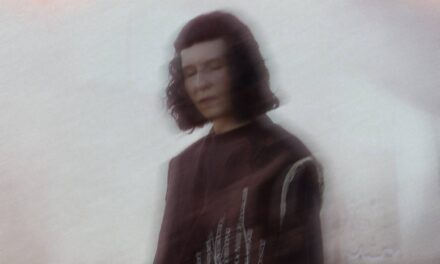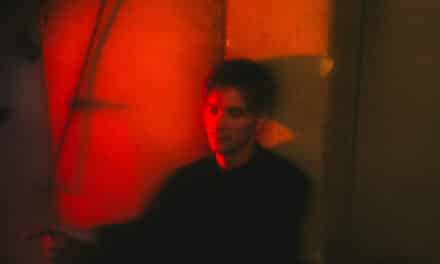
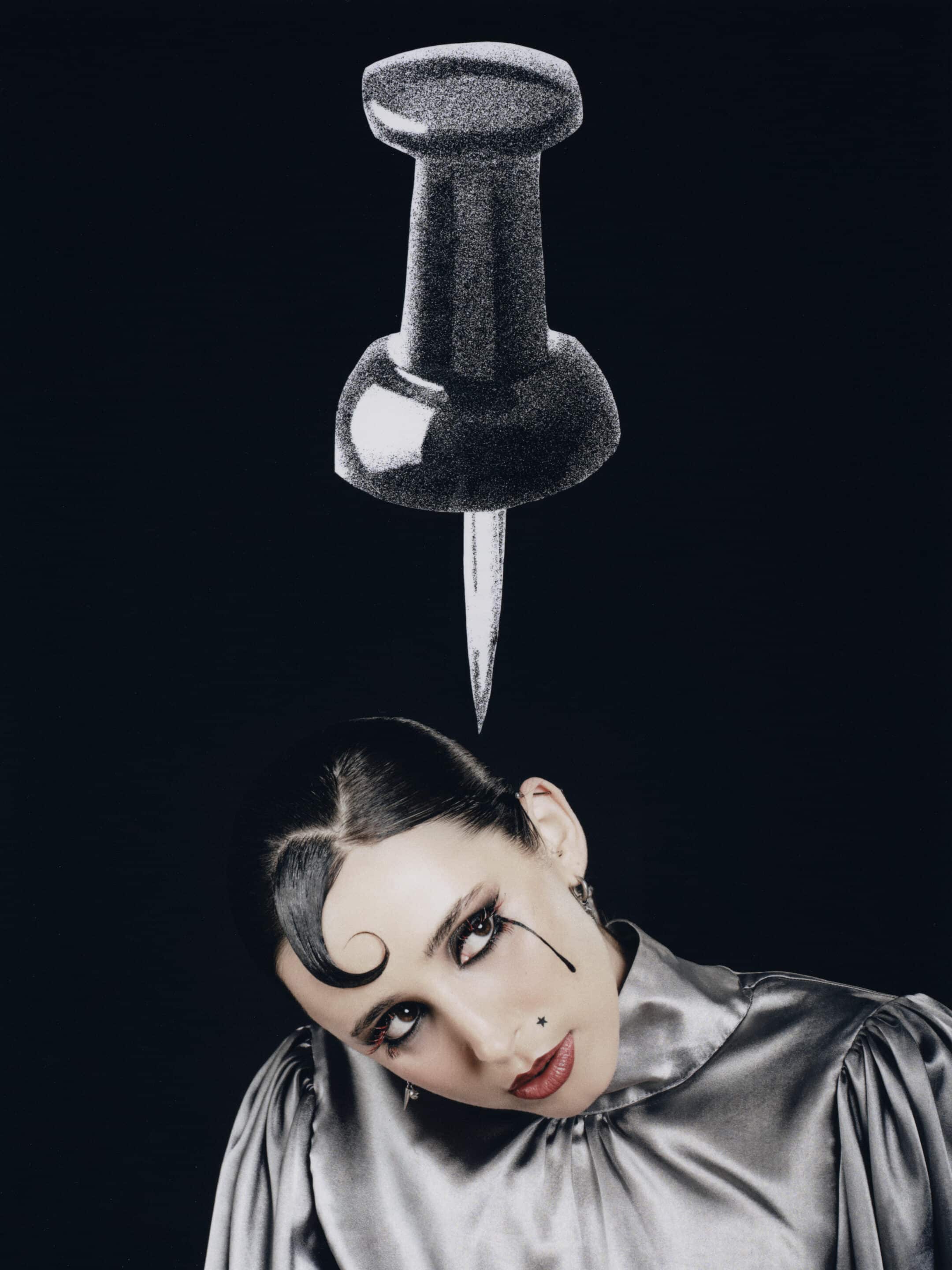
For Annika Rose, telling the truth doesn’t necessarily mean arriving at a verdict.
On her deeply personal new single “Tainted State of Mind,” the Los Angeles alt-pop artist confronts the complicated emotions that surfaced after her father began dating a woman close to Rose’s own age. But rather than reducing that experience to betrayal, anger or a simple antagonist, Rose allows contradiction to remain unresolved: she can deeply love someone while questioning their decisions, understand their humanity while disagreeing with their choices, and tell her own story without pretending it represents the entirety of theirs.
“Songs never capture the full character spectrum of a person,” she says. “I’ve come to accept that sometimes only bits and pieces of the story can fit into a song and that feeling doesn’t have to equate to a poor verdict on who someone is.”
That complexity runs through both the writing and production of “Tainted State of Mind.” Restrained verses preserve the intimacy of a difficult conversation before expanding into a more explosive chorus, allowing tension, hurt and disbelief to exist alongside Rose’s attempt to process what happened.
But the song is only one component of a much larger world.
Rose has been expanding her forthcoming EP READ ALL ABOUT IT through The Bond St. Bulletin, the self-written and self-published newspaper she distributes alongside her music. Now on its fifth edition, the publication allows Rose to transform private experiences into headlines, stories and physical artifacts, playing with the tension between journalism’s supposed objectivity and the fundamentally subjective nature of memory.
For “Tainted State of Mind,” she took that relationship between music and print one step further, performing the song inside a functioning newspaper printing facility. Surrounded not by an audience but by industrial machinery, Rose physically entered the process through which her stories become objects.
“There was no audience, but there was a physical manifestation of what happens when you have an idea and actually see it through to the end,” she says.
The result increasingly positions READ ALL ABOUT IT as something beyond a conventional EP rollout. Songs become articles; experiences become headlines; performances become extensions of the archive. And Rose becomes simultaneously the person living the story, the songwriter interpreting it and the publisher deciding how it gets preserved.
We spoke with Rose about family, uncomfortable truths, the limitations of songwriting, turning private experiences into public artifacts and why READ ALL ABOUT IT is ultimately an invitation to enter the memories with her.
“Tainted State of Mind” comes from a really personal family experience, but you’ve been very deliberate about not turning anyone into the villain of the song. Was it difficult to write honestly about complicated feelings toward someone you still deeply love without simplifying that person into a character?
I would honestly say, in the spur of the moment it was very easy to write the song. It tends to work like that for me. When the emotional experience is at its peak, that’s when I like to write—capturing a particular moment in the ebb and flow of the emotional curve.
The more rational and logical thinking about its effects on the subject and how much I am comfortable with letting it exist outside of me comes later. Songs never capture the full character spectrum of a person, and I’ve come to accept that sometimes only bits and pieces of the story can fit into a song and that feeling doesn’t have to equate to a poor verdict on who someone is. We are too complex as entities for that to be logical anyways.
You’ve described experiencing the situation both as a daughter and as a young woman. Did those two perspectives ever pull in different directions, and was songwriting where you were finally able to let both exist without choosing one?
They sort of sit in the same place, at least for this particular song, but maybe not in the world at large. Because it’s about someone so close to me, they sorta fall into the same corner.
My perspective in “Tainted State of Mind” competes with beliefs I have in general about power dynamics, patriarchy, manipulation, etc. as a young woman, but then to deal with and observe those issues that are very prevalent in society so close up and tied to someone who filled a very particular role and standard in my life was, and is, very complicated. They very much both exist.
There’s an interesting moment in adulthood when we stop seeing our parents exclusively as parents and begin seeing them as complex people with lives of their own. Did writing this song shift the way you see your family at all?
Writing the song didn’t, but going through the experience has. Or I suppose it sorta solidified that fact for me.
There’s been an accumulation of moments growing up that have shown me just how human the people I idolized in youth are. And still do, just with a lot more space for them to be as imperfect as the rest of us.
Though it is unrealistic to say that there are not certain choices made by people you love that you don’t agree with. Or things they have done or do that make you question what lens you’ve been viewing them through. And it puts some fog on the glass, definitely.
The production moves from restrained, tense verses into a much more explosive chorus, almost mirroring emotions that can no longer be contained. When you were making the record, how important was it for the arrangement to recreate the experience of trying to process something before emotion eventually takes over?
I love this question. It was a dynamic that evolved very naturally in the room. The production followed what my friend Simon and I were writing on piano and guitar.
There’s so much lyrical intimacy in it. It was the conversation that took me a long time to kindly put into a face-to-face interaction, and I wanted the delivery of the whole song to be as fragile as that conversation was probably going to be. It’s very easy for me to layer and layer until there aren’t any more notes in the scale, but some things deserve to be unmasked, and I wanted that for these lyrics.
Calling the song “Tainted State of Mind” suggests something more nuanced than straightforward anger. It implies that an experience can change the way you see something you thought you understood. What felt “tainted” for you, and has that feeling evolved since writing it?
Honestly, just my perception of this person. Someone who filled such a role in my life and my mind.
There’s so much nuance to a lifelong relationship and an understanding of a dynamic that felt pretty set in its prolonged place. That shift is a dramatic one, and it definitely taints the understanding I thought that I had.
READ ALL ABOUT IT has expanded beyond music into a self-published newspaper, and you’re now on its fifth edition. Why did print become the right medium for telling the parts of these stories that couldn’t fit inside the songs themselves?
Yes!!! Crazy I’m on #5 already.
There’s so many reasons, but I love tangibility and context. Many of the stories that I write and talk about in my music are pretty rich in depth, pain and experiences that maybe didn’t leave me with the most positive outcome.
There’s something about being able to look and talk about things through a more satirical lens from the angle of media that allows a more playful and unique perspective into my periphery. And because most people would never know if they picked up the paper on a park bench that I am the writer and the subject, I can have more fun with what I talk about in the newspapers as speculation, without it being known there might actually be some truth to it—as I AM the writer and the subject.
There’s a mystery and a mask.
There’s something particularly interesting about using a newspaper—a format traditionally associated with supposedly objective accounts of events—to document intensely subjective emotional experiences. Are you playing with that tension between what happened, how someone else might tell the story, and how you experienced it?
Oh absolutely. This song is complex for obvious reasons. And there’s still a lot that remains unresolved. Some parts I understand, some I don’t want to, and some I simply just never will. That’s the complexity of it all.
There’s an internal battle that happens when you love someone so much, you know they would never do anything to harm another human being, you want to remain understanding of their choices even if you passionately disagree with them, you worry about how other people see or judge those choices, yet you somehow still want to protect their right to make personal life decisions without immediate judgment and void of a drastic character verdict with no other context.
That being said, yes, there’s plenty for me to play with in the paper, as I genuinely can see and feel every angle of this battle through different eyes.
You performed “Tainted State of Mind” inside an operational newspaper printing facility, physically bringing the song into the place where these stories become objects people can hold. What changed about performing such a personal song surrounded by the machinery producing the larger world around it?
Honestly, it was just an insanely surreal experience overall. Typically when I’m performing there’s bodies in a room, not massive machinery. But somehow both were equally as emotional for different reasons.
There was no audience, but there was a physical manifestation of what happens when you have an idea and actually see it through to the end. It’s wild to me that a seed that I planted in early 2025 has opened so many doors and given me so much knowledge about a sector of art and media that is an entire universe in itself.
Something about the environment and being in the home of where mine and so many other stories get printed just opened an entirely new emotional portal for me to channel in the already deeply emotional song that “Tainted State of Mind” is.
This release is described as one of your most personal and increasingly unfiltered moments. As your songwriting becomes more specific about real relationships and real people, where do you draw the boundary between telling your truth and protecting someone else’s humanity?
There’s no boundaries when I’m making. I would never limit myself in my most cathartic process. That’s what I use it for.
If I really feel like a song I’ve written will impact my interpersonal relationships in a negative or exploitative way, I always make sure to be intentional in my communication around it, and I of course have whatever preemptive conversations need to be had.
With READ ALL ABOUT IT, you’re effectively turning your experiences into songs, headlines, physical objects and performances. By the time this entire chapter is complete, do you hope people feel like they’ve simply listened to an EP—or like they’ve entered an archive of a particular period of your life and discovered their own stories somewhere inside it?
That’s always what I hope for!!! But it’s super important to me that I don’t have any expectations for how someone experiences my music or anything I do. I can only do what makes me excited and keeps me engaged and hope it inherently encourages the audience to notice new things as well.
Perhaps engage with art in a different way than they might be used to, and find something in any part of it that resonates with them. READ ALL ABOUT IT definitely captures periods of my life, and it’s an invitation to sit in the memories of them with me. And if I’m lucky, someone somewhere connects to the collection of all the feelings captured.