There is something inherently unstable about love built on control.
Affection becomes leverage. Intimacy becomes confusion. Compliments blur into manipulation, and eventually the person caught inside the relationship begins questioning not only the other person’s intentions, but their own perception of what love even is.
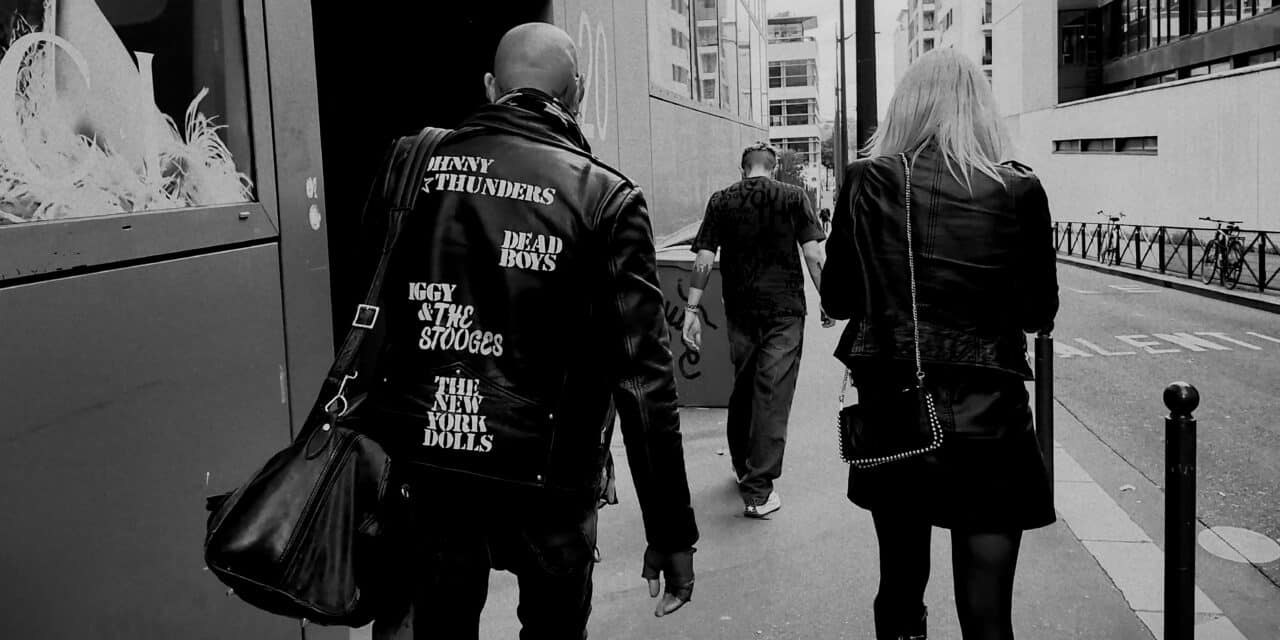
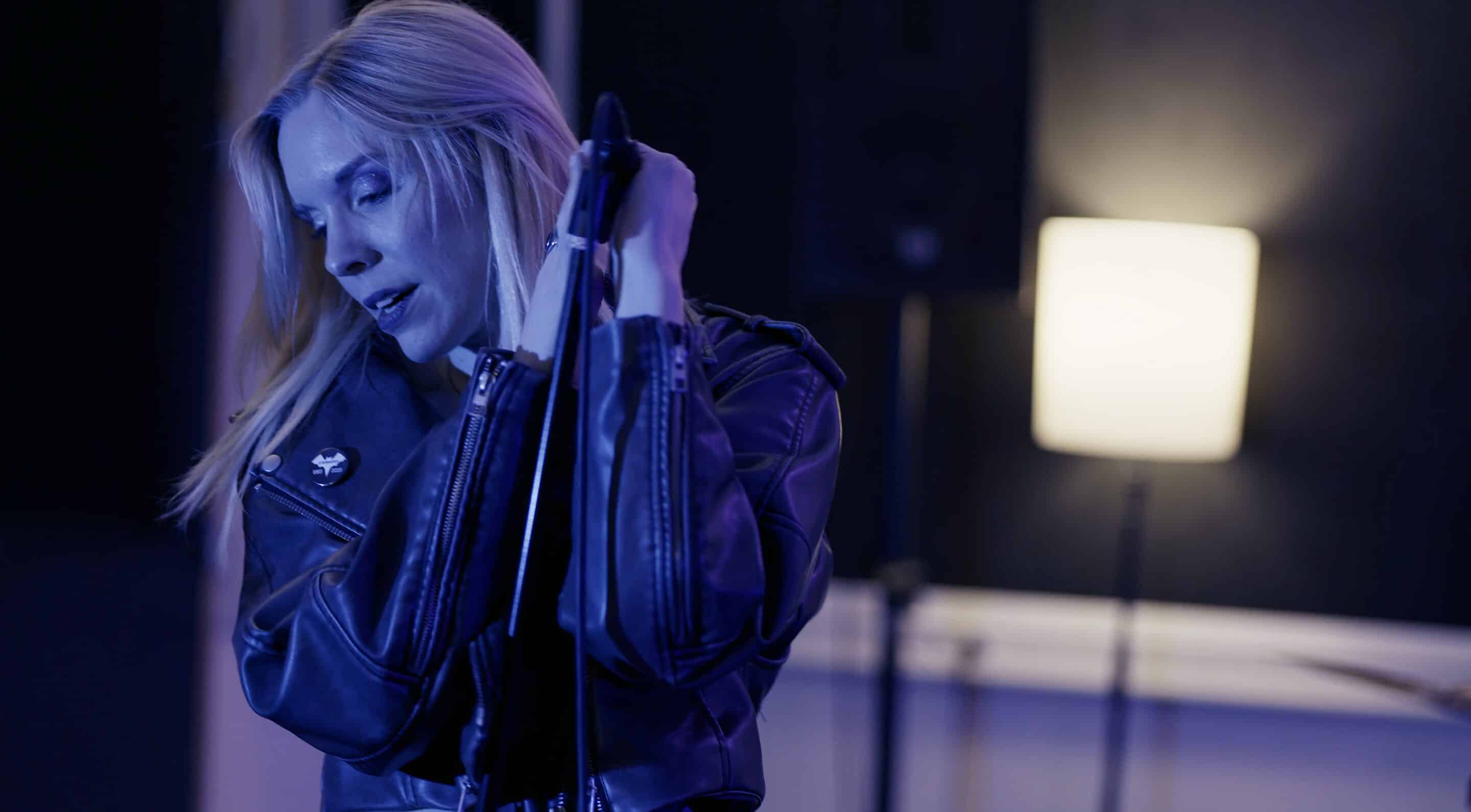
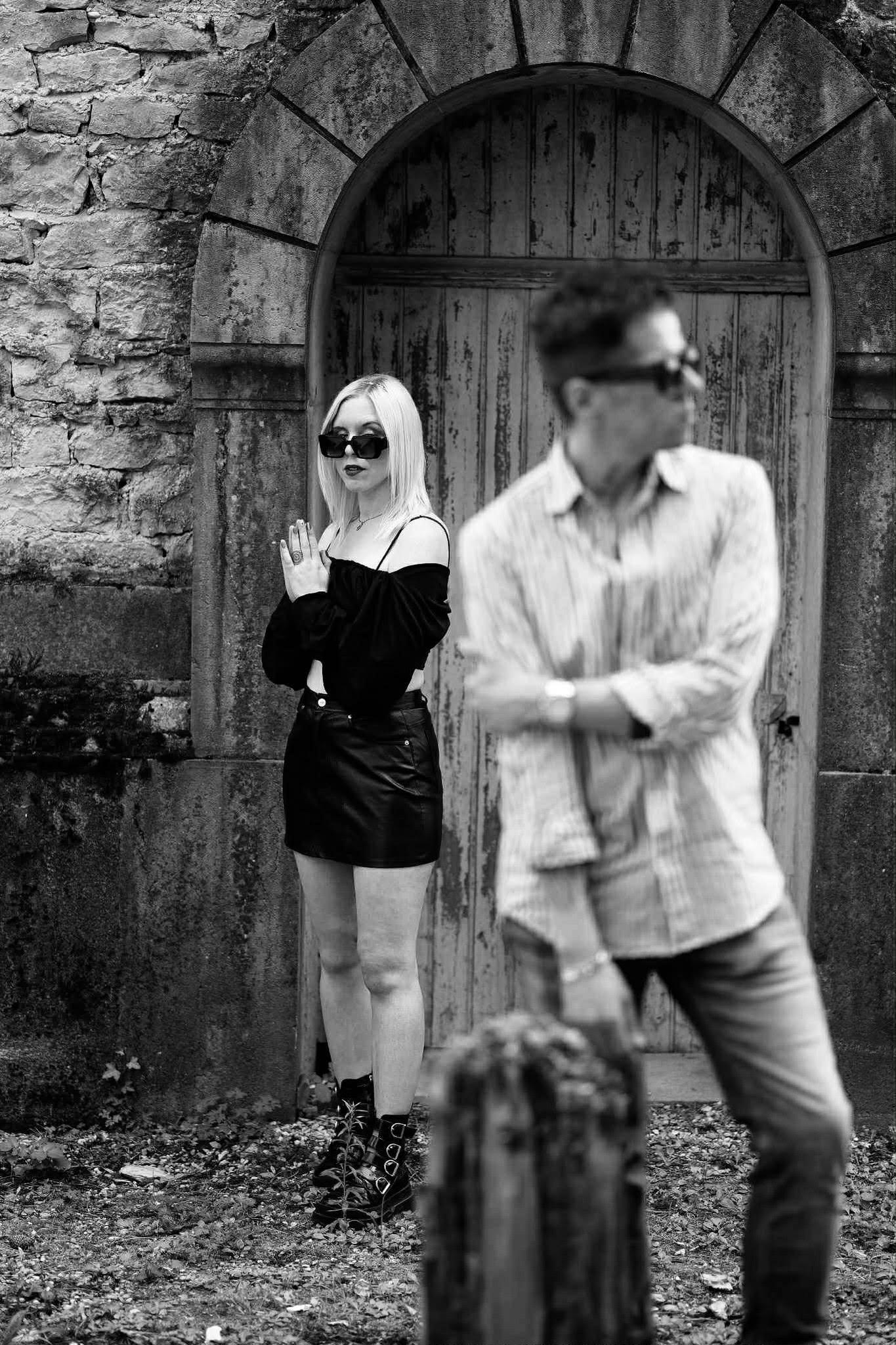
That tension sits at the center of “Love Lies,” the latest single from Bliss My Heart x Cliff Estatof, a darker, sharper turn from the Paris-based duo whose evolving sound increasingly exists somewhere between post-punk, industrial rock, synth-driven darkness, and cinematic alternative pop.
Released through Cleopatra Records, the track follows the success of January’s “Sugar Kapel” and pushes the project further into guitar-heavy territory without abandoning the electronic and atmospheric foundation that has defined their recent work.
At its core, “Love Lies” is about emotional distortion.
“It’s a story about a toxic relationship,” Cliff explains. “Someone who flatters you just to lie to you and control you. Sometimes we also lie to ourselves. We think we’re in love with someone, but it’s a lie—we’re simply under their influence.”
The song’s title works almost like a contradiction folded into two words. Love can lie. We can lie about love. We can also convince ourselves that manipulation is intimacy simply because acknowledging the alternative is too painful.
Musically, the track attacks that emotional conflict through tense guitars, programmed textures, raw rock energy, and the unmistakably human pulse of Frank Ferrer, whose extensive career includes work with Guns N’ Roses, The Psychedelic Furs, Love Spit Love, and Draco Rosa.
His appearance is not treated as decorative prestige.
For Cliff and Jen, Ferrer provides something increasingly central to the project’s philosophy: imperfection, physicality, and a sense of human breath inside a production environment shaped by synthesizers and programming.
“Frank has a very alive way of playing,” Cliff says. “He didn’t just play the drums—he gave the track room to breathe, impact, and power.”
Jen describes his performance as almost “a third voice.”
That language reveals much about how Bliss My Heart x Cliff Estatof now approach their music. Instruments are not simply components in an arrangement. Every sonic choice becomes emotional characterization.
The result is part post-punk band, part cinematic universe.
Jen and Cliff are explicit about that ambition.
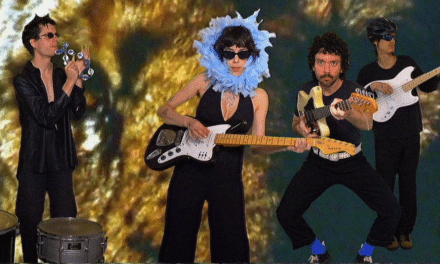
The duo’s recent releases have each occupied their own visual and emotional spaces: “Suffer Well” explored spirituality, “Sinner Sinner” leaned into ’90s black-and-white aesthetics, “Sugar Kapel” embraced their affection for the 1980s, while “Love Lies” presents them more directly as a live post-punk band.
The songs do not form a conventional narrative, but they belong to the same emotional mythology.
“We’re basically trying to build the MCU of music,” Cliff jokes.
Underneath the humor is a serious artistic principle: Bliss My Heart x Cliff Estatof is not simply a collection of singles.
It is a world.
“Love Lies” marks a noticeable evolution toward darker post-punk territory. What inspired this new sonic direction?
Cliff: I come from a punk, grunge, and metal background.
I actually wrote this song several years ago. When I brought it back and confronted it with our current ideas, it immediately matched what we wanted to do.
Jen: We both love the post-punk scene, and many of our inspirations come from there.
When Cliff sent me his demo, I immediately told him that we had to release the track.
The title suggests the fragile relationship between truth, desire, and illusion. What emotional conflict were you exploring?
Cliff: It is a story about a toxic relationship.
Someone flatters you just to lie to you and control you.
Sometimes we lie to ourselves as well.
We think we are in love with someone, but it is a lie—we are simply under their influence.
Your influences range from Depeche Mode and Talk Talk to Alice in Chains. How do those different worlds coexist naturally in your songwriting?
Cliff: When I arranged the song, I imagined something somewhere between Michael Jackson, Nine Inch Nails, Talk Talk, Guns N’ Roses, Alice in Chains, and Depeche Mode.
I was not trying to make it sound like any of them.
I was simply drawing, without pretension, from the influences I grew up with.
Jen: We don’t place any limits on what we can bring into our music.
For example, I can listen to Lana Del Rey and then Gary Numan.
I think it works because we do not hide any feeling or anything we want to express through our music.
Frank Ferrer brings a very physical presence to the song. What did his performance add to “Love Lies”?
Cliff: Frank has a very alive way of playing.
Even though the song is built around programming and synthesizers, he brings a human energy that no machine can reproduce.
He did not simply play the drums. He gave the track room to breathe, impact, and power.
His experience and sensitivity truly elevated “Love Lies” while fully respecting my original vision.
Jen: We have both been fans of Frank’s groove and attitude for a long time.
We thought he was the perfect person to bring the right energy to this track.
We are beyond excited about what he did.
It sounds like a third voice, and that is exactly what we wanted.
We are so grateful.
Since Cliff became the second half of the project, Bliss My Heart has developed a darker and more spiritual identity. How has the partnership changed the creative process?
Jen: The fact that Cliff joined the project as the second half changed everything.
First of all, I am incredibly happy to have brought him into it as both a friend and an artist.
Everything feels more developed, deeper, and more incredible.
We continuously find the perfect balance between his way of creating and mine.
Cliff: Our collaboration was built first and foremost on genuine friendship.
We share many musical influences, but also the same artistic sensitivity.
Jen brings a great deal of spirituality, sensuality, and emotion to our music.
On my side, I probably bring a more rock, industrial, and cinematic approach.
We naturally complement each other.
“Suffer Well,” “Sinner Sinner,” and “Love Lies” all deal with vulnerability, temptation, and redemption. Are these songs part of a larger narrative?
Cliff: Yes, in a way.
We are not telling one linear story, but all of our songs belong to the same emotional universe.
We are basically trying to build the MCU of music. Laughs.
Jen: We use music to bring our emotions into the world.
We do not place limits on what we want to show, but everything comes from our hearts and everything is completely honest.
There is a cinematic quality to the project that extends beyond the songs themselves. How important is visual storytelling?
Jen: We want to offer more than a musical experience.
Bliss My Heart x Cliff Estatof is a complete universe where we want to show our emotions, the things we love, and our inspirations.
“Suffer Well” is deeply connected to spirituality, which is very much a part of me.
“Sinner Sinner” carries a ’90s black-and-white atmosphere.
“Sugar Kapel” is completely connected to our love for the ’80s.
“Love Lies” is more about seeing a band performing within a post-punk scene.
Cliff: It is essential.
I approach our songs almost like soundtracks for imaginary films.
The visuals, colors, lighting, and music videos all help tell the story.
Opening for The Depeche Mode Experience seems especially fitting given your influences. What did those performances teach you?
Cliff: Both reassurance and inspiration.
Performing in front of an audience that already loves that musical universe was something very special.
It reassured us that our music could connect with those people while also making us want to push things even further.
Jen: It was a huge challenge because we had never performed live before under this project, and suddenly we were playing in front of 5,000 people.
Very quickly, Cliff and I realized we had the same vision for the set.
We were lucky to have Mike Estatof on drums and Kevin R Scarf on guitars to bring even more power.
The magic happened, and the crowd loved it.
We are going back on tour this fall with The Depeche Mode Experience for ten shows in some of the biggest arenas in France.
We feel incredibly lucky.
Your music balances polished electronic production with raw emotional energy. How do you preserve intimacy inside such expansive arrangements?
Cliff: No matter how many synthesizers or textures you use, if the emotion is not there, something is missing.
I am still convinced that human imperfection is the only thing that gives a song real emotion.
“Love Lies” feels like the beginning of another chapter. What do you hope listeners discover through this next phase of the project?
Jen: For me, it is also a way of sharing a positive message.
Believe in the universe, stay grateful, be honest, and life will change.
That is the way I choose to live, and it is also the philosophy behind our music.
I truly believe that following your heart is the greatest promise you can make—to yourself, to your loved ones, and to everyone we meet through Bliss My Heart x Cliff Estatof.
Cliff: I do not pretend my music has something to teach people about themselves.
I simply hope people continue listening to music made by human hands instead of music that is entirely digital or created by AI without a soul.
If our music can bring even the smallest moment of joy to someone, then I am happy.
The tension between machine and human presence has always existed inside electronic music.
For Bliss My Heart x Cliff Estatof, it is becoming increasingly central.
“Love Lies” contains programming, synthesizers, carefully constructed textures, and the polished architecture of modern production. Yet Cliff repeatedly returns to the concept of imperfection as the element that makes those structures emotionally credible.
Frank Ferrer embodies that contradiction perfectly.
A programmed beat can be exact.
A drummer breathes.
Timing shifts microscopically. A hit lands slightly harder than expected. A fill responds not only to the arrangement but to the emotional momentum created seconds earlier.
Those differences may appear technically insignificant.
Emotionally, they change everything.
Cliff’s insistence on “human imperfection” therefore extends beyond nostalgia for analog music. It is part of a larger question about what audiences recognize—consciously or otherwise—as human intention.
That question feels especially relevant as generative technology becomes increasingly capable of creating polished musical material.
Bliss My Heart x Cliff Estatof are not rejecting digital tools.
Their music clearly relies on them.
The distinction is between using technology as an instrument and allowing technology to replace human experience as the source of the work.
“Love Lies” is effective because its production amplifies something recognizably messy.
Manipulation is messy.
Desire is messy.
Realizing that someone has been controlling you through affection is messy.
Recognizing that part of the deception may have involved lying to yourself is messier still.
A perfectly sanitized musical environment would undermine that narrative.
The guitars need tension.
The drums need physical force.
Jen’s voice needs to exist inside an arrangement that feels simultaneously controlled and unstable.
That same contrast defines the duo themselves.
Jen describes bringing spirituality, emotion, sensuality, and honesty into the project, while Cliff identifies his contribution as more industrial, cinematic, and rock-oriented.
Neither side dominates.
Instead, their creative partnership depends on friction.
Spirituality meets machinery.
Sensuality meets distortion.
Synthesizers meet post-punk guitar.
Personal vulnerability meets the scale of an imagined cinematic universe.
That duality has become more pronounced since Cliff officially joined the project.
Bliss My Heart began in Paris in 2020 around Jen Wolf and a synthwave-oriented approach, represented by releases such as Morning Star and “Latigo Canyon.”
The arrival of Cliff in 2025 pushed the project toward something less easily categorized.
“Suffer Well,” “Sinner Sinner,” “Sugar Kapel,” and now “Love Lies” do not simply represent stylistic experiments.
They map the development of a shared creative language.
Their “MCU of music” joke becomes useful here.
Contemporary pop often treats eras as branding cycles. A color palette changes, a visual concept is introduced, and an album receives its own self-contained identity.
Bliss My Heart x Cliff Estatof appear interested in something more cumulative.
Every release creates another room within the same structure.
“Suffer Well” does not disappear when “Sinner Sinner” arrives.
The ’80s atmosphere of “Sugar Kapel” does not need to be erased for “Love Lies” to enter post-punk territory.
Each aesthetic becomes part of a growing mythology.
That approach also explains Cliff’s cinematic instincts.
Thinking of songs as soundtracks for imaginary films means production can begin with scenes rather than genre rules.
What does this room look like?
What color is the light?
How does the person inside it move?
Does the song feel claustrophobic or enormous?
Does it belong in a nightclub, an abandoned industrial building, a black-and-white film, a spiritual ritual, or a post-punk stage?
Those questions create emotional continuity even when the genres shift.
The influence of Depeche Mode becomes particularly significant within that framework.
Their music famously demonstrated how synthesizers and electronic programming could coexist with intense human vulnerability. Machines did not eliminate intimacy. They heightened it by placing exposed emotions against disciplined, sometimes severe sonic architecture.
Bliss My Heart x Cliff Estatof draw from that lineage without attempting replication.
Cliff’s reference list for “Love Lies” is almost absurdly broad: Michael Jackson, Nine Inch Nails, Talk Talk, Guns N’ Roses, Alice in Chains, and Depeche Mode.
On paper, those artists appear incompatible.
Emotionally, however, connections emerge.
Every one of them understood that production can become theatrical without sacrificing human presence.
Every one of them understood dynamics.
Restraint matters because impact follows it.
Atmosphere matters because it changes how a melody is perceived.
Identity matters because great music is rarely only about the notes.
Jen’s listening habits reinforce that openness. Lana Del Rey and Gary Numan can occupy the same personal musical universe because inspiration is not organized according to playlist taxonomy.
The project therefore treats genre less as a destination than as available vocabulary.
The post-punk language of “Love Lies” simply happens to be the correct vocabulary for this particular story.
Toxic love requires tension.
The lie underneath intimacy requires darkness.
The moment someone begins seeing through manipulation needs the sensation of something snapping into focus.
The arrangement supplies that psychological architecture.
Yet the duo refuses to end in cynicism.
Jen’s final response returns to gratitude, honesty, intuition, and following the heart.
It would be easy to dismiss such language as contradictory inside a song about how love can become deceptive.
Instead, it reveals the difference between blind romanticism and deliberate openness.
Following your heart does not mean trusting everyone who asks for access to it.
It means trusting yourself enough to recognize when something presented as love has become control.
That may be where Jen and Cliff’s perspectives ultimately intersect.
Jen believes music can carry positive energy into the world.
Cliff is more reluctant to prescribe meaning, preferring simply to create human work capable of giving someone a moment of joy.
One is explicitly spiritual.
The other is cautiously pragmatic.
Both arrive at the same place: connection.
That connection also exists onstage.
Their first performances as Bliss My Heart x Cliff Estatof placed them almost immediately before thousands of people, supporting The Depeche Mode Experience in Paris and Marseille.
Instead of gradually learning the project in tiny rooms, the duo had to discover its live identity at scale.
The response confirmed something they had already suspected.
The cinematic universe could survive outside the studio.
Now, with another run of arena dates ahead, the live band becomes another extension of the mythology.
More guitars.
More drums.
More physicality.
More human unpredictability inside songs partially constructed from machines.
“Love Lies” may represent the beginning of a darker chapter, but darkness is not the destination.
For Bliss My Heart x Cliff Estatof, it is simply another environment to explore.
A place where post-punk, synths, spirituality, manipulation, cinematic imagery, arena-sized ambition, and human imperfection can collide without needing to resolve their contradictions.
Because perhaps the most interesting thing about their work is that they are not trying to make those contradictions disappear.
They are building a world large enough to contain them.