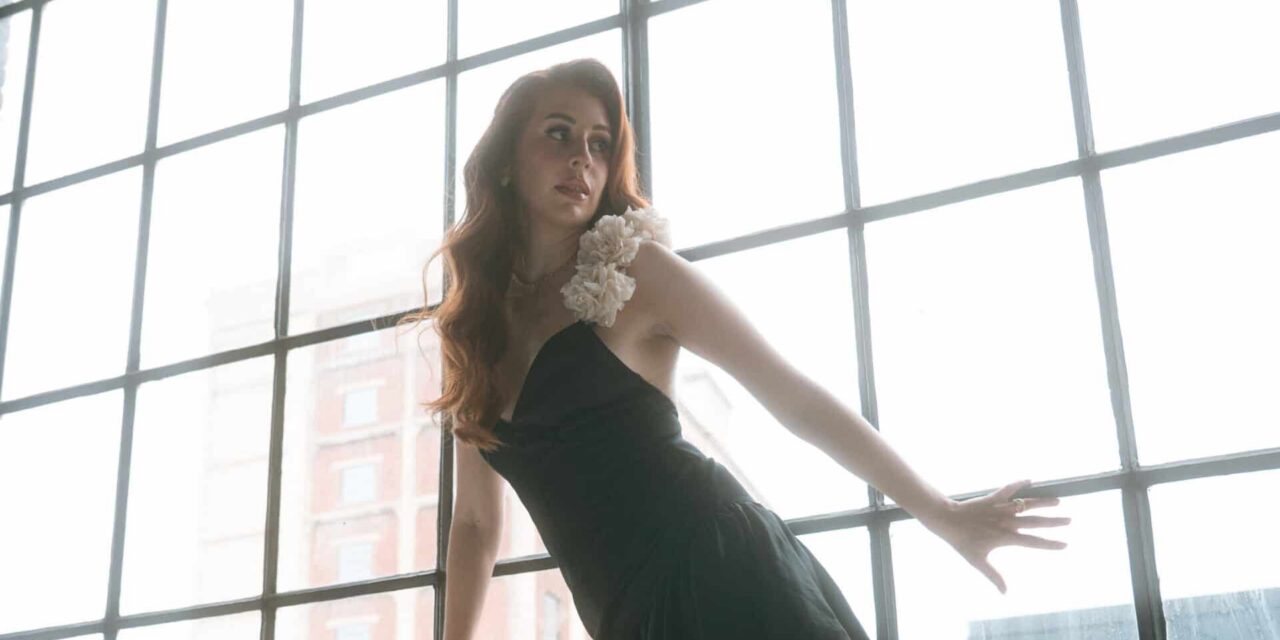
With more than 10 billion views, the comedian, commentator, and digital storyteller has turned reaction content into something closer to community
Charlotte Dobre understands the internet’s appetite for chaos.
Entitled strangers. Bridezillas. Dating disasters. Petty revenge. Toxic relationships. Social catastrophes so absurd they feel fictional until someone uploads the receipts.
But Dobre’s success has never really been about the drama alone.
With more than 10 billion views across her content, 2.5 million YouTube subscribers, over 1 million TikTok followers, and one of the most loyal audiences in digital entertainment, she has built something that exists somewhere between comedy show, commentary desk, group chat, and daily ritual.
“I’ve heard that I keep people company while they clean, drive, do their makeup,” she says. “My channel is part of many viewers’ daily routine.”
That may be the most revealing explanation of her appeal.
Dobre is not simply reacting to stories. She is sitting beside the audience while they process them.
Her format feels deceptively simple: find an outrageous story, react with sharp comedic timing, and say the thing viewers are already screaming at their screens. But underneath that immediacy is a background unusually suited to the creator economy.
Before YouTube became her primary stage, Dobre trained as an actor and studied broadcast journalism. One discipline taught her how to entertain; the other taught her how to structure a story so people stay until the end.
Those skills converged at exactly the right time.
As entertainment increasingly migrated from traditional media into creator-led platforms, Dobre found herself occupying a space where journalist, performer, comedian, and entrepreneur no longer needed to be separate job descriptions.
And she has had to evolve alongside the platforms themselves.
She remembers the earlier YouTube era when viewers would stop what they were doing to watch a new upload from creators like Jenna Marbles. Since then, the rise of TikTok, short-form video, podcasts, algorithm changes, and the infamous Adpocalypse have repeatedly reshaped what it takes to survive online.
Dobre adapted without allowing every new trend to dictate her identity.
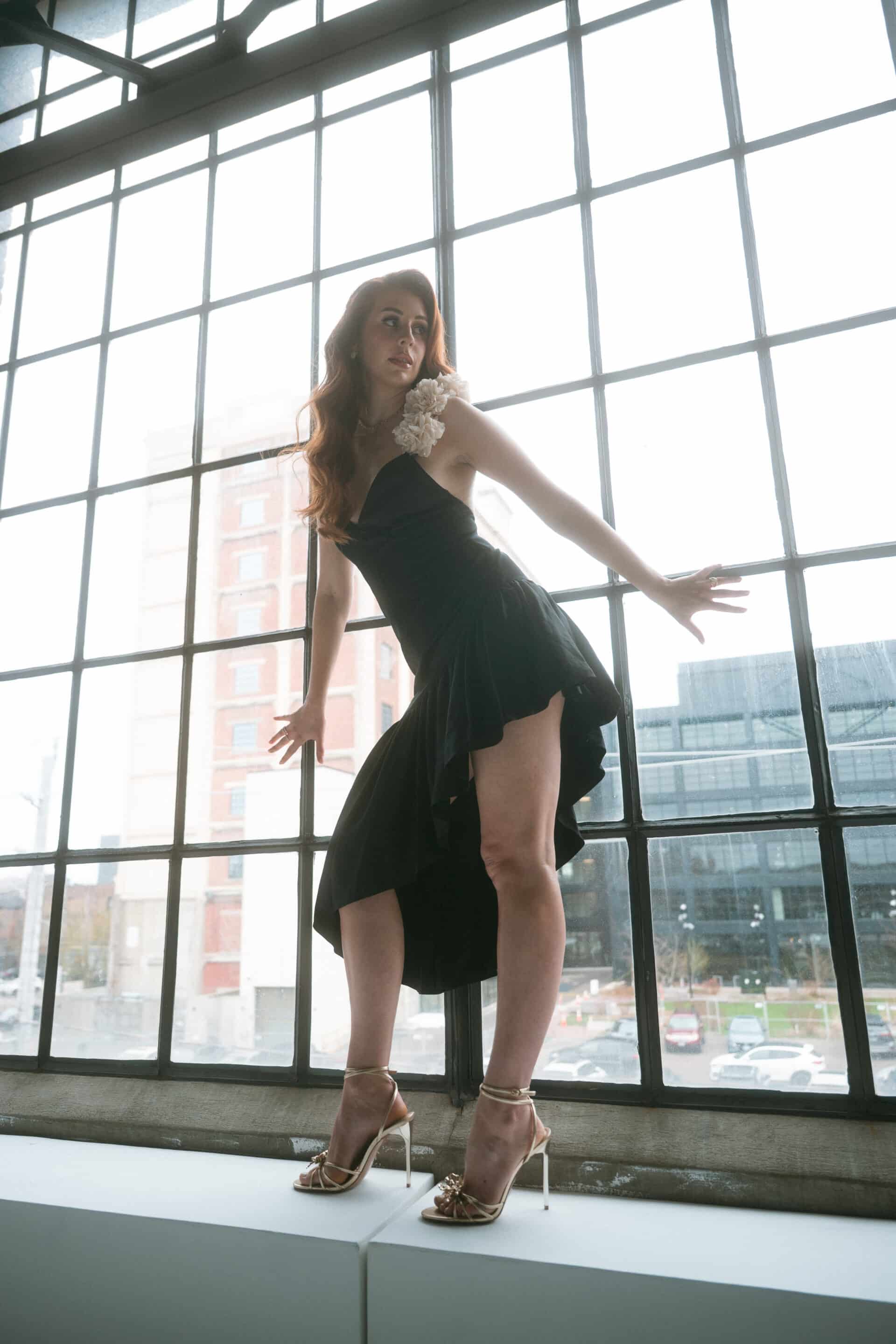
That balance—between reinvention and recognizability—has become central to her longevity.
The stories may be outrageous, but Dobre’s fascination increasingly lies with the behavior beneath them. After years of reading interpersonal conflict for a living, she has become particularly interested in the narratives people construct to justify themselves.
“Very few people wake up thinking, ‘I’m going to be the villain today,’” she says.
It is an observation that explains why her videos can drift naturally from comedy into something closer to social commentary. Dobre is quick to clarify that she is not a therapist, but she is open about having done extensive therapy herself, and she sees value in using what she has learned to help viewers recognize unhealthy dynamics, set boundaries, or leave relationships that are harming them.
The punchline gets people through the door.
Sometimes the conversation afterward matters more.
Mundane spoke with Charlotte Dobre about the psychology of internet drama, surviving a decade of platform changes, why authenticity can occasionally make people uncomfortable, and her ambition to grow far beyond the traditional definition of an influencer.
You’ve built one of the internet’s most loyal communities by turning everyday internet drama into something millions of people genuinely look forward to watching. What do you think people are really coming for—the stories, the comedy, or the feeling that someone else is saying exactly what they’re thinking?
All of the above!
I’ve been doing this a while and with the help of my team, we are able to pick some of the best stories and produce great videos as a result.
But I also think people do tune in for my company. I’ve heard that I keep people company while they clean, drive, do their makeup.
My channel is part of many viewers’ daily routine, so I think there’s an element of getting to hang out with me that people enjoy.
Before becoming one of YouTube’s biggest commentary creators, you trained as an actor and worked in broadcast journalism. How have those two very different disciplines shaped the way you approach your content today?
Absolutely.
With regards to acting, these videos are about entertainment and I happen to love entertaining and being on camera, and I have a background in it.
And broadcast journalism, I know exactly how to produce an engaging story that will not only get clicks, but will keep viewers interested until the end.
The two skillsets go hand in hand when it comes to producing YouTube videos.
Your videos often walk the line between comedy and social commentary. Do you ever feel a responsibility to go beyond making people laugh and actually spark conversations about relationships, boundaries, or human behavior?
It goes without saying that as a content creator, there is a certain amount of responsibility that comes with having a large platform.
I always say that I’m not a therapist but I have had LOTS of therapy, and I like to think I have a decent amount of life experience navigating difficult relationships and people.
If I can use what I’ve learned in therapy and in my lived experience to help even one person out of a toxic relationship, or to set a boundary with people who are taking advantage of them, I’ve done a good thing.
There’s a reason why I keep doing this style of content, it helps people.
With over 10 billion views, you’ve witnessed internet culture evolve in real time. What’s the biggest shift you’ve noticed in how audiences consume online content compared to when you first started?
When I first started, it was the golden age of YouTube. People used to stop everything they were doing to watch Jenna Marbles’ latest upload.
So much has changed now. TikTok is now the top platform, so many OG YouTube creators have pivoted to podcasts and short form content and time really has shown who was able to adapt to changing times and new algorithms and rules.
Viewers are consuming short form content more than ever, but that being said, they are still consuming podcasts and extremely long forms of content which is definitely an interesting dichotomy.
Your reaction videos have become your signature, but they’re really about storytelling. What makes a story instantly grab your attention and make you think, “I have to react to this”?
Usually if I read a title and it immediately evokes an emotion in me, it’s a good sign.
Maybe I gasp, maybe my eyes widen, maybe I send it to someone close to me and they are also shocked or excited.
I think good stories spark curiosity as well, so if I instantly want to know more after reading a title, I know I have to react to it.
So much of your content revolves around entitlement, dating disasters, and interpersonal conflict. After reading thousands of stories, have you learned anything surprising about human nature?
I think the biggest thing I’ve learned is that people are incredibly good at justifying their own behavior.
Very few people wake up thinking, “I’m going to be the villain today.”
Even in the most outrageous stories, there’s usually someone who has created an entire narrative where they’re completely justified.
It’s made me obsessed with the “why,” why a person behaves the way they do.
Reading thousands of these stories teaches you that conflict is rarely as simple as good person versus bad person.
People are carrying around insecurity, jealousy, fear, family dynamics, past relationships. All of these invisible things that influence how they behave.
Authenticity is a word that’s used constantly online, but audiences seem to genuinely trust your perspective. How do you maintain that sense of authenticity while producing content at such a consistent pace?
Sometimes my authenticity is too much for people, sometimes people disagree with me.
But at the end of the day, staying true to myself means I never have to pretend or put a mask on.
I’m able to flow freely as a creator which is exactly how I thrive.
The minute I start feeling resistance, that’s when problems like burnout arise.
The creator economy has blurred the lines between entertainer, journalist, comedian, and entrepreneur. Do you see yourself fitting into any one category, or is the freedom to move between them what excites you most?
I think most creators are all of the above, we wear multiple hats.
Sometimes the entrepreneur hat is on, sometimes the entertainer hat. Sometimes all the hats are on at once.
I think it’s great that I’ve landed myself in a profession that uses all of my skillsets at once.
It is, in many ways, the perfect job for me.
You’ve interviewed actors, covered pop culture, and built an audience through long-form commentary rather than chasing short-lived trends. Has resisting the pressure to constantly reinvent yourself been part of your success?
I actually have had to reinvent myself a few times.
I had to deal with the Adpocalypse and the rise of short form, and through those challenges, and others, I’ve watched so many creators quit or pivot, sometimes to less than desirable forms of content.
I truly believe you have to be adaptable as a creator.
But in terms of avoiding trends, I do that too, while also staying flexible and adapting when needed.
Looking ahead, what kind of legacy do you hope to build beyond the numbers? When people think about Charlotte Dobre years from now, what do you hope they’ll remember about the community and conversations you’ve created?
I want to be a household name.
Someone whose expertise reaches far beyond the traditional idea of an “influencer.”
I want to produce, to write, to act and create original works.
I also want to be someone who champions other artists, other women especially, and someone who creates amazing work environments in an industry that’s often unkind.
For all the absurdity that powers Charlotte Dobre’s content, there is something unexpectedly traditional underneath her success: she understands how to tell a story and how to make an audience want to hear the next one.
The platforms will continue changing. Formats will get shorter, then somehow longer again. Algorithms will reward one behavior until they suddenly reward another.
Dobre’s answer has been neither complete resistance nor constant reinvention.
It has been adaptability without abandoning personality.
And perhaps that is why billions of views later, viewers are still showing up.
Sometimes for the revenge story.
Sometimes for the red flags.
And sometimes simply because Charlotte is there.