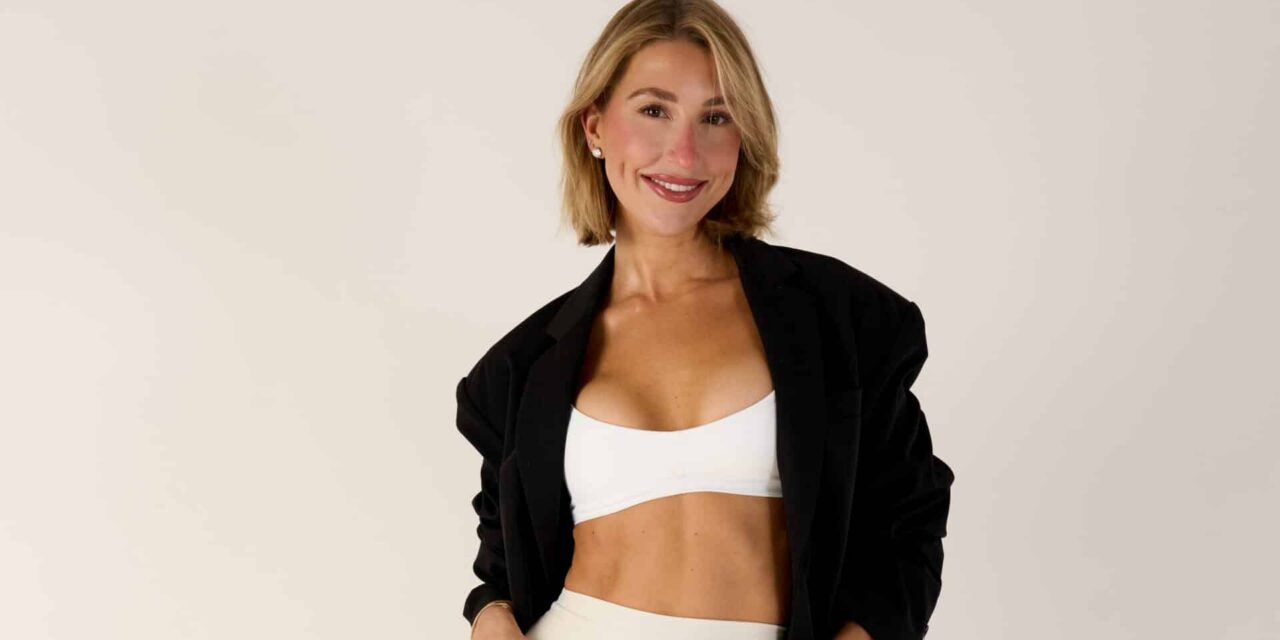
In an era dominated by extreme fitness challenges, transformation culture, and endless wellness trends, Gabby George is championing a refreshingly different philosophy: movement should support your life—not consume it. As the founder of GGStudio, George has cultivated a global community of more than one million followers and built a fitness platform spanning over 91 countries, proving that sustainable habits often outperform dramatic overhauls.
Known for her viral Bridal Arms series and her science-backed yet approachable teaching style, George combines expertise in Public Health Nutrition, Pilates, barre, personal training, breathwork, holistic health coaching, and prenatal fitness to help women build strength, confidence, and healthier relationships with movement.
We spoke with Gabby about redefining success in fitness, the rise of low-impact training, why posture is about far more than appearance, and what true wellness really looks like in 2026.
Your philosophy centers on consistency over perfection, which feels almost radical in today’s fitness culture. What inspired you to build GGStudio around sustainability rather than transformation-driven messaging?
I think we’ve spent years believing that if you’re not pushing harder, restricting more, or completely overhauling your life, you’re somehow not doing enough. But when I looked at the women around me—and honestly at myself—the biggest barrier wasn’t a lack of motivation. It was trying to maintain routines that simply didn’t fit our real lives.
I wanted to build a platform that celebrates showing up consistently instead of chasing perfection.
Low-impact workouts have exploded in popularity over the last few years. Why do you think so many people are moving away from the “no pain, no gain” mentality?
I think people are redefining what strength looks like.
We’re realizing that completely exhausting yourself doesn’t automatically make a workout more effective. You don’t have to leave every session feeling depleted to build muscle, improve cardiovascular health, or become stronger.
People want movement that supports their energy instead of taking it away. Fitness should improve your life—not become another source of stress—and I think that’s a really powerful shift happening throughout the wellness space.
Your viral Bridal Arms series introduced your work to millions of women. Why do you think it resonated so deeply, and what did it reveal about the fitness industry’s blind spots?
I think the series succeeded because it removed so many of the barriers that keep people from getting started.
The workouts are approachable, fit into busy schedules, and focus on helping women feel strong and confident rather than chasing perfection.
One of my favorite things has been seeing how people have made the series their own. I’ve seen women doing the classes in pajamas before work, moms squeezing in five minutes during nap time, brides working out alongside their dads or fiancés, and even children joining in because the workouts feel so accessible.
I actually started creating Bridal Arms while I was earning my Master’s in Public Health. One of my professors would pause class for a five-minute YouTube stretching session. It wasn’t revolutionary—but everyone participated because it was easy to say yes.
That taught me something important.
It’s not always about creating the perfect workout. It’s about helping people begin.
Lower the barrier to entry, and consistency naturally follows.
Your background spans Public Health Nutrition, Pilates, barre, personal training, breathwork, and holistic health coaching. How do you balance scientific evidence with the emotional side of wellness?
I don’t think you can separate them.
Science gives us the foundation, but knowing what to do is only one piece of the puzzle.
Our emotions, mindset, environment, stress levels, access to resources, and daily routines all influence whether healthy habits actually become sustainable.
I always want people to understand why they’re doing something, but I also want wellness to feel approachable rather than overwhelming.
Sometimes wellness has become so complicated that people end up doing nothing because they’re afraid of getting it wrong.
My goal is to help women build habits from a place of self-respect, love, and simplicity rather than criticism.
Social media constantly promotes extreme routines, unrealistic body standards, and quick fixes. How do you help your community separate wellness from comparison?
Social media makes it feel like everyone is doing more, achieving faster results, or somehow doing everything perfectly.
But we’re only seeing the highlight reel.
Behind every post is someone with different genetics, different circumstances, different priorities, and a completely different life.
I always try to shift the focus away from aesthetics and toward questions like:
Are you getting stronger?
Do you have more energy?
Is movement helping you manage stress?
Those are the metrics that actually matter.
The more we stop measuring ourselves against unrealistic timelines and start celebrating our own consistency, the healthier our relationship with wellness becomes.
You often talk about posture, something that’s surprisingly overlooked in mainstream fitness. Why is it so important?
I always say posture is confidence.
Yes, improving posture can reduce pain, improve breathing, strengthen your core, and help your body move more efficiently.
But its impact goes far beyond the physical.
The way you carry yourself influences the way you feel.
Standing taller, opening through your chest, and learning to move with intention naturally changes your presence. When your body feels supported, your confidence tends to follow into every other part of your life.
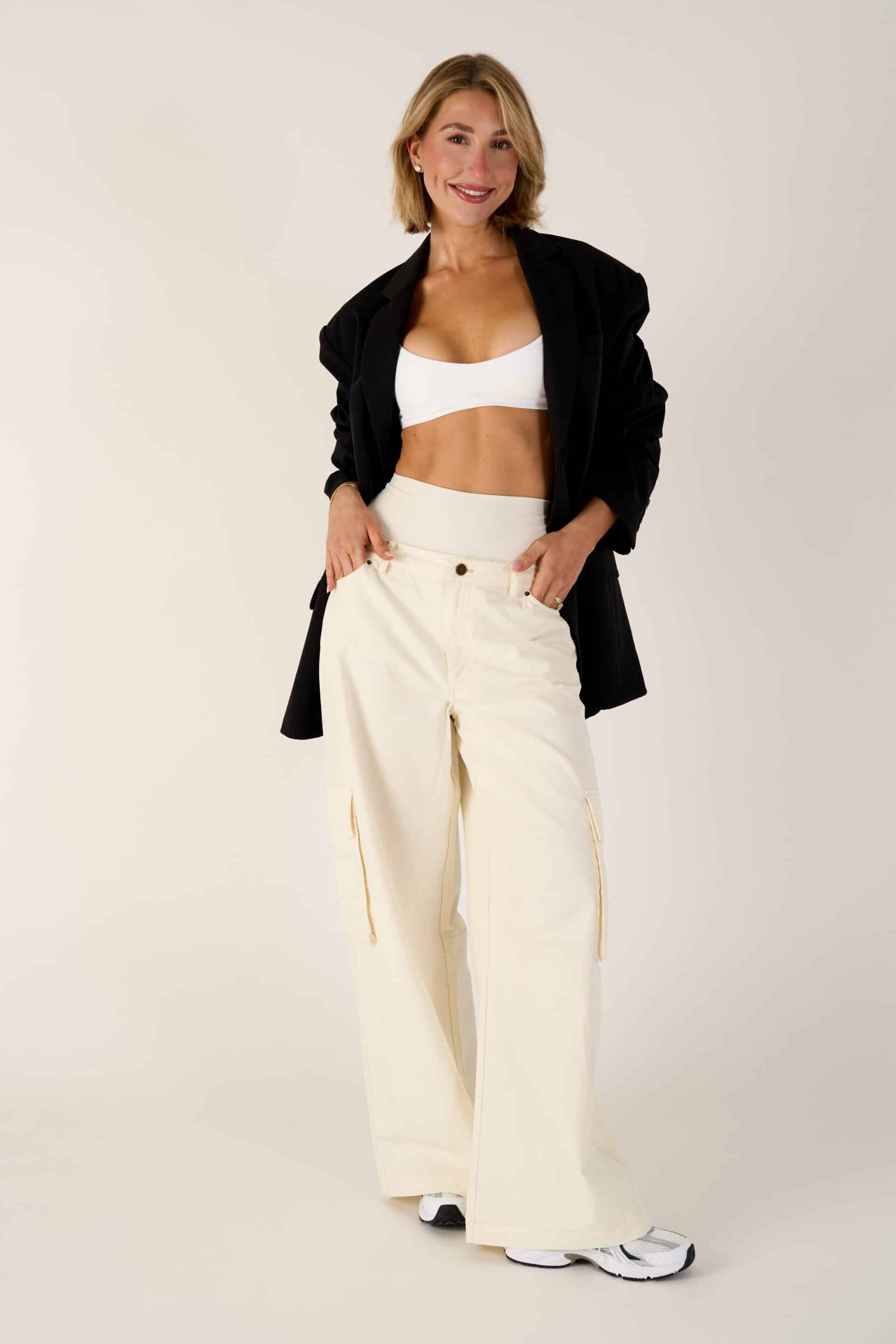
GGStudio now serves members in more than 90 countries. Despite cultural differences, what challenges do women seem to share?
Women everywhere are balancing careers, relationships, caregiving, families, and countless responsibilities.
The biggest misconception I continue to see is the belief that self-care has to be all or nothing.
Giving yourself permission to adapt instead of quit is what actually creates lasting habits.
Your routine doesn’t need to look the same every day.
Some seasons allow for heavy strength training.
Other seasons might only leave room for five minutes of arm exercises.
Both count.
The women who stay consistent aren’t the ones who never miss a workout.
They’re the ones who keep returning, regardless of what life looks like.
Summer often brings pressure to transform our bodies quickly. What would you say to someone caught in that all-or-nothing mindset?
I’d remind them that their body is not a summer project.
The fastest results are rarely the ones that last.
Instead, build a routine you genuinely enjoy.
Celebrate showing up.
Remember that one missed workout or one indulgent meal doesn’t erase your progress.
Health is built through hundreds of small choices repeated over time—not through perfection.
Your background in classical dance and vocal training clearly influences your teaching. What lessons from those worlds still guide you today?
Both experiences gave me a level of discipline I’ll always be grateful for.
But more importantly, they taught me the importance of breathing.
Long before I taught fitness, I was learning how breath influences posture, stability, movement, and performance.
Today I see breath as the foundation of movement itself.
When you learn how to breathe well and connect with your body, everything becomes more effective—whether you’re strength training, walking, or simply moving through daily life.
It’s such a simple concept, yet I think it’s one of the most overlooked aspects of wellness.
Looking beyond workouts, what does true wellness mean to you in 2026, and what habits do you believe people should prioritize for lasting health?
I think we’ve reached a point where there’s so much noise around wellness that people have forgotten to ask themselves what actually makes them feel good.
My advice is simple:
Walk more.
Do less—but do it consistently.
Stop chasing what everyone else is doing.
The healthiest people I know aren’t constantly searching for the newest wellness hack.
They’ve simply found a rhythm that supports their lives, and they keep returning to it.
That’s what real wellness looks like to me.