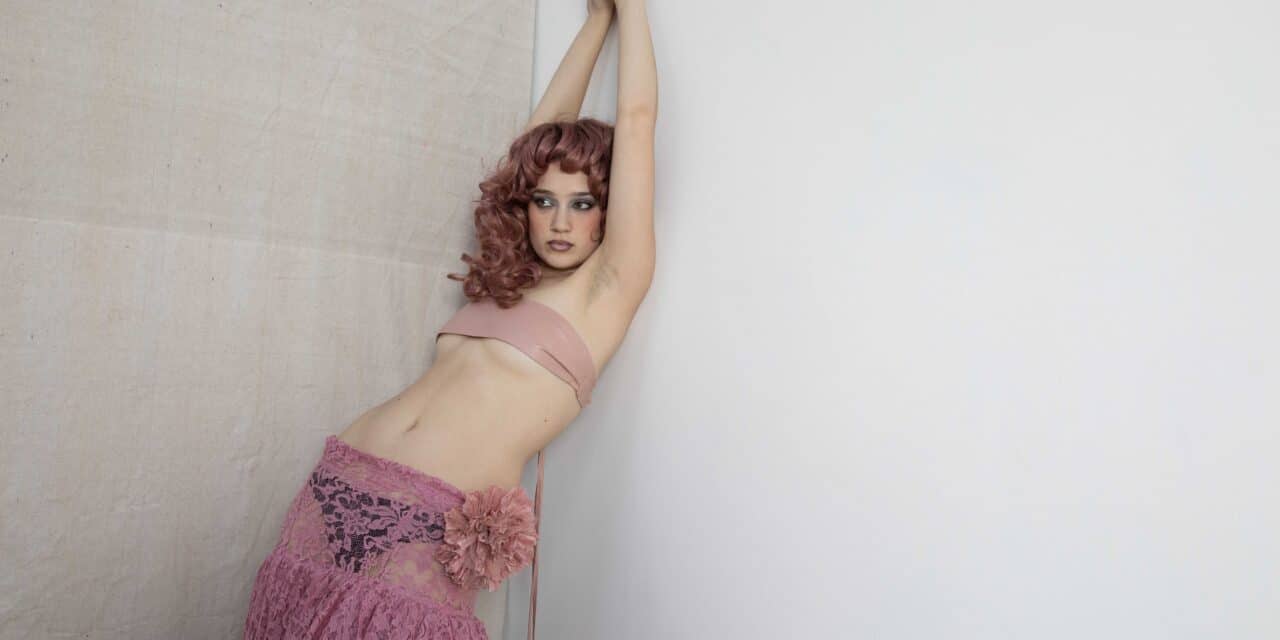
Few artists capture emotional contradictions quite like Susannah Joffe. Balancing razor-sharp songwriting with understated indie-pop production, the Texas-born artist has quietly become one of the most compelling new voices in alternative music. After turning heads at Rolling Stone’s Future of Music showcase during SXSW and selling out her biggest headline shows in both New York and Los Angeles, she’s now preparing for the release of her long-awaited debut album later this year.
Leading the project is “Happiness Is Just a Myth,” a bold and sonically adventurous single that questions the endless pursuit of fulfillment while embracing life’s contradictions with wit, vulnerability, and emotional honesty. Ahead of her appearance at All Things Go D.C. this September, we caught up with Joffe to discuss ambition, authenticity, artistic evolution, and why embracing uncertainty has become one of her greatest strengths.
“Happiness Is Just a Myth” is a striking title. What inspired it, and what does the song reveal about your relationship with happiness, expectations, and self-perception?
I wrote this song after taking a look at my life and realizing that I really hadn’t taken a moment to be grateful for any of it. I have accomplished so many things that I always dreamt of doing, and yet the second I have an inch I want a mile. I think that type of dissatisfaction extends into every corner of my life. I’m constantly wondering if there is something better or if I am enough. It got to a point where I started questioning whether I would ever actually feel satisfied, content, or happy.
Sonically, I wanted to make something that felt chaotic and non-linear while also serving as a bold declaration of what I want my music to sound and feel like. There was so much exploration and experimentation involved, from the constantly shifting tempo to the huge wall of sound and even the miniature instruments I incorporated that I’d never used before.
You’ve been steadily building momentum for years, culminating in sold-out headline shows and major showcases like Rolling Stone’s Future of Music. How has your understanding of success changed since you first started releasing music?
I think I’ve come to realize that I honestly don’t know what success is or what it looks like.
My definition of success a few years ago is completely different from what it is today. I’m trying to make peace with that mystery instead of constantly trying to define it. More than anything, I’m learning to enjoy the journey rather than obsess over whatever milestone comes next.
Many of your songs balance sharp wit with emotional vulnerability. How do you navigate the line between exposing personal truths and protecting parts of yourself?
On my earlier project, Your Mother’s Name, I was really committed to writing songs that were deeply vulnerable. After releasing that, I almost reacted against it. The EP that followed was much more about experimenting with sounds and having fun than revealing my emotions.
Ironically, I ended up feeling less connected to those songs because they weren’t as personal. I’ve realized that exploring those personal truths is actually a form of protecting myself. Writing honestly helps me process things rather than hide from them.
Indie-pop often rewards polish, but your music feels refreshingly honest and difficult to categorize. Do you ever feel pressure to present a more curated version of yourself?
One thing that’s unique about these songs is that they don’t fit neatly into one genre. “Happiness Is Just a Myth” exists somewhere between dream pop, indie folk, and singer-songwriter music.
I don’t really struggle with presenting a curated version of myself. What I struggle with is presenting the most authentic version of myself because sometimes I don’t fully trust my own instincts, taste, or creative vision. That’s the challenge I’m constantly working through.
Your recent headline shows suggest audiences are connecting deeply with this new material. What have fans shared with you that has surprised or moved you the most?
Honestly, just seeing people’s reactions to the new songs has been incredibly reassuring.
When you have a song like “Die Your Daughter” that reaches over 100 million streams, there’s always this question in your mind: Can I ever make something that resonates like that again?
Playing these new songs live and hearing audiences scream back lyrics from tracks that haven’t even been released yet has made me feel so much more confident in the music I’m making.
You’ll be performing at All Things Go this September, another major milestone in your career. How does it feel to be entering a phase where so many new listeners are discovering your music?
Playing All Things Go has been a dream of mine for years.
I’m especially excited that my festival debut is happening at a festival that celebrates women and queer artists so intentionally.
It’s definitely intimidating. It almost feels like one giant talent show or an X Factor audition where you’re trying to win over an entirely new audience. I probably put too much pressure on myself, but mostly I’m just excited to sing these songs for people who haven’t heard them before.
Your music consistently embraces emotional contradictions rather than neat conclusions. Why are those gray areas so fascinating to you as a songwriter?
I grew up surrounded by contradiction.
My dad comes from a conservative Jewish family in New Jersey, while my mom comes from a small evangelical town in Texas. I’ve always felt like I’ve existed somewhere between worlds.
I think that’s why these songs—which feel like the most honest representation of me—are built around contradiction. You hear it not only in the lyrics but also in the production and even the visuals. It’s really the central motif that connects the whole project.
As listeners spend time with both “Happiness Is Just a Myth” and your debut album, what do you hope they ultimately take away from your music?
More than anything, I hope they discover something new about themselves.
One of the most beautiful things that happened after “Die Your Daughter” went viral was realizing that once a song belongs to listeners, it evolves into something completely different for every person.
Watching people find their own meaning inside my music has become my favorite part of making it, and I hope this album gives them another opportunity to do exactly that.