Some records are carefully constructed concepts. Others emerge because they simply have to exist.
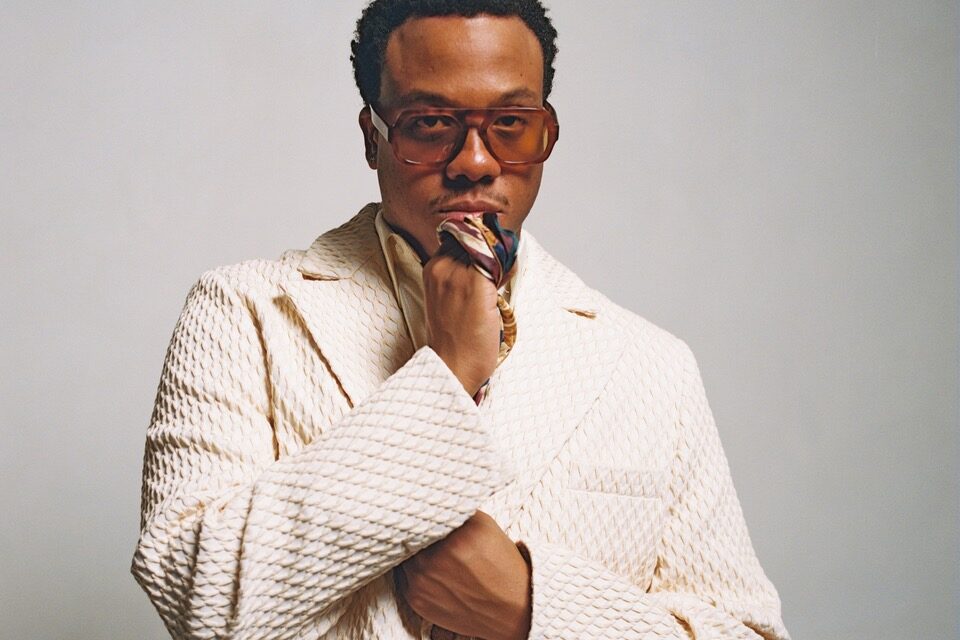
For Los Angeles-based singer-songwriter Lee Lewis, HOWL belongs firmly in the latter category. The emotionally raw EP chronicles the collapse of a relationship, the reclamation of self-worth, and the complicated realities of navigating love as a Black queer man. Drawing equally from vintage soul, contemporary R&B, trip-hop, and cinematic film scores, Lewis transforms heartbreak into something expansive—music that feels intimate enough to whisper directly into your ear while carrying the emotional weight of an orchestral film soundtrack.
Produced alongside collaborators Bijou Choder (Channel Tres, Duckwrth) and youthxl/Roméo (James Blake, Joey Bada$$), HOWL arrives after Lewis has steadily earned recognition from The New York Times, Wonderland, and Clash, establishing himself as one of contemporary R&B’s most compelling emerging voices.
Ahead of the EP’s release, we spoke with Lee about heartbreak as transformation, classical training, Black queer identity, cinematic storytelling, and why making this project ultimately freed him from the relationship that inspired it.
HOWL feels like a deeply personal project born from both emotional and professional challenges. At what point did you realize these experiences needed to become an entire body of work rather than just individual songs?
I’m really one of those people that needs to make something out of everything.
If I’m in pain over an experience, I’ve got to process it in every possible way. Cry about it. Sing about it. Write about it. All of it.
So this project really came out of necessity.
I’d write a breakup song like “White Flag,” and then go end things with the guy I was involved with. I think after writing the second song, I realized the whole project was going to be about my time with this person.
When something monumental happens in your life, just write about it.
The funny thing is that since finishing the project, I don’t really care much about that relationship anymore.
A blessing.
Throughout the EP there’s a strong sense of reclamation and self-discovery. What does the title HOWL represent for you?
HOWL is really me going from a puppy to becoming a full-grown dog.
It’s about learning your worth and insisting that other people respect it.
Sometimes a bad relationship—or even a bad situation—forces you to finally start respecting yourself.
That’s what HOWL represents for me.
It’s me growing up and losing some innocence.
On the surface it’s about one relationship, but underneath it’s about my own patterns as a Black queer man navigating whiteness as a whole.
It’s acknowledging that dynamic and beginning to completely reframe it.
As a Black queer artist, vulnerability sits at the center of your songwriting. Was there one song that was especially difficult to write?
I think “Your Love (What I’m Dying From)” ended up being one of the most vulnerable songs I’ve ever written.
Everything I write comes from real experiences, but this one became very real very quickly.
“I wanted peace, but you wanted war…”
That lyric was absolutely true.
And when I’m singing “your love is what I’m dying from” at the top of my lungs, that wasn’t metaphorical.
At the time, that relationship really was exhausting me.
It was causing so much pain.
The song comes directly from dating a forty-year-old white man.
Different worlds.
Different traumas.
Different histories.
It was challenging across every possible level.

The focus track “Bitter” feels less like a breakup song than a declaration of self-worth. What was happening when you wrote the lyric, “I’d rather go home tired and bitter than spend my whole life stuck waiting on you”?
That song came after I was fed up with this person for what felt like the fiftieth—and final—time.
I remember thinking,
“Damn…I’m starting to look stupid.”
So people can absolutely hear it as a breakup song.
But for me, it’s really a song about self-respect.
It’s me trying my absolute hardest to leave something painful, toxic, and unnecessary.
Thankfully…
Making this EP actually helped me do exactly that.
Your influences range from Sam Cooke and Luther Vandross to Portishead and European film composers. How do you make such different inspirations feel cohesive?
At the root of everything I make is soul.
Every artist people mention when talking about my influences is soulful.
Whether it’s in the writing or the vocals, that’s always what I want to preserve.
I want my voice to become the instrument that ties everything together.
That gives me permission to move between trip-hop, R&B, pop, or wherever else I want to go while still feeling like myself.
I just need the music to have soul.
Authenticity.
Vulnerability.
You studied classical voice and earned a degree in vocal performance. How has that training shaped the artist you’ve become?
I love this question because for years I actually tried to push my classical training away.
Classical music and contemporary R&B are such different worlds.
Classical music asks for precision and perfection.
Soul music asks for flaws and honesty.
Now that I’ve spent years singing outside that world, I realize my training doesn’t necessarily show up in the harmonies—it shows up in the way I sing.
I naturally use very open vowels like we were taught in conservatory.
Even my vocal runs feel more structured than free.
I don’t see that as a problem anymore.
It’s just part of my voice.
Eventually I’d love to incorporate actual classical music into my live shows.
Maybe some German Lieder over a bed of synths.
That could be beautiful.
And storytelling-wise…
I’m incredibly melodramatic.
Maybe that’s the opera.
Maybe it’s just who I am.
There’s a distinctly cinematic atmosphere throughout HOWL. Were there specific films or visual references shaping the record?
I’m obsessed with movies.
Especially film scores.
We listened to so much Piero Piccioni, Francis Lai, and Riz Ortolani while making this record.
Films like Casino Royale, The Game, Purple Noon, and Her were huge inspirations—both aesthetically and emotionally.
By the end it genuinely started feeling less like an album and more like the soundtrack to a tragic love story.
You worked alongside Bijou Choder and youthxl/Roméo on the EP. What did those collaborations teach you?
Honestly, it was such a joy working with people who are incredibly experienced songwriters.
They pushed me to become a stronger writer and singer.
I learned when to trust my instincts.
When to move on from an idea.
When to simply improvise and let my voice lead.
There were also moments where I intentionally stepped back and trusted their direction.
That’s important too.
Coming from classical music, studios can actually feel intimidating because there’s almost too much freedom.
Bijou and Roméo created a space where I felt safe enough to explore.
That’s invaluable.
Recognition from The New York Times, Wonderland, and Clash is growing, but HOWL feels remarkably unconcerned with commercial expectations. How do you stay grounded?
Music has always been freedom for me.
It’s rebellion.
It’s therapy.
So while I deeply appreciate every bit of recognition, that’s never really been the goal.
I simply need to write.
I need to sing.
I need to tell these stories.
I’ve spent large portions of my life feeling boxed in—especially as a Black queer man in America.
Music is how I push through that.
So intensely personal will always be the direction I choose.
If recognition follows…
That’s wonderful.
But at the end of the day, just let me write songs, sing them, and perform them.
That’s what I truly need.
By the end of HOWL, listeners move through heartbreak, self-awareness, and renewal. What do you hope they discover about themselves after hearing the record?
I hope people realize they aren’t defined by what they’ve been through.
You’re not tied to your trauma.
You’re not tied to your pain.
If you can, turn it into something meaningful.
Make an album.
Write a poem.
Go running.
Travel.
Whatever helps you move through it.
We all experience similar things.
We just process them differently.
For me, music is how I survive those experiences.
Hopefully this project reminds people they can survive theirs too.