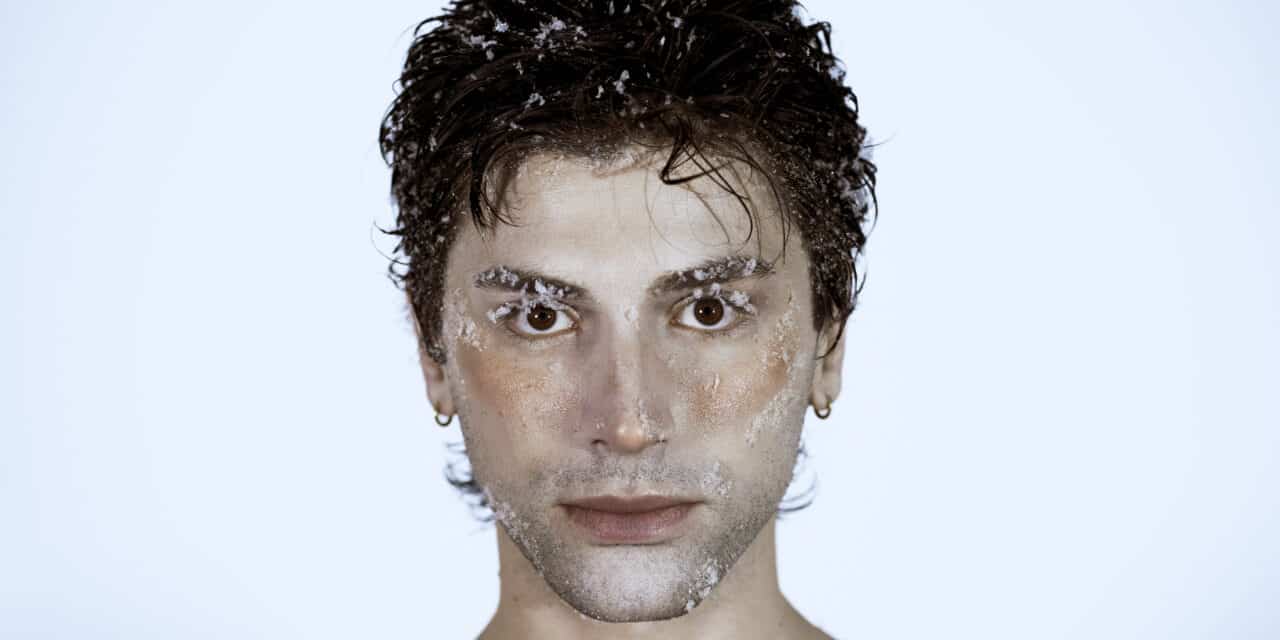
With “Raise Your Head,” Leon Blane continues to carve out a distinctive place in contemporary electronic pop, creating music that values emotional honesty as much as sonic ambition. Following the nostalgic warmth of “Stereo Dream,” the London-based artist returns with a euphoric synth-pop anthem that transforms personal reflection into a collective call for courage, resilience, and self-empowerment. Built around soaring synthesizers, driving electronic production, and heartfelt lyricism, the new single arrives not simply as another release, but as a manifesto for facing uncertainty without surrendering hope.
Previously known through his electronic project NOCUI, Leon Blane has embraced a more direct and emotionally expressive artistic identity, one that prioritizes storytelling over escapism and genuine human connection over fleeting distraction. While his music remains rooted in innovative production, each release is driven by a deeper philosophical curiosity about modern life—exploring the tensions between isolation and community, darkness and optimism, and the responsibility artists carry in shaping cultural conversations.
Rather than offering easy answers, Leon Blane invites listeners to confront the contradictions of contemporary existence while refusing to give in to hopelessness. As he prepares to unveil a larger body of work, “Raise Your Head” signals an artist increasingly comfortable balancing vulnerability with conviction, creating songs designed not only to move audiences physically, but emotionally and intellectually as well. We spoke with Leon about artistic evolution, the responsibility of songwriting, the enduring influence of ’80s music, and why hope remains one of the most radical creative choices an artist can make.
“Stereo Dream” marked a noticeable shift toward optimism and hope after the darker themes explored in your earlier work. What inspired this change in perspective, and why did now feel like the right moment for it?
First of all, thank you for having me and for providing a platform to discuss my latest release!
Stereo Dream didn’t personally feel like a shift to me, but rather another side of the same story. There’s no true optimist who doesn’t see the absurdity of life. Often, the most burdened people are the ones who smile the most.
With Stereo Dream, I wanted to share a simple ray of hope with my audience amid all the mess that surrounds us. By hope, I don’t mean the hedonistic, “mind-numbing” weekend that serves as a break between stretches of “business as usual.” I mean that naïve vision of a better place, one that often starts from within.
We’ve been bombarded with negative news for a long time, and it seems that people have grown hopeless. Hopelessness is useless; it’s defeat before the fight has even begun. While I’m convinced that awareness is essential for change, sometimes being naïve is exactly what we need to push through. Being naïve is a lost skill that can often change the world. Every great figure seems to have been a naïve ideologue in some way.
On a personal level, it’s very draining to always be working on dark tunes, so sometimes I need optimistic music to counterbalance that.
Unfortunately, I think I still have some darker tunes up my sleeve. As I said, they’re two sides of the same coin.
Before launching Leon Blane, you released music under the NOCUI project. What creative or personal evolution led you to start this new chapter under a different name?
I simply grew out of the world of dance music. The reasons I started making dance music are simply gone, both on the dance floor and within the industry. I don’t want to contribute to a scene that actively promotes self-destructive behavior and domesticates people into accepting the status quo, one hangover at a time.
You’ve described your music as a source of relief during challenging times. Do you think music has a responsibility to offer hope, or is it simply a reflection of where the artist is emotionally?
I believe music has a paramount responsibility to lift, inspire, challenge, and bring people together. There’s nothing quite as powerful as music and its collective synergy, even though this power seems to have been dormant for the last thirty years.
Music can be a truly disruptive force in society.
The reason I only recently started singing on my songs and launched this new project is that I don’t take words lightly. Words impact people’s unconscious minds, and in my opinion, using words in a song carries a great deal of responsibility. There’s something reckless about simply “dropping lines.”
Both “Stereo Dream” and your new single “Raise Your Head” draw inspiration from the synth-driven spirit of the ’80s while feeling unmistakably contemporary. Which artists or production techniques from that era continue to influence your work the most?
Honestly, there are too many great ’80s artists to mention. But Stereo Dream wasn’t directly inspired by any particular song. I think its ’80s vibe is mostly derived from the composition and arrangement, which were created using synthesizers and drum machines, because that’s essentially what artists did back then. They wrote music and orchestrated songs with synthesizers.
Nostalgia can be a powerful creative tool, but it can also become limiting. How do you balance honoring the past while still creating something that feels contemporary and forward-thinking?
I mostly use different tools from those they had back then, and even though I might apply some of the overarching techniques of ’80s music, the delivery will inevitably feel modern because of my contemporary sonic palette, software, and production methods.
Much of your work explores the contradictions and pressures of modern life. What aspects of today’s culture do you find most difficult to navigate as both an artist and as a person?
I think people don’t realize the scarcity of time and the value of community enough. We’re too overstimulated. We don’t actually have that much time at our disposal to build roots, nurture love, take care of loved ones, our community, and ourselves.
You describe your music as a response to a world filled with distraction, superficiality, and distorted values. What role do you believe artists should play in helping people reconnect with authenticity?
Artists need a strong sense of integrity and intellectual honesty. They need to have credibility and share honest human experiences that can help bring people together. We’re not just putting on shows but building bridges and echoing the values we encounter on our journeys through our songs.
Artists need to critically look at the world and be mindful of the message they spread, and in some way, they should consider themselves societal leaders and not just entertainment employees.

“Raise Your Head” speaks about courage, shared responsibility, and the possibility of creating something better together. What does that message mean to you personally at this stage of your life and career?
To me, Raise Your Head is about refusing hopelessness. It acknowledges that we all carry burdens, but it also reminds us that change begins when we choose not to surrender to them. It’s about having the courage to believe that individual actions still matter, and that collective imagination can shape a better future. Sometimes simply raising your head is the first act of resistance.
Your production style is meticulous yet emotionally driven. When creating songs like “Raise Your Head” or “Stereo Dream,” do the emotional themes arrive first, or does the sonic landscape guide the storytelling?
In this specific case, it all started with the basslines, then came the beat, and then the melody. All the rest came after, but there really isn’t a one-size-fits-all strategy, and I often change starting points.
As you continue building toward your forthcoming project, what conversations do you hope listeners leave with after experiencing this next chapter of Leon Blane?
Unfortunately, it’s not the beginning of a more uplifting era, but simply a color of a broader world. I think the next songs will have an energetic vibe with a slightly darker undertone, and then the album is probably going to be an emotional rollercoaster, just like life is.
At the moment, my only hope is that this album will create a sense of community among people who feel burdened, confused, or stuck by everything that surrounds them. The best songs are still up my sleeve.