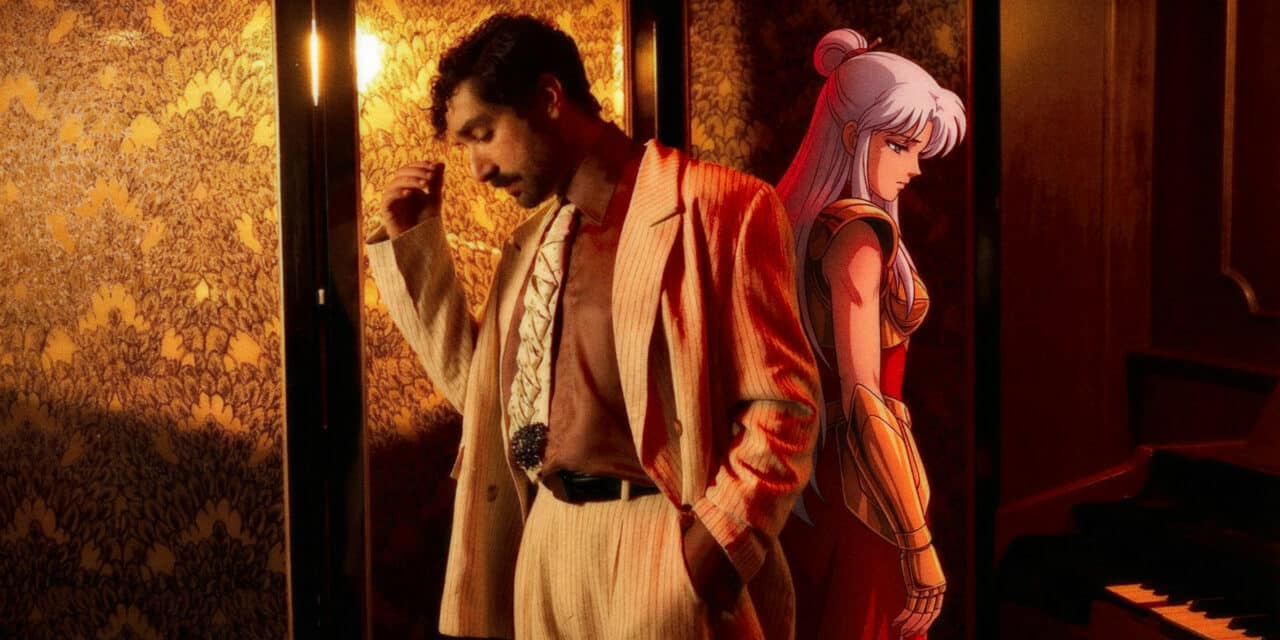
With “Regrésame,” the Mexican singer-songwriter transforms nostalgia into something dangerously addictive, blending traditional bolero, corrido tumbado, and Peruvian waltz into his own theatrical universe of Boleroglam. In conversation with MUNDANE, he reflects on romanticizing heartbreak, the physical language of emotional wounds, and why sometimes the most painful relationships are the ones that haven’t actually ended.
There’s a particular kind of heartbreak that happens before a relationship is officially over.
The person you love is still there. You still share a life, a history, perhaps even the same bed. But something fundamental has disappeared, leaving you mourning someone who technically hasn’t gone anywhere.
For Mexican singer-songwriter Luciano Daniel, that unsettling emotional territory became the inspiration behind his latest single, “Regrésame.”
“I wrote the song while I was still in a relationship,” he reveals. “I was still with that person, but already carrying a feeling of inadequacy.”
Rather than pleading for an ex-lover to return, Luciano was asking for something considerably more complicated: the return of the person his partner used to be.
“The person I fell in love with had completely transformed into someone else, but we were still together.”
It’s a distinction that makes “Regrésame” particularly devastating. The song isn’t simply about losing love. It’s about recognizing that love has changed while desperately trying to recover something that may no longer exist.
When Nostalgia Becomes an Addiction
At the center of “Regrésame” is Luciano’s fascination with nostalgia, an emotion he describes with striking ambivalence.
“Nostalgia, in most of its forms, is poisonous, addictive and incredibly pleasurable.”
For him, remembering the beauty of a relationship can become a dangerous justification for remaining in circumstances that no longer serve us.
The past becomes more compelling than the present.
And sometimes the sweetness of what once existed makes it difficult to acknowledge what a relationship has become.
That contradiction finds expression in one of the song’s most visceral images: respirar por la herida, or breathing through the wound.
Luciano traces the phrase to Mexican songwriter Martín Urieta’s “Acá Entre Nos,” revealing how his writing remains connected to the country’s rich tradition of romantic songwriting.
“Wounds often sustain us,” he explains. “They give us life, they give us reasons to keep moving forward, even if it’s a romantically unhealthy addiction.”
It’s precisely this willingness to romanticize emotional devastation that has kept bolero culturally relevant across generations.
For Luciano, heartbreak doesn’t necessarily become easier when transformed into music.
But it can become beautiful.
“It’s like chile,” he says. “It burns and it bites, but it gives life flavor.”
Reinventing Romance Through Boleroglam
Luciano’s relationship with bolero is rooted in both reverence and experimentation.
A drummer, singer, songwriter, and producer who has spent years performing alongside established pop artists and figures from the Mexican jazz scene, he approaches the genre with an understanding of its musical traditions and a desire to push them somewhere unexpected.
His independent project, Boleroglam, preserves the lyrical, melodic, and harmonic sensibilities of classic bolero while allowing him to explore contemporary production and unconventional arrangements.
On “Regrésame,” that experimentation takes the form of an unexpected combination of bolero, corrido tumbado, and Peruvian waltz.
“I think one of the most exciting elements of ‘Regrésame’ is the fusion of genres,” he explains.
The visual identity is equally important.
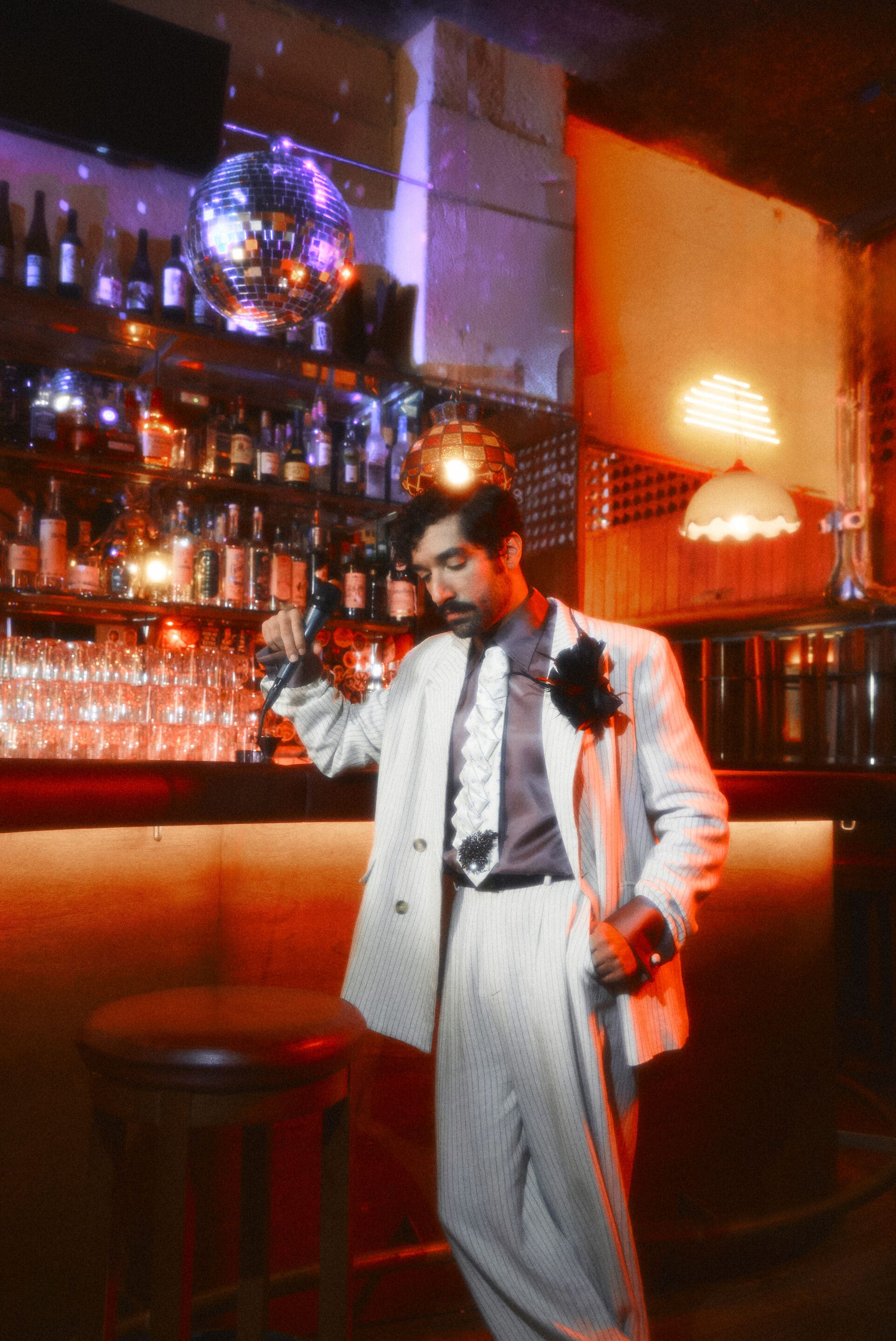
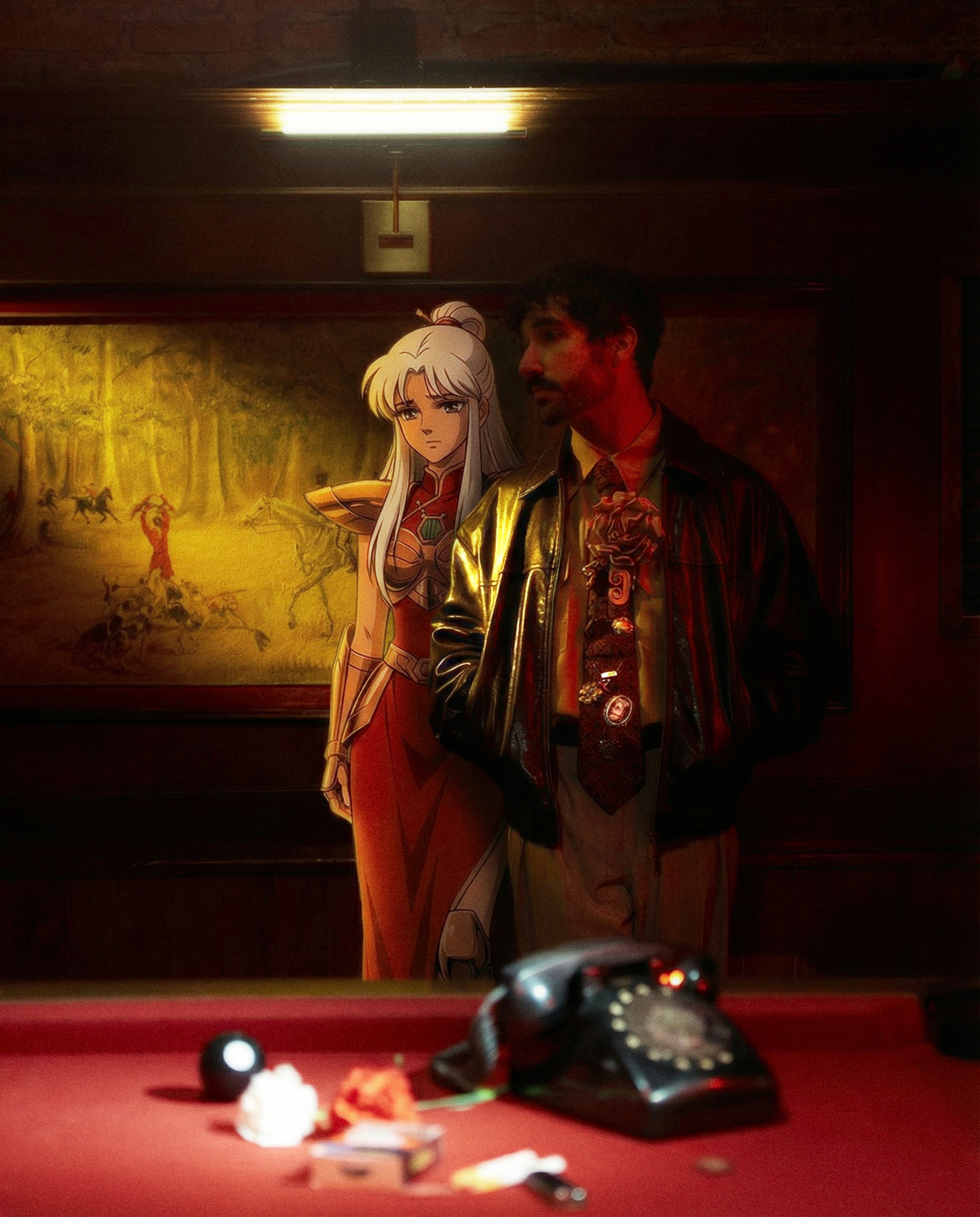
Working with visual collaborator Enrique Arechavala and stylist Ceidi Alcalá, Luciano has developed an aesthetic that combines romantic nostalgia with theatrical imagery and a distinctly contemporary sensibility.
His initial creative direction to Arechavala was wonderfully specific: Knights of the Zodiac, José José, overwhelming nostalgia, and the feeling of personal renewal.
The result is an artistic world that doesn’t treat bolero as something belonging exclusively to the past.
Instead, Luciano approaches it as a living language, capable of absorbing new sounds, images, and cultural references without losing its emotional intensity.
And despite the increasingly elaborate universe surrounding Boleroglam, his musical instincts remain surprisingly simple.
“What I do have is that I’m an obsessive collector of melodies,” he says.
He finds them everywhere, including in recordings that others might consider outdated or poorly produced.
For Luciano, the emotional power of a melody matters more than its cultural prestige.
That philosophy also explains why his music can feel simultaneously timeless and contemporary.
He’s not trying to make bolero fashionable again.
He’s exploring how much more it can become.
With “Regrésame,” Luciano Daniel reminds us that sometimes the hardest person to let go of is someone who is still standing right in front of us.
And that nostalgia, however beautiful, can become the very thing preventing us from healing.
In Conversation With Luciano Daniel
“Regrésame” is built around the painful contradiction of knowing a relationship has ended while emotionally continuing to live inside its memory. Why were you interested in exploring the period after love is gone but before the heart has actually accepted its absence?
I wrote the song while I was still in a relationship. I was still with that person, but already carrying a feeling of inadequacy. In other words, the person I fell in love with had completely transformed into someone else, but we were still together. It was a situation where I was asking for the person I had given my heart to back, not this other version of her, where I gave myself completely but she made me feel like I wasn’t enough.
One of the song’s most striking ideas is that nostalgia can become almost poisonous when we depend on memories to keep a relationship alive. Do you see nostalgia as something that comforts us, or can it actually prevent us from moving forward?
Nostalgia, in most of its forms, is poisonous, addictive and incredibly pleasurable. The problem is that nostalgia means clinging to the past and all its sweetness. That can lead you to accept, in the present, situations you don’t deserve, situations that hurt you, or simply things that are no longer healthy to hold on to.
You sing about “respirar por la herida,” which is an incredibly visceral image—as though pain itself becomes necessary for survival. When you’re writing boleros, how important is it to find language that makes an emotional wound feel almost physical?
Honestly, it’s a reference to a line by Martín Urieta in his song “Acá Entre Nos,” so yes, it is rooted in the tradition of Mexican song. I like that phrase because, literally, wounds often sustain us. They give us life, they give us reasons to keep moving forward, even if it’s a romantically unhealthy addiction.
Your music embraces the tradition of bolero while bringing in theatricality, contemporary production and a more visceral performance style. What elements of classic bolero do you consider almost sacred, and which conventions are you most interested in challenging?
I really like preserving the lyrical aesthetic. I also like maintaining the melodic and harmonic elements, although sometimes I explore places that are more inspired by pop. The area where I like to experiment the most is production. There are thousands of possibilities in production that can reshape a song and dress it differently at every stage, whether through instrumentation, samples, effects, mixing styles, vocal doubling, or the processing of each instrument during the recording. I think one of the most exciting elements of “Regrésame” is the fusion of genres, in this case, corrido tumbado with bolero and Peruvian waltz.
You describe your larger artistic universe as Boleroglam. Beyond its sonic characteristics, what does that term represent aesthetically and philosophically—and what can Boleroglam express that simply calling the music “bolero” cannot?
I think it gives me the freedom to experiment beyond traditional instrumentation, structures and arrangements. It’s also a nostalgic nod to the project I had before Luciano Daniel.
There’s an elegance to “Regrésame” that exists alongside very raw heartbreak. Do you think part of the enduring power of bolero comes from its ability to make emotional devastation feel beautiful without diminishing how painful it actually is?
I think romanticizing love within a song is something that unites us, moves us and defines us as Latinos. Those peculiarities live in the interpretation, the lyrics, the rhythm and the soul of boleros. In short, it’s like chile: it burns and it bites, but it gives life flavor.
Enrique Arechavala’s artwork and visuals extend the song’s atmosphere of longing beyond the recording itself. When you’re developing this project, do you think visually from the beginning, or does the imagery emerge once you’ve understood the emotional world of the song?
I am genuinely grateful to Enrique because he has taken the visual production to places my mind never would have been able to conceive. I simply told him, “I want there to be Knights of the Zodiac, José José, a tremendous amount of nostalgia, and an aesthetic that makes me feel renewed.” Every video in this project has come with an incredible idea that sometimes we have to adjust a little between the two of us, but he has executed, produced and conceived each one beautifully. Styling has also been very important to the visual side of the project. Ceidi Alcalá handles it, and she has made me look good and fresh in ways I didn’t even know were possible for me.
You’ve spent years not only as a singer and songwriter but also as a drummer and producer. Has moving from behind the drums to the front of your own project changed the way you understand vulnerability as a performer?
Completely. My understanding of dynamics, the development of a concert and the value of silence are all things I’ve learned from having to accompany myself while playing drums and singing at the same time. Also, because drums are my primary instrument, they are my way of understanding music in general. So yes, I now understand a singer’s decibel-level vulnerability much more, especially because I sing very quietly.
You’ve shared stages with established pop artists and figures from Mexican jazz while developing an independent project rooted in a much older romantic tradition. What have those different musical worlds taught you about creating something that feels contemporary without chasing whatever happens to be contemporary?
Honestly, since I was a child, I’ve always felt a very personal relationship with music. Almost out of rebellion, I listen to a lot of music that hardly anyone around me likes, and that’s been true during every stage of my life. Sometimes people think that because I’m a musician, I must have excellent musical taste and be an amazing music recommender, but that’s completely false. I don’t even have particularly great musical taste. What I do have is that I’m an obsessive collector of melodies, and many times I’ll listen to very bad or outdated productions just to extract melodies that move me. They’re everywhere. If I made a list, people would probably laugh at me.