On “Home,” the Donegal songwriter turns Rathmullan, memory, migration and the people who raised him into a love letter to where everything began.
There is a particular kind of clarity that comes from leaving somewhere.
Distance has a way of editing memory. Familiar streets become more vivid, ordinary landscapes acquire an almost mythological quality, and the people who once simply surrounded you become inseparable from your understanding of who you are.
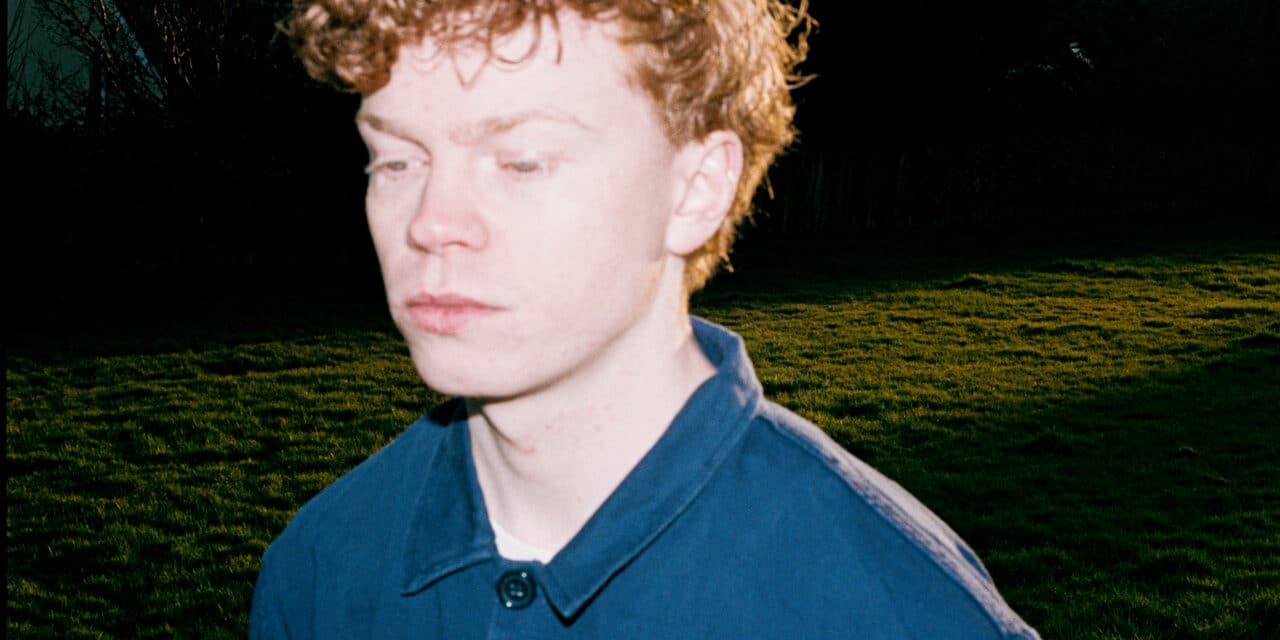
For Irish songwriter **McGrath — Mick Russell to the people who knew him before the stages got bigger — leaving Rathmullan, Co. Donegal for Belfast ultimately taught him something remarkably simple: the grass wasn’t greener elsewhere.
“The grass is the perfect shade in Donegal,” he says.
That realization sits at the heart of “Home,” his deeply personal new single, arriving August 13 via Some Action Records. Produced by Rob Kirwan (PJ Harvey, Hozier, U2), the track is a tribute to Rathmullan and the community that made McGrath. Yet by writing so specifically about his own home, he has tapped into something much larger: the persistent ache of belonging somewhere you no longer live.
Homesickness is particularly intertwined with Irish identity, where migration, community and returning home have shaped generations of stories. McGrath is conscious of that tradition.
“I’m very proud of how it’s inherently Irish to tell and pass down stories,” he says. “I like to think I fall into the bracket of storytelling Irish artists.”
His own career is beginning to resemble one of those stories. Discovered while performing in a Donegal pub, McGrath has since opened for George Ezra, performed at British Summer Time in Hyde Park, appeared at Dublin’s Ruby Sessions, and earned radio support from BBC 6Music, RTÉ Radio 1, RTÉ 2FM and BBC Introducing Ulster. This November, he embarks on his first headline UK and Ireland tour.
But despite the expanding stages, part of him remains exactly where he started.
“I think I’ll always be that guy,” he says. “It’s important I remember and embrace the fact I played in pubs so that I stay true to the art that I create.”
And back in Rathmullan, he’ll always be something even simpler: “wee Mick Russell.”
Below, McGrath speaks with MUNDANE about homesickness, Irish storytelling, humor, the people who shaped him, working with Rob Kirwan and why success has only made his roots stretch further.
MUNDANE: “Home” is specifically about Rathmullan, but the feeling of missing the place that made you is incredibly universal. When you were writing it, were you consciously trying to speak to anyone who has left home, or did the universality emerge from being as specific as possible about your own?
McGrath: I realised when I was writing the song that the messages within it would speak to people. Lots of people back home move abroad for work, so I was definitely bearing that in mind at the time. Homesickness is unfortunately a feeling that is familiar to lots of us.
MUNDANE: You’ve said, “It takes a village to raise a child,” and described Rathmullan as exactly that kind of community. Who were some of the people outside your immediate family who shaped the person—and eventually the songwriter—you became?
McGrath: Declan McClafferty played a huge role for me. He taught me a lot of what I know and introduced me to many different kinds of music. My good friend Luc Kelly has been a constant force of nature for me too. My uncle Aidan helped me to fall in love with the guitar and highlighted to me the freedom of being alone with an instrument. My English teacher, Nicola Shields, encouraged my love for words and language, as well as helped me to step out of my comfort zone. I’ve been very lucky.
MUNDANE: You’re from Donegal but now live in Belfast. Sometimes leaving a place allows you to understand it differently. What did you only begin to appreciate about Donegal once you weren’t living there anymore?
McGrath: I realised that the “grass is always greener” sentiment is right on the money. The grass is the perfect shade in Donegal. It is one of the most stunning places I’ve ever known. I realised how fortunate I was to have grown up surrounded by rolling hills, lapping tides and the simplicities of rural Irish life. You feel free there.
MUNDANE: Irish identity is deeply connected to ideas of place, migration, community and returning home. Do you feel like writing about Rathmullan places you within a longer tradition of Irish storytelling, even when you’re making contemporary music?
McGrath: I’m always trying to lean into storytelling when I write songs. I’m very proud of how it’s inherently Irish to tell and pass down stories. I’m always aware of this when I’m writing. I like to think I fall into the bracket of storytelling Irish artists.
MUNDANE: Your songs can move from drinking stout with your father to the apocalypse and Rotha Mór an tSaoil, often balancing humor with something much more existential underneath. Why is humor such an important tool for you when writing about serious things?
McGrath: I think it’s important to take the edge off the seriousness of things through humour in general. It demonstrates a uniquely human interpretation and can help me digest my thoughts and convey what it is I’m really trying to say. As an Irishman I can’t say I have a reputation for being the least sarcastic person either!
MUNDANE: “Home” was produced by Rob Kirwan, whose work has included artists like PJ Harvey, Hozier and U2. How did you preserve the intimacy of such a personal song while allowing the production to become bigger and more atmospheric?
McGrath: Working with Rob was a blast. He’s a big name but it’s very important to remember what you’re in the studio for. It’s a toolbox that aids you in communicating with people in the purest of ways. Songs often have words but I find it’s the music that does the talking. It was important that it gave the song a backbone, to prop it up and let the words ring louder.
MUNDANE: Your career itself has a wonderfully old-school origin story: being discovered while performing in a Donegal pub. Since then you’ve opened for George Ezra and played Hyde Park, and you’re heading into your first headline UK and Ireland tour. Does any part of you still feel like the person playing songs in that local pub?
McGrath: I think I’ll always be that guy. There are definitely moments where I pinch myself and I look forward to those moments becoming even more surreal. It’s important I remember and embrace the fact I played in pubs so that I stay true to the art that I create.
MUNDANE: Alongside your own career, you’ve started a Belfast club night championing emerging artists. Having benefited from people recognizing your potential early on, does creating opportunities for other musicians feel like a way of recreating some of that community that shaped you?
McGrath: It definitely does! It’s early doors yet, but I’m very hopeful for the future of The Sásta Sessions. I think we could really cultivate a space that gives back to young artists, offering them a platform and a safe space to perform and create. I love the idea of helping artists the same way in which I was helped.
MUNDANE: There’s something interesting about reaching a breakthrough moment professionally while releasing a song that looks backward toward where everything began. As your world gets bigger, are you becoming more protective of your roots rather than less?
McGrath: I’ll always be “wee Mick Russell” in Rathmullan, so I’m not sure I have to protect my roots at all. They’re always there, keeping me attached to the place that I’m from. They just need to stretch a little further now, but they’re still very firmly rooted and nurtured by my home place and its people.
MUNDANE: You describe Rathmullan simply and affectionately as “My Rathmullan.” When someone from your hometown hears “Home,” what do you hope they recognize in it—and what would their approval mean to you compared with all the other milestones happening around your career?
McGrath: I hope folks recognise the places and people named in the song, but what I really hope they realise is how much I love my hometown and all of the memories it still feeds to me. The backing from those back home means the absolute world to me and it is right up there with the biggest gigs I’ve played and the experiences I’ve had in terms of fulfilment for me. It makes my heart swell.
For a songwriter whose world is rapidly getting bigger, “Home” feels less like looking backward than understanding what allows him to move forward. The pubs have become festival stages, Belfast has replaced Rathmullan as his everyday surroundings, and a headline tour now waits on the horizon. Yet none of that seems to have weakened the gravitational pull of Donegal.
McGrath’s roots, as he puts it, simply have to stretch a little further.
And perhaps that is why “Home” works beyond Rathmullan. The details belong to McGrath, but the feeling belongs to anyone who has left somewhere only to discover how deeply that place had already become part of them.
McGrath’s “Home” is out August 13 via Some Action Records. His first headline UK and Ireland tour begins November 24 in Dublin.