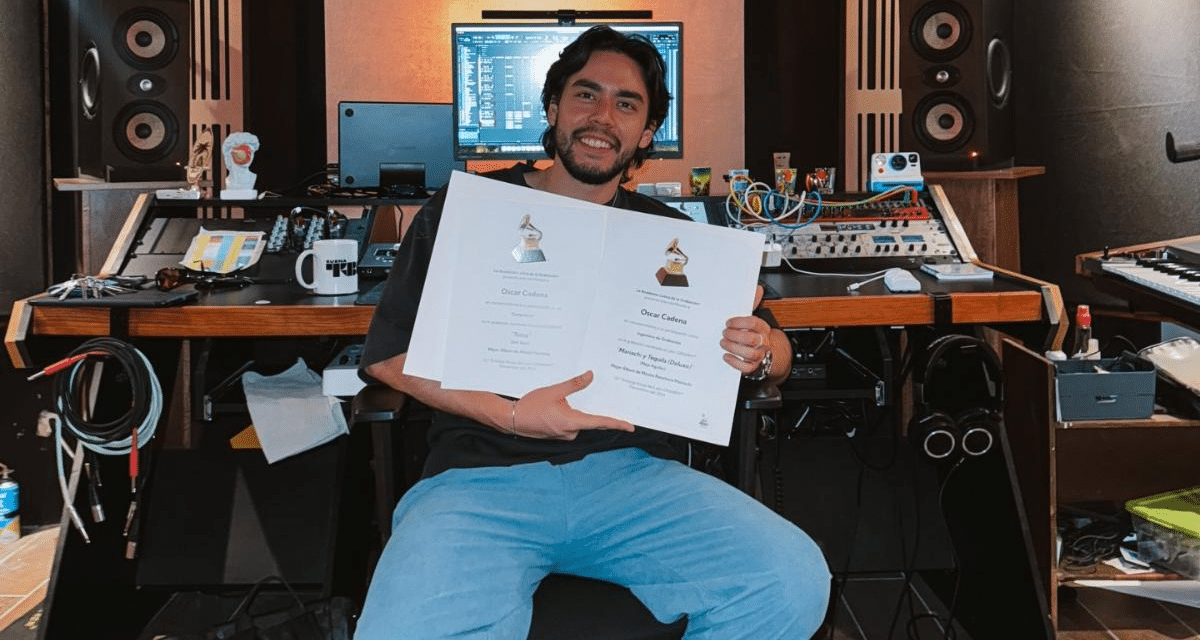
With contributions to two albums nominated for the 2026 Latin GRAMMY Awards, Mexican songwriter and producer Oscar Cadena is proving that the future of Música Mexicana isn’t defined by a single sound. From Sofi Saar’s 50/50 to Kakalo’s De Parte Mía, his work reflects a new generation of artists challenging genre boundaries while remaining connected to their cultural identity.
Behind every successful artist is a creative ecosystem of songwriters, producers, musicians, and collaborators whose contributions often remain invisible to the public.
For Mexican composer and producer Oscar Cadena, working behind the scenes has never meant simply helping artists make records. It means understanding their identities, recognizing what makes their perspectives distinctive, and creating the conditions for those ideas to become something greater.
That philosophy has helped establish Cadena as an increasingly influential creative force across contemporary Mexican music.
His contributions to two albums nominated for the 2026 Latin GRAMMY Awards—Sofi Saar’s 50/50 in the Best Norteño Album category and Kakalo’s De Parte Mía in Best Contemporary Mexican Music Album—represent a significant milestone in a career built around collaboration.
“I’m incredibly grateful to see two albums I participated in as a composer and producer recognized by the Latin GRAMMYs,” Cadena says. “These nominations represent so much work, creativity, and collaboration.”
But beyond the recognition itself, the nominations reveal something about the changing identity of Mexican music.
As regional styles increasingly intersect with pop, alternative, and contemporary production, artists are finding new ways to honor tradition without allowing it to dictate their creative possibilities.
And Cadena is helping them navigate that evolution.
The Art of Understanding Someone Else’s Vision
Working across different musical genres requires more than technical versatility.
It demands an ability to understand what an artist is trying to communicate before deciding how the music should sound.
For Cadena, that process begins with listening.
“I always start by understanding the artist’s vision and what they want people to feel,” he tells MUNDANE.
“My role is to create an environment where they can share their ideas freely, then help turn those ideas into music while bringing my own perspective.”
It’s an approach that places emotional intention ahead of genre conventions.
While a norteño project and a contemporary Mexican music album might require different instrumentation, arrangements, and production techniques, Cadena sees the producer’s fundamental responsibility as consistent.
“I want to understand what makes that artist unique and make sure the production brings that out.”
That philosophy helps explain how he can move between different musical worlds without imposing a single recognizable formula on every project.
His signature isn’t necessarily a particular drum sound, instrumental texture, or production technique.
It’s the ability to make the artist’s identity unmistakable.
Why Trust Is the Most Important Instrument
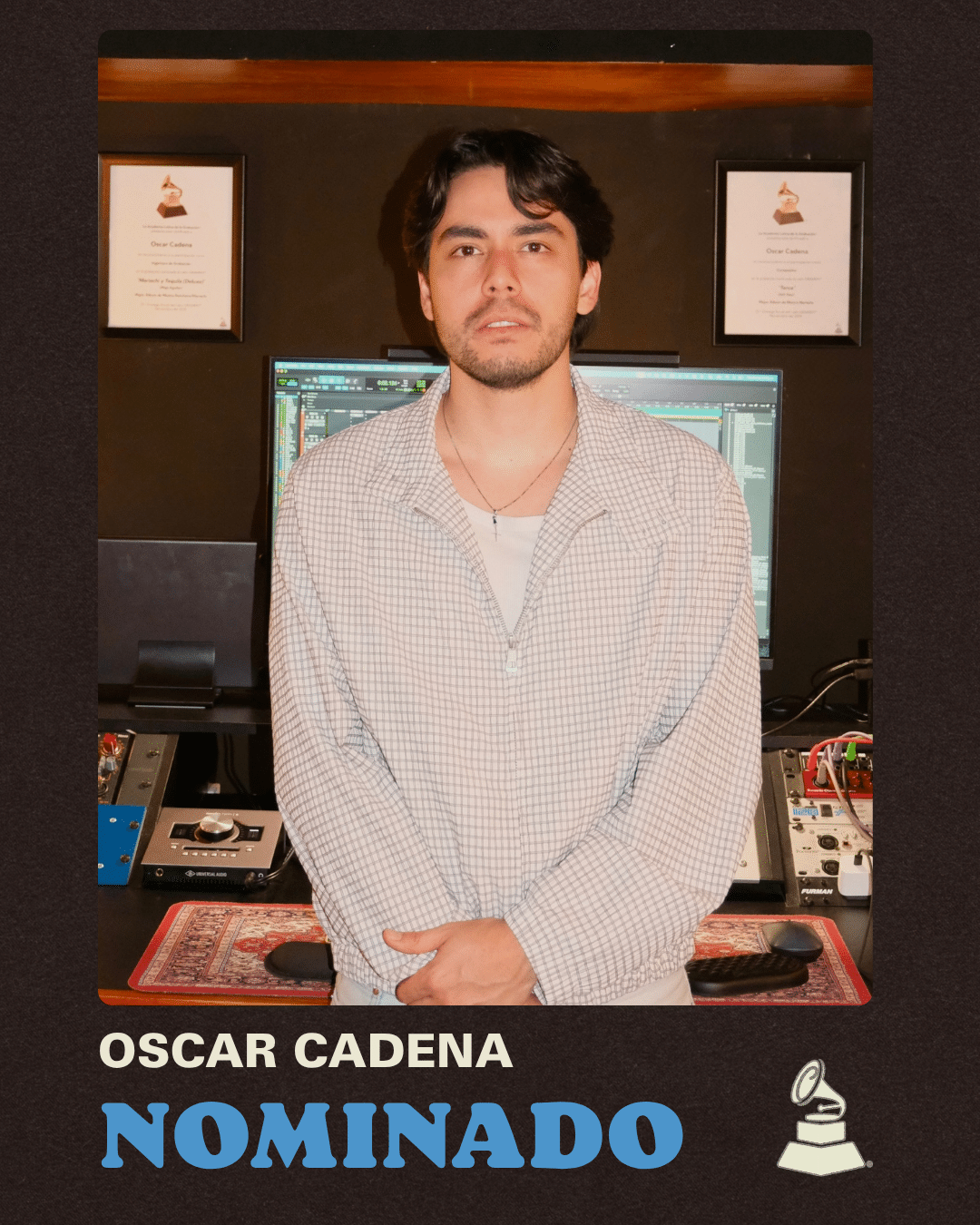
Cadena believes that the most successful collaborations depend on something that cannot be engineered in a recording studio: mutual trust.
“As a producer, you can only go as far as the artist trusts you to go,” he explains.
That trust allows collaborators to challenge each other’s instincts, explore unfamiliar ideas, and take creative risks without losing sight of the original vision.
It also requires the producer to recognize when stepping back is more valuable than intervening.
“I need to trust the artist’s instincts and know when to listen.”
One example is “NeurodiverTDA,” a track from Kakalo’s Latin GRAMMY-nominated De Parte Mía, which Cadena co-wrote with Kakalo and David Aguilar.
According to Cadena, Kakalo arrived at the session with a clear concept and the central lyrical idea he wanted to explore.
That clarity gave the three collaborators a foundation on which to build.
“When an artist knows what they want to say, it gives everyone else something to respond to,” Cadena explains.
Rather than competing to shape the song, each writer contributed ideas that strengthened Kakalo’s original intention.
The result reflects Cadena’s broader philosophy: collaboration works best when individual creativity serves a shared purpose.
A New Generation Is Redefining Música Mexicana
Cadena’s work arrives during a period of extraordinary creative expansion for Mexican music.
Regional traditions remain central to the genre’s identity, but younger artists are increasingly incorporating influences from contemporary pop, alternative music, and other global sounds.
For Cadena, the most exciting aspect of this evolution is its unpredictability.
“Artists are bringing more of their own influences and personalities into the music, and that creates room for different sounds,” he says.
“I love hearing something that surprises me while still feeling connected to the roots of Mexican music.”
His work with Sofi Saar is particularly significant within that conversation.
Saar’s 50/50 earned a nomination for Best Norteño Album, and the artist has emphasized the importance of creating more space for women’s voices within Música Mexicana.
“May the voices of women in Música Mexicana be heard loud and clear,” Saar said following the nomination announcement.
Cadena contributed songwriting and recording work across the project, helping bring its musical vision to life.
Alongside his work with Kakalo, the recognition illustrates the breadth of contemporary Mexican music and the different creative directions emerging within it.
“We don’t know exactly what the next sound will be,” Cadena says, “and that uncertainty makes me want to get into the studio and be part of discovering it.”
Building More Than Records
In 2025, Cadena expanded his creative ambitions by founding Suena Tribu Records, a venture focused on artist development and creative strategy.
The move reflects a broader interest in supporting artists beyond individual recording sessions.
“I’ve always been interested in the whole picture of an artist’s career, so founding Suena Tribu Records felt like a natural extension of what I was already doing,” he explains.
“The difference is that now I can help shape more of that picture.”
With a catalog exceeding 665 million combined streams and collaborations involving artists such as Majo Aguilar, Armenta, Taburete, Jasiel Núñez, Adriel Favela, and Pepe Aguilar, Cadena has developed a perspective that extends across genres and generations.
His work also includes projects such as Sofi Saar’s TERCA and Taburete’s El Perro Que Fuma, alongside his involvement in the early development of artist RIA.
But the establishment of Suena Tribu suggests that his ambitions are no longer limited to producing successful songs.
He’s interested in helping artists build sustainable creative identities and careers.
In an industry increasingly shaped by short-term trends and rapidly changing audiences, that long-term perspective may be just as important as musical innovation.
Recognition Without Losing Perspective
The 27th Annual Latin GRAMMY Awards will take place November 12, 2026, at the MGM Grand Garden Arena in Las Vegas.
For Cadena, the nominations represent an opportunity to recognize the people and collaborative processes behind the music.
But he is careful not to allow industry recognition to determine his creative priorities.
“It’s an incredible milestone, and I’m proud and grateful to be part of these projects,” he says.
“Once I’m back in the studio, though, my focus is on the artist in front of me and the song we’re making.”
It’s a perspective that captures the balance between ambition and artistic integrity.
Awards can validate the work, but they cannot replace the curiosity, experimentation, and trust required to create it.
“You can’t build a song around the possibility of an award.”
Ultimately, Oscar Cadena’s contribution to contemporary Mexican music is about more than individual credits or accolades.
It’s about creating space for artists to discover what their music can become.
And as the boundaries of Música Mexicana continue to expand, his work suggests that its future may depend less on defining a particular sound than on empowering the people who are brave enough to reinvent it.
In Conversation With Oscar Cadena
MUNDANE: Being recognized for your work on both a Best Norteño Album and a Best Contemporary Mexican Music Album is a unique feat. How do you approach the technical and emotional demands of such different styles when you’re in the studio?
Oscar Cadena: I always start by understanding the artist’s vision and what they want people to feel. My role is to create an environment where they can share their ideas freely, then help turn those ideas into music while bringing my own perspective. Technically, each project asks for something different. But emotionally, my starting point is always the same. I want to understand what makes that artist unique and make sure the production brings that out.
MUNDANE: You’ve mentioned that these nominations represent a lot of work and collaboration. In your experience as both a composer and producer, what is the most vital element in a collaboration that allows you to push an artist’s vision further?
Oscar Cadena: Mutual trust, without a doubt. I always say that, as a producer, you can only go as far as the artist trusts you to go. When that trust is there, you can suggest something unexpected, challenge each other, and explore ideas without anyone feeling like their vision is being lost. It also goes both ways: I need to trust the artist’s instincts and know when to listen. That’s what gives us the freedom to take a song somewhere neither of us might have reached alone.
MUNDANE: You founded Suena Tribu Records in 2025. How has your perspective on the creative process shifted now that you are overseeing artist development and strategy alongside your own production work?
Oscar Cadena: I’ve always been interested in the whole picture of an artist’s career, so founding Suena Tribu Records felt like a natural extension of what I was already doing. The difference is that now I can help shape more of that picture.
MUNDANE: Your work spans everything from regional Mexican music to pop and alternative. Is there a common thread or sonic signature that you feel you bring to every project, regardless of the genre?
Oscar Cadena: I think the common thread is my approach. I want every artist to sound like the strongest version of themselves. Working across genres gives me different ways to get there, whether that means exploring an unexpected texture or keeping an arrangement simple so the voice can carry the song. My taste naturally comes through in those decisions, but I want the artist’s identity to be what people hear first.
MUNDANE: As a producer, you’ve witnessed how a new generation of artists is expanding the sound of regional Mexican music. What do you think is the most exciting evolution happening in the genre right now?
Oscar Cadena: What excites me most is how open the possibilities feel. Artists are bringing more of their own influences and personalities into the music, and that creates room for different sounds. I love hearing something that surprises me while still feeling connected to the roots of Mexican music. We don’t know exactly what the next sound will be, and that uncertainty makes me want to get into the studio and be part of discovering it.
MUNDANE: You co-wrote “NeurodiverTDA” on Kakalo’s nominated album. Could you walk us through the creative process for that track—how did that collaboration come together?
Oscar Cadena: Kakalo is one of the most talented artists I know. That session was him, David Aguilar, and me. Kakalo came into the studio with the central idea and the punchline he wanted to build the song around, so we had a clear starting point. When an artist knows what they want to say, it gives everyone else something to respond to. We could each bring our own ideas to the writing while keeping his vision at the center. That clarity made the collaboration feel very natural.
MUNDANE: With the Latin GRAMMYs approaching, do you find that this level of industry recognition changes your approach to future projects, or do you prefer to keep the focus entirely on the music itself?
Oscar Cadena: It doesn’t change how I approach the music, but it does make me pause and appreciate the work and the people around it. It’s an incredible milestone, and I’m proud and grateful to be part of these projects. Once I’m back in the studio, though, my focus is on the artist in front of me and the song we’re making. You can’t build a song around the possibility of an award.
2026 Latin GRAMMY-Nominated Projects
- Sofi Saar — 50/50 | Best Norteño Album
- Kakalo — De Parte Mía | Best Contemporary Mexican Music Album
The 27th Annual Latin GRAMMY Awards take place November 12, 2026, in Las Vegas.