
In an era where electronic music performances often unfold under neon lights and crowded club ceilings, Japanese deep house duo Snowk have taken the opposite approach—bringing their music into the stillness of the natural world.
Their latest project is a breathtaking 66-minute live DJ mix recorded atop the frozen surface of Lake Daisetsu inside Daisetsuzan National Park in Hokkaido. Performed aboard the surreal structure known as the “Ice Merry-Go-Round,” the set transforms the landscape itself into part of the performance.
The result is less like a conventional DJ mix and more like a cinematic meditation: melodic house rhythms drifting through a snow-covered wilderness, drone cameras gliding across frozen water, and sound moving in quiet dialogue with nature.
Behind the project are producers Yutaka Takanami and Fuminori Kagajo, two artists raised in Japan’s snowy regions whose music often channels the emotional duality of winter—melancholy and warmth, stillness and movement.
The mix includes four unreleased Snowk tracks alongside recent single “Big Love” featuring Liset Alea, as well as selections from artists including Qrion and Shingo Nakamura. Together they form a carefully structured emotional arc that feels almost narrative in nature—music drifting across the frozen landscape like snowfall.
We spoke with Snowk about the origins of the project, translating snow into sound, and why nature may be the ultimate stage for electronic music.
Performing on the “Ice Merry-Go-Round” in the middle of a frozen lake feels almost surreal. When did the idea shift from a concept to something that actually had to happen?
We had actually been searching for a great location in our home regions of Hokkaido and Niigata for about two years.
Then, through one of Kagajo’s acquaintances, we learned that this place becomes a dam during the green season and transforms into this incredible landscape in winter. That’s when we discovered what felt like a turntable made of snow.
Suddenly the project became possible. Once we knew about the location, everything moved quickly—we spent about two months preparing before making it happen.
Daisetsuzan National Park feels less like a backdrop and more like part of the music itself. How did the environment shape the structure of the set?
Once the location was decided, we chose the tracks while imagining sounds that would blend naturally into the landscape.
That became the most important element of this DJ set.
There’s a strong emotional continuity throughout the mix—it almost feels like a film without dialogue. Do you think about narrative when building a set like this?
Thank you. When I DJ, I always try to imagine a story that fits the specific day, place, and time.
You’ve described your sound as “floating like powder snow.” How do you translate a physical sensation like falling snow into music?
Rather than translating it directly, we focus on whether the sounds we create can evoke the image of snow—or the feeling of floating.
The set features four unreleased tracks. How do these new songs reflect Snowk’s evolution?
Originally our roots were strongly in house music.
Rather than simply returning to those origins, we’re moving forward in a way that feels authentic to Snowk while still staying aware of how the scene is evolving.
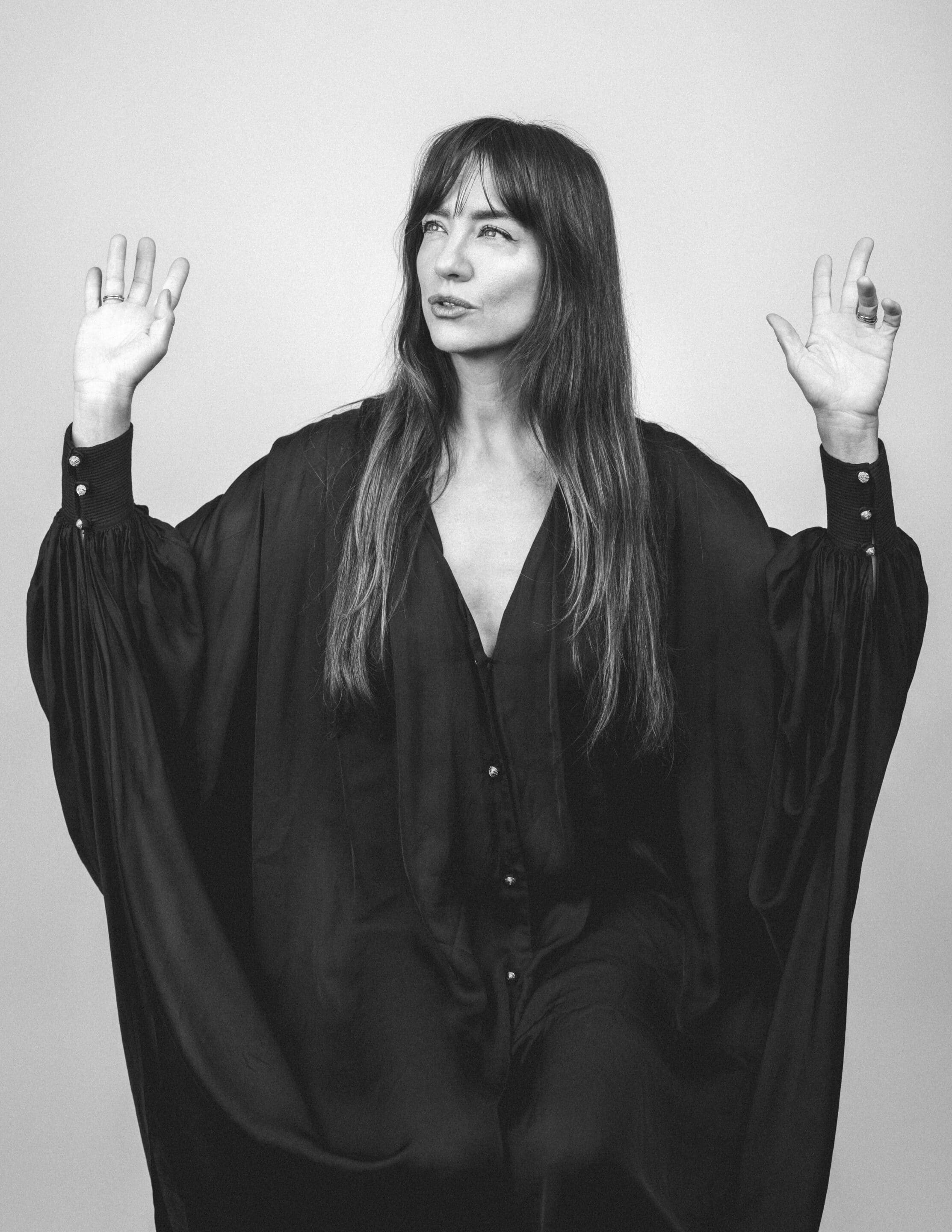
“Big Love,” your collaboration with Liset Alea, carries a very human and intimate emotional tone. How did that track influence the overall journey of the mix?
Liset injected emotion into the musical world we created.
Her voice added a sense of human intimacy that became central to the emotional arc of the mix.
Your music balances minimal production with deep emotional atmosphere. How do you decide what to leave out in order to strengthen the emotional impact?
That decision comes entirely from intuition and inspiration, shaped by our musical experience.
The drone cinematography plays a huge role in the experience of this performance. How important are visuals when presenting music in environments like this?
For this DJ set we mainly played unreleased Snowk tracks. It was important that the music could be experienced together with the snowy landscape—which is also the hometown scenery of Kagajo.
The visuals and music complement each other.
Your identity as artists seems deeply connected to the landscapes you grew up in. Do you see Snowk as a project rooted in Japan, or something that could exist anywhere?
We don’t consciously think about it that way, but people often say that to us.
We’re influenced heavily by house music and R&B, but the fact that we grew up in snowy regions naturally seeps into our music. It’s not something we deliberately express—it just becomes part of who we are.
This performance feels almost like an art installation rather than a traditional DJ set. Do you see more projects like this in Snowk’s future?
This was our first attempt, but it feels like an important way of expressing our world.
We would love to try similar projects in different seasons and locations.
At the same time, filming something like this takes a lot of time, so we see it as something that complements our traditional releases. We’ll continue focusing on albums and standard formats while also exploring immersive projects like this.
We hope you’re looking forward to what comes next.
Music That Moves Like Snow
With their Lake Daisetsu performance, Snowk demonstrate that electronic music doesn’t have to exist solely inside clubs or festival stages. Sometimes the most powerful setting is silence—snow falling, mountains rising in the distance, and a melody drifting across a frozen lake.
In that moment, the music feels less like entertainment and more like atmosphere—something suspended between nature and sound, between memory and motion.
And like snow itself, it leaves an impression long after it disappears.