Some bands are formed through careful planning and industry ambition. Others emerge so naturally that it’s difficult to pinpoint exactly when they began. For The Army, The Navy, the latter is true.
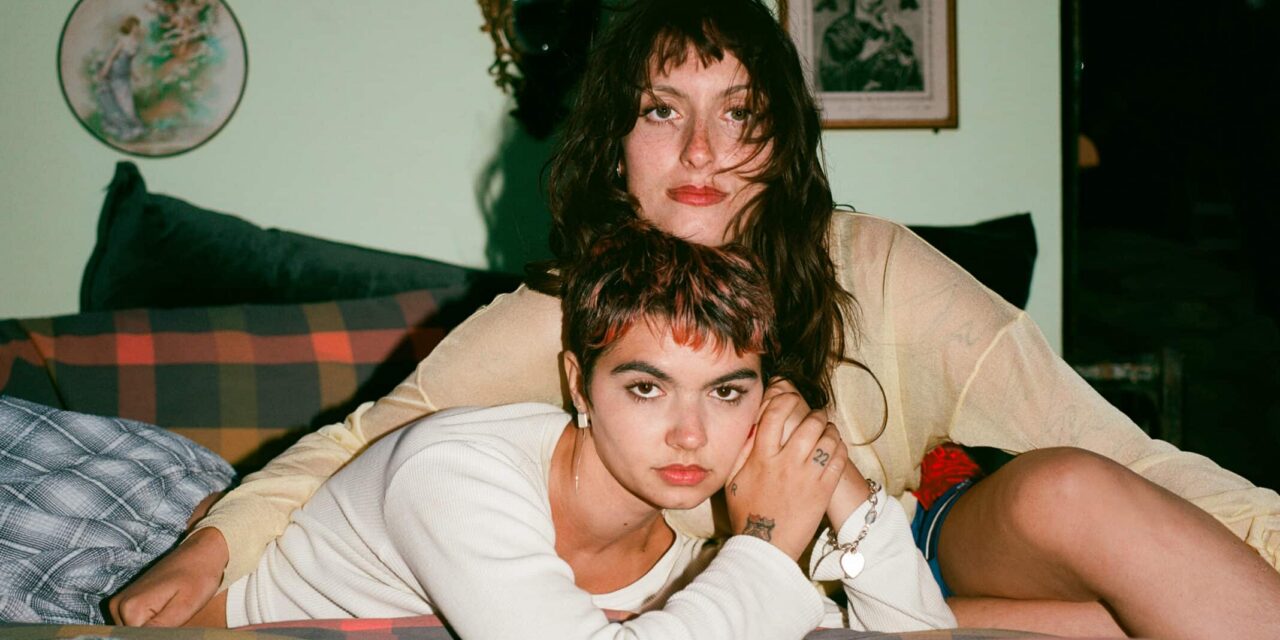
Though Maia Ciambriello and Sasha Goldberg had known each other for most of their lives—growing up beneath the fog-covered peaks of Mount Tamalpais in Northern California—it wasn’t until they became roommates in New Orleans that their creative partnership truly took shape. Writing songs from opposite corners of a dorm room eventually evolved into one of indie music’s most compelling collaborations, built on intuition, trust, and an almost uncanny emotional synchronicity.
Their debut album, Fake Brave Life, captures that relationship in all its complexity. Simultaneously intimate and cinematic, the record explores love, loss, ambition, insecurity, and the strange act of creating art for strangers. Written between New Orleans, Los Angeles, Athens, Georgia, and New York City, the album transforms deeply personal experiences into something larger—a meditation on what it means to pursue a dream while carrying the weight of uncertainty.
At its heart lies the concept of “fake bravery”: the idea that courage often arrives only after we’ve acted as if we already possess it.
We caught up with Maia and Sasha to discuss friendship, songwriting, vulnerability, and the emotional universe behind Fake Brave Life.
The name Fake Brave Life suggests performance—being strong even when you’re not. What does “fake bravery” look like in your world?
Writing music is extremely vulnerable, especially when you use it as an emotional outlet. There was a time when our songs were exclusively ours. Nobody but us could share opinions about them. They were sacredly ours and no one else’s.
There is something inherently courageous about releasing your music into the public sphere and allowing others outside your inner circle to experience your vulnerability in its rawest form. Writing music together is vulnerable in itself, but sharing it with people who don’t know you or your experiences is a completely different kind of scary.
We took our intimate songwriting process—sitting on a bed with an acoustic guitar and our songwriting journal, which we call “the Bible”—and made it accessible to anyone who wanted to be part of it.
Opening your art to both praise and critique is terrifying. The title Fake Brave Life comes from the courage it took to transform something exclusively ours into something for everyone.
You’ve described your connection as almost cosmic. When you’re writing together, does it feel collaborative or intuitive?
Since we grew up in the same hometown, attended the same schools, performed in the same theatre productions, and even studied with the same voice coach, our life experiences are remarkably similar.
There was one time we were writing a song about a bridge. After we finished, we realized we’d both been picturing the exact same bridge from our hometown—the one that always smelled faintly like brown sugar in the mornings.
We’ve been friends for so long that our lives are deeply intertwined. We often feel each other’s emotions as strongly as our own. I don’t think there’s a universe where Sasha and I don’t find each other.
That connection helps our songwriting tremendously because understanding each other comes naturally. Our process is highly collaborative, but it never feels forced. We tend to write best when a guitar gets picked up spontaneously rather than scheduling songwriting sessions in advance.
Starting as roommates writing separately and eventually merging sounds feels incredibly organic. What changed when your individual processes became shared?
Ironically, neither of us remembers the exact moment we decided to do this together. It all happened so naturally.
As we started collaborating, we had to learn how to communicate effectively—just like any relationship. We had to learn how to ensure both of us felt heard and understood.
Luckily, our egos never get in the way of the songs.
If one of us feels strongly about a melody or lyric, the other trusts that instinct because we both know we’re serving the song first. We genuinely believe in each other’s creativity.
We learned how to write music together, and we’re still learning. That’s part of the beauty of it.
Growing up in the Bay Area but forming in New Orleans gives you two very different cultural backdrops. How do those places live inside your music?
The Bay Area gave us our relationship with nature.
Marin County is beautiful—redwoods, mountains, fog so thick it looks edible, and the ocean twenty minutes away. Growing up there made nature an endless source of inspiration.
New Orleans opened up an entirely different world.
For the first time, we encountered musicians whose relationship to their instruments was as passionate as ours was to singing. We discovered community through music in a way we’d never experienced before.
The musicians there changed our lives and expanded our understanding of what music could be.
Every song contains pieces of both places. There’s always some New Orleans in there, and there’s always some Bay Area too.
“Pretty, Pink and Soft” suggests something delicate, but the song carries a lot of emotional fire underneath. Are you drawn to contrasts like that?
Absolutely.
We actually describe that song as angry, bratty, and a little confrontational.
Being women in the music industry comes with a lot of expectations about femininity and presentation. Sometimes anger can be difficult to express directly, so wrapping those feelings in something that appears soft or pretty can be an effective way of communicating them.
Contrast is a huge part of our songwriting. We love comparing emotions to physical objects, places, and images.
Artists like Adrienne Lenker do that beautifully, and it’s definitely influenced the way we approach lyricism.
As a duo, how do you navigate creative tension without losing the honesty that makes your chemistry so strong?
Communication.
And trust.
We’ve spent years building a friendship that allows us to be completely honest without taking things personally.
We both want what’s best for the music, and because we genuinely respect each other’s opinions, disagreements rarely become conflicts.
Everything comes back to believing in one another.
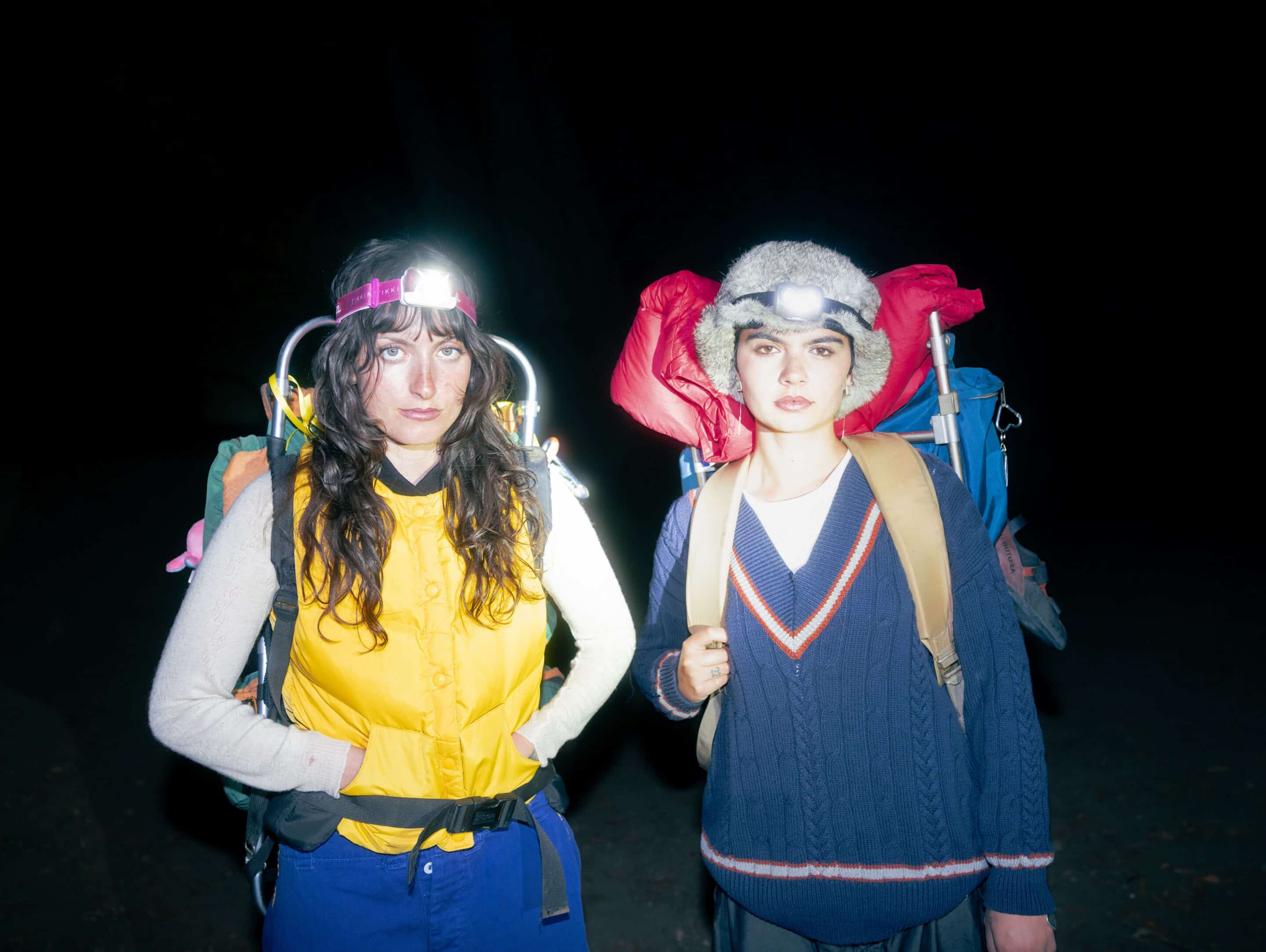
There’s a shapeshifting quality to your sound. Is that intentional, or simply a reflection of two distinct voices colliding?
I love that description.
I don’t think it’s intentional, but maybe it comes naturally because we’re constantly blending two separate experiences into one shared story.
We’re very similar people in many ways, but we’ve also had different experiences and perspectives. When those things combine, maybe that creates the feeling of transformation.
We also love experimentation. We love key changes, ambient soundscapes, unexpected shifts, and creating moments that surprise us.
If this debut album is a snapshot of your connection right now, how do you imagine it evolving as your relationship—and your lives—change?
The funny thing is that this album isn’t really a snapshot of who we are right now.
It’s a snapshot of who we were about a year ago.
Every song corresponds to a specific moment in our lives. Listening back feels like opening a time capsule.
The foundation will always remain the same. The melodies, the lyricism, the way we write together—that’s always going to be The Army, The Navy.
But we’re still growing. We still have a lot of life to live.
Our music will continue to expand, evolve, and transform alongside us.
No matter how much changes, it will always be Maia and Sasha at the center of it all.
Finding Courage Through Connection
What makes Fake Brave Life resonate isn’t simply its songwriting or lush production. It’s the sincerity behind it. Maia and Sasha understand that bravery isn’t always loud or triumphant. More often, it’s quiet. It’s sharing a song. It’s trusting another person. It’s allowing yourself to be seen despite uncertainty.
The album’s title captures a universal truth: sometimes courage isn’t something we possess from the beginning. Sometimes we stumble into it accidentally, pretending to be brave until one day we realize we actually are.
For The Army, The Navy, that journey began in a tiny New Orleans dorm room. On Fake Brave Life, they transform it into something listeners can recognize in themselves.