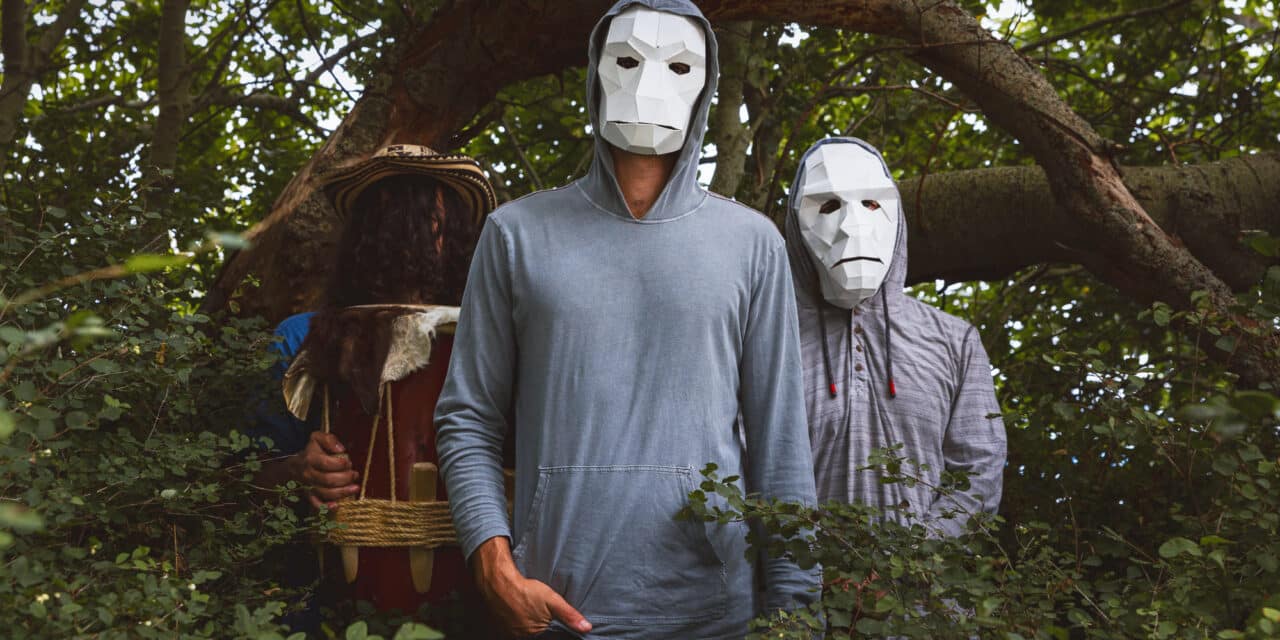
For Terror/Cactus, collapse is not simply destruction — it’s transformation. The project of Argentine-born producer and multi-instrumentalist Martín Selasco, Terror/Cactus has built a singular sonic universe where cumbia, Peruvian chicha, Argentine folk traditions, dub textures, psychedelia, and electronic production collide into something hypnotic and deeply transportive.
On the upcoming album Colapso, Selasco expands that vision outward. Where previous releases explored identity and belonging, this new body of work grapples with migration, resistance, political tension, and the invisible systems shaping contemporary life. Across layered percussion, field recordings, euphoric synths, and psychedelic guitars, Colapso imagines breakdown not as an endpoint, but as an opening.
We spoke with Martín about destruction as creation, cultural hybridity, pirate radio transmissions, and why music still has the power to awaken people from emotional numbness.
Q: Colapso frames collapse not as an ending, but as a beginning. What drew you to reinterpret breakdown as something creative rather than purely destructive?
Martín Selasco:
I’m drawn to the idea of destruction as a creative force. I think that in order to see what’s possible, it’s helpful to imagine a complete breakdown of what we know.
It’s not that different from when John Lennon sings, “Imagine there’s no countries… Imagine no possessions…” It’s a kind of stripping everything away to reveal something new. What kind of world would we create if we could start over?
In a lot of traditions, destruction isn’t the opposite of creation — it’s part of the same cycle. In Hinduism, Shiva the destroyer is also a conduit for transformation, clearing space so something new can emerge.
That idea really resonates and is what inspired the album title, Colapso.
Q: “Transmisión Clandestina” imagines a pirate signal waking people up. Do you see music itself as a kind of underground transmission in today’s world?
Martín Selasco:
Sometimes, but in today’s world music can also be just a branding or marketing tool.
Despite that, I do think that music has this incredible power to make people feel things that are extraordinary — awaken from a routine numbness and connect with certain magic that feels essential to our humanity.
Q: Your sound moves between cumbia, chicha, folk traditions, dub textures, and electronic production. How do you approach blending cultures without flattening their individuality?
Martín Selasco:
I don’t think that cultural traditions are static. Cumbia itself was born from the blending of African and Indigenous cultures in Colombia.
I think we should honor the history and people and sounds that created these sounds, but I also think it’s important to continue to expand and explore possibilities to keep them alive.

Q: You’ve lived between Buenos Aires, Miami, and the Pacific Northwest. How has that sense of movement and in-betweenness shaped the emotional core of your music?
Martín Selasco:
That in-betweenness has always felt like a part of my identity, and my music feels like a bridge that helps connect those different parts of myself.
Sometimes there is a sense of tension between those different sides — like feeling lost, nostalgic, or out of place. Other times it feels exciting and beautiful to have access to different cultural expressions, and so it feels celebratory.
There’s a whole range of emotions within that I’m excited to continue to explore.
Q: There’s a deep lineage of music in your family, from Music Hall to your father’s work in Miami. Did growing up around those archives make music feel like destiny, inheritance, or rebellion?
Martín Selasco:
I think that my family’s history in the music business definitely has a strong impact on how I relate to music.
Because of it, I feel like music provides a connection to my past and my heritage. When I would go visit my dad’s warehouse in Miami where he kept CDs for distribution, it felt like digging through a goldmine of folk music from South America.
So more than destiny or even inheritance, it felt like discovery — and self-discovery. It was a way of finding my own connection to where I come from, on my own terms.
Q: Forastero looked inward at identity and belonging, while Colapso turns outward toward systems and resistance. What changed in you between those two records?
Martín Selasco:
The world around me changed.
I started seeing immigrants being taken from their families, and it shifted something in me. While identity and belonging still matter, there’s now a stronger sense of urgency that needed to be reflected in the music.
I felt like parts of electronic cumbia and Latin downtempo were starting to flatten out — becoming more of an aesthetic than a living culture, almost like an exotic soundtrack to escapism or pseudo-spiritualism.
Something you can step into for a weekend in Tulum, feel culturally enriched, and then step out of — back into cities where those same cultures are being marginalized or targeted.
That disconnect didn’t sit right with me.
So Colapso comes from that tension. It’s about the spaces where people can come together and feel something real, but also about pushing against that drift — disrupting the patterns we’ve fallen into and resisting the direction things have been heading.

Q: Field recordings and fragments of urban life play a strong role in your work. What do those everyday sounds communicate that instruments alone cannot?
Martín Selasco:
I love the way that field recordings can ground you in a specific place and time.
Especially within instrumental music, I think it’s an incredibly helpful tool to help tell a story and create an immersive experience.
Q: Partnering with Northwest Immigrant Rights Project ties the album directly to action. How important is it for your political themes to exist beyond symbolism?
Martín Selasco:
I’m incredibly grateful to Northwest Immigrant Rights Project and Share It Music for creating a structure where artists can directly support organizations like this.
That kind of tangible connection helps ground the work in something real and extends it beyond the music itself.
At the same time, I don’t think symbolism should be dismissed. Symbols are powerful — they help define cultural movements and open up new ways of seeing the world.
Music, imagery, language — they all operate in that space. They can shift perception, create identity, and bring people into a shared feeling or understanding.

Q: There’s tension in your music: lush and danceable on the surface, but carrying unease underneath. Are you intentionally using beauty as a vehicle for harder truths?
Martín Selasco:
For me, those elements — tension and release, beauty and hardship — all exist in the same space. They’re always in motion.
I’m drawn to that push and pull, and how those energies overlap.
So it’s less about using beauty as a vehicle, and more about letting those contradictions live together without resolving them, in a way that feels real.
Q: If Colapso is a transmission between worlds — past and future, city and landscape — what do you hope listeners receive when they tune in?
Martín Selasco:
I think everyone will receive it differently, depending on where they’re coming from.
But for me, the intention was to create a kind of electricity — something that moves through the body and wakes something up.
A signal you can tune into that cuts through the static, creating moments of connection, release, and maybe even a shift in perspective.