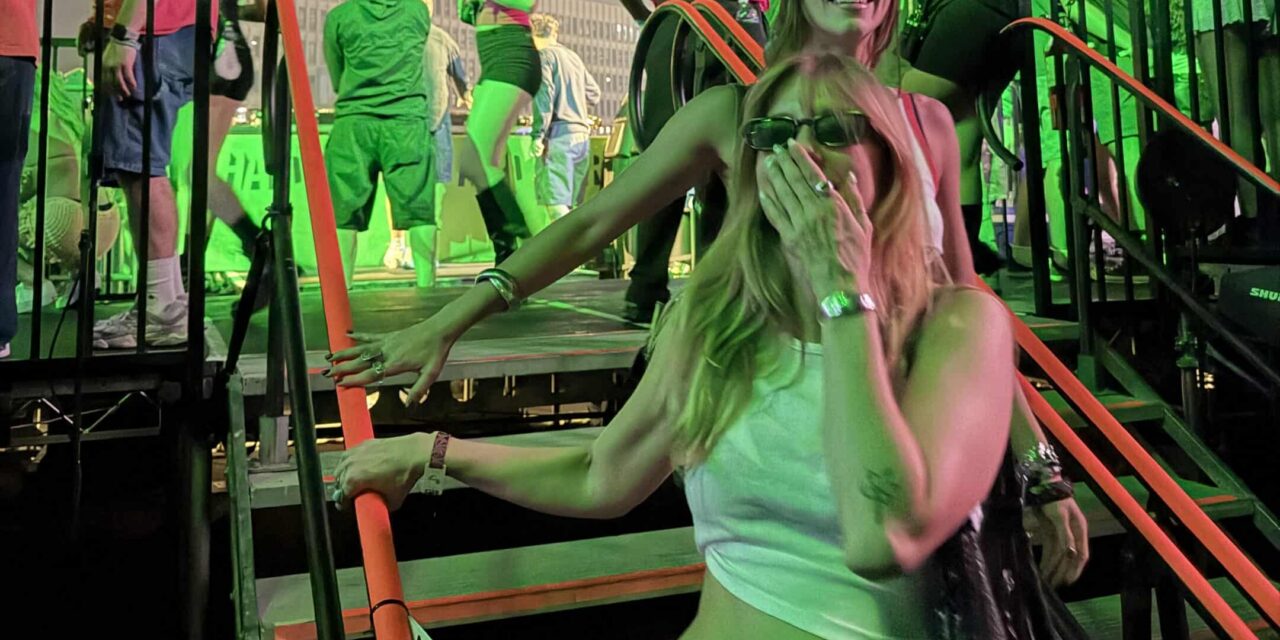
The Los Angeles singer, producer, DJ and designer STRAWBRY is moving beyond the expectations of electronic music, building a world where vulnerability, nightlife and community can exist in the same room
Dance music is often framed around escape. The lights go down, the volume goes up, and for a few hours the world outside disappears.
But for the artist behind STUDIO5400, the dance floor has always offered something more complicated—and more meaningful. It can be a place for connection, vulnerability and self-discovery just as easily as release.
That tension was already present on debut EP HEADPHONES, a project that placed deeply personal songwriting inside electronic production. At the time, however, there was still uncertainty about whether those two instincts were supposed to coexist.
“I wasn’t sure if people would relate or be drawn to that sort of personal, emotional, more narrative-driven lane of electronic,” they explain.
The response provided an answer. People did connect, and that connection has opened the door to an upcoming EP that pushes the idea further: more vulnerable, more instinctive and significantly less interested in fitting neatly into an existing category.
It makes sense for an artist whose creative process has never really respected boundaries between disciplines.
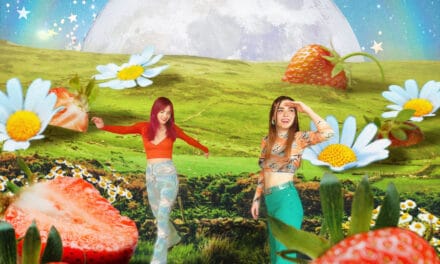
Singer, songwriter, producer, DJ and graphic designer are not separate identities here. The artwork can begin forming while a track is still being produced. A visual idea can influence the music and the music can reshape the visual language in return.
“They both need each other to survive,” they say.
That world-building instinct extends beyond the records themselves.
Through STUDIO5400, their Los Angeles event series, the same philosophy becomes physical. Created after experiencing firsthand how nightlife helped turn an unfamiliar city into a community, the series prioritizes safe, inclusive environments and primarily femme-identifying acts.
Rather than treating nightlife as simply somewhere to be seen, STUDIO5400 asks what can happen when a dance floor becomes a place to actually find one another.
That same relationship between artist and audience shapes the DJ booth. Sets are rarely rigidly planned. Instead, the room becomes a collaborator—transitions, emotional peaks and unexpected moments discovered alongside the people dancing.
As the next EP begins to emerge, that instinct is becoming even more central to the music itself.
This time, there is less concern about what electronic music should sound like and more curiosity about where a song might go when it is simply allowed to become itself.
Mundane spoke with the multidisciplinary artist about HEADPHONES, the evolution of their upcoming EP, building STUDIO5400, finding community through Los Angeles nightlife, learning to trust creative instincts and discovering that vulnerability might belong on the dance floor after all.
Your debut EP HEADPHONES introduced listeners to a world where club music feels deeply personal rather than purely escapist. As you begin rolling out your next EP, how has your perspective as both an artist and producer evolved since that first release?
I think when I made HEADPHONES, I wasn’t sure if people would relate or be drawn to that sort of personal, emotional, more narrative-driven lane of electronic, and I oscillated a lot on if that’s what I SHOULD be doing.
After seeing and hearing how people were able to connect with it, I feel like I’ve given myself the space to lean into and explore the personal, intimate elements of my take on electronic music more.
The next EP is definitely more vulnerable at times, and a lot of just creating and letting things flow out without the guidelines of, like, what existing category it might fall into.
You wear so many creative hats—singer, producer, DJ, and graphic designer—and you even create all of your own artwork. Do you see the visual identity of your music as an extension of the songs themselves, or does the artwork sometimes reveal something the music can’t?
Such a fun question to think about—it’s definitely a bit of both!
A lot of times I’ll start creating the visual worlds of individual songs while I work on them. The production and visual identity will happen parallel to each other in my head and inform each other back and forth throughout the process.
They, like, both need each other to survive, you know?
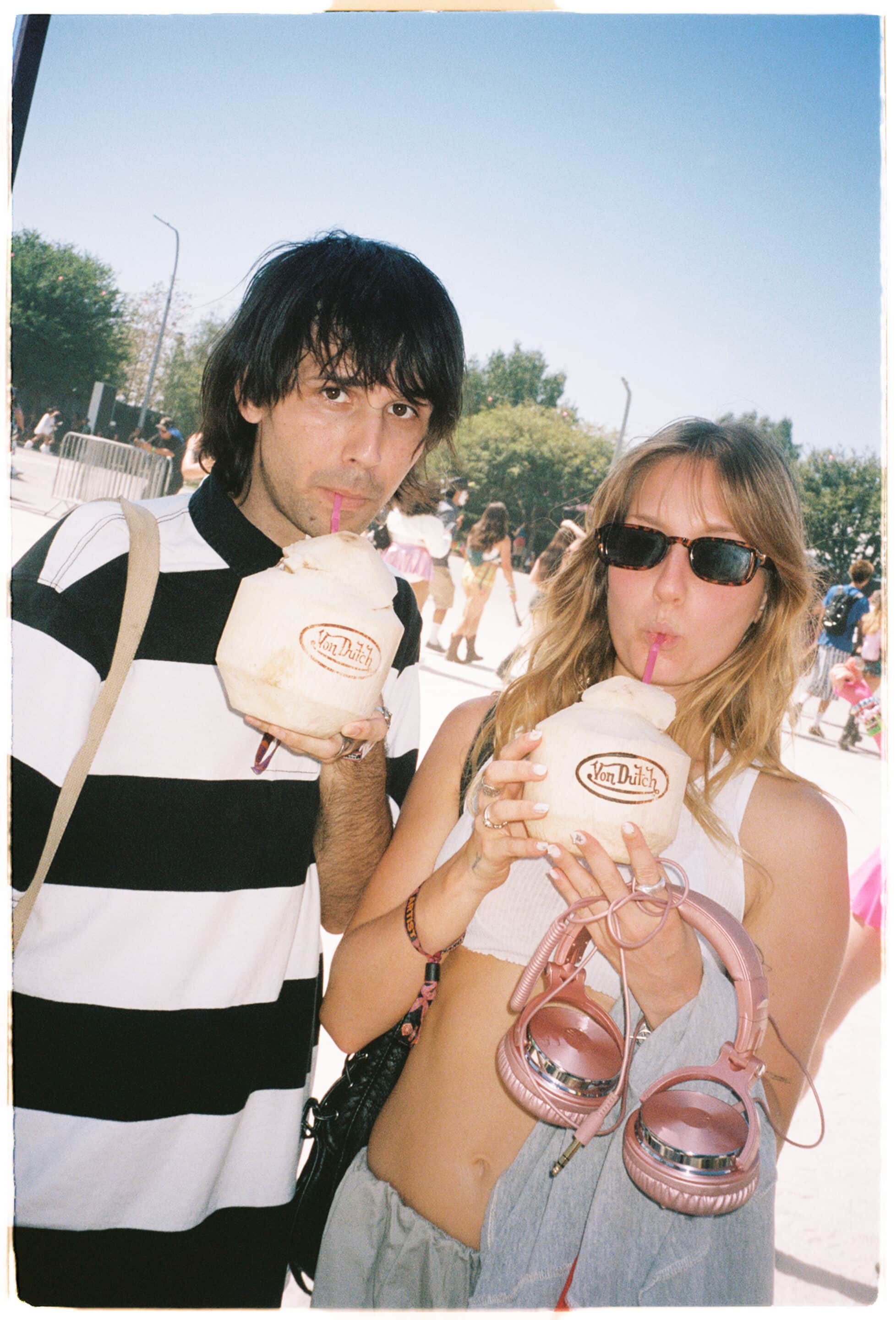
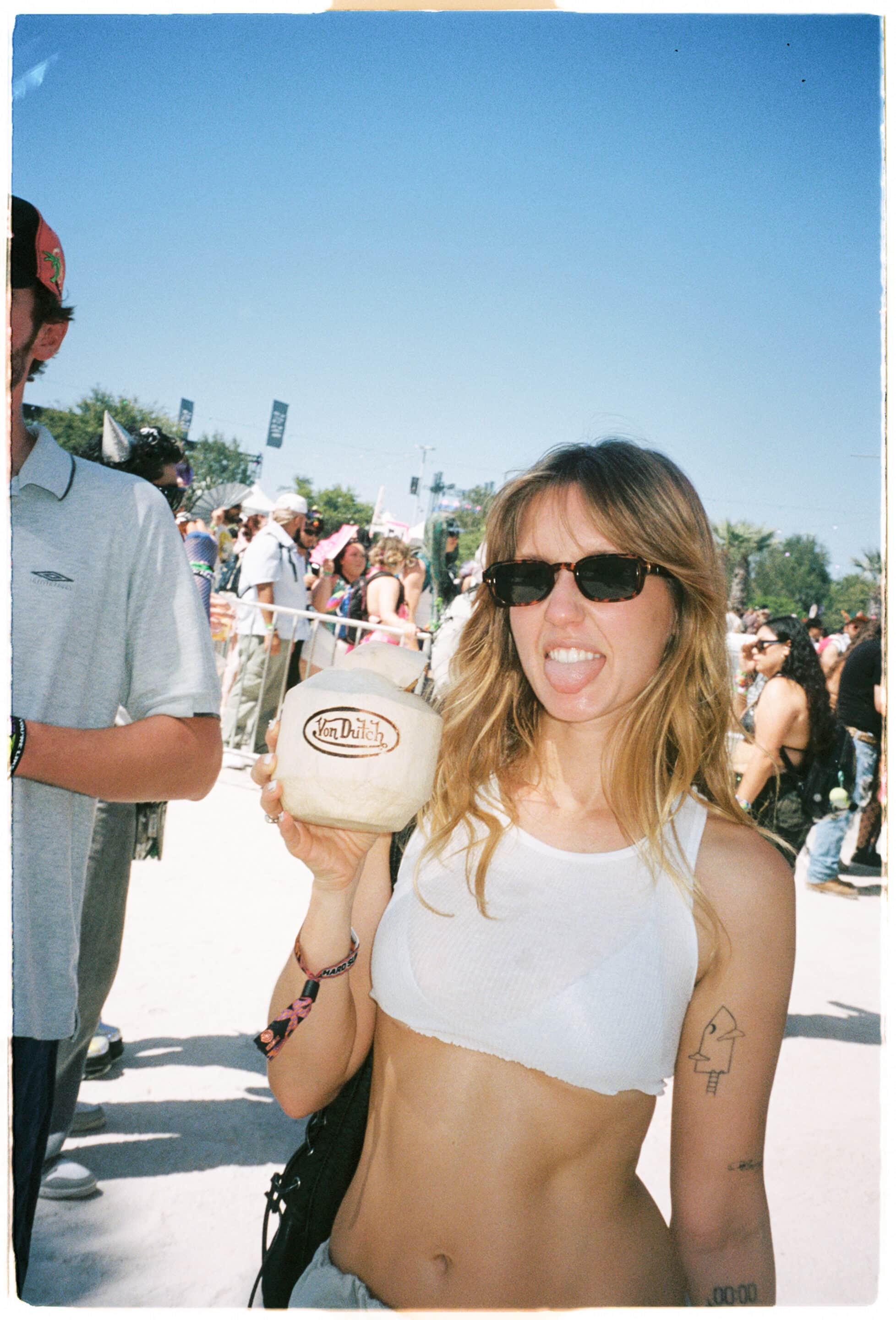
Your event series STUDIO5400 has become an important part of Los Angeles’ dance music community. What inspired you to build a space that goes beyond performing and instead focuses on bringing people together?
When I first came to LA I didn’t really know anyone, and I made so many of my best friends here now through the community that I found in nightlife.
That’s not to say all LA nightlife is rooted in community and connection, haha, because it’s definitely not, but when you find it, it’s really special. I grew to really appreciate what a safe, expressive space in nightlife can do for people.
With STUDIO5400, I wanted to expand on those spaces to bring people together in a safe and inclusive way. My goal has always been to book primarily femme-identifying acts, which has also allowed me to meet and connect with so many women in the dance space, which is always inspiring and reassuring.
You grew up in South Florida before making Los Angeles your creative home. How have those two places shaped your musical identity, and where do you hear each influence in your work today?
I grew up listening to a ton of R&B and rap, which is, like, the foundation of my love for music and writing. Like, that’s who I am at my core.
In South Florida, I watched the influence the underground internet scene had on rap in the 2010s and a lot of genre-bending writing and production that came out of it, which always inspired me.
When I came to LA, though, that’s when I really saw club music bring people together. LA has a special way of fostering, like, micro-communities tied to shared passions for subgenres that never feel exclusive and have always felt welcoming in my experience.
My love for dance and electronic music really developed here, honestly.
Your DJ sets move effortlessly through house, breaks, and unexpected sounds. When you’re behind the decks, are you trying to tell a story, create an emotional arc, or simply follow the energy of the room?
I really do follow the energy of the room. That has always been my lighthouse, and I’ve never really let myself plan sets out too much because I feel like it takes me out of it.
I like hearing transitions and moments for the first time with the crowd because it makes me feel closer to the relationship between me and them during a set.
That said, there is always a rotating handful of, like, five songs that I know make for a big emotional moment that I keep on hand for any set. They change every two or three months.
Eventually I want to curate hybrid sets that feel really intentional as far as a sonic journey, but for now I lean on the symbiotic relationship between me and whoever’s dancing!
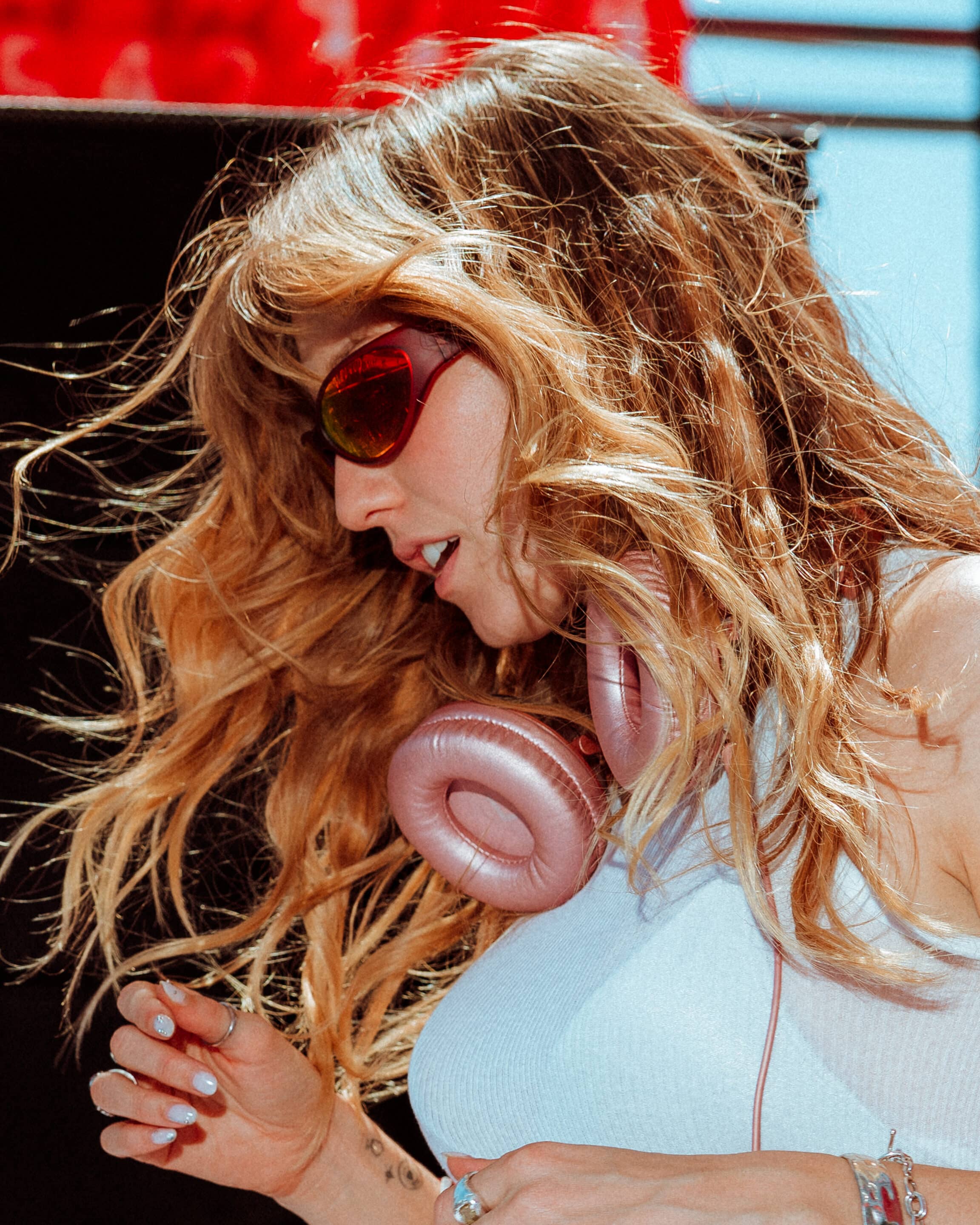
Photo by Orhun Uygur I www.turkphotos.com
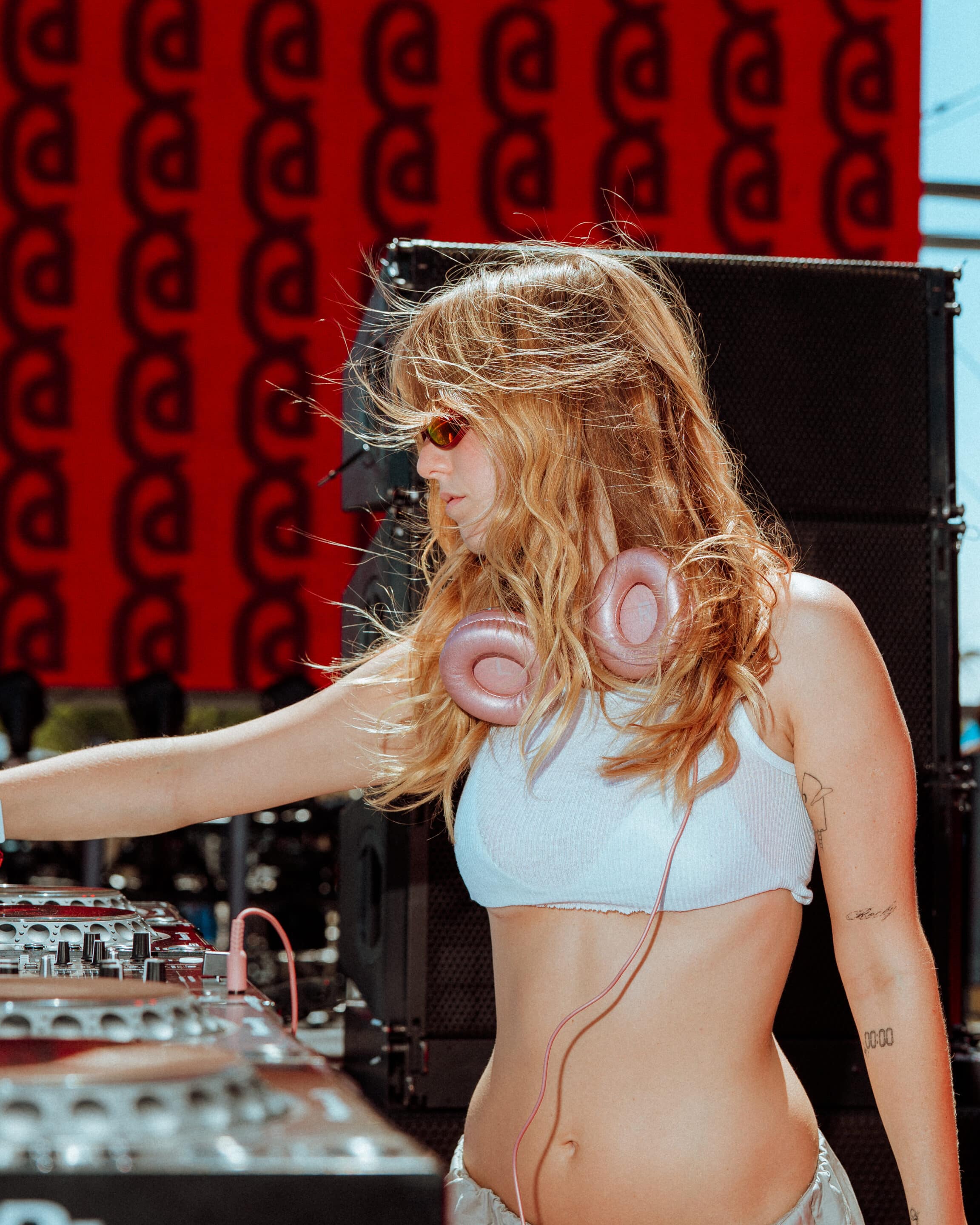
Photo by Orhun Uygur I www.turkphotos.com
Dance music is often associated with nightlife, but your work also carries an intimacy that feels almost cinematic. How do you balance creating tracks that work in a club while still rewarding someone listening alone with headphones?
I’m so glad that feeling carries through to y’all!
I’m always trying to find ways to strike that balance, but I think the fact that when I’m writing and singing the vocals that end up on these dance tracks, I’m usually writing to something smoother, like just chords, and then building out the energy around it afterwards with the production.
So the toplines come from a really sensitive, vulnerable place a lot of the time, and then they take on a new life from there, but the energy stays with them, I guess.
I used to be scared to use lyrics in dance music, like that it made it less dance-y, but I think there’s a cool balance in the in-between.
As someone who produces, performs, and designs everything yourself, how do you know when a project is truly finished? Is there a point where you have to let go of perfection and trust your instincts?
I think what makes this hard for me is less of a, like, reaching for my definition of perfection and more of imagining new lives that projects could take on if I keep tinkering with them.
That can sometimes lead to something really cool, but sometimes it just takes you further from what was working and opens up Pandora’s box of experimentation, you know?
The truth, though, is sometimes you need to do that, step away, and then listen back and realize, “Oh, I like the other version better,” to know.
You’re entering a new chapter with your upcoming EP. Without giving too much away, what conversations, emotions, or experiences are shaping this body of work, and how does it differ from HEADPHONES?
Yes! I think with this upcoming project I’ve given myself a bit more freedom to really follow the sounds that have been calling to and inspiring me, rather than putting pressure on myself to fit into a mold of what I imagine people might expect of me or a vision of who I want to be.
It took a minute to get there, and I attribute it to a lot of really special conversations and people that helped me accept that I can trust my own vision and trust that if it feels authentic and true to me, it will find people it feels authentic and true to as well.
I’m lucky to be around and work with a lot of incredibly creative people who push me to try and figure out what it means to be myself.
Community seems to be just as important to you as creativity. In an industry that can often feel competitive, what does building genuine creative spaces like STUDIO5400 teach you about collaboration and connection?
Definitely, community and creativity feel really linked for me.
I think everything good I’ve ever created, especially with music, can be traced back to being inspired by people around me. When a community not only welcomes you but also challenges you, I feel like you’re able to expand your perspective, which I think is really important in creativity.
Mundane is fascinated by artists who create complete worlds around their music. When listeners experience your next EP—from the production to the visuals to the live shows—what do you hope they understand about you that they haven’t seen before?
I’m hoping that the vulnerability not only in the lyrics but also in the genre exploration comes across.
I’ve always been sensitive, in my music and in everything—anyone who knows me knows, haha. I love to party and have fun, that’s definitely a big part of it all, but I want people to see more of a window into the other half of it, which is a lot of overthinking, haha, and that that side can be positive and worth sharing too.
Perhaps that is the most interesting space this next chapter occupies: between the party and what happens inside your head when the party ends.
The dance floor doesn’t have to erase introspection. A club record doesn’t have to sacrifice storytelling to move a room. Vulnerability doesn’t necessarily reduce the energy of electronic music; sometimes it gives all that movement somewhere meaningful to go.
After HEADPHONES, the question seems to be shifting from whether those contradictions belong together to how far they can be pushed.
And for an artist increasingly willing to trust that instinct, the answer may be found somewhere between a pair of headphones, a crowded Los Angeles dance floor and whatever comes next.