The Seattle trio turns heartbreak, memory, friendship, and change into a debut album that understands hope less as certainty than as something you practice until it starts to feel true.
There is a quiet contradiction inside the title Tomorrow Will Be Better.
Hope is usually presented as conviction: a confident belief that improvement is coming. But for waltzerr, the Seattle indie rock trio led by vocalist and songwriter Emily Waltzer, hope began somewhere much less stable.
It started as wishful thinking.
“When I first started writing this record, I was in a very back-and-forth, almost 10-year relationship with someone I had known since I was a teenager,” Waltzer says. “It’s strange when you’ve had so many good days and memories that when the new normal starts to become exhausting and bitter, you find yourself trying to convince everyone, including yourself, that it’s just a bad day.”
That tension—between what something used to be and what it has become—runs through the band’s debut album, Tomorrow Will Be Better, out August 28 via Share It Music.
Across ten tracks, waltzerr turn endings into movement.
The album deals with love, friendship, nostalgia, loss, and the peculiar emotional labor involved in recognizing when holding on has become its own form of avoidance.
“The old reality starts to become an excuse for not making hard decisions,” Waltzer says. “Or being stuck in the loop of wishful thinking.”
Now, with more distance, the title feels different.
“Change is scary,” she says, “but it’s not the end of the world.”
That shift—from trying to preserve the past to accepting uncertainty—becomes the emotional architecture of the record.
Loud Enough to Be Heard
Lead single “ciggy b” captures one of those strange afterimages that remain once a relationship is technically over.
The song began after Waltzer’s ex told her he was attending a show at a venue directly across from her apartment.
“He let me know that he was there and how all he could think about was if he was going to run into me,” she says.
She wasn’t there.
What remained was the absurdity of how present someone can remain even after they are gone.
“It made me laugh at how much people can just get stuck in your mind, or even the yearning to stay so front of mind in others,” Waltzer says.
She calls the emotion “kind of bratty,” but harmlessly so.
That attitude suits the song.
“ciggy b” pairs confessional writing with gritty guitars, creating a tension between emotional exposure and sonic insistence.
Waltzer did not necessarily design that contrast from the beginning.
“I honestly try not to think too much about forcing a certain sound onto a song,” she says.
But by the time the band entered the studio, her relationship to the lyrics had changed.
“I could now see how much those lyrics were a plea for attention,” she says, “and what better way to get attention than loud gritty guitars.”
It is a perfect waltzerr move: self-awareness without self-punishment.
The song understands its own neediness and amplifies it.
From Acoustic Songs to a Band Identity
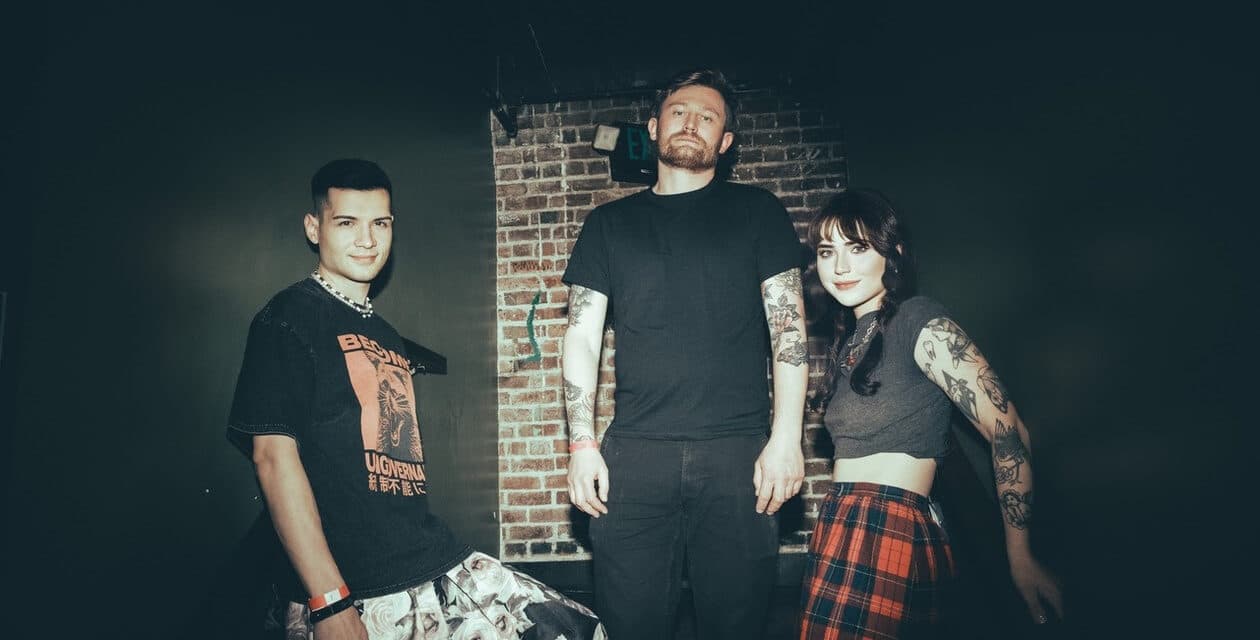
waltzerr began in 2023 with Waltzer’s songwriting before expanding into a trio with Anthony Coraggio on bass and Schuyler Jensen on guitar.
That evolution significantly changed the music.
“Every song starts off on an acoustic guitar,” Waltzer says. “And with how I play, every song starts off sounding like an indie folk song.”
What happens next is where waltzerr becomes a band.
The three members come from different musical backgrounds and have different tastes, but instead of treating that as a problem to solve, they use the friction productively.
“It’s fun working with the two of them to come up with a cohesive sound,” Waltzer says, “because we all come from very different backgrounds of music, and honestly all have pretty different taste, but seem to know exactly what we want for our own songs.”
Their process is also unusually fragmented.
Because Waltzer lives in a different state from the other two members, songs are often assembled in layers, with files sent back and forth before the band finally gets into the same room.
Only then do the songs fully reveal themselves.
“Once we get into a studio and have everyone playing together, we really get to sink our teeth into what we want the songs to be,” she says.
Sometimes that means last-minute structural changes.
Sometimes chord changes.
Sometimes simply discovering that the arrangement everyone imagined was not actually the one the song needed.
That flexibility becomes crucial across Tomorrow Will Be Better.
The Importance of Space
One of the album’s strengths is its refusal to treat quiet songs as lesser versions of loud ones.
The record moves between shimmering guitars, heavier indie rock, open arrangements, and moments of much more intimate reflection.
For Waltzer, the key was learning not to fill every space.
“I think a lot of it came down to not being afraid of space,” she says.
That decision allows the album to build contrast naturally.
“I hate when every song on a record sounds the same,” she explains, “and we didn’t want the quieter tracks to feel like smaller versions of the louder ones.”
The quieter songs needed their own kind of weight.
The band approached that by adding vocal textures where necessary, leaving other sections deliberately open, and letting restraint become a form of tension.
Those spaces then make the louder moments hit harder.
It is a useful metaphor for the album itself.
Not everything has to be resolved immediately.
Sometimes absence creates the shape.
A Record Built From Letting Go
Tomorrow Will Be Better was not written as a concept album.
The larger narrative emerged afterward.
“This record was definitely patched together,” Waltzer says, “with various songs I had written throughout the year, about different people in my life.”
There was no predetermined theme.
She simply happened to experience multiple versions of letting go in a relatively short period of time.
“I wasn’t writing for a specific theme,” she says. “I just happened to have multiple examples of having to let go happen in a short amount of time.”
When the songs were assembled, the throughline became impossible to miss.
Love ending.
Friendships changing.
Old identities falling away.
Memory becoming less useful as evidence for what the present should still be.
The album’s cohesion comes precisely from the fact that none of it was forced.
“It makes it feel more like a complete story with an end,” Waltzer says.
Seattle Without the Mythology
It is almost impossible to make guitar music in Seattle without encountering the city’s mythology.
But waltzerr seem much more interested in the Seattle happening around them now.
“Seattle has such a diverse music scene now and there is a strong sense of community that backs it,” Waltzer says.
When the band first formed, they did not have a clear idea of what waltzerr was supposed to become.
That uncertainty might have pushed them toward imitation.
Instead, the local scene gave them permission to take their time.
“We were lucky to meet some really cool people in the scene who are making music they genuinely care about,” Waltzer says, “and that helped us avoid chasing a specific sound and gave us permission to take the time to experiment, and focus on developing our own identity.”
That local connection extends beyond aesthetics.
The band is releasing the album through nonprofit label Share It Music, with a portion of proceeds benefiting Washington-based food access organization Northwest Harvest.
For Waltzer, that partnership made sense because it gave the release a tangible relationship to the place that helped shape it.
“We wanted to connect to something happening in our own community,” she says.
The band hopes that relationship grows beyond a single album.
“We’d definitely like to keep finding ways for the band to be involved in our local community beyond just playing shows.”
In Conversation with waltzerr
MUNDANE: Tomorrow Will Be Better is such a hopeful title for an album that spends a lot of time inside heartbreak, change, and the difficulty of moving forward. Is that title something you genuinely believe, or is there a little bit of wishful thinking embedded in it?
EMILY WALTZER: Tomorrow Will Be Better was definitely wishful thinking at the time.
When I first started writing this record, I was in a very back-and-forth, almost 10-year relationship with someone I had known since I was a teenager. It’s strange when you’ve had so many good days and memories that when the new normal starts to become exhausting and bitter, you find yourself trying to convince everyone, including yourself, that it’s just a bad day.
The old reality starts to become an excuse for not making hard decisions. Or being stuck in the loop of wishful thinking.
Now that I’m a lot more removed from that time, I think the title rings more true, in how change is scary but it’s not the end of the world.
MUNDANE: “ciggy b” captures that strange period after a relationship ends when someone is gone but still seems to exist everywhere in your memory. What specific feeling or moment first became the foundation of the song?
EMILY WALTZER: “ciggy b” was written after my ex felt the need to tell me he was seeing a show at the venue right across from my apartment.
He let me know that he was there and how all he could think about was if he was going to run into me. I wasn’t at that show, but it made me laugh at how much people can just get stuck in your mind, or even the yearning to stay so front of mind in others.
It’s kind of a bratty feeling but in an honest/harmless way. I feel like “ciggy b” is kind of bratty in an honest/harmless way too.
MUNDANE: There’s a compelling contrast in “ciggy b” between the grittiness of the guitars and the vulnerability of the writing. When you’re arranging a song, how much do you think about using the instrumentation to push against the emotion rather than simply reinforcing it?
EMILY WALTZER: I honestly try not to think too much about forcing a certain sound onto a song.
I think with “ciggy b,” the lyrics were very confessional when writing them in the moment, but in the studio, I had a newer connection to the song.
I could now see how much those lyrics were a plea for attention and what better way to get attention than loud gritty guitars.
MUNDANE: waltzerr began with Emily’s songwriting before becoming a three-piece with Anthony and Schuyler. How did bringing the band together change the sound of these songs from their earliest versions to what we hear on the album?
EMILY WALTZER: Every song starts off on an acoustic guitar, and with how I play, every song starts off sounding like an indie folk song.
It’s fun working with the two of them to come up with a cohesive sound, because we all come from very different backgrounds of music, and honestly all have pretty different taste, but seem to know exactly what we want for our own songs.
I live in a different state from the two of them, so a lot of our songs are built layer by layer, as we send each other files back and forth.
Once we get into a studio and have everyone playing together, we really get to sink our teeth into what we want the songs to be—and a lot of times that means last-minute format changes or chord changes.
MUNDANE: The record moves between shimmering, expansive indie rock and much quieter moments of reflection. How did you approach dynamics across the album so that those intimate moments could coexist with songs designed to hit much harder live?
EMILY WALTZER: I think a lot of it came down to not being afraid of space.
I hate when every song on a record sounds the same, and we didn’t want the quieter tracks to feel like smaller versions of the louder ones. They needed to have their own kind of intensity.
We went about this by adding interesting textures to vocals, or just leaving things deliberately open, allowing the quieter songs to help create the tension needed to make the bigger songs have more of an impact.
MUNDANE: Tomorrow Will Be Better explores love, friendship, endings, and the tension between holding on and letting go. Did you realize those themes were connecting the songs while you were writing them, or did the larger emotional narrative only become clear once you started assembling the record?
EMILY WALTZER: This record was definitely patched together, with various songs I had written throughout the year, about different people in my life.
I wasn’t writing for a specific theme, I just happened to have multiple examples of having to let go happen in a short amount of time.
I think it’s nice when it kind of comes together like that. It makes it feel more like a complete story with an end.
MUNDANE: Seattle has such a heavily mythologized guitar-music history, but its contemporary indie scene has its own identity. How has actually being part of Seattle’s current music community shaped waltzerr, beyond the city’s musical legacy?
EMILY WALTZER: Seattle has such a diverse music scene now and there is a strong sense of community that backs it.
When we first started we really didn’t know what we were doing or what we wanted to be.
We were lucky to meet some really cool people in the scene, who are making music they genuinely care about, and that helped us avoid chasing a specific sound and gave us permission to take the time to experiment, and focus on developing our own identity.
MUNDANE: You’ve already spent significant time playing these songs live throughout the West Coast. Did touring change any of the arrangements or reveal things about the songs that you hadn’t noticed while writing and recording them?
EMILY WALTZER: Songs can sound so different when playing them live versus listening to a studio version. It’s honestly a great way to get real-time feedback.
Some songs you just want to really rip on stage so you add a couple bars of guitar solo, and some choices made in studio just didn’t sound right live so you have to pivot.
Especially with some of the quieter songs that have filtered sounds. Sometimes that’s just too much in a live setting, when it’s harder to nail down those dynamics, and you have to simplify.
MUNDANE: You’re releasing the album through nonprofit label Share It Music, with part of the proceeds benefiting Northwest Harvest. What made that partnership feel right for this debut, and is connecting the band to your local community something you want to continue building into the project?
EMILY WALTZER: It felt right because we wanted to connect to something happening in our own community and Northwest Harvest works directly on food access here in Seattle and across Washington.
We are incredibly grateful for our community and the proceeds from the record gives our release a tangible way to contribute.
We’d definitely like to keep finding ways for the band to be involved in our local community beyond just playing shows.
MUNDANE: Your debut arrives only a few years after the band formed, and you’re celebrating it with a hometown release show at Seattle’s Sunset Tavern. When you imagine that night and finally having all ten songs out in the world, what do you hope this record establishes about who waltzerr is and where you might go next?
EMILY WALTZER: I hope the record establishes us as a band that’s willing to explore and not stay in one lane.
These ten songs have a lot of different sides to them, but they still feel connected, and this feels like the first release we’ve had that was genuinely us.
Playing the release show in our hometown makes it even more meaningful because a lot of the community around us helped shape these songs.
I’d like to keep pushing ourselves, explore more genres, and writing styles. It really has only been a couple years as a band, so there is so much more to learn and grow from.
Tomorrow, Eventually
There is something refreshing about an album titled Tomorrow Will Be Better that refuses to pretend improvement happens immediately.
The record understands something more realistic.
Tomorrow can be better and still hurt.
Leaving can be correct and still feel like loss.
A relationship can contain years of beautiful memories and still become something you need to leave behind.
Hope does not invalidate grief.
It simply prevents grief from becoming the only imaginable future.
That distinction gives waltzerr’s debut its emotional weight.
These songs are not written from the perspective of someone who has mastered letting go.
They document the process of learning how.
And because the songs emerged from several kinds of endings rather than one neatly contained story, Tomorrow Will Be Better becomes broader than breakup music.
It is a record about transitions.
About recognizing when an old version of your life has stopped fitting.
About trusting the unfamiliar thing enough to move toward it anyway.
That same philosophy seems to be shaping the band creatively.
waltzerr do not want their debut to define the borders of what they are allowed to become.
“I hope the record establishes us as a band that’s willing to explore and not stay in one lane,” Waltzer says.
For a first album, that may be a more valuable statement than arriving with everything figured out.
There is time for the sound to change.
There are more songs to write.
More places to play.
More things to lose and discover.
And perhaps that is where the title finally stops sounding like wishful thinking.
Not because tomorrow is guaranteed to be better.
But because, after enough change, you begin to understand that tomorrow can be different.
Sometimes that is enough to keep moving.