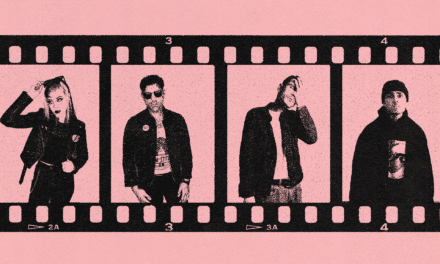
On his debut album Behaviour, British singer-songwriter Daniel Pickard turns social discomfort into a provocative world of French Touch, Italo disco, dark humor, and psychological contradictions. With his single “Nominee,” he explores the seduction of excess and the hidden impulses governing human behavior. In an exclusive conversation with MUNDANE, Pickard discusses Jung’s shadow self, British social repression, class, romantic disillusionment, and why music should sometimes make us uncomfortable.
There is something inherently theatrical about the way we behave in public.
We construct identities, perform versions of ourselves, and follow social conventions that often have very little to do with what we actually think or desire.
We learn when to speak, when to remain silent, when to appear confident, and when to disguise discomfort behind politeness.
And somewhere between the person we present to the world and the person we privately recognize, an entire universe of contradictions begins to emerge.
For British singer-songwriter Daniel Pickard, those contradictions are endlessly fascinating.
The Coventry-raised, London-based musician has spent years observing the strange rituals of human interaction: the unspoken hierarchies of workplaces, the absurdity of social expectations, the uncomfortable relationship between pleasure and power, and the ways people conceal their insecurities behind carefully maintained appearances.
His debut solo album, Behaviour, released October 23, 2026, independently via AWAL, transforms those observations into an eccentric collection of musical character studies.
Drawing from French pop, Italo disco, cinematic arrangements, and the sardonic storytelling tradition of Serge Gainsbourg, Pickard creates a world where elegant production coexists with uncomfortable subject matter.
The result is music that feels simultaneously sophisticated and mischievous.
Seductive and unsettling.
Romantic and deeply cynical.
His single “Nominee” captures that tension particularly well.
Built around shimmering synth-pop textures and a relaxed, danceable French Touch groove, the track follows a young man’s awakening to a world of pleasure, excess, and complicated power dynamics.
But beneath its polished surface lies something more psychologically ambiguous.
The song explores the moment when curiosity becomes desire, when desire begins challenging moral boundaries, and when the pursuit of pleasure exposes aspects of ourselves we might prefer to keep hidden.
“‘Nominee’ is a young man’s awakening to a world of excess and the struggle of power dynamics,” Pickard explains.
The narrator becomes fascinated by a beautiful tour guide, allowing his imagination to construct a world of possibilities and consequences.
It’s a story about youthful naivety, but also about the peculiar power that desire can exercise over someone who doesn’t yet understand it.
And like much of Behaviour, the song is less interested in providing moral answers than in examining the strange mechanisms behind human conduct.
“I like to pose questions that people don’t want to think about or answer,” Pickard says of his broader artistic philosophy.
“Not forcing an answer. Just playing around with it.”
The Seduction of Breaking the Rules
At the center of “Nominee” is a question that extends far beyond its particular narrative.
Why are we attracted to experiences that challenge our moral boundaries?
Is transgression a natural human impulse, or does society manufacture forbidden desires by constantly defining what is acceptable?
Pickard doesn’t believe there’s a universal answer.
Instead, he sees human behavior as the product of individual longing.
“I believe it depends on the appetite of the person and their longing,” he tells MUNDANE.
“We all long for something, or feel the absence of something in our lives and some of us choose to challenge societal norms and ethics to make us feel alive.”
Others, he observes, find reassurance in the safety of established expectations.
The distinction becomes one of the album’s recurring concerns.
Some people seek excitement through disruption.
Others construct their lives around stability.
And many exist somewhere between those extremes, privately fantasizing about possibilities they would never publicly acknowledge.
For Pickard, those contradictions provide fertile ground for songwriting.
Rather than presenting desire as something inherently liberating or destructive, he examines its relationship to insecurity, imagination, and power.
The protagonist of “Nominee” isn’t necessarily someone who understands the consequences of his own impulses.
He is someone discovering that pleasure can be both exhilarating and destabilizing.
And the song’s relaxed musical atmosphere makes that uncertainty all the more compelling.
The production invites listeners to surrender to the rhythm, even as the lyrics raise questions about what surrender might actually mean.
It’s an effective contradiction.
The music feels carefree.
The story is anything but.

The Strange Performance of Being British
Although Behaviour moves through different cities, eras, and social environments, much of its psychological foundation emerges from Pickard’s observations of British society.
Particularly its obsession with politeness.
The tendency to disguise emotion.
And the uncomfortable relationship between conformity and social acceptance.
For Pickard, one of the most absurd aspects of contemporary life is the way professionalism can sometimes become synonymous with emotional detachment.
“It’s the robotic essence I critique,” he explains.
“I find it most visible in workplaces, where I have found the norm to be: the less human as possible the more the pat on the back.”
It’s a striking observation about the expectations governing modern professional environments.
People are often rewarded for appearing composed, predictable, and emotionally neutral.
Authenticity becomes something to manage.
Individuality becomes a potential inconvenience.
And the ability to suppress discomfort can be mistaken for competence.
Pickard connects this tendency to a broader cultural reluctance to challenge established systems.
“In Britain, we are nervous to accept what it takes to actually make a difference and sticking one’s head above the parapet is largely banished through fear.”
He also suggests that these patterns of depersonalized communication existed long before the rise of AI-generated workplace correspondence.
The issue, in other words, isn’t simply technological.
It’s cultural.
And for an artist fascinated by the gap between social performance and private desire, the modern workplace offers an almost inexhaustible supply of material.
On Behaviour, that fascination becomes especially explicit in “MD is a Pervert,” a song that targets the unsettling predictability of inappropriate managerial behavior.
The setting is deliberately mundane.
Corporate offices.
Uninspired furniture.
Ordinary professional routines.
But beneath that familiar surface lies the potential for manipulation, hierarchy, and abuse of power.
Pickard’s satire works by exposing how easily disturbing behavior can become normalized when it occurs within institutions designed to appear respectable.
When Your Shadow Self Takes Control
The accompanying visualizer for “Nominee,” directed by Ben Poulton, expands the song’s psychological themes into an eccentric visual experiment.
Drawing on surrealism, retro karaoke aesthetics, and the symbolist imagery associated with René Magritte, the video features faceless figures, mannequins, theatrical props, and deliberately imperfect visual effects.
At its center is an alternative version of Pickard.
A character representing what he describes as his anti-me.
“There is the notion of Carl Jung’s shadow self here,” Pickard explains.
“I like to call it the anti-me — played by Ben in the video — who assumes control.”
In Jungian psychology, the shadow refers broadly to aspects of the personality that remain unacknowledged, rejected, or outside conscious identification.
For Pickard, that idea becomes a playful framework for examining the distance between public identity and private impulse.
The visualizer stages an encounter between the artist and an alternative version of himself, with both characters moving through a world of props and concealed identities.
But rather than attempting to create a perfectly convincing illusion, the video intentionally reveals its own artificiality.
The green-screen effects are not entirely seamless.
The disguises are incomplete.
The subconscious figure isn’t as hidden as it imagines itself to be.
That imperfection is central to the joke.
“My subconscious mind is making fun of me but is not completely in disguise as it thinks,” Pickard explains.
The result is a visual metaphor for the uncomfortable possibility that we understand our own motivations far less clearly than we believe.
Poulton, who also served as creative director for Behaviour and designed the album and single artwork, approached the visual identity through a related question.
What happens when you remove the subject from an image?
How much of someone’s identity comes from the person themselves, and how much comes from their surroundings?
For the “Nominee” artwork, Poulton recreated a photograph of Pickard using a mannequin.
The visualizer develops that idea further by reversing the relationship between human and artificial figure.
Instead of dressing mannequins to resemble people, the performers make themselves resemble mannequins.
Their faces disappear.
Their identities become abstracted.
And what remains is a strange theatrical representation of personality.
For Pickard, the effect is more personal than it might initially appear.
When asked whether his artistic persona exaggerates his real personality, he offers a surprisingly revealing answer.
“It’s very much me, I guess. If anything, I water it down as a means to hold a candle in the dark.”
His characters aren’t simply inventions designed to distance him from uncomfortable subjects.
They’re also ways of recognizing aspects of himself within the people and situations he describes.
“Lots of songs play on the characters in subject and how I find myself relating to them, this is the irony and where the satire begins.”
Music That Hugs You While the Words Scratch You
One of the most distinctive qualities of Behaviour is its contrast between musical elegance and lyrical discomfort.
Pickard draws heavily from the textures of French Touch, synth-pop, and Italo disco.
The music often feels warm, rhythmic, and inviting.
But the stories are populated by morally ambiguous characters, awkward encounters, loneliness, debauchery, and emotional insecurity.
It might be tempting to interpret that contrast as a carefully constructed artistic strategy.
A way of seducing listeners into confronting subjects they might otherwise avoid.
But Pickard insists the relationship developed more naturally.
“No, I’m not that tactful but I like your thinking,” he tells MUNDANE.
He was initially attracted to the production style itself.
Only after completing the record did he fully recognize how dramatically the music’s warmth contrasted with the lyrical content.
Still, he appreciates the resulting provocation.
“I like the provocation though, where the music hugs you but the words scratch you.”
It’s perhaps the most concise description of his artistic identity.
The pleasure of listening becomes inseparable from the discomfort of interpretation.
A seductive groove draws the audience into a story that gradually reveals something less reassuring.
And that contradiction gives Pickard room to explore difficult subjects without abandoning humor or musical accessibility.
The approach recalls a long tradition of pop music that disguises darker narratives beneath elegant arrangements.
But Behaviour also reflects Pickard’s particular fascination with social observation.
He’s not simply interested in describing emotional experiences.
He wants to investigate the environments that shape them.
A Collection of Stories From Society’s Strange Corners
Across its ten tracks, Behaviour unfolds like an eccentric anthology of human behavior.
The settings are unusually specific.
A nineteenth-century gay brothel.
An extravagant hotel afterparty.
A New York basement bar.
São Paulo’s Guarulhos airport.
A corporate office decorated with uninspired IKEA furniture.
Each environment becomes a stage on which Pickard examines a different aspect of human desire, insecurity, or social performance.
On “First Past the Pose,” he imagines a Victorian gay brothel through a dreamlike narrative.
On “Room Service,” the decision to remain at a hotel afterparty becomes a way of avoiding loneliness.
On “MD is a Pervert,” workplace hierarchies become the foundation for a critique of disturbing managerial behavior.
And on “Love on a Lie,” an older composition rooted in romantic disappointment introduces a more explicitly personal dimension.
What connects these seemingly unrelated stories is Pickard’s fascination with people who find themselves trapped between desire and social expectation.
He describes himself as a Romantic with a capital R.
Someone who is drawn to the emotional possibilities of unfamiliar places and historical moments.
“I fantasise a lot about what it would have been like back then or in a certain environment and what my role or position would be.”
For him, a song begins when the imagined emotional experience becomes compelling enough to explore.
But the album is not entirely fictional.
Pickard also draws from his experiences moving through different social environments and encountering people whose backgrounds and beliefs differ from his own.
“I have spent my adult life brushing shoulders with those that do not sing from the same hymn book as me,” he explains.
“This has helped me learn the spectrum of society and its class system.”
He considers himself primarily an observer.
But only just.
That qualification matters.
Because the album’s satire doesn’t position Pickard as a morally superior narrator standing outside the contradictions he describes.
Instead, he recognizes himself within them.
His observations are sharpened by the uncomfortable knowledge that he is also part of the world he’s criticizing.
Humor as Both Protection and Exposure
For all its social criticism, Behaviour is not a relentlessly serious record.
Humor is central to Pickard’s approach.
Sarcasm.
Wordplay.
Self-deprecation.
The absurdity of people behaving badly while attempting to maintain appearances.
But beneath those comedic gestures lies a persistent sense of emotional vulnerability.
Loneliness appears throughout the album.
So does insecurity.
And the desire for connection often coexists with a fear of revealing too much.
Pickard acknowledges that humor serves two seemingly contradictory purposes.
It can make difficult emotions easier to express.
But it can also become a way of avoiding them.
“Yes to both,” he says when asked about that tension.
“I think humour is the longstanding antidote, if one can laugh about it then they can get over it, at least in the present.”
The qualification is important.
At least in the present.
Humor may temporarily relieve discomfort without necessarily resolving its underlying cause.
And in Pickard’s music, irony often functions as both a form of emotional honesty and a protective disguise.
The listener is invited to laugh.
But the laughter doesn’t entirely eliminate the sadness beneath it.
That ambiguity is part of what makes Behaviour more than a collection of satirical character sketches.
It’s also a record about the difficulty of being sincere in a world that often rewards emotional performance.
French Touch, Italo Disco, and the Architecture of Behaviour
The album’s sonic identity reflects an equally expansive range of influences.
Pickard draws inspiration from artists including Serge Gainsbourg, Sébastien Tellier, Daft Punk, L’Impératrice, Ellie et Jacno, and SebastiAn, combining French pop sophistication with the rhythmic exuberance of Italo disco.
There is also a cinematic quality to the arrangements, supported by contributions from an international group of musicians and producers.
Among them are composer and violinist Owen Pallett, known for work with Arcade Fire, Charlotte Gainsbourg, and Pet Shop Boys, and composer Michael Stein, associated with the music of Stranger Things.
Pickard began developing the album during the first COVID-19 lockdown in 2020 while isolating with his family in Coventry.
The unusual circumstances created opportunities for remote collaboration.
He worked with co-producer Max Prior, recorded vocals with Grammy-winning mixer Eduardo De La Paz at Toast studio in London, and developed the record with additional contributions from Dani Spragg, Alex Ball, Carlos Trilha Müller, and French vocalist Mahault.
The album was mastered in Paris by Antoine Chabert, whose credits include Charlotte Gainsbourg, Christine and the Queens, and Daft Punk.
Despite the breadth of collaborators, Pickard emphasizes that the album’s identity was established early.
“The album and its aesthetic was very much formed early on in the demo process.”
He gave contributors freedom to explore their ideas, but found that many naturally gravitated toward the arrangements he had already developed.
For him, the lesson was less about controlling every detail than about choosing collaborators whose creative instincts he trusted.
“I think the key is to collaborate with people you admire and let them do their thing.”
The result is an album whose musical sophistication contrasts sharply with the unruly personalities inhabiting its songs.
The characters may be impulsive, insecure, or self-destructive.
But the music itself is carefully constructed.
“The album is very purposeful,” Pickard says.
“I’m not chancing it musically.”
From Half Loon to a More Personal Artistic World
Before launching his solo project, Pickard was a member of the art-pop band Half Loon, which he formed in 2013 alongside actor and musician Charlie Heaton.
The group released an EP, performed at festivals, and toured before disbanding in 2017.
Pickard’s relationship with songwriting, however, began earlier.
After picking up the guitar at sixteen, he moved to London for university, living above the Big Red pub on Holloway Road in an unconventional student residence that had previously been a Young Offenders Institute.
It was there that he began translating observations and experiences into lyrics and songs.
What started with open mic performances eventually developed into a musical career.
And with Behaviour, he has arrived at a particularly distinct creative identity.
Rather than following the conventions of confessional singer-songwriter music, he approaches his work as a series of encounters with people, places, and psychological contradictions.
Some stories are imagined.
Others draw from lived experience.
And some, like “Love on a Lie,” carry emotional material that has evolved over more than a decade.
Originally written in 2011 following the breakdown of his first major romance, the song has been revisited and adapted over time.
Pickard explains that he changed certain lyrics to create a greater sense of distance from the original experience.
“It’s more in the past tense now to suit the mood and a reflection as opposed to a knee-jerk reaction.”
Its placement as the album’s closing track feels significant.
After a record populated by elaborate characters and social observations, “Love on a Lie” offers a glimpse of an earlier, more directly personal version of its creator.
Pickard doesn’t feel disconnected from that younger self.
But he recognizes how much he has changed.
And that distance gives the song a different emotional weight.
In Conversation With Daniel Pickard
MUNDANE: Your new single “Nominee” explores a young man’s introduction to a world of pleasure, excess and complicated power dynamics. Do you think we’re naturally drawn to experiences that challenge our moral boundaries, or is the desire to transgress something society teaches us by constantly telling us what we shouldn’t want?
Daniel Pickard: I believe it depends on the appetite of the person and their longing. We all long for something, or feel the absence of something in our lives and some of us choose to challenge societal norms and ethics to make us feel alive. On the other hand, there are others that find comfort in safety by living through what’s expected of them. This is very much a subject I address on the album.
MUNDANE: Behaviour seems fascinated by the contradictions of polite British society, particularly the distance between how people present themselves and what they actually desire. What do you find most absurd about the unwritten social rules we follow, and why do you think people are so invested in maintaining appearances?
Daniel Pickard: It’s the robotic essence I critique. I find it most visible in workplaces, where I have found the norm to be: the less human as possible the more the pat on the back. It’s also a cultural thing, where in Britain, we are nervous to accept what it takes to actually make a difference and sticking one’s head above the parapet is largely banished through fear. This precedes emails written with AI.
MUNDANE: The visualizer for “Nominee” draws on Jung’s concept of the shadow self, with an alternative version of you gradually taking control. How much of your artistic personality is an exaggerated version of who you really are, and have you ever discovered something uncomfortable about yourself through a character you’ve created?
Daniel Pickard: It’s very much me, I guess. If anything, I water it down as a means to hold a candle in the dark. Lots of songs play on the characters in subject and how I find myself relating to them, this is the irony and where the satire begins.
MUNDANE: There’s an intriguing contrast between the elegance of your French Touch-inspired production and the often uncomfortable, morally ambiguous situations in your lyrics. Is that contrast a deliberate way of seducing listeners into confronting subjects they might otherwise prefer to avoid?
Daniel Pickard: No, I’m not that tactful but I like your thinking. I was seduced by that style of production and only realised after we had finished that the music, generally speaking, is quite upbeat and warm compared to the words. I like the provocation though, where the music hugs you but the words scratch you.
MUNDANE: Your songs move between Victorian brothels, hotel afterparties, airport terminals and corporate offices, almost like a collection of short stories about human behavior. What makes a particular place or social interaction interesting enough to become a song, and do you see yourself more as a participant in these worlds or an observer standing slightly outside them?
Daniel Pickard: It’s almost as if I lived them all… I fantasise a lot about what it would have been like back then or in a certain environment and what my role or position would be. I’m a Romantic, with a capital R: If the feeling of the experience is strong enough then I’ll write about it. I also have spent my adult life brushing shoulders with those that do not sing from the same hymn book as me, this has helped me learn the spectrum of society and its class system. I would say I’m more of the observer on the album, but only just.
MUNDANE: Humor, sarcasm and self-deprecation are central to your songwriting, yet there’s often a genuine sense of loneliness or insecurity underneath them. Do you use humor to make vulnerability easier to express, or can irony sometimes become another way of avoiding emotional honesty?
Daniel Pickard: Yes to both. I think humour is the longstanding antidote, if one can laugh about it then they can get over it, at least in the present. I like to play on words and the album is a playful design; the water is lovely and warm once the plumber finishes the duties.
MUNDANE: “Heartbeats the Flaw” explores the extremes of romantic experience, while “Nominee” examines pleasure and power. Do you think contemporary relationships have become increasingly transactional, with people constantly negotiating status, attention and control rather than allowing themselves to be genuinely vulnerable?
Daniel Pickard: Absolutely.
MUNDANE: Your musical influences range from Serge Gainsbourg and Sébastien Tellier to Daft Punk and Italo disco, while Behaviour also features contributions from Owen Pallett and Michael Stein. How did working with musicians from such different creative backgrounds influence the album, and what did you learn about balancing meticulous artistic control with collaboration?
Daniel Pickard: Owen and Michael were sent the demos to the songs and largely stuck to the script, which we took as a compliment, given how talented they are. The album and its aesthetic was very much formed early on in the demo process. I gave them license to do as they please but Owen largely stuck to my string arrangements. Mahault, the French singer featured on the singles, would run her ideas over to me and it was difficult to choose because I was in love with her voice and found it hard to be objective. I think the key is to collaborate with people you admire and let them do their thing.
MUNDANE: You began working on Behaviour during the first pandemic lockdown, and the record has taken several years to reach its release. You also revisit a song, “Love on a Lie,” originally written in 2011. How does it feel to release music that contains different versions of yourself from different moments in your life? Do you ever feel disconnected from the person who originally wrote those songs?
Daniel Pickard: The lyrics to Love on a Lie have been adapted since I first wrote it, there was always the odd line I wasn’t too pleased with. It’s more in the past tense now to suit the mood and a reflection as opposed to a knee-jerk reaction. It also has my favourite line, I think, on the whole album. I’m not disconnected from that person but I have certainly grown up since then. It does feel like a different moment in time on the album, it’s probably why it’s the final track.
MUNDANE: You’ve described Behaviour as an album that confronts listeners with a kind of “take it or leave it” attitude, while admitting that you secretly hope they’ll embrace it. Is that contradiction—wanting to challenge people while still craving their approval—the central tension of being an artist? And what would you consider a successful reaction to an album designed to make people slightly uncomfortable?
Daniel Pickard: I think it is, to my mind, the only way to justify what I’m doing. I couldn’t write songs that aren’t challenging for me and the idea that it may challenge the listener is largely accidental and a makeup of who I am. I’m intrinsically a nihilist, and to harness that, I provoke. I get bored if I feel like someone isn’t being genuine and is too fixated on wrapping up. I’ve been to the gutter and I’ll tell you what I saw, I know you have, and I expect you to tell me your tale too. These are the relationships I hold valuable, and the success is to keep playing.
The Art of Making People Uncomfortable
There’s an important contradiction at the center of Daniel Pickard’s artistic philosophy.
He wants to challenge people.
But he also wants them to connect with what he’s created.
He embraces provocation, yet admits that the possibility of rejection makes him uncomfortable.
He approaches human behavior with cynicism, but remains fascinated by romance.
And although his music often exposes the absurdity of social conventions, he is equally aware of his own participation in them.
That tension is what gives Behaviour its distinctive personality.
The album doesn’t offer a neatly organized moral perspective.
Its characters aren’t divided into heroes and villains.
Its stories don’t necessarily arrive at satisfying conclusions.
Instead, Pickard presents a collection of human experiences shaped by desire, loneliness, insecurity, class, power, and the need to belong.
The music may be meticulously arranged, but the emotional landscape is deliberately untidy.
And perhaps that is precisely the point.
Human beings rarely behave with the consistency we demand from fictional characters.
We contradict ourselves.
We hide behind humor.
We pursue things we know might hurt us.
We criticize social systems while participating in them.
We want to be understood without always being willing to reveal who we really are.
Pickard doesn’t pretend to exist outside those contradictions.
If anything, he considers them essential to his work.
“I’m intrinsically a nihilist, and to harness that, I provoke,” he says.
But his provocation isn’t simply about shocking an audience.
It’s about creating the conditions for a more candid exchange.
“I’ve been to the gutter and I’ll tell you what I saw, I know you have, and I expect you to tell me your tale too.”
There’s an unexpected generosity in that invitation.
Beneath the sarcasm, cynicism, and theatrical absurdity, Behaviour ultimately asks listeners to participate in something more honest.
To acknowledge the strange, uncomfortable, sometimes ridiculous aspects of being human.
To recognize themselves in characters they might initially judge.
And perhaps to become a little less invested in pretending that they have everything figured out.
Pickard doesn’t need his audience to agree with him.
He doesn’t even need them to feel entirely comfortable.
But he wants them to engage.
Because for an artist whose work is built around examining the performances of everyday life, genuine engagement may be the most meaningful response of all.
The music invites you to dance. The lyrics ask you to look in the mirror. And Daniel Pickard seems perfectly content if you don’t entirely like what you see.
Daniel Pickard — Behaviour
Released: October 23, 2026
Label/distribution: Independent via AWAL
Single: “Nominee”
Visual direction: Ben Poulton
Co-producer: Max Prior
Mastering: Antoine Chabert
Photography: Sami Weller
Tracklist
- First Past the Pose
- Nominee
- Catastrophe
- Heartbeats the Flaw
- Interlude
- São Paulo
- MD is a Pervert
- Room Service
- A Bum Suspected of Murder
- Love on a Lie
Behaviour is available now via AWAL, alongside the single “Nominee” and its accompanying visualizer.