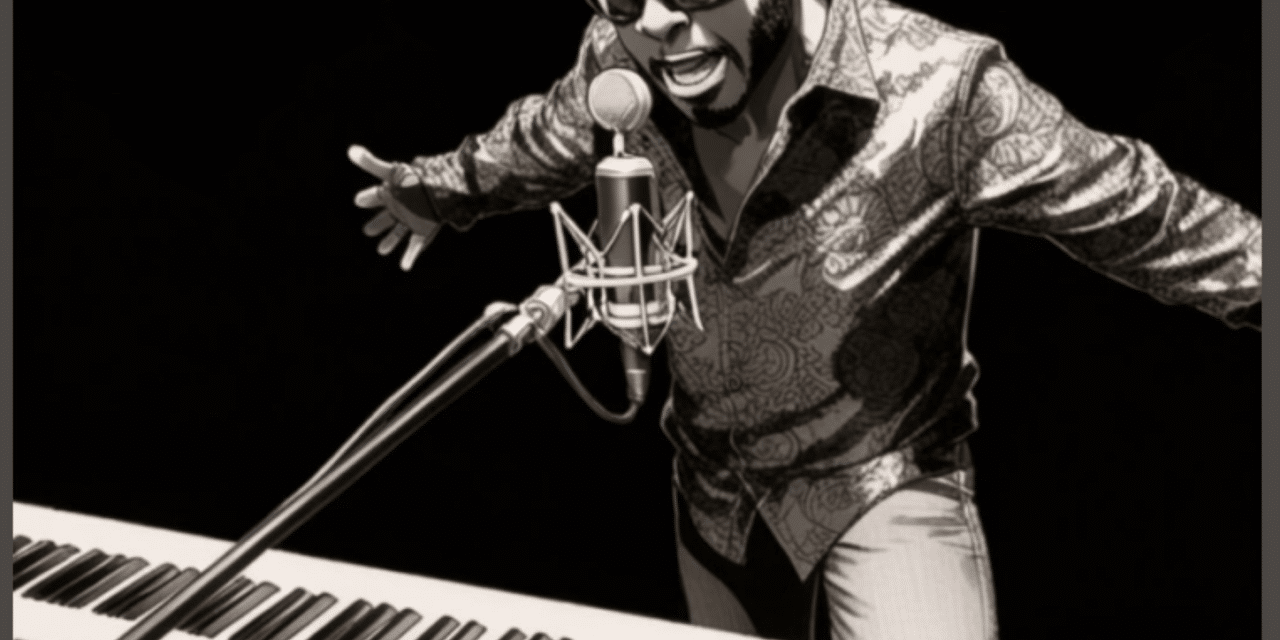
After eight years away from releasing music, the veteran singer-songwriter turns grief, faith, family and rediscovery into Welcome To Studio B—a deeply personal return to his “Rock-n-Soul Pop” roots
For Barth Beasley, returning to music wasn’t a calculated comeback. It was something closer to a calling.
After years spent raising his children, caring for his mother, grieving his father and living largely outside the machinery of a music career, Beasley had barely touched the piano. Across eight years, he estimates he played for a total of only an hour. Music—the force that had taken him from a Michigan church to international stages, Hollywood and eventually a historic Voice of Asia victory—had become distant.
Then someone from his musical past unexpectedly reopened the door.
“One of my backup singers asked me to write music to four sets of lyrics she had written while going through relationship issues,” Beasley remembers. “When she left, I felt a calling to start writing and singing again.”
Something had shifted. New chord voicings appeared beneath his fingers. Gibberish became melodies. Grief began transforming into reflection.
“The numbness from my mother’s passing turned into reflection,” he says. “God repurposed assuredness through my downfalls, opened my heart and mind that the gift of words and music is a privilege.”
That rediscovery became Welcome To Studio B, a 15-song album drawing together faith, family, relationships, disappointment, perseverance and the accumulated perspective of a life that had changed dramatically while Beasley was away.
Its first single, “I Used To Be,” makes the scale of that return surprisingly intimate. Instead of announcing his comeback with spectacle, Beasley tells the story of two longtime friends slowly recognizing that the love they were searching for may have been beside them all along.
“To begin as friends is underrated,” he says. For Beasley, the song is ultimately about having enough courage to risk disrupting what is comfortable in pursuit of something real. “Vulnerability will lead you in grace and recognition.”
That emphasis on vulnerability reflects a songwriter whose relationship with his own history has changed.
Beasley’s musical life began extraordinarily early. Raised in Battle Creek, Michigan, he first performed as a four-year-old church soloist before studying classical piano and numerous instruments. His father’s record collection exposed him to everyone from Duke Ellington and Ray Charles to Marvin Gaye, Elvis Presley and Elton John, helping create the eclectic musical vocabulary Beasley eventually named “Rock-n-Soul Pop.”
For Beasley, the term has always meant more than genre.
“‘Rock-n-Soul Pop’ means to me that I embrace who I am,” he explains, rejecting the idea that being a Black artist should automatically determine the musical category in which he is expected to exist.
That refusal to be reduced to a single tradition would carry him through an unusually varied career: touring Europe with Up with People, performing during Super Bowl XVI, appearing in Tom Hanks’ That Thing You Do!, performing internationally and eventually becoming the first American to win Voice of Asia.
Yet when asked which of those experiences most profoundly affected him as a writer, Beasley points to that international competition.
“My music was recognized as worthy to the people of Kazakhstan and all over the world,” he says. “The expectation of how I should be compared to being real about who I am has continued to evolve.”
Now, decades after he first began writing songs, that question of authenticity feels central to Welcome To Studio B.
Working with producer Allan Phillips, Beasley built the record outward from piano and voice. If a composition couldn’t survive in its most exposed form, it wasn’t ready.
“If the songs didn’t work with just piano and vocals first, then I kept exploring until they did,” he says.
What emerges is less a reinvention than a return made possible by transformation. Beasley is coming back to the fundamental things—melody, storytelling, faith, connection—but hearing them through everything that happened while he was gone.
As T. S. Eliot’s famous idea of returning to where we started suggests, sometimes home becomes recognizable only after we’ve traveled far enough away from it.
For Beasley, Studio B is that return.
Mundane spoke with Barth Beasley about rediscovering music after eight years, turning grief into creative purpose, refusing genre expectations, the meaning of service and why his latest chapter is less about becoming a star than understanding what music can give to someone else.
After eight years away from releasing new music, what finally made you feel it was the right time to return with Welcome To Studio B?
It was all divine timing. One of my backup singers asked me to write music to four sets of lyrics she had written while going through relationship issues. I had only played the piano for a total of one hour over an eight-year period. She flew in to do the final run-through of the songs. When she left, I felt a calling to start writing and singing again.
I was playing voicings of chords I had never played before. My gibberish turned into melody-provoking thoughts. The numbness from my mother’s passing turned into reflection. God repurposed assuredness through my downfalls, opened my heart and mind that the gift of words and music is a privilege. I needed to not be self-centered in my sorrow and return to my roots.
T. S. Eliot said it best: “We shall not cease from exploration, and the end of all our exploring will be to arrive where we started and know the place for the first time.”
“I Used To Be” tells the story of two friends discovering they were meant for each other all along. What drew you to begin this new chapter with a song about love that grows quietly over time rather than arriving all at once?
Because to begin as friends is underrated. I have friends that have painfully lived through the wish of I could have, would have. Regret in one of my past relationships added to it as well.
In this world we are never in hope alone. Someone is going through exactly what you are going through. To me, “no” is a time saver; so face your fear. Embrace and don’t doubt hope. Vulnerability will lead you in grace and recognition. Letting go and reveal will lead to love’s victory in your life.
Throughout your career you’ve described your sound as “Rock-n-Soul Pop.” What does that term mean to you today, and how has it evolved alongside your own life experiences?
“Rock-n-Soul Pop” means to me that I embrace who I am and have not sold out to sign with a label as an R&B artist because I’m Black. My dad played an eclectic mix of music in the house when I was growing up. Those nights are some of my fondest, priceless memories.
My friends are multicultural and it taught me that friendship and musical oneness are colorful, emotional, and prolific. I find in my writing that there is nothing like experimenting from that crayon box. There is no such thing as halfway cooked when it comes to writing or living life.
Your journey has taken you from singing in church as a child to touring the world, performing in That Thing You Do!, and becoming the first American to win Voice of Asia. Looking back, which chapter shaped you the most—not as a performer, but as a songwriter?
The Voice of Asia chapter really was a breakthrough for me as a songwriter. Twenty-plus countries of songwriters were represented at the Voice of Asia. My music was recognized as worthy to the people of Kazakhstan and all over the world. The expectation of how I should be compared to being real about who I am has continued to evolve.
You stepped away from music to raise your children, care for your mother, and grieve your father. How did those years away from the spotlight ultimately change the stories you wanted to tell when you returned?
I got to see joy and heartbreak stacked in my days. I got to reminisce and go to therapy to sort out my new chapter away from music. It motivated me to rediscover and explore my curiosity and thirst to not keep my life and memories in solitary confinement. It was freeing.
Welcome To Studio B draws on faith, family, disappointment, love, and perseverance. Was writing this album a way of reconnecting with your past, or discovering a new version of yourself?
It was both.
You’ve worked with incredible producers and collaborators throughout your career, including Allan Phillips on this project. What did you want the production to capture emotionally that words alone couldn’t express?
I wanted the feel of hooks and space in production to bounce around my piano in rhythm and layers. If the songs didn’t work with just piano and vocals first, then I kept exploring until they did.
Your music consistently emphasizes hope, connection, and service. In an industry that often rewards trends over sincerity, how have you stayed true to that mission?
When I was four years old I started performing as a soloist in church. One Sunday I had traveled to a different church and I gave a halfway effort because there was a very small audience.
My mother, on the drive home, told me, “If you are gonna perform, I don’t care if there are four people in the audience, you need to sing and perform like there are millions. You never know what someone is going through. Be a blessing.”
You once said, “I’m a messenger. I’m a servant.” How has that philosophy influenced the way you define success today compared to earlier in your career?
Earlier in my career I was laser focused on writing more uptempo songs than ballads because ballads were in my wheelhouse. I have focused since on my spiritual walk and a quest to grow over the years. The same as in my songwriting and what I feel needs to be said in vulnerability, rebellion, and fun.
If someone discovers your music for the very first time through “I Used To Be” and Welcome To Studio B, what do you hope they learn about the man behind the songs—and perhaps about themselves in the process?
First, I hope it’s when, not if. I hope they hear that my will to succeed is not just to be a star. Victory buds a new soul when you reflect on your growth and not dwell within emotional, temporary deficits.
The man behind the music are things we share in common whether we are Black, white, yellow, red, or brown. I want them to learn that they are beautifully and wonderfully made. I want them to know that they are more than conquerors.
Exhale negativity and embrace life’s journey by receiving love, growing in courage; and that beautiful mistakes open doors to unrelenting wisdom.
LIVE!!!