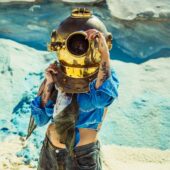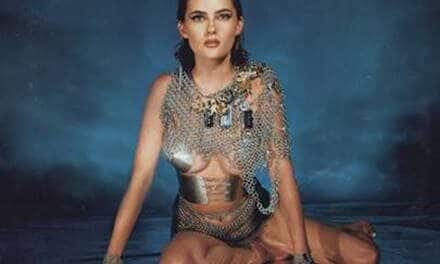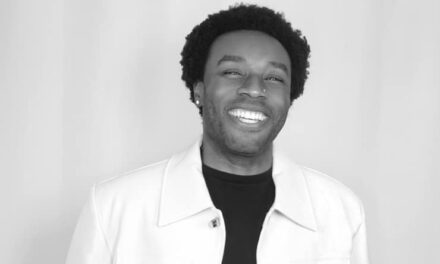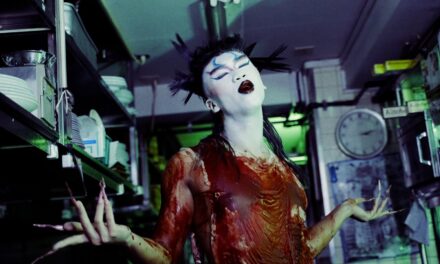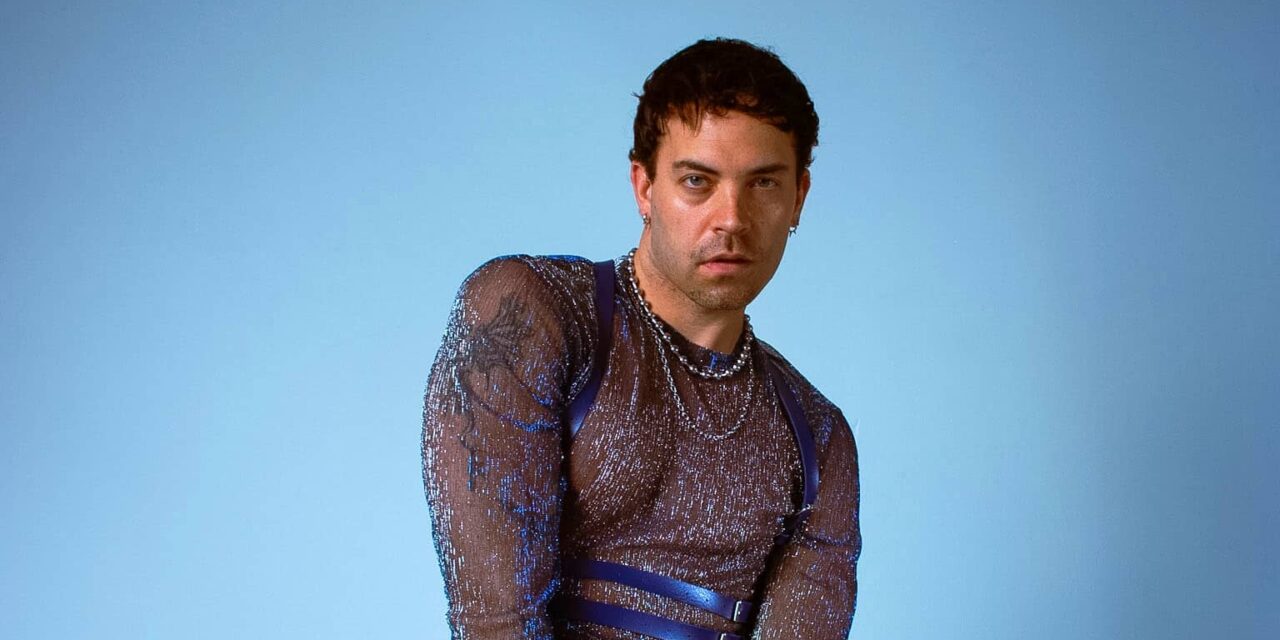
There is something thrilling about an artist who understands that pop is not just a sound, but a state of becoming. On “Platinum Pleasure,” LA-by-way-of-Atlanta artist Boy Blu arrives with exactly that kind of electricity: sharp, charismatic, flirtatious, and fully aware of the power of performance. Released ahead of his debut EP Eye of Desire, due this April, the single introduces a world built on bold hooks, sleek alt-electro sheen, theatrical confidence, and the kind of self-aware glamour that feels both nostalgic and unmistakably current.
If “Platinum Pleasure” lands like a rush, that is because it was born from a need to transform mood in real time. Boy Blu describes writing from a place of not feeling his best, then stepping into the studio wanting to feel like “a bad bitch.” The result is a song that does exactly what great pop should do: alter the temperature of the room. It is glossy, high-energy, and defiantly pleasure-driven, but beneath the sparkle is something more vulnerable—a desire not just to feel confident, but to feel wanted.
That tension sits at the heart of Eye of Desire. Across the project, Boy Blu found a through line connecting the songs he had been making over several years: confidence on one side, longing on the other. The EP is not simply about self-possession, but about the human need to be desired—by lovers, by friends, by family, by the world around you. In that sense, Eye of Desire feels less like a straightforward debut than a reckoning with visibility itself: what it means to perform, to be perceived, and to still search for affirmation inside all of that.
It is a fitting first statement for an artist who has spent years circling this moment. Boy Blu admits that perfectionism kept him from releasing music for a long time. For roughly five years, he was caught in a familiar creative loop: getting close to putting something out, then pulling back, then returning later only to feel it no longer reflected who he was. What makes this chapter different is not just the music, but the willingness to let it be seen. That is its own kind of arrival.
The references surrounding Boy Blu—Troye Sivan, early Mika, SOPHIE, Yeule, Caroline Polachek—make sense, but they only tell part of the story. What stands out most is the way he filters those influences through his own history: growing up in the South, searching for pop in spaces that did not naturally reflect him, absorbing Atlanta’s musical and cultural energy, and building an aesthetic shaped as much by outsider instinct as by polished taste. He speaks with affection about artists like Sam Sparro, Robyn, Cobrah, Loreen, and of course Lady Gaga, but what unites those influences is not genre so much as permission. Each offered some version of the same message: there is another way to exist.
That realization came early. One of the clearest formative moments he recalls is watching America’s Best Dance Crew and seeing the group Fanny Pack—bright, strange, playful, totally outside the mold. In a landscape full of more conventional performers, they represented the possibility of standing out on purpose. It was not just about style, but about claiming difference as something exciting rather than isolating. For a young artist growing up in Georgia, surrounded by a more conservative social world, that mattered.
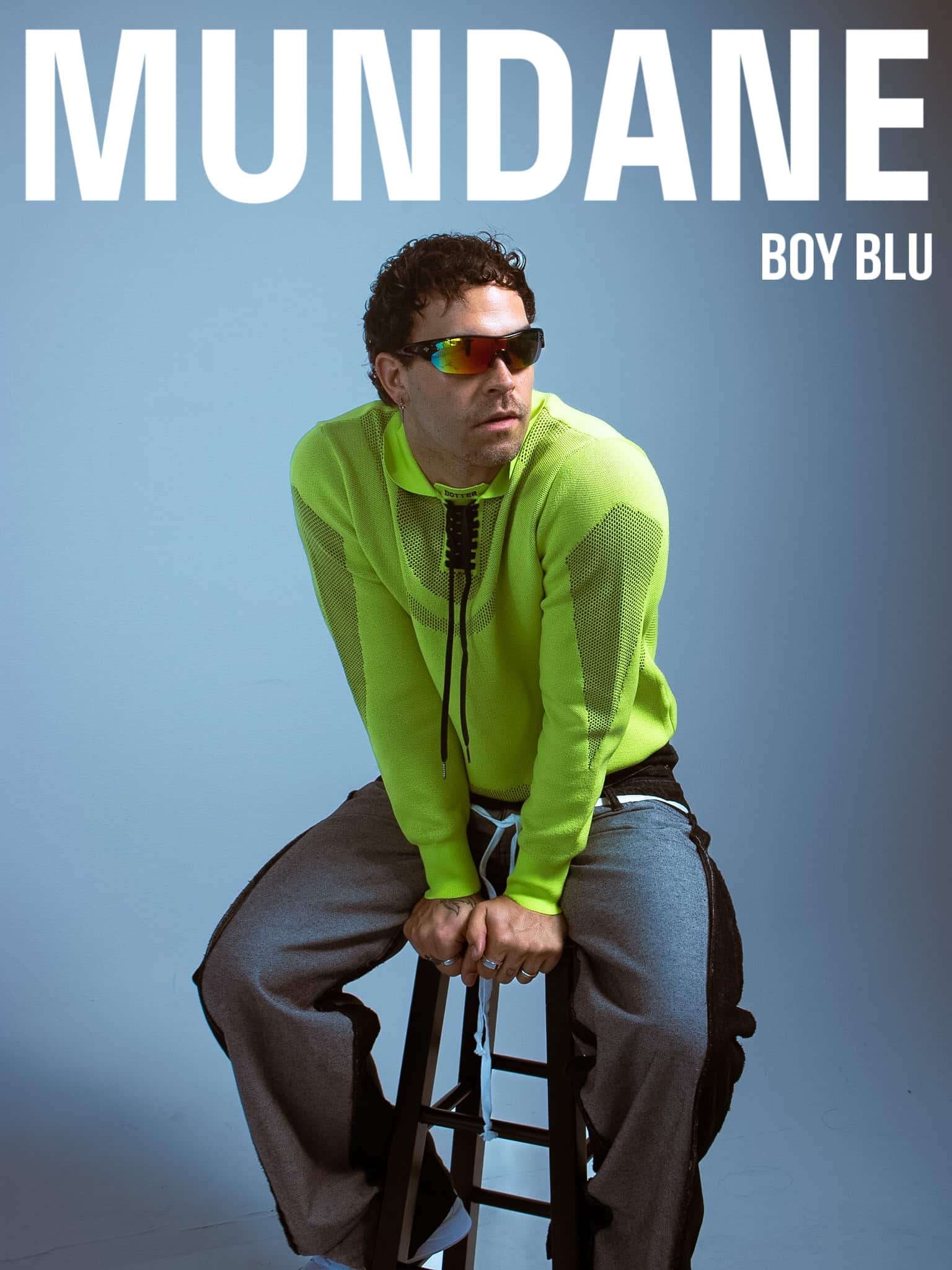
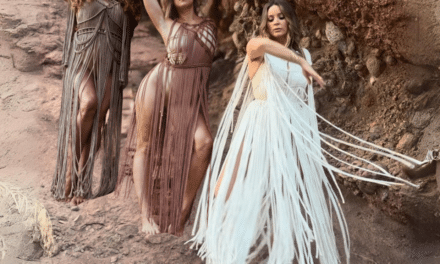
Photography Blurmedia
Style Eileen Marou
You can still hear that push and pull in Boy Blu’s music now. There is the South in him—not in a literal sonic sense, but in the values, the social codes, the emotional directness, and the relationship to community that continue to shape him. There is also Atlanta: the rap, the R&B, the diversity of influence, the instinct for rhythm and attitude. Then there is LA, where those impulses seem to sharpen into something more stylized and self-conscious. The result is a pop project that feels rooted without being boxed in.
If “Platinum Pleasure” is the glossy first doorway into this world, it is not the whole story. Boy Blu points to the title track “Eye of Desire” as one of the songs that most fully captures his artistic identity—experimental, mysterious, danceable, and emotionally charged. He also mentions “Hurricane,” a more vulnerable track that moves through pain before opening into release. That combination—sadness and motion, ache and spectacle—may be the clearest definition of what Boy Blu is building.
What makes his debut especially compelling is that he does not present confidence as something static or effortless. It is something made, rehearsed, reached for. That is what gives the music its pulse. It is not the sound of someone who has always known exactly who they are. It is the sound of someone who has fought to get closer to that person, and who now understands that desire, performance, and self-expression can all be part of the same language.
With Eye of Desire, Boy Blu is not just introducing himself. He is stepping into focus.
Your debut EP Eye of Desire arrives this April, which is a big milestone. How are you processing that, especially with all the pressure that can come with a first proper body of work?
The most pressure I feel right now is honestly from myself, because I think I’m a perfectionist, and I also grew up watching so many artists do their thing that I have such a high taste level for what people do that I expect that for myself. So I’m just hoping I achieved that. Sometimes I can be so perfectionistic and want everything to be so perfect that it can prevent me from putting things out. Whereas now I’m finally pushing past that to release this EP. It’s scary to put that out there and have it critiqued and viewed and consumed and perceived. So I have a lot of fear, but I’m also very excited and proud of myself for finally doing that and telling my story.
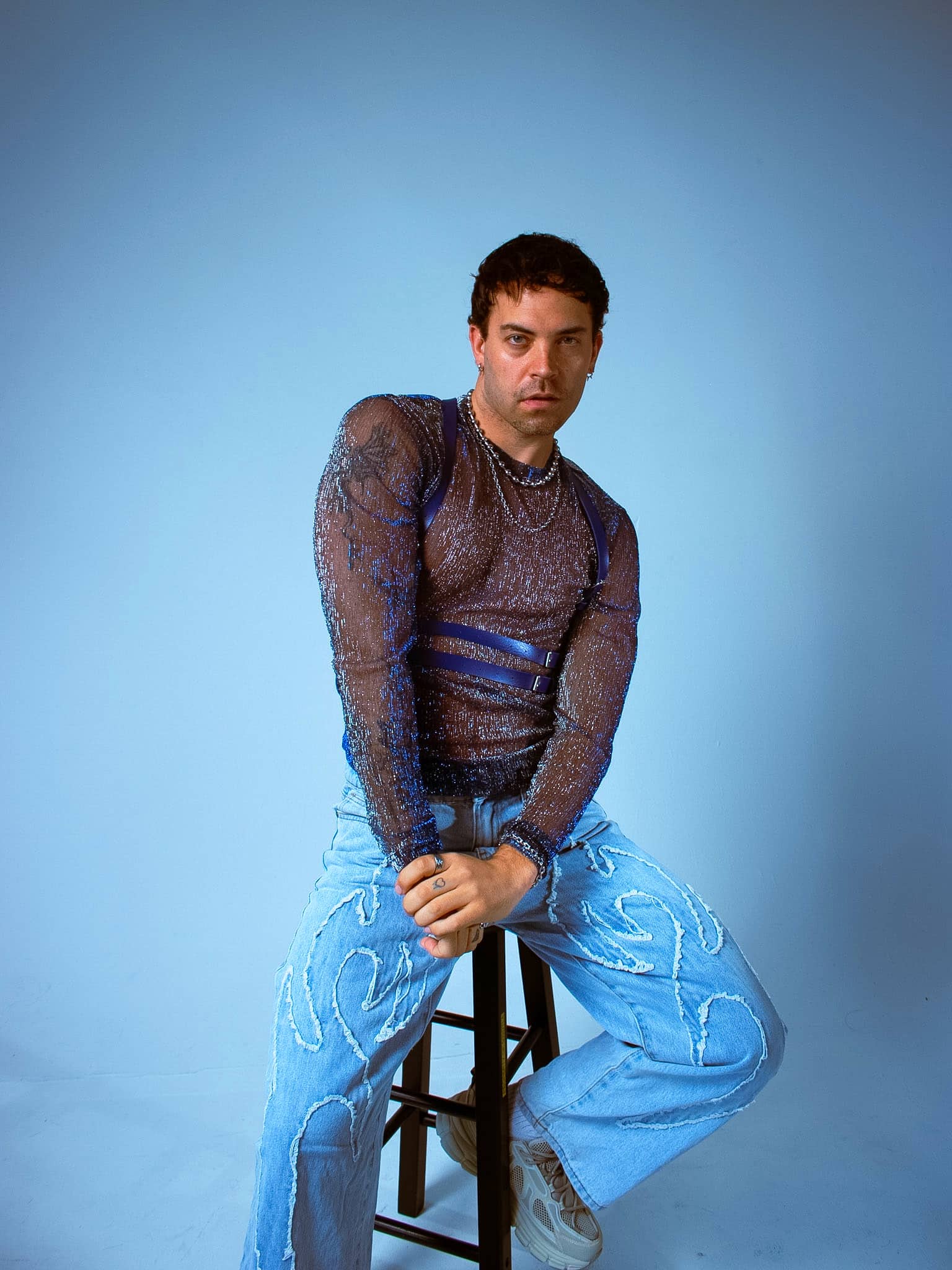
How long has this project been building?
The last five years, really. I worked on music and then I would get close to putting something out and then I just wouldn’t. Some time would go by and I wouldn’t like it anymore, or I would like it at first and then later not like it. One of my close friends and producers, Gregory, was like, “You’ve got to just put it out. You can’t keep doing that.” So I did that for about five years, and then finally I put out one or two singles. But this year it was like, okay, I want to put out a body of work. I want it to be more than just a single. An EP feels even more vulnerable.
What made these songs feel like they belonged together as Eye of Desire?
As I was making music, I wasn’t really necessarily thinking about an EP or a message. I was just making stuff with my friend and responding to whatever I was going through or needing in that moment. Like with “Platinum Pleasure,” I wasn’t feeling the best, but then I had this trip in New York where I was like, I want to feel like a bad bitch. I want to feel that way in the studio today. So we wrote “Platinum Pleasure,” and it made me feel really good.
When I listen to music, it changes my whole mood. I can listen to a sad song and immediately feel nostalgic and sad, or I can put on that song before going out to get hype and feel good. Same with being in the studio. I wanted to feel good. That’s where “Platinum Pleasure” came from.
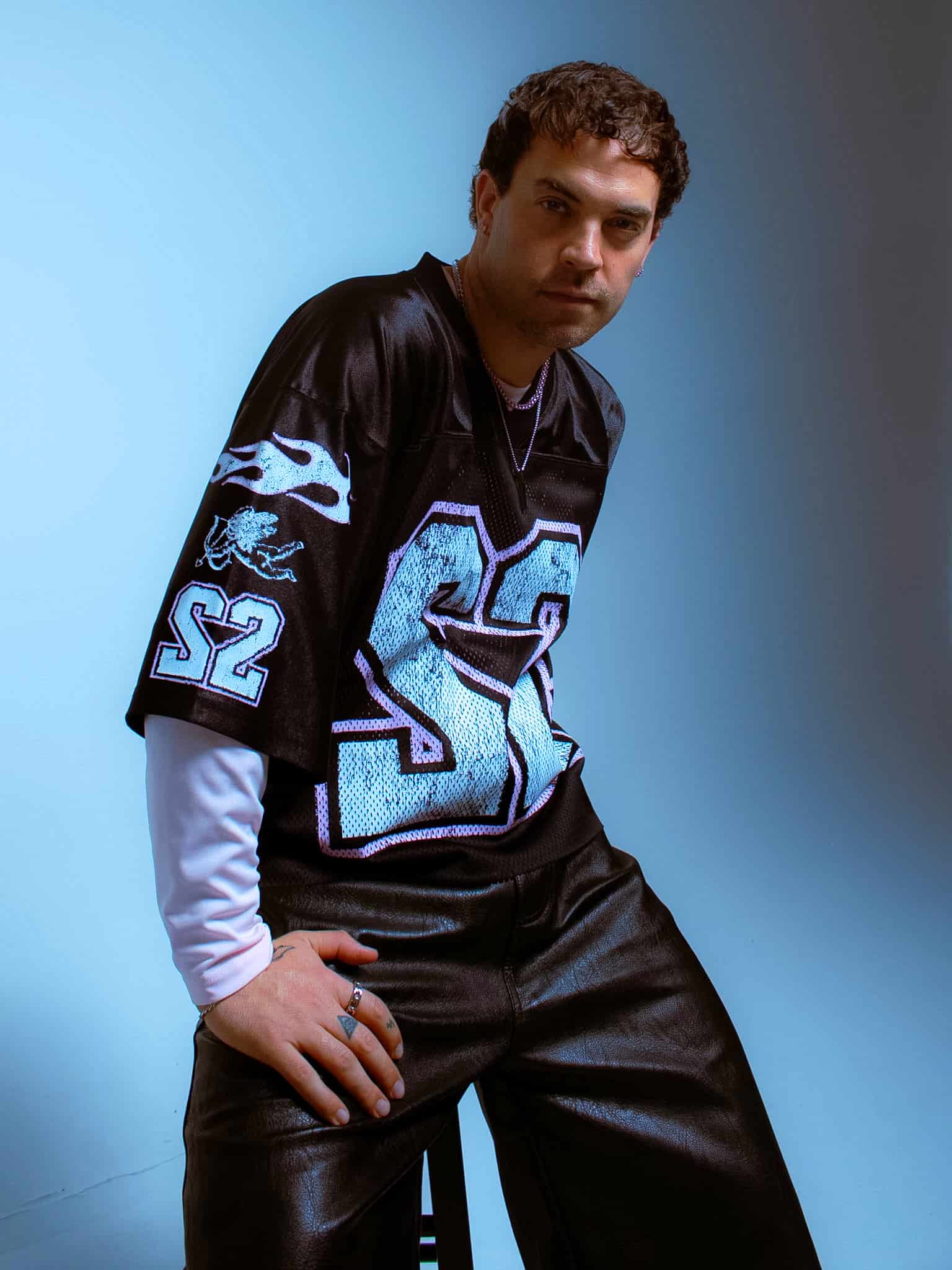
As I kept creating these songs, I started seeing this through line of confidence, but also wanting to be desired. It was like, I’m confident, but I want to be wanted. And I realized that’s really what I’d been dealing with. As you get older and your body changes and things in your life change, you still want to feel desired as a person—from your lover, your friends, your family, even just the world. I was struggling with not feeling that for a while. So this became a way to remind myself of that and share that story.
Is “Platinum Pleasure” the most representative Boy Blu song, or are there other tracks on the EP that paint an even fuller picture?
I think the title track, “Eye of Desire,” which comes out April 24, is a real testament to Boy Blu. It’s experimental. It’s really interesting to me. It makes you want to dance, but it’s also kind of mysterious, which I love. I’d also say there’s another song called “Hurricane” that I really love. It’s one of the more vulnerable songs I wrote, and there’s definitely more pain in there, but by the end it goes into this dance mix that feels happy. That’s very much me. I’m sad, I’m happy, I’m all of those things, but at the end of the day I want to feel good.
Your influences span Troye Sivan, early Mika, SOPHIE, Yeule, Caroline Polachek and more. Were there any artists who carried you through your journey in a deeper, more formative way?
I grew up in a family that wasn’t really big on music, actually. They were big on religious music and country music, and I never related to that. I always liked pop music and other things, so I never really got introduced to what I loved. I was always searching and looking for it. I’ve always loved smaller artists or lesser-known artists. Even now, I probably listen to more indie artists than huge artists, because you can find such good music there.
When I was younger, Mika was huge for me. And Sam Sparro too. Sam Sparro was another really big inspiration. His music doesn’t necessarily sound like mine, but seeing him as a gay artist, and his visuals, and just who he was—that was really inspiring. Robyn was also big for me. I remember seeing the way she dressed, and those sad lyrics you’re still dancing to, and I loved that. I want to be vulnerable and talk about real things in music, but I still want to dance.
More recently, I’ve been inspired by Loreen. I love the visuals she brings, the mystery, the cinematic performances. I also love Cobrah. There are honestly so many.
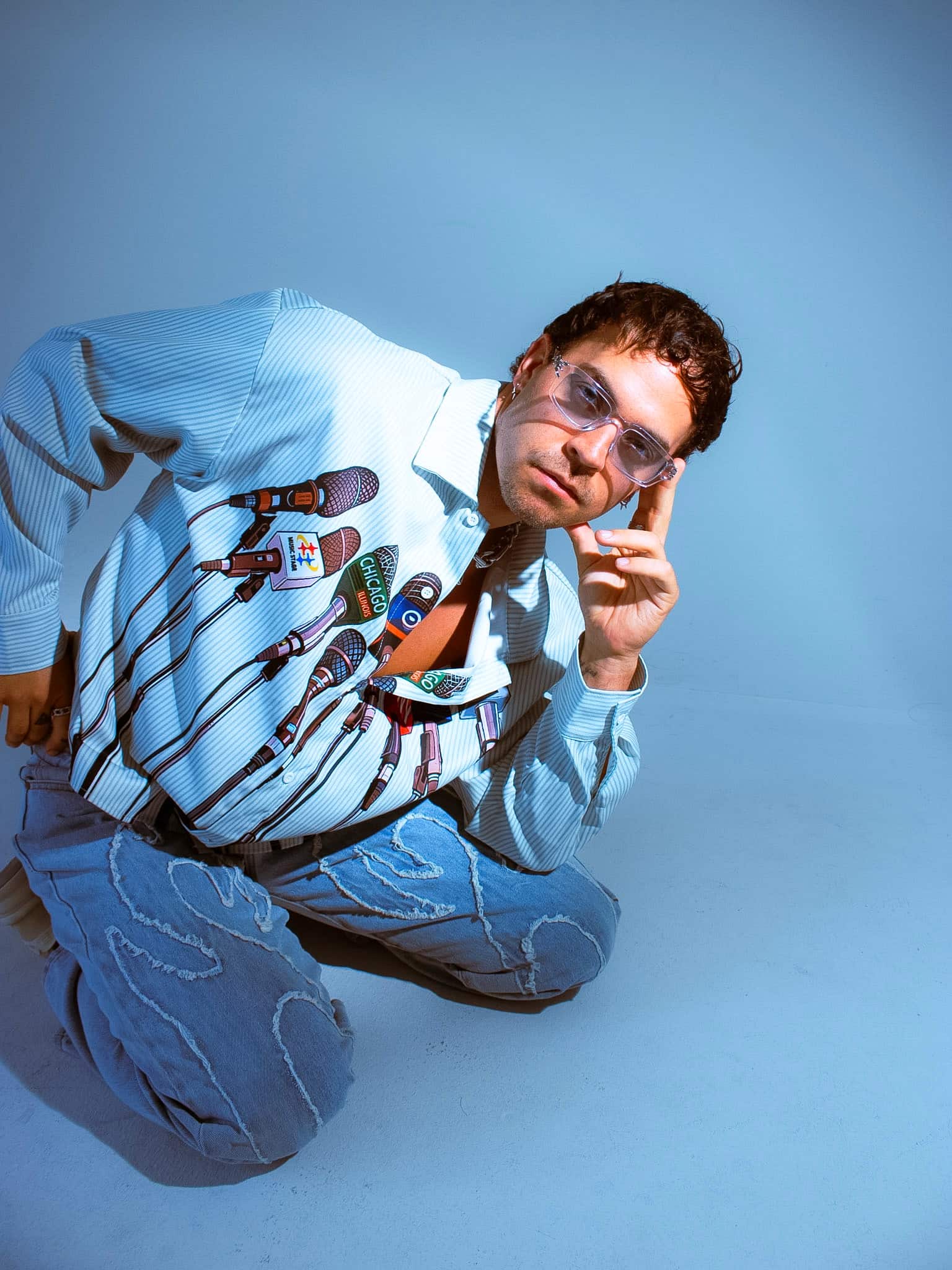
When did you first realize you were drawn to something larger-than-life aesthetically? Was there a specific moment that stuck with you?
There was a really weird but important moment. I remember watching America’s Best Dance Crew, and there was this crew called Fanny Pack. All the other dance crews were cool, but they were more expected—more hip-hop, more straight in presentation. Fanny Pack was this group of gay guys and girls from the Valley with bright colors, fanny packs, super weird movement, and I was obsessed. I was like, whoa, you don’t have to do it the normal way.
They introduced me to Janet Jackson and Missy Elliott in a way I hadn’t seen before. It made me want to dress like that. I remember being in high school wearing the brightest colored shoes and shirts. It was tacky and ugly, but I loved standing out. I think that was one of the first moments that really inspired me to step out of the box. And then Gaga reinforced all of that. She made it feel possible to be successful and not conform.
How much does being from the South still influence you?
A lot, honestly. I’ve lived in LA for over 12 years, but I grew up in the South, and I think a lot of it still influences me in terms of my values, how I treat people, and social interactions. It even affects my taste in music. I went to Georgia State University in the heart of Atlanta, so I was around a lot of rap and R&B and a really diverse community, and I loved it. I do miss that sometimes in LA.
I think that perspective stays with me. And I still go back to see my family, who are all still there, so it’ll always be part of me.
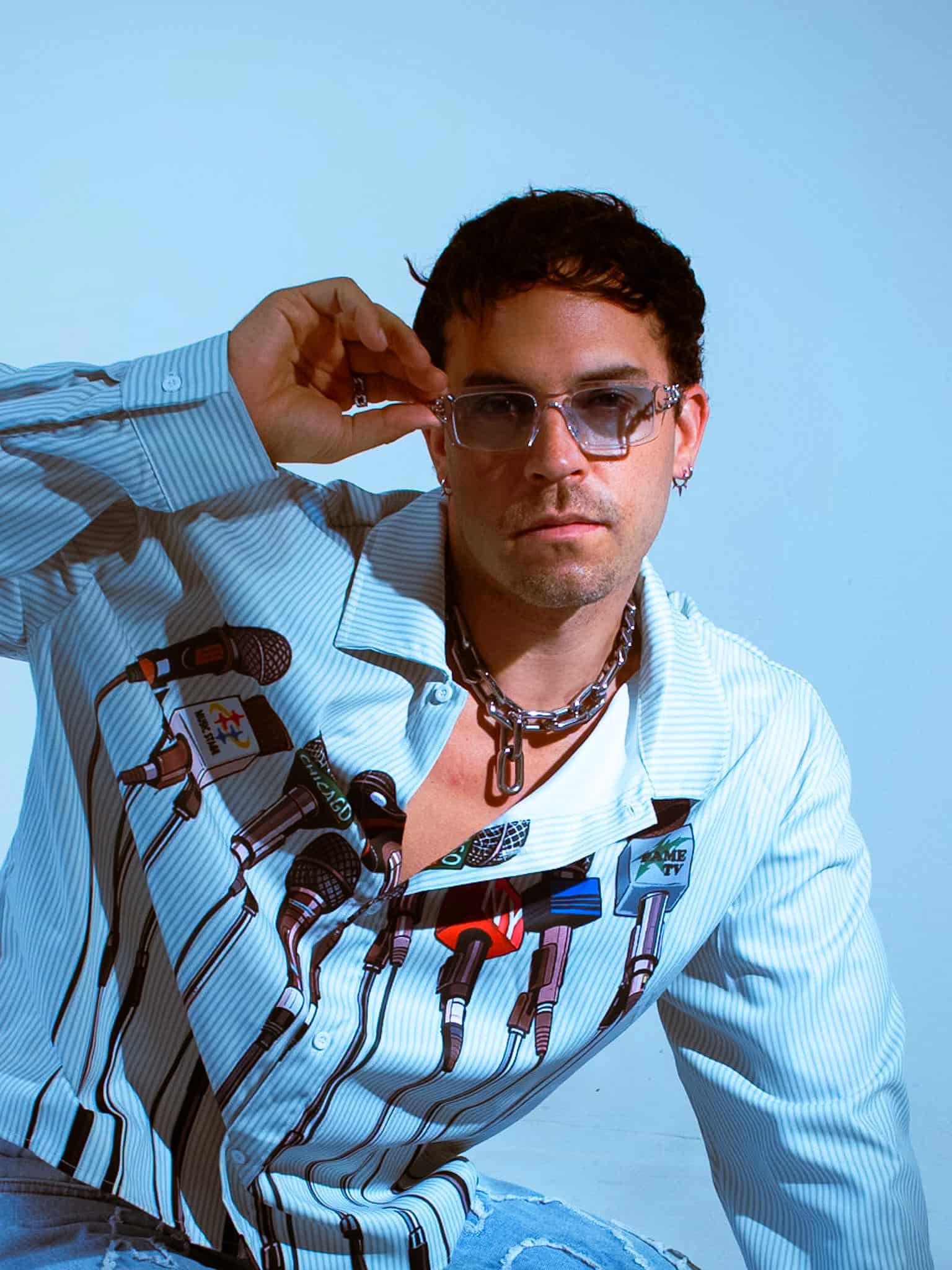
Who helped encourage your artistic identity early on?
I’d say two people. One is my aunt, who was in a girl group when she was younger. I remember thinking it was the coolest thing, her doing music and being in a band and singing. It made me feel like, oh, I can do that. It made it feel real and possible because it was someone in my family.
The second person is my friend Gregory Dillon, who’s also a musician and artist. He has really pushed me to do better, work harder, and challenged me on my visuals, my writing, my producing, my taste—everything. He’s been a huge inspiration for me to keep pushing myself, even when I feel like I can’t. He feels like my brother at this point.
You’re releasing music now that you were making a year ago, while also creating new things. How does that tension feel?
It’s actually weird. I’m putting out this music right now that I worked on a year ago, but at the same time I’m recording new stuff and feeling inspired by all this new material. It’s been a challenge dipping back into the older music and figuring out visuals for that while also being in the moment with the new music and visuals. I’ve been struggling a little with that back and forth.
I don’t really know what the next thing is yet in terms of whether it’s another EP or something else, but I’m recording and I’m in such a rhythm of putting stuff out now that I’m inspired to keep doing that. I think I’m just going to keep releasing music this year and really go for it.