There’s something unsettling about writing a protest song in 1976 and discovering, fifty years later, that you might have been describing the future.
For Gary Marks, that realization is becoming increasingly familiar.
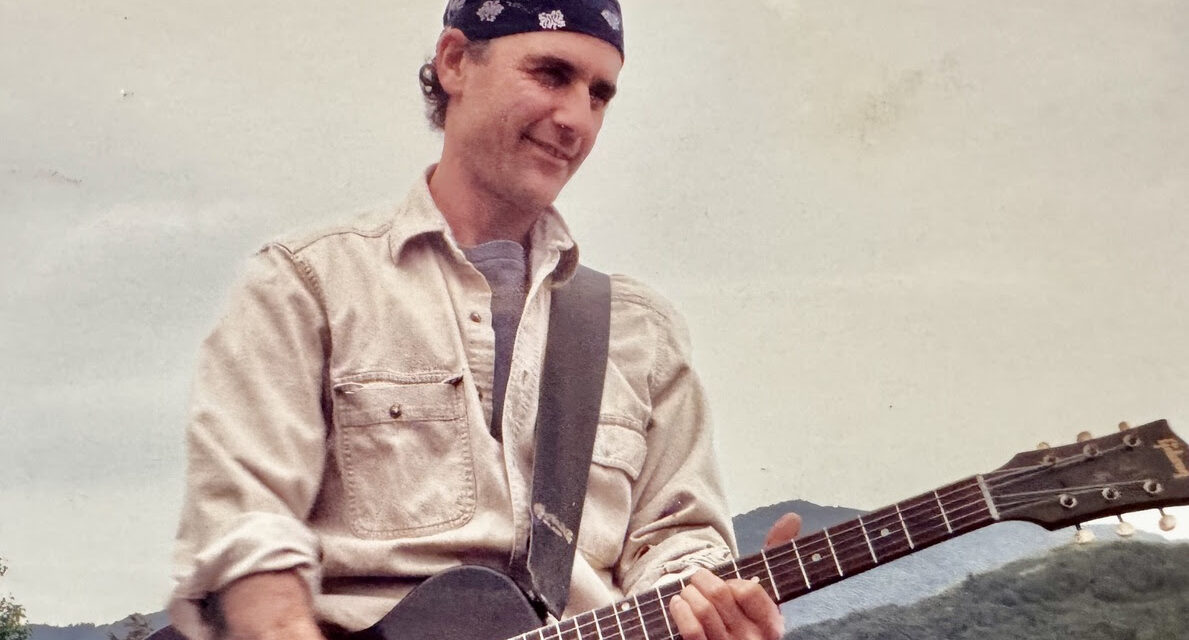
The American singer-songwriter, author, and cult figure whose career stretches back to the early 1970s, has spent five decades exploring the relationship between political power, human compassion, environmental responsibility, and individual freedom.
His songs have documented moments of social unrest, challenged institutional authority, and questioned the moral consequences of a society increasingly organized around wealth and power.
And now, as he revisits some of that material in 2026, Marks finds himself confronting an uncomfortable possibility.
Perhaps the problems he was writing about never really went away.
His newly shared singles, “I Guess It Never Stops” and “Castles,” were originally written in 1988 and 1976, respectively. Yet their concerns about political corruption, corporate greed, and the erosion of democratic values resonate with the present political climate.
The releases accompany his political novel The Dance and the Diamond Sky and follow Crossroads, his recent album released through Lantern Heights Records and selected for Record Store Day UK/Europe 2026.
Together, the projects represent something more ambitious than a retrospective of a long career.
They’re an attempt to connect different generations of American political consciousness through music and literature.
And perhaps more importantly, they’re an argument against the idea that history inevitably moves forward.
“I wrote this song in 1988,” Marks says of “I Guess It Never Stops.” “Political lies, corruption, corporations eating the planet alive. Almost forty years later — same story, bigger stakes.”
The most disturbing part isn’t simply that the song remains relevant.
It’s that Marks believes its warnings have become more urgent.
The Protest Song That Refused to Become History
When Marks wrote “I Guess It Never Stops” in 1988, he was responding to a world in which corporate interests, political dishonesty, and environmental destruction were already deeply intertwined.
Nearly four decades later, he sees those same dynamics operating on a larger scale.
The song’s title, originally intended as a warning, has acquired an almost bitter irony.
“I called this song I Guess It Never Stops. I meant it as a warning,” he explains. “In 2026, I’m still hoping my guess is wrong.”
It’s a remarkable statement from an artist who has spent so much of his life writing about the possibility of social change.
Marks isn’t suggesting that history repeats itself in precisely the same way.
Rather, he’s interested in the structures that allow familiar abuses of power to persist even as political figures, technologies, and cultural attitudes change.
He points to corporate boardrooms, environmental irresponsibility, and the ways governments influence public understanding of history through education.
In his view, the relationship between economic power and political authority has become particularly troubling.
And the rapid development of artificial intelligence introduces another dimension to those concerns.
Marks worries about who controls emerging technologies, who benefits from them, and whether their development will reinforce existing concentrations of power.
These are not abstract questions for him.
They’re extensions of the same moral concerns that inspired his earliest political songwriting.
Yet he insists that Crossroads should not be understood solely as an indictment of the present.
“I created Crossroads as a map to a better future, not just a criticism of the way things are.”
That distinction matters.
Because beneath the frustration in Marks’s music is an enduring belief that people retain the ability to change the direction of their society.
The question is whether they will choose to exercise it.
When Castles Begin to Collapse
If “I Guess It Never Stops” examines the persistence of institutional corruption, “Castles” approaches political power through a more symbolic lens.
Written in 1976, in the aftermath of Richard Nixon’s presidency and the Watergate scandal, the song explores the instability of authority built on dishonesty, intimidation, and a lack of compassion.
At the time, Marks remembers hearing more optimism in his own lyrics.
The collapse of Nixon’s presidency had demonstrated that even the country’s most powerful political figure could face consequences.
The song imagined a future in which democratic accountability and the freedom to speak openly might prevail.
But listening to it fifty years later, Marks hears something different.
“Back then I heard and sensed more optimism in the lyrics than I hear now,” he explains.
What once felt like a hopeful statement about the possibility of political accountability now sounds, to him, more like a warning about what happens when accountability begins to fail.
The image of a castle becomes especially revealing.
A castle is built to project permanence.
Its walls suggest security, its architecture communicates power, and its existence depends on the belief that whatever stands inside is worth protecting.
But even the strongest structure can become unstable when its foundations deteriorate.
For Marks, compassion is one of those foundations.
Without it, political authority risks becoming little more than an exercise in domination.
“The waters are rising, and the castle walls are starting to collapse,” he says.
It’s a dramatic image, but one that captures his concern about the fragility of democratic institutions.
And while his interpretation of the present is unmistakably critical of the Trump administration, the broader question extends beyond any individual president.
What happens when political leaders begin to treat power as an entitlement rather than a responsibility?
And how long can a society sustain itself when the people governing it no longer feel accountable to those they represent?
From Woodstock to the Present
Gary Marks’s political perspective wasn’t formed through distant observation.
He lived through the cultural and political upheaval of the late 1960s.
He attended Woodstock, witnessed the activism surrounding Berkeley’s People’s Park, and participated in a generation shaped by opposition to the Vietnam War, civil rights organizing, women’s liberation, and growing environmental awareness.
Those experiences form the historical and emotional foundation of his novel The Dance and the Diamond Sky.
Set in 1969, the book follows young pacifists, political radicals, and a college-dropout songwriter navigating a deeply divided America.
At its center is Jackie Rose, a young musician attempting to reconcile his ideals with the complications of love, jealousy, personal freedom, and political responsibility.
But Marks is careful to emphasize that the novel isn’t simply a political manifesto disguised as fiction.
It’s also a coming-of-age story.
“The writing is mostly warm and funny,” he explains, adding that many of the book’s concerns extend well beyond politics or the decade in which it takes place.
That combination of personal experience and historical conflict is central to the novel’s appeal.
For Marks, the late 1960s were not merely a period of protest and ideological confrontation.
They were also a time when young people were attempting to invent new ways of living.
Questions about sexuality, relationships, personal identity, and artistic expression existed alongside debates about war and institutional authority.
The political and the personal were inseparable.
And that intersection remains relevant to the present.
Marks sees parallels between the social divisions of 1969 and those of 2026, particularly in the ways political leaders can exploit fear, resentment, and cultural differences.
But the novel’s most interesting question may be a more intimate one.
What does an individual owe to the world when the world appears to be falling apart?
It’s a question that becomes especially urgent when the cost of taking a position is no longer theoretical.
Can One Person Actually Change Anything?
At the center of The Dance and the Diamond Sky is a moral dilemma that has haunted political movements for generations.
When institutions appear incapable of correcting themselves, what responsibility falls on ordinary people?
Is protest enough?
When does resistance become necessary?
And how do individuals distinguish between meaningful action and gestures that simply make them feel less powerless?
Marks explores these questions through characters confronting war, injustice, and a political culture in which the distinction between truth and propaganda has become increasingly unstable.
The novel’s conclusion places its central character in an extreme confrontation with mortality and personal responsibility.
Rather than offering an uncomplicated answer, Marks uses the situation to examine the relationship between conscience and action.
That concern also runs through his music.
In 2021, he wrote “Where We Started” in response to the January 6 attack on the United States Capitol.
The song asks whether the event might become a turning point toward renewal or a sign of deeper democratic deterioration.
For Marks, the question remains deeply personal.
He doesn’t view political engagement as something separate from the rest of human life.
Instead, he sees it as an extension of the same ethical responsibilities that govern relationships, communities, and individual choices.
His songwriting has increasingly moved toward psychological and philosophical questions.
When he writes about love, he wants to understand what genuine love demands.
When he writes about freedom, he’s interested not only in its legal definition but in the emotional experience of actually feeling free.
And he questions whether freedom can be meaningful without compassion.
It’s a perspective that connects his political work to a broader philosophy of human responsibility.
The health of a democracy, in this understanding, depends on more than institutions.
It also depends on the values people bring into their relationships with one another.
A Cult Songwriter Who Walked Away From the Industry
Marks’s commitment to artistic independence is hardly a recent development.
He first emerged in the 1970s with three albums that blended folk, rock, and jazz, developing a sound that resisted the conventional boundaries of singer-songwriter music.
Those recordings featured a remarkable group of musicians who would later become influential figures in jazz and contemporary instrumental music.
Guitarist John Scofield made his first studio appearance on Marks’s 1974 album Gathering.
Subsequent recordings featured musicians including Paul McCandless, Art Lande, David Samuels, and Mark Isham.
The albums eventually developed a dedicated following among collectors, receiving multiple reissues across Europe and Japan.
Yet despite those early achievements, Marks chose not to pursue the conventional trajectory of a recording artist.
He stopped touring in the 1980s and gradually withdrew from the traditional music industry.
Instead, he continued writing and recording independently, creating eight additional albums without formal distribution.
That decision reveals something essential about his artistic identity.
Marks has never seemed particularly interested in separating the value of music from the ideas it communicates.
His work is grounded in the belief that songwriting can be an intellectual and emotional pursuit, not merely a commercial product.
And while he recognizes that the industry has always been shaped by financial considerations, he worries about the increasingly formulaic nature of mainstream songwriting.
He argues that commercial success often encourages artists and producers to repeat familiar sounds and lyrical themes rather than develop distinctive voices.
For Marks, the problem isn’t popularity itself.
It’s the possibility that music becomes less meaningful when its primary purpose is to reproduce what has already succeeded.
“Music as art has meaning,” he says. “That’s what I’m still striving to find and create five decades in.”
The Meaning of a Crossroads
There’s something fitting about the title Crossroads.
On one level, the album brings together songs written across different stages of Marks’s life, allowing listeners to trace the evolution of his political and philosophical concerns.
On another, it reflects his belief that contemporary America faces a series of consequential decisions.
But a crossroads is not the same thing as a dead end.
It implies that different directions remain possible.
That sense of possibility is what prevents Marks’s work from becoming purely pessimistic.
Despite his frustration with contemporary politics, he continues to believe in the importance of individual participation and collective responsibility.
He hopes that his music and fiction will encourage people to engage more critically with political narratives, recognize the historical patterns shaping current events, and consider the consequences of disengagement.
But he also hopes listeners will rediscover something that extends beyond politics.
The experience of connecting deeply with a songwriter’s individual perspective.
In an era when music is increasingly consumed through fragmented clips, algorithmic recommendations, and rapidly changing trends, Marks is defending the value of sustained attention.
He wants songs to be experienced as works of art rather than interchangeable units of content.
And he wants listeners to recognize that music can challenge their assumptions as effectively as it can entertain them.
It’s an ambitious hope.
But perhaps ambition is necessary when the alternative is resignation.
Fifty Years Later, the Question Remains
The most striking aspect of Gary Marks’s latest releases is not that his songs remain politically relevant.
It’s that he seems genuinely disappointed by their relevance.
“I Guess It Never Stops” was written as a warning.
“Castles” imagined the consequences of political power divorced from compassion.
And decades later, Marks is still asking whether the society around him has learned anything from the experiences that inspired those songs.
But his continued creative output suggests that he hasn’t abandoned the possibility of change.
At a point in life when many artists might be content to revisit their achievements, Marks is still writing novels, releasing music, and asking difficult questions.
His work connects the idealism of the 1960s with the disillusionment of subsequent decades, but it also preserves something that political cynicism often destroys.
The belief that conscience matters.
That art can communicate uncomfortable truths.
And that individuals retain responsibility for the societies they help create.
Maybe the most important word in “I Guess It Never Stops” is guess.
Because a guess isn’t a certainty.
And for Gary Marks, that uncertainty leaves room for something he’s spent five decades refusing to surrender.
Hope.
In Conversation With Gary Marks
“I Guess It Never Stops” was written in 1988 but feels remarkably relevant today. What made you want to revisit and release the song in 2026?
When Jac Iofalla and Barbara Foci of Lantern Heights Records worked with me to create an album of my most socio-politically relevant songs, my song I Guess It Never Stops immediately came to mind. Because boardrooms still divide up profits without caring about who they’re profiting from, and many companies are not following through with their responsibility to protect the environment. Classroom books still have little lies built in, and sometimes very big lies—because the government is overseeing and defining what history is, then “standardizing it” in public school history books.
So, if anything, I Guess It Never Stops is not only relevant in 2026, but is pointing out how things are actually worse in many ways. Corporate greed is in control of the White House, and in control of the guardrails of artificial intelligence. Too many political messages are being multiplied by fear, the need for power, and hate. I hope all this does stop one day. I created Crossroads as a map to a better future, not just a criticism of the way things are.
“Castles” was written in 1976 in the aftermath of Nixon’s presidency. What do you hear differently in the song now, fifty years later?
Back then I heard and sensed more optimism in the lyrics than I hear now. I was saying that “the country that’s gonna last is the one that lets everybody see, and lets everybody speak,” etc. But now I hear the less optimistic phrases: “We can speak out, you say, speak against you lawfully, but when no one is watching the ones who dare it are brought to their knees…” and the warning that castles made of lies and raw power have always collapsed from their own weight at a certain point. So what I hear differently now is an even stronger warning, when hope has just about run out—the waters are rising, and the castle walls are starting to collapse.
Both songs deal with political power, corruption, and the consequences of losing compassion. How have those themes evolved in your songwriting over the past five decades?
I’m still following history as it happens. For instance, I wrote a song in 2021 about January 6th called “Where We Started.” The ending line is, “Will this be the end, or the beginning of us?” In other words, will this event at the Capitol Building be the day we wake up and start to save ourselves, or the day we decide to let criminals run the country? We got the answer.
I also think my lyrics have evolved and shifted into a more psychological, philosophical perspective. So when I talk about relationships I’m more interested in what love demands of us before we deserve to use a word like that. And when I talk about true freedom–feeling freedom—I don’t think that feeling can exist if it doesn’t include feeling love.
What inspired you to write The Dance and the Diamond Sky, and why did you choose 1969 as the setting for the story?
I chose 1969 because I lived it. I was there. And I still feel that time in me. I was at Woodstock, and Berkeley’s People’s Park. The beliefs, the hopes we had back then—the commitment to freedom for everyone—marching for civil rights, women’s rights, children’s rights, stopping the Vietnam War, getting arrested for our beliefs; the beginning of environmental concerns; all those issues came to a peak in the late sixties. And they are the same issues we face today, including presidents pursuing wars they can’t win.
On the other hand, The Dance and the Diamond Sky is fiction. It’s a coming-of-age novel. Jackie Rose is a pacifist songwriter trying to find his way through young love, and free love, and jealousy, and the political upheaval around him. The writing is mostly warm and funny, and many of the messages in the book are about a lot more than politics, or the ’60s.
The novel explores young people confronting war, injustice, and a deeply divided America. Were there aspects of the 1960s that you found especially relevant to the political climate of 2026?
All of it. I think the frightening thing when you read the book is how much Trump is Nixon 2.0, but with an out-of-control Supreme Court allowing Trump to do things Nixon legally couldn’t. Corruption, decisions made purely for revenge or personal gain, war, injustice, cultural division, a president trying to unite his voters by fostering fear and hatred of the other party, and hatred of everyone who disagrees with him. To me, it’s also Fascism 2.0. I’m trying in my own small way to make sure we head into the midterm elections with everyone’s eyes wide open.
You’ve spent decades writing about music, politics, human nature, and personal responsibility. What do you hope listeners and readers take away from these two songs and The Dance and the Diamond Sky today?
Hope #1: That everyone who cares about America’s future will register to vote, and then actually vote. Let’s have the midterms be the turning point America needs to start to find its way again. Read The Dance and the Diamond Sky, and let me know if you see the parallels!
Hope #2: Musically, I hope listeners find ways to connect to songs written by songwriters again. As usual, commercial songwriting is about making money, repeating styles, repeating lyrics that have made money in the past. But great songwriters are still out there with their own unique voices, waiting for you to connect with them on a deeper level than just joining their Instagram page. Music as art has meaning — that’s what I’m still striving to find and create five decades in.
Listen to Gary Marks
New singles: “I Guess It Never Stops” | “Castles”
Album: Crossroads — Stream and Vinyl
Additional music: “Where We Started” | “Nobody’s Following” | “Sky High” | “The Real World”
Gary Marks’s album Crossroads, released via Lantern Heights Records, was selected for Record Store Day UK/Europe 2026 and is available on vinyl and digital streaming platforms. His singles “I Guess It Never Stops” and “Castles” accompany the publication of his political novel The Dance and the Diamond Sky.